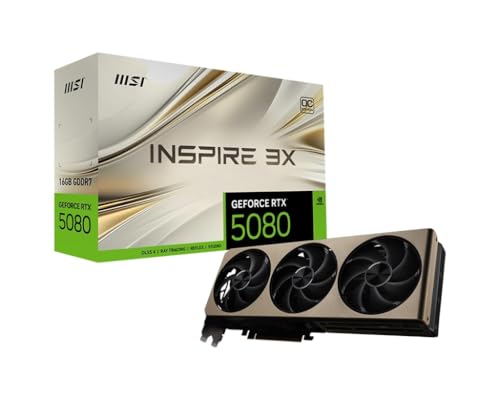
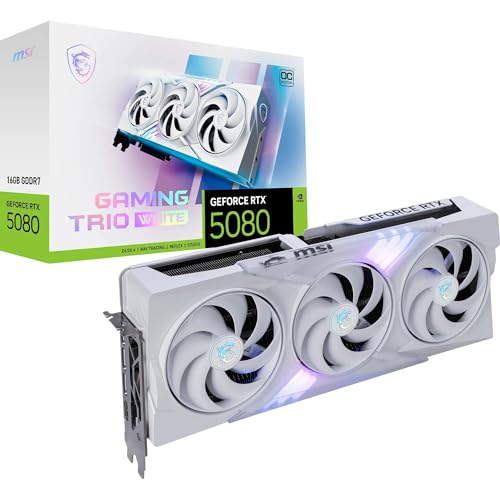
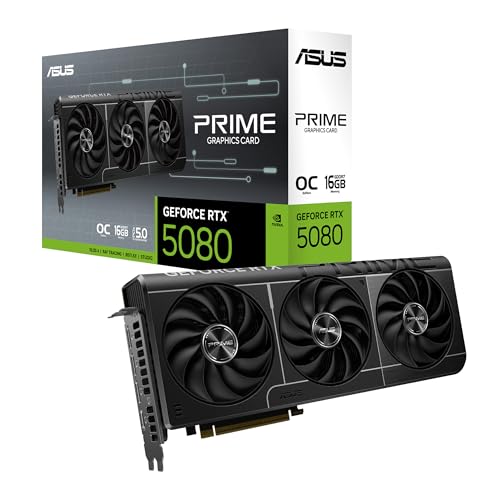
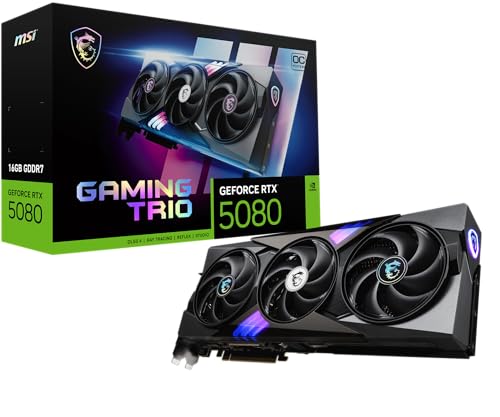
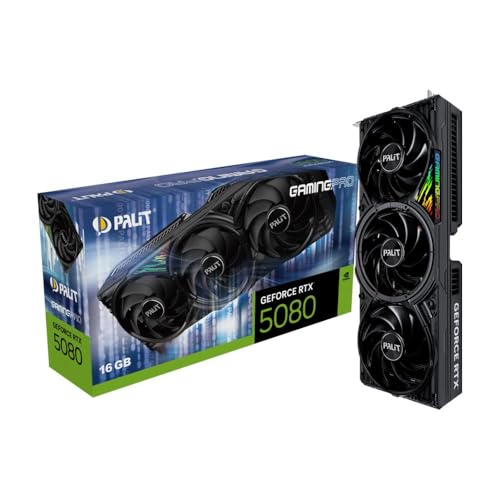
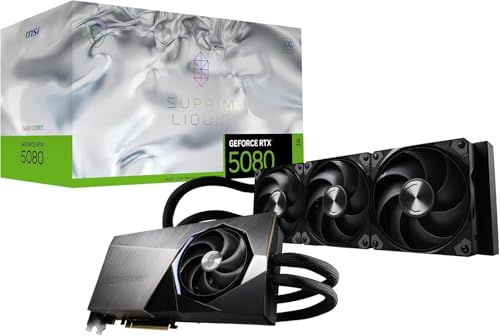
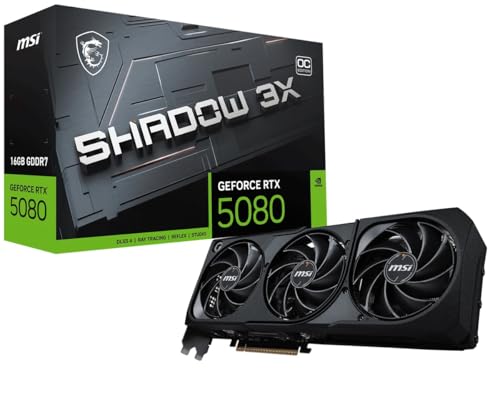
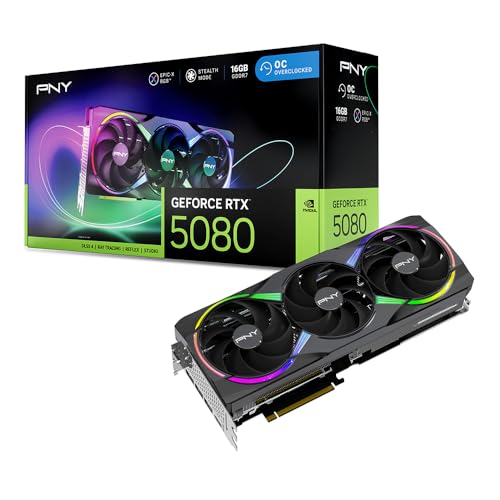
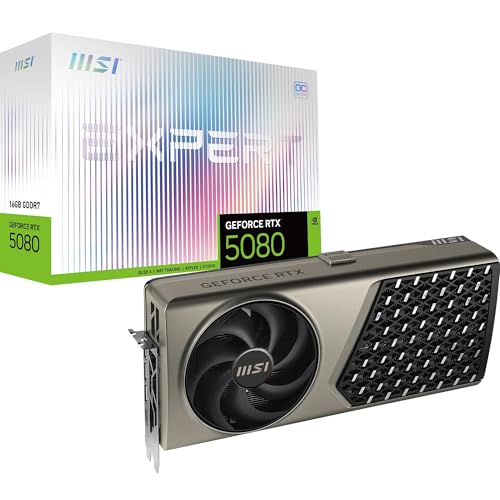
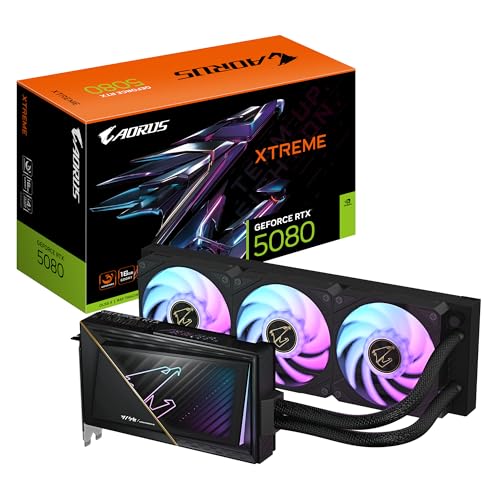
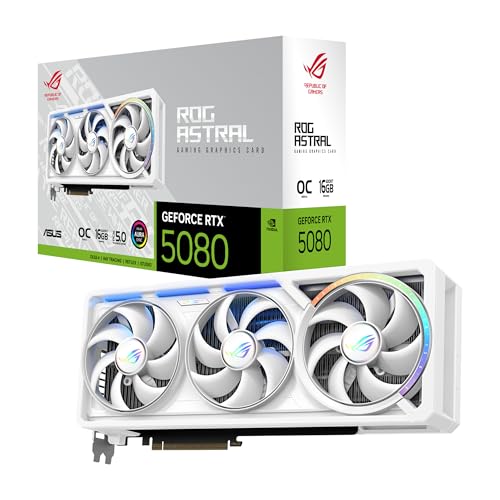
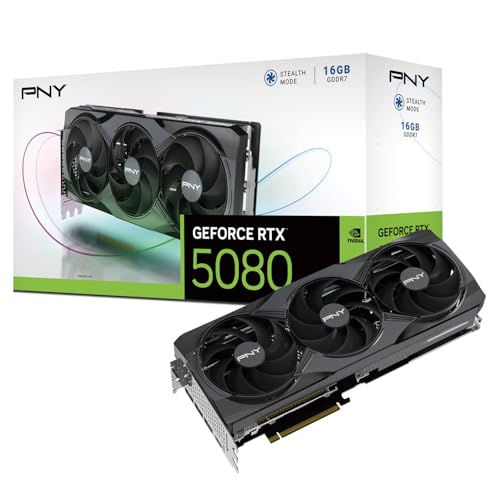
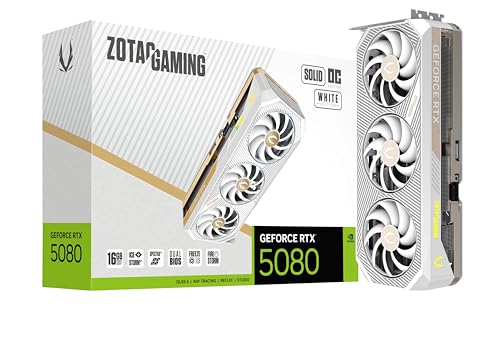
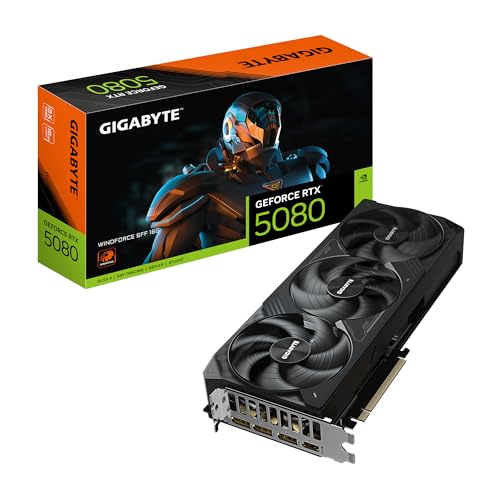
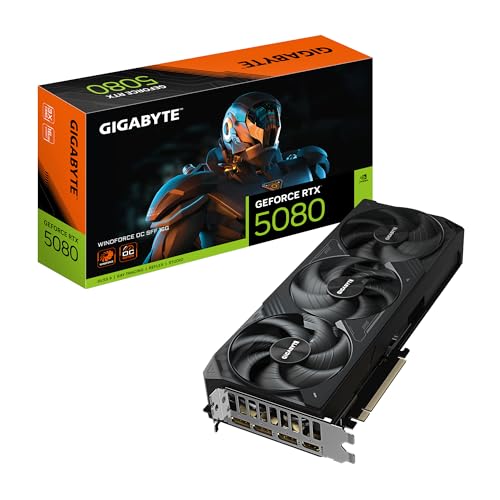
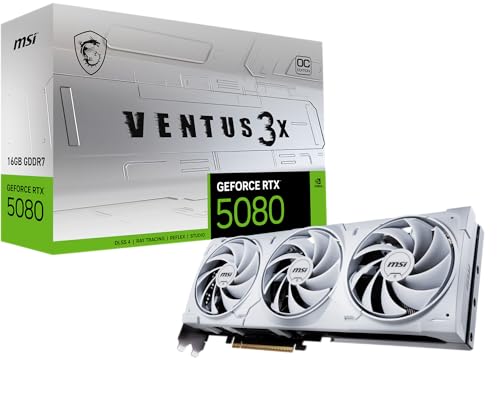
What is the RTX 5080?
The RTX 5080 is a high-end Nvidia GeForce graphics card family built mainly on the Blackwell architecture for buyers who want premium gaming and creator-class GPU hardware below the ultra-halo 5090 tier. In practical terms, the family is extremely consistent: RTX 5080 cards use 16 GB of GDDR7 memory on a 256-bit bus.
That makes the RTX 5080 a modern flagship-leaning option rather than an experimental or fragmented lineup. It is the kind of GPU buyers choose when they want current-generation GeForce features, strong 4K ambitions, and a premium platform without paying for the most extreme tier above it.
Who should buy the RTX 5080?
The RTX 5080 is best for buyers who want a premium current-generation GeForce card for strong 4K gaming, heavier ray tracing, and mixed gaming-plus-creator use, but who do not want to jump all the way into RTX 5090-level cost and power. It is a very good fit when you want high-end Blackwell hardware in a tier that is still easier to power and live with than the halo class.
It is a weaker fit for buyers who mainly target 1440p, want the cleanest value story, or do not need a premium GPU this large and expensive. If your budget is tighter or your workload is lighter, another tier is usually easier to justify.
Is the RTX 5080 a good graphics card?
RTX 5080 graphics cards are good high-end GeForce options for buyers who want current-generation Blackwell performance without moving all the way into RTX 5090 pricing and power demand.
The main reason to buy an RTX 5080 is that it gives you current-generation Blackwell hardware with strong 4K gaming headroom, 16 GB of GDDR7 memory, a 256-bit bus, and access to Nvidia features such as DLSS, NVENC, and strong creator software support.
The main caution is price discipline. RTX 5080 cards are still expensive, large, and power-hungry enough that some premium partner versions can drift too close to RTX 5090 or heavily discounted RTX 4090 territory.
The chart below compares RTX 5080 brands by average overall score.
[horizontal-chart-00443322866064534947177847319159673018684178360948]
What are the main advantages of the RTX 5080?
The main advantages of the RTX 5080 are as follows:
- Clean high-end Blackwell profile: The RTX 5080 centers on 16 GB of GDDR7 memory and a 256-bit bus, which gives it a more predictable and clearly premium specification than messy mixed-memory midrange families.
- Strong high-end gaming target: This tier is built for buyers who want serious 4K or top-end 1440p gaming without paying for the absolute excess of a 5090. It sits in a more practical flagship-adjacent position.
- Latest Nvidia feature ecosystem: The RTX 5080 brings the newer Nvidia stack for ray tracing, DLSS, and media work, which helps it appeal to buyers who want both modern features and high raw speed.
- Lower burden than the 5090: Power draw, cost, and cooler size are still substantial, but they are usually easier to justify than on the halo tier above it. For many buyers, this is the cleaner stopping point.
- Broad premium-partner choice: Board partners offer many quiet, factory-overclocked, and visually distinct RTX 5080 variants, so buyers can still tune the purchase around acoustics, case space, and design preferences.
What are the main disadvantages of the RTX 5080?
The RTX 5080 has the following disadvantages:
- Still a very expensive GPU class: The RTX 5080 is easier to justify than a 5090, but it still sits far above mainstream budgets. Buyers should treat it as a premium decision, not as a sensible default.
- 16 GB is high-end, not extreme: Sixteen gigabytes is healthy for gaming, but it does not give the same creator and AI margin as 24 GB or 32 GB cards. Some buyers will care about that difference immediately.
- Power and size are still serious: This is still a large enthusiast GPU with meaningful cooling and PSU demands. It may be cleaner than a 5090, but it is not close to a midrange card in system burden.
- Flagship partner versions can distort value: Once you get into liquid-cooled models or heavy premium shrouds, the price gap over a standard RTX 5080 often grows much faster than the real performance gap.
- Hard to justify for lower-resolution use: If you mainly play at 1080p or ordinary 1440p, a large part of the RTX 5080 budget can be wasted. The card makes the most sense when you genuinely target high-end workloads.
How much does the RTX 5080 cost?
RTX 5080 graphics cards usually cost about £900 to £2,300, with many mainstream custom cards sitting closer to roughly £950-£1,400.
At the lower end of the range, you are usually looking at the cards that already cover the real point of this tier. Once you move higher, the extra money mostly buys larger coolers, quieter operation, heavier factory overclocks, or prestige board-partner designs rather than a different GPU class. That is why the better-value RTX 5080 cards are often the balanced premium models rather than the most expensive editions.
This chart visualizes RTX 5080 graphics card prices.
[vertical-chart-09561750934952029584166502989996087640022472716240]
How does the RTX 5080 compare with the RTX 4090?
The RTX 5080 compares with the RTX 4090 as the newer but lighter flagship-leaning option rather than as the bigger halo card. A typical RTX 5080 gives you 16 GB of GDDR7 on a 256-bit bus, while most RTX 4090 cards give you 24 GB of GDDR6X on a 384-bit bus.
The RTX 5080 is usually easier to power, easier to cool, and much easier to fit into a premium gaming build, while the RTX 4090 still carries more raw headroom and a much larger VRAM ceiling.
The RTX 5080 is the better fit when you want high-end current-generation GeForce hardware with more controlled system demands. The RTX 4090 is usually the stronger choice if maximum 4K performance, heavier creator work, or 24 GB of VRAM matter more than efficiency and price discipline.
What should you consider while choosing the RTX 5080?
You should consider the following factors when choosing the RTX 5080:
- Workload target: The RTX 5080 makes the most sense for strong 4K gaming, heavier ray tracing, and mixed creator use. If your real target is lighter 1440p gaming or a more budget-conscious build, this tier can become expensive overkill quickly.
- VRAM and memory subsystem: A typical RTX 5080 gives you 16 GB of GDDR7 on a 256-bit bus. That is a strong high-end profile, but you should still decide whether this is exactly the right middle ground or whether your workload points lower or higher.
- Power and PSU planning: Most RTX 5080 cards sit around the 360 W class, so PSU headroom, connector type, and case airflow still matter. This tier is easier than a 5090 to live with, but it is not a routine low-power upgrade.
- Card size and cooler design: Many RTX 5080 models still use large triple-fan coolers. Check case length, slot clearance, front-radiator conflicts, and whether the card design matches the physical limits of the build.
- Cooler quality and acoustics: Two RTX 5080 cards can use the same GPU but differ a lot in noise and temperatures. Heatsink size, fan tuning, and board-partner cooler design often matter more than small factory-clock differences.
- Price logic against nearby tiers: The RTX 5080 sits between cheaper premium cards and the much heavier RTX 5090 class, while some deals can also pull the RTX 4090 back into the discussion. If a specific 5080 climbs too high in price, compare carefully against those nearby options instead of looking at the 5080 label alone.