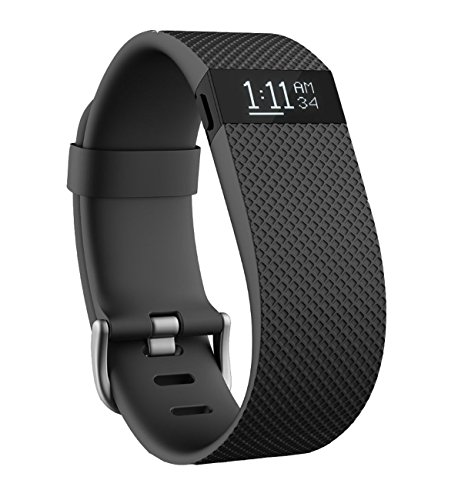
Fitbit Charge 2 review. Compare 171 technical specifications and user reviews to see how it ranks among fitness trackers and if it is worth buying.
Overall score
What it is: An overall evaluation of the fitness tracker's quality, based on technical analyses and user reviews.
When it matters: When you need a quick reference to identify the best fitness trackers on the market.
Score components:
80.0%
Technical Score
20.0%
User score
Technical Score
What it is: An assessment of the fitness tracker's technical performance, covering eight key areas: health tracking, sports features, connectivity, display, battery, smart features, design, and app support.
When it matters: When you want to compare fitness trackers based on technical performance and available features.
Score components:
20.0%
Sports & Navigation
20.0%
Battery
18.0%
Health
18.0%
Display
8.0%
Smart Features
8.0%
App & Wellness
4.0%
Connectivity
4.0%
Design & Durability
User score
What it is: A rating that combines user reviews and the total number of reviews received by the fitness tracker.
When it matters: When you want to know how a fitness tracker performs in daily use and how reliable it remains over time according to user feedback.
Score components:
70.0%
User reviews
30.0%
Popularity
Score components:
28.0%
ATM rating
24.0%
Open-water swim mode
18.0%
Waterproof depth rating
15.0%
GPS
15.0%
Battery life
Score components:
30.0%
Battery life
25.0%
Weight
20.0%
ATM rating
15.0%
Screen size
10.0%
Price
Available: ranking among products currently available (including other versions of this product).
All: ranking among all products in the database.
#11 in Best Fitbit Fitness Trackers
#67 in Best Fitness Trackers
What it is: An assessment of the fitness tracker's technical performance, covering eight key areas: health tracking, sports features, connectivity, display, battery, smart features, design, and app support.
When it matters: When you want to compare fitness trackers based on technical performance and available features.
Score components:
20.0%
Sports & Navigation
20.0%
Battery
18.0%
Health
18.0%
Display
8.0%
Smart Features
8.0%
App & Wellness
4.0%
Connectivity
4.0%
Design & Durability
What it is: A rating that combines user reviews and the total number of reviews received by the fitness tracker.
When it matters: When you want to know how a fitness tracker performs in daily use and how reliable it remains over time according to user feedback.
Score components:
70.0%
User reviews
30.0%
Popularity
What it is: An indicator that combines the fitness tracker's overall rating with its cost.
When it matters: When you are looking for a fitness tracker with a good balance between quality and price.
Score components:
60.0%
Overall score
40.0%
Price
Importance: HIGH
Importance: MEDIUM
Importance: LOW
Importance: LOW
Importance: MEDIUM
Importance: LOW
Importance: LOW
Importance: LOW
Importance: LOW
Importance: LOW
Importance: LOW
Importance: LOW
Importance: LOW
Importance: LOW
Importance: LOW
Importance: HIGH
Importance: LOW
Importance: LOW
Importance: LOW
Importance: LOW
Importance: LOW
Importance: LOW
Importance: LOW
Importance: LOW
Importance: LOW
Importance: LOW
Importance: LOW
Importance: LOW
Importance: LOW
Importance: LOW
Importance: LOW
Importance: LOW
Importance: LOW
Importance: MEDIUM
Importance: MEDIUM
Importance: HIGH
Importance: MEDIUM
Importance: LOW
Importance: LOW
Importance: LOW
Importance: LOW
Importance: LOW
Importance: LOW
Importance: LOW
Importance: LOW
Importance: LOW
Importance: LOW
Importance: LOW
Importance: LOW
Importance: LOW
Importance: LOW
Importance: LOW
Importance: LOW
Importance: LOW
Importance: LOW
Importance: LOW
Importance: LOW
Importance: LOW
Importance: LOW
Importance: LOW
Importance: LOW
Importance: MEDIUM
Importance: LOW
Importance: LOW
Importance: LOW
Importance: LOW
Importance: LOW
Importance: LOW
Importance: LOW
Importance: LOW
Importance: LOW
Importance: LOW
Importance: LOW
Importance: LOW
Importance: LOW
Importance: LOW
Importance: LOW
Importance: LOW
Importance: LOW
Importance: LOW
Importance: LOW
Importance: LOW
Importance: LOW
Importance: LOW
Importance: LOW
Importance: LOW
Importance: LOW
Importance: LOW
Importance: LOW
Importance: LOW
Importance: LOW
Importance: LOW
Importance: LOW
Importance: LOW
Importance: LOW
Importance: LOW
Importance: LOW
Importance: LOW
Importance: LOW
Importance: LOW
Importance: LOW
Importance: LOW
Importance: LOW
Importance: LOW
Importance: LOW
Importance: LOW
Importance: LOW
Importance: LOW
Importance: LOW
Importance: LOW
Importance: LOW
Importance: LOW
Good value: >=5.0
Importance: LOW
Good value: >=10 m
Importance: LOW
Importance: LOW
Importance: LOW
Importance: LOW
Importance: LOW
Importance: LOW
Importance: LOW
Importance: LOW
Importance: HIGH
Good value: >5 days
Importance: LOW
Good value: >=8 hours
Importance: LOW
Importance: LOW
Importance: MEDIUM
Good value: >=100 mAh
Importance: LOW
Importance: LOW
Importance: LOW
Importance: MEDIUM
Importance: LOW
Importance: LOW
Importance: LOW
Importance: LOW
Importance: LOW
Importance: MEDIUM
Importance: MEDIUM
Importance: MEDIUM
Importance: LOW
Good value: >=280 ppi
Importance: LOW
Importance: LOW
Importance: LOW
Importance: HIGH
Good value: >=450 nits
Importance: LOW
Importance: LOW
Importance: LOW
Importance: LOW
Importance: LOW
Importance: LOW
Importance: LOW
Importance: LOW
Importance: LOW
Importance: LOW
Importance: LOW
Importance: LOW
Importance: LOW
Importance: LOW
Importance: LOW
Good value: <10 mm
Importance: LOW
Importance: LOW
Good value: <25 g
Importance: LOW
Importance: LOW
Importance: LOW
Good value: >=5 ATM
Importance: LOW
Good value: >=50 m
Importance: LOW
Importance: LOW
Importance: LOW
Importance: LOW
Importance: LOW
Importance: LOW
Importance: LOW
Importance: LOW
Importance: MEDIUM
Importance: MEDIUM
Importance: LOW
Importance: LOW
Importance: LOW
Importance: LOW
Importance: LOW
Importance: HIGH
Good value: >5 days
Importance: MEDIUM
Importance: MEDIUM
Importance: MEDIUM
Good value: >=100 mAh
Importance: LOW
Good value: <25 g
Importance: LOW
Good value: <10 mm
Importance: LOW
Good value: >=10 m
(Reviews last updated: June 2026)
The Fitbit Charge 2 In-Depth Review by Recombu highlights several pros, emphasizing its lightweight, reassuring design, customisable clock faces, and easily interchangeable straps available in multiple colours and leather options. Key pros include an upgraded, larger display that makes viewing vitals easy, an integrated heart rate sensor, and automated tracking for sleep and physical activities. Useful additions like notification alerts, an effective vibrating silent alarm, a customisable menu structure, and Guided Breathing Sessions further elevate usability, while the feature-packed mobile app smoothly coordinates data over a solid 3- to 5-day battery life. However, the reviewer points out notable cons regarding general device performance and daily interaction. A significant drawback is the touch-sensitive control system, which is described as unreliable, often failing to register taps and causing user frustration. Furthermore, accuracy issues persist; the tracker lacks built-in GPS—requiring a paired mobile phone for mapping—and its automatic activity detection occasionally misidentifies simple chores (like making fried eggs or pushing a pram) as workouts. Finally, the hardware is only water-resistant rather than fully waterproof, meaning users cannot swim with it, and some may...
Fitbit Charge 2 In-Depth Review Summary The Fitbit Charge 2 is a well-rounded activity tracker that builds upon its predecessor with expanded features, featuring an updated design with swappable bands and an improved charging clip. It delivers reliable 24/7 heart rate monitoring and boasts an impressive battery life that easily clears seven to eight days on a single charge. The addition of unique workout modes—such as running, cycling, and weight training—allows users to categorize their exercises accurately. Furthermore, its step tracking trends consistently over time, and the accompanying smartphone app remains a market leader for its clean, user-friendly interface and highly engaging social features. However, the device falls short in several key performance areas, most notably its lack of proper waterproofing, which limits its use to splash and rain resistance only. Its heart rate accuracy during active workouts is highly mixed; it struggles significantly during cycling and fails to export any heart rate data for workouts recorded without GPS. The "Connected GPS" feature, which requires a constant tether to a smartphone, is prone to dropping connections mid-workout and occasionally drops...
The Fitbit Charge 2 is a highly capable, budget-friendly fitness tracker that balances continuous daily monitoring with versatile workout capabilities. Its standout features include a large, readable home screen displaying the time and step count, helpful hourly reminders to move, and unique health-focused additions like guided breathing exercises. It tracks standard metrics like steps, distance, cycling, and cardio workouts effectively. When paired with a smartphone, the tracker can utilise the phone's GPS to greatly enhance the accuracy of distance and speed tracking. Additionally, users benefit from a highly intuitive companion app that supports social competitions, virtual "Adventures," and manual logs for food and water intake. Despite its high value, the device comes with several notable drawbacks. The tracker is entirely lacking in water resistance, meaning it is only splash-proof and cannot be used for swimming. It also features a shorter battery life of up to 5 days and relies on a slower, proprietary charger. During physical testing, the optical heart rate monitor was found to be only average, showing a tendency to lag and underestimate active heart rates by an...
The Wareable review rates the Fitbit Charge 2 as a top all-around fitness tracker, highlighting its improved, larger OLED display and, for the first time, interchangeable bands. Key features praised include actionable insights like VO2 Max (Cardio Fitness Level), guided breathing exercises, and enhanced sleep tracking, making it a well-rounded device for daily fitness monitoring. However, the review notes significant limitations for serious athletes, primarily the lack of integrated GPS and the absence of swim-proof water resistance, with the tracker only being splash-resistant. While it remains an excellent choice for casual users due to its design and features, those needing in-depth, on-device metrics may require a more specialized, higher-end device. YouTube
The Fitbit Charge 2 review focuses on daily usability, highlighting a clear screen, a four-day battery life, and a sub-two-hour recharge time. The reviewer praises the well-designed Fitbit app, which integrates smoothly with Strava to seamlessly sync cycling and heart rate data. Additional lifestyle features—like sleep stage tracking, SmartTrack automatic workout detection, and logs for water and food intake—are noted as highly functional and surprisingly accurate despite the tediousness of custom manual data entry. However, the device falls short in performance training due to its lack of built-in GPS, forcing it to rely on a paired smartphone's GPS instead. The reviewer also critiques the simplistic heart rate zones—which offer only three categories ("fat burn", "cardio", and "peak") instead of the typical six—and notes that utilizing a custom heart rate zone heavily limits the live display readings. Additional hardware drawbacks include rudimentary smartwatch functionality limited to basic alerts, the absence of proper water resistance for swimming, an inconsistent tap-to-navigate interface, and a strap material that can trigger skin rashes if not properly dried.
The Fitbit Charge 2 is a sleek, relatively affordable ($150) activity tracker that monitors 24-7 health metrics like heart rate, sleep, approximate calories burned, steps taken, and resting heart rate. It provides a full-day view of fitness, offering useful tools like "get-up-and-move" reminders, phone alerts, a cardio fitness score, and a "relax" guided breathing feature. Tested over several weeks, the device excelled at tracking overall fitness honesty and showing progress, such as a drop in resting heart rate during training and revealing how lifestyle habits impact daily exertion levels. However, the tracker suffers from major inaccuracies during runs because it lacks an internal GPS; a 5-mile run was inaccurately measured as just 2.7 miles without a phone connection. Connecting to a phone fixes the accuracy, but managing the Fitbit alongside other apps like Strava becomes cumbersome. Additionally, the movement reminders occasionally vibrated while the reviewer was falling asleep, though this can be adjusted in the settings. Ultimately, despite these flaws, the reviewer highly recommends the Charge 2 as an overall health tracker when paired with a separate GPS device for...
The Fitbit Charge 2, released in late 2016 as the successor to the Charge HR, is an accessible and easy-to-use fitness tracker that balances health tracking with affordability. It features a significantly larger OLED touchscreen display than its predecessor, providing crisp and readable data across menus for tracking steps, time, heart rate, and calories. Structurally, the device boasts a highly comfortable elastomer strap that sits securely on the wrist all day, along with a customisable design that allows users to easily swap bands for alternative plastic or premium Luxe leather options. However, the tracker falls short of complete versatility as it lacks built-in GPS and is only water-resistant rather than fully waterproof, meaning it cannot be worn in the shower or during swim sessions. A closer look at its operational performance reveals distinct benefits and drawbacks for the everyday user. On the positive side, its major pros include an upgraded multi-sport tracking capability, the larger screen real estate, and a robustly built, comfortable strap that prevents the skin irritation issues found in older Fitbit models. On the negative side, its...
Fitbit Charge 2 Review Summary The Fitbit Charge 2 is a highly capable fitness tracker that stands out as an excellent, budget-friendly option for the average user, primarily due to its exceptional companion app and robust ecosystem. It improves upon its predecessor by introducing a larger, multi-line vertical OLED display that simultaneously shows the time, steps, and real-time heart rate data. Key advantages include a reliable five-day battery life, swappable bands, automatic sleep and stair tracking, and useful software additions like the "Relax" guided breathing app and a gamified "Cardio Fitness" score. However, the wrist-based heart rate monitor can fluctuate or cut out during intense workouts, meaning it is not accurate enough for critical medical reliance. Despite its strong performance, the Charge 2 suffers from a few notable limitations, most significantly its total lack of swim-proof water resistance, making it unsuitable for showers or pools. Dedicated long-distance runners may also be disappointed by the lack of onboard GPS, which forces the device to rely on a paired smartphone to map routes. Furthermore, the screen notifications for text messages and calendar...
Review Overview The Fitbit Charge 2 is a feature-packed, mid-range fitness tracker that delivers a highly accurate and compelling tracking experience for $149.99. Its standout physical attribute is a massive black-and-white OLED display that is four times larger than its predecessor, allowing users to comfortably check stats like heart rate and step counts at a single glance. Performance-wise, the device excels with an impressive five-to-six-day battery life, highly accurate sleep and continuous heart rate tracking, and helpful vibrational reminders that prompt inactive users to move. Additionally, the tracker features a simple clasp mechanism for swapping colored bands and pairs with a beautifully designed Windows 10 Mobile companion app. Despite its strong performance, the Charge 2 has several notable drawbacks. On the hardware side, the tracker is not waterproof, the screen is highly prone to unsightly fingerprint smudges, and the heart rate sensor adds a bit of physical bulk. There is also a slight tracking delay when relying on the automatic exercise detection feature. Software and navigation present further friction: the on-device menu system can be cumbersome because users cannot go...
The Fitbit Charge 2 serves as a highly functional, well-rounded fitness tracker that bridges the gap between casual step-counting bands and premium smartwatches. Retailing at $149.95, it brings several critical upgrades over its predecessor, the Charge HR, notably a significantly larger screen that supports tap controls and displays calls, text messages, and calendar alerts. The design is comfortable for all-day wear and introduces structural flexibility with interchangeable classic and premium leather straps. Key strengths include a long-lasting battery life of four to five days—allowing for overnight sleep tracking—and an easy-to-use mobile app layout. Furthermore, it introduces unique health metrics such as guided "Relax" breathing exercises and a "Cardio Fitness Level" score based on an estimated VO2 Max rating. However, the device has distinct limitations that may deter serious athletes like runners and swimmers. It lacks a dedicated internal GPS chip, requiring a connected smartphone nearby to map physical routes, and it is not water-resistant enough for pool workouts. Users cannot control music playback from the wrist, and text notifications suffer from distracting scroll delays during exercise. There are also minor...
The Fitbit Charge 2 is positioned as a highly functional, motivation-focused fitness tracker featuring continuous PurePulse heart rate monitoring, automatic activity tracking, and interchangeable bands for customization. It excels at monitoring steps, floors, and sleep, providing data via an intuitive app, along with guided breathing sessions. Conversely, the device acts more like a tracker than a smartwatch, with limitations including rudimentary, laggy notifications, lack of standalone GPS, and a bulky design. Furthermore, the Charge 2 is not fully waterproof, making it unsuitable for swimming or showering.
The Fitbit Charge 2 earned a PCMag Editors' Choice award, lauded for its large, modular display that allows for swappable bands and an exceptional balance of performance and comfort. Key features highlighted include continuous heart rate monitoring, automatic activity tracking for steps and sleep, and a guided "Relax" breathing mode. However, the device lacks built-in GPS, requiring a connected phone for route mapping, and is not waterproof, restricting its use in wet conditions. Additionally, the display can be faint in direct sunlight, and the tracker is prone to smudges.
Comprehensive Review Summary The device presents several clear advantages and disadvantages: Pros: Highly accurate step counting, reliable optical pulse tracking, and an excellent, easy-to-use display. Pros: Automatic sleep and sport recognition, alongside a holistic companion health app. Cons: Significant lack of third-party data synchronization with Apple Health Kit or Google Fit. Cons: The broad, stiff elastomer band can feel thick and slightly uncomfortable on the wrist. Cons: The internal battery is not replaceable, and the tracker cannot be worn while swimming, showering, or bathing. Cons: The automatic activity tracking requires at least ten minutes of movement to trigger, and notifications are strictly limited to calls and text messages, omitting WhatsApp or emails.
The Fitbit Charge 2 is reviewed as a successful upgrade, featuring a larger OLED display, interchangeable bands, and advanced features like VO2 Max estimation, PurePulse heart rate monitoring, and a 5-day battery life. Its pros include comprehensive activity tracking, guided breathing, and reliable smartphone integration. Key limitations, or cons, include the lack of integrated GPS, requiring a connected phone for mapping, and only splash-proof water resistance, making it unsuitable for swimming. Additionally, users noted the display requires firm tapping, and the charging cable requires precise alignment. YouTube
Computer Bild However, the review points out a major compatibility drawback, specifically that the wristband does not synchronize gathered data with third-party ecosystems like Apple Health Kit or Google Fit. This lack of integration forces users to stay strictly within the proprietary Fitbit app environment to analyze their fitness metrics. Ultimately, the review positions the device as a capable health tracker for day-to-day use, provided you do not rely on external fitness data platforms. Computer Bild
Overview The Fitbit Charge 2 succeeds the brand's best-selling fitness tracker by introducing a modern, comfortable design with easily swappable wristbands, moving away from previous "plastic-bomber" aesthetics. Weighing just 35 grams, the device is ideal for all-day wear and sleep tracking, though its screen and casing are quite prone to scratching. Navigated via a single mechanical button and basic tap gestures, the tracker features a generous step counter, floor counting, and an innovative "Relax" feature for guided breathing exercises. It delivers a solid five-day battery life, but utilizes a frustratingly unique, proprietary charging cable. Pros and Cons Pros Integrated heart-rate sensor that tracks pulse data every second during workouts. Altimeter functionality to motivate users by accurately counting climbed floors. Highly customizable, quick-swap bands available in elastomer and leather. Excellent software ecosystem supporting detailed historical data, IFTTT integration, and motivational virtual treks. Cons No integrated GPS module, requiring a connected smartphone to map routes. Lacks swim-proofing as it is only splash, rain, and sweat resistant. Inaccurate tracking in high-movement sports like yoga, push-ups, or MMA where the optical wrist sensor regularly...
The Fitbit Charge 2 features a significantly larger display than its predecessor, supporting intuitive touch gestures and side-button navigation for easy tracking across various sports like running, yoga, and weight training. A standout addition is the personalized, guided breathing feature designed for stress relief, which dynamically adjusts breathing intervals based on the user's real-time heart rate data. Key advantages highlighted in the review include its highly reliable tracking accuracy of 98.2%, automatic activity detection via SmartTrack, morning vibration alarms through sleep tracking, and continuous pulse monitoring via an integrated optical heart rate sensor. However, the fitness tracker falls short due to a few notable feature omissions and design limitations. It lacks an integrated GPS module, requiring a connected smartphone to map routes, and entirely omits music player controls. Additionally, the device is completely unsuitable for swimming. The review also critiques its relatively brief six-day battery life and the requirement of a proprietary charging dock rather than a standard Micro-USB connection.
The Fitbit Charge 2 review highlights significant structural and software improvements over its predecessor, focusing on a more interactive user experience. Among its core pros, the tracker features a much larger display that supports convenient touch-gesture navigation, making it easier to view real-time data. In terms of performance, the integrated optical sensor provides continuous and reliable heart rate monitoring, while the multisport-programs and automatic activity tracking work quickly and accurately during exercises. Additionally, CHIP praises the inclusion of guided deep-breathing exercises aimed at active stress reduction, alongside a strong 5-day battery life and a well-organized companion app. YouTube ·COMPUTER BILD However, the device has notable cons regarding connectivity, design, and missing features. A major downside is that it lacks integrated GPS, forcing users to carry a smartphone to map running routes. The tracker is also not waterproof—making it entirely unsuitable for swimming, bathing, or showering—and it utilizes a frustrating proprietary charging cable instead of a universal standard. Finally, data ecosystem restrictions are quite prominent; the device cannot sync with third-party platforms like Apple Health or Google Fit, and its notifications...
The provided review from Netzpiloten details a hands-on test of the Fitbit Charge 2, focusing heavily on its design and daily utility compared to the Huawei Band 2 Pro. A major strength of the tracker is its comfortable, non-bulky design measuring 21.45 mm wide, featuring interchangeable wristbands and a splash-proof build. The reviewer praises its seamless 5-day battery life and user-friendly OLED display, which activates automatically when lifting the arm. Performance-wise, the tracker excels in comprehensive fitness monitoring by utilizing an altimeter to count floors climbed, motivating users through hourly step goals, tracking continuous heart rate, and calculating a precise cardio fitness score. Furthermore, its robust companion app delivers excellent gamification options via virtual solo or social race challenges, offers home workout guides, and simplifies nutritional logging by instantly identifying food calories from a vast built-in database. However, the reviewer highlights notable drawbacks, starting with an initial setup and firmware update process that was highly frustrating and repeatedly crashed. A severe downside stems from Bluetooth connectivity issues if the user's specific smartphone is not officially supported by Fitbit, which resulted...
However, the device has notable drawbacks, particularly regarding connectivity and specific training features. A major operational limitation highlighted by user feedback reveals severe smartphone compatibility issues after software updates, where upgrading to newer operating systems (such as Android 8.0) caused the tracker to permanently stop synchronising calls and messages. Additionally, the tracker lacks a built-in GPS module, forcing users to carry a paired smartphone to map out running or cycling routes. Because of this dependency, the reviewer notes that the device is not an ideal standalone tool for advanced marathon runners who prefer to train phone-free, functioning instead as a wellness monitor rather than a dedicated sports watch.
The Fnac review highlights the Fitbit Charge 2 as a highly successful, lightweight, and comfortable fitness tracker that heavily improves upon the design of the Charge HR with a much larger screen. The initial configuration takes between 1 and 2 hours for a full charge, after which it seamlessly pairs with smartphones via Bluetooth using the dedicated iOS or Android app. Users can effortlessly view daily metrics—such as real-time heart rate, steps, and burned calories—by tapping the display or pressing the side button. Additionally, the tracker supports multi-sport tracking for running, gym work, cycling, and weight training, alongside interactive deep-breathing relaxation sessions and real-time call and SMS notifications. Despite these strong features, the review notes several distinct drawbacks. Chief among the cons is the lack of integrated GPS, which forces users to carry their smartphones during outdoor workouts if they wish to map and fully analyze their physical routes. The reviewer also points out that the device is not waterproof and cannot be turned off, and it suffers from a lack of third-party application notifications. On the pros side, the...
However, the review points out several notable limitations regarding the tracker's depth and technical capabilities. The Fitbit Charge 2 lacks a built-in GPS sensor, meaning it cannot natively track routes or precise distances without relying on a connected smartphone. It also falls short for water sports, as it cannot track swimming and is not fully waterproof for the pool like the smaller Flex 2. Furthermore, while the tracker has successfully "muscled up" its options for casual fitness enthusiasts, the reviewer notes that it remains a relatively basic activity tracker that cannot rival complex, dedicated GPS sports watches (like the Garmin Forerunner series) or more advanced smartwatches.
The 01net.com review highlights the Fitbit Charge 2 as an excellent, user-friendly activity tracker tailored for casual weekend athletes, balancing a sleek design with rich health tracking features. Retailing at 160 euros, the device brings notable upgrades over its predecessor, most significantly a much larger monochrome OLED screen that ensures excellent visibility while running outdoors. The reviewer praises the tracker's intuitive interface and navigation via a single physical side button, as well as its well-designed, block-based mobile companion app. New features include a personalized "Relax" breathing mode that helps lower the user's heart rate based on initial biometrics, alongside an estimated VO2 Max calculation to track long-term cardiovascular progress. Performance-wise, the continuous PurePulse heart rate monitor proves reliable for steady endurance training, and the tracker delivers an impressive five-day battery life, fulfilling the manufacturer's promise despite its larger display size. Despite these strengths, the review notes several design flaws and hardware limitations that hold the device back. On the ergonomic side, the strap's watch-style buckle features a small security protrusion that requires frustrating force to secure. Additionally, Fitbit introduces yet...
The Fitbit Charge 2 is a feature-rich fitness tracker that offers an accessible heart-rate monitoring experience tailored for amateur and regular athletes. It features an upgraded, larger rectangular OLED screen that is clear and easy to read. The device provides an excellent user experience through its clear, beginner-friendly application interface. It tracks standard metrics like steps, continuous heart rate, sleep quality, and calories burned. Key advantages include its strong battery life of up to 5 days, a wide selection of optional styling bands, and helpful integrated relaxation exercises. However, the tracker has several limitations that prevent it from achieving a perfect rating. It lacks waterproofing, meaning it cannot be worn while swimming. The single physical button is located on the left side, which presents an awkward layout for right-handed users who wear the device on their left wrist. Furthermore, social media sharing capabilities within the app are quite limited, and the data depth may prove too basic for highly advanced or elite athletes.
The Fitbit Charge 2 is a feature-rich fitness tracker tailored for athletes and fitness enthusiasts, offering dynamic tools like a heart rate sensor, multi-sport tracking, guided breathing exercises, and smartphone-connected GPS. It features an OLED screen that displays the time, step counts, and active workout data (such as duration and calories burned) in real time. The device comes in sizes Small and Large with interchangeable colored bands, utilizes an easy-to-use proprietary clip-on charger, and synchronizes quickly with its mobile application. Priced at €129.98, it offers a strong quality-to-price ratio for users who want to monitor their daily activity, sleep cycles, and physical progression. Pros and Cons Pros: Highly motivating dedicated multi-sport tracking modes, useful guided breathing sessions, a clear OLED clock and data display, fast Bluetooth syncing, and an improved, user-friendly charging clip. Cons: Complete lack of water resistance—meaning it must be removed for swimming, showering, or washing dishes. The design is notably bulky and massive on the wrist, making it uncomfortable for some users to wear during sleep. Additionally, the software suffers from bugs that crash the app during...
In this review from Jujube en cuisine, the blogger Julie provides a highly positive evaluation of the Fitbit Charge 2 after two months of personal use. Aimed at an "apprentice athlete," her choice was driven by a need for a tracker that offered key statistics, told the time, and featured a feminine, elegant design suitable for everyday, non-sportswear outfits. The core pros highlighted in the review include the device's extensive data tracking—such as automatic multi-sport recognition, continuous heart rate monitoring, sleep analysis, and guided breathing exercises. She heavily praises the motivational, friendly "reminders to move" and the highly intuitive, detail-rich Fitbit companion app. Additionally, the battery life is a major positive, lasting about one week on a single charge since she prefers syncing her data twice a day rather than keeping a continuous 24/7 Bluetooth connection. Conversely, the review notes a couple of distinct drawbacks to the device. The primary engineering con is that the Fitbit Charge 2 is not waterproof, making it unsafe for showers or swimming, which forces the user to constantly remove it. Furthermore, it lacks built-in...
The Fitbit Charge 2 is a functional fitness tracker that scores a 7/10, aimed primarily at casual fitness enthusiasts who want reliable health tracking without needing a highly advanced device. On the positive side, it stands out for its continuous heart rate tracking and highly accurate sleep analysis, supported by a well-designed, user-friendly mobile application. The tracker also features a large, crisp OLED screen, an altimeter to count stairs, guided breathing exercises, and a robust five-day battery life that fully recharges in just two hours. Furthermore, it covers a comprehensive range of activity profiles—such as jogging, weightlifting, and elliptical training—and includes handy wrist notifications for text messages and phone calls. However, the device falls significantly short in aesthetics and physical comfort. Critics label it as bulky and anti-fashion, noting that the thick, textured silicone band easily catches dust and must be tightly clamped against the skin to get accurate heart rate readings, leaving visible marks on the arm. Performance and software limitations also drag down the experience; it lacks integrated GPS, meaning users must carry their smartphone to map workouts....
The Fitbit Charge 2 is a well-built activity tracker that merges the brand's standard tracking features with an integrated optical heart rate sensor for continuous, 24/7 pulse monitoring. Key design upgrades include a significantly larger OLED display capable of showing multiple lines of text and a fully modular design that allows users to swap straps effortlessly in seconds. On the performance side, the device excels in everyday motivation, sleep tracking, and automated exercise recognition via SmartTrack. It also features a connected GPS mode that borrows your smartphone’s location data to provide highly accurate pace, distance, and route maps for outdoor running, walking, and cycling. However, the reviewer highlights severe limitations regarding connectivity and environmental durability. The device lacks official water resistance, meaning users cannot safely swim or shower with it, falling behind much cheaper competitors in the wearable market. Furthermore, its smart notifications are incredibly restrictive; while Android users can view WhatsApp messages, iPhone users are strictly limited to basic SMS, calls, and calendar alerts, completely omitting major apps like Twitter, Facebook, or email. The optical sensor, while highly reliable...
The Fitbit Charge 2 is a stylish daily activity tracker featuring a bright, bezel-less OLED screen, interchangeable elastomer bands, and a secure buckle closure. It provides continuous 24-hour heart rate monitoring via its PurePulse optical sensor, tracks standard metrics like steps, floors climbed, and sleep quality, and introduces an automatic workout detection tool called "SmartTrack". On the performance side, the review highlights its "Connected GPS" functionality, which pairs with a smartphone to map outdoor routes and track exact pacing, alongside a dedicated interval training profile perfect for HIIT workouts. Data logging is tied seamlessly to a highly intuitive mobile application that stands out for its robust goal-setting and food-tracking capabilities. However, the device has notable drawbacks, particularly regarding its basic smart features and water resistance. The review emphasizes that the device is only splash-proof and cannot be worn while swimming. Mobile notifications are extremely limited; users only receive alerts for calls, texts, and calendar events, with no support for third-party apps like WhatsApp on iOS or any backlog menu to view missed alerts. Furthermore, its display lacks an "always-on" mode...
The Fitbit Charge 2 is a well-rounded fitness tracker designed for moderate exercise, health monitoring, and sleep tracking. It features an elegant design with a large OLED screen, a high-quality metal finish, and easily interchangeable classic buckle straps. The device excels in battery life, reliably lasting 6 to 7 days on a single charge, and fully powers up in just 45 minutes. Its health-tracking capabilities are highly comprehensive, standing out with precise automatic sleep detection, guided breathing sessions, and a "Cardio Fitness Level" feature that estimates VO2 max based on resting heart rate, age, and weight. Furthermore, while it lacks built-in GPS, it can seamlessly pair with a smartphone's GPS to map outdoor routes and track exact distances. However, the device has several notable drawbacks, most significantly its lack of true water resistance. It can handle sweat and splashes but cannot be worn while showering or swimming. The user interface is highly basic and can be confusing; navigating menus relies strictly on forward-only screen taps and long presses of a single side button, leading to trial-and-error usage. Performance flaws include...
Fitbit Charge 2 Review Summary The Fitbit Charge 2 is a highly capable and comfortable fitness tracker that offers significant improvements over its predecessors, particularly in design and usability. It features a robust metal body paired with a rigid, less rubberised plastic band that resists dirt and eliminates fur snagging. For the first time, users can easily swap the straps out for different colours or premium materials like leather. A major highlight is its large, bright monochrome display, which allows users to read physical activity and workout data directly from the wrist without opening the companion app. The tracking hardware is highly precise, providing accurate metrics for steps, calories, floors climbed, and heart rate monitoring via Bluetooth LE sync. The comprehensive software features detailed tracking graphics, inactivity alerts, custom interval training, guided breathing exercises, and a silent vibrating alarm. Despite these positive updates, the device carries a few notable limitations. Its primary drawbacks are the complete lack of waterproofing—making it splash-resistant but unsafe for swimming—and the absence of a built-in GPS module. Furthermore, its smart notification system is highly restricted,...
The Fitbit Charge 2 is highlighted as an excellent fitness tracker that succeeds largely due to its superior software integration and premium hardware design. It features a sleek aluminum body, an easy-to-read monochrome OLED display that performs well outdoors, and high-quality interchangeable silicone or leather straps. The device bridges the gap to smartwatches by displaying smartphone notifications, calendar events, and incoming caller IDs. The seamless navigation via physical button taps and screen responses significantly enhances user experience, while the comprehensive companion app offers unique, engaging features like 3D virtual New York City marathons, dietary logging, and guided breathing exercises. Despite its strengths, the reviewer notes several downsides to the device. A primary drawback is its lack of waterproofing; it is merely water and sweat-resistant, making it unsuitable for swimming or baths. Furthermore, the step counter has a noticeable tendency to overestimate daily steps. The physical build is also somewhat bulky and thick, which might feel uncomfortable on smaller wrists. Finally, it lacks integrated GPS—relying instead on your smartphone—and its above-average price makes it less ideal for hardcore athletes who require...
The Fitbit Charge 2 is a solid and versatile fitness tracker that balances a curated aesthetic with comprehensive tracking features. It excels with its SmartTrack technology, which automatically identifies and logs exercises like running, walking, and cycling after 15 minutes without requiring manual setup. The tracker features a high-quality OLED display, continuous heart rate monitoring, and a highly intuitive interface combining a physical button, touch-tap, and gesture activations. Its accompanying app is highly praised for being extremely comprehensive, offering tailored workout plans, dietary logging, community fitness challenges, and smartwatch-like notifications for calls and popular messaging apps like WhatsApp. Additionally, its integrated guided breathing sessions are highly effective for daily stress relief. However, the device has notable drawbacks, most significantly its lack of an onboard GPS and the fact that it is not waterproof—while it handles splashes or showers safely, it cannot be submerged for swimming or diving. The tracker is also quite bulky, making it potentially uncomfortable or oversized for users with slimmer wrists. Lastly, the review notes a slight tendency for the device to overestimate total daily steps, and...
This article details a study conducted by the TSW Experience Lab to evaluate the heart rate accuracy of the Fitbit Charge 2 by comparing its data against a medical-grade ECG during a 10-minute stationary cycling test with 15 participants. The primary advantage highlighted is the device's functional design, including its intuitive user interface, vibrant colour options, relatively low price point, and ease of use, which makes it highly appealing for general users looking to track their basic fitness metrics. Additionally, the device utilizes photoplethysmography technology to easily capture blood flow data through the wrist, removing the need for a cumbersome chest strap. However, the study reveals significant cons regarding its technical accuracy, showing that the Charge 2 considerably underestimates real heart rates. It exhibits an average error of 5 beats per minute (bpm) at a resting rate of 100 bpm, which worsens to a 15 bpm discrepancy during higher intensities around 140 bpm. Furthermore, the device failed to detect any heart rate at all in 10% of the recorded cases—particularly during peak heart rate changes—suggesting a poorly optimized tracking algorithm....
The Fitbit Charge 2 balances notable design upgrades with a few functional limitations, receiving mixed opinions from the reviewers. On the positive side, Fitbit addressed major physical flaws from the original model by expanding the display to show more complete, legible text and introducing a highly requested interchangeable strap system. This customizable design significantly reduces the strap tearing and warping issues that plagued its predecessor. Additionally, the fitness tracker boasts improved battery life and adds guided relaxation exercises directly to the device. While it lacks a built-in GPS chip, it successfully leverages "Connected GPS" through a paired smartphone to track routes, speed, and pacing accurately. However, the tracker suffers from several performance and design drawbacks. A major limitation highlighted by users is its lack of waterproofing, which means it cannot be worn while swimming or accidentally submerged in water. Reviewers and users also noted frustrating software and hardware inconsistencies, such as a glitchy screen-wake gesture that frequently fails to turn the display back on, basic notification support, and a heart rate monitor that occasionally loses tracking or provides spotty data...
The Fitbit Charge 2 marks a transition for the brand from purely fitness-focused wearables to a more casual, everyday style icon. Designed as the successor to the popular Charge HR, it features a noticeably larger, brighter monochrome OLED display and introduces easily interchangeable bands available in rubber, leather, and special editions. In terms of functionality, the tracker reliably monitors daily steps, calories, heart rate, and sleep quality automatically. It also leverages shared smartphone GPS for distance tracking and introduces unique software features like "Respiro" guided breathing sessions and "Adventures" virtual step challenges.
The Gazzetta Active review highlights the Fitbit Charge 2 as a highly versatile, user-friendly fitness tracker that successfully builds on its predecessors. On the positive side, it is praised for its lightweight feel, continuous heart rate monitoring, automatic multi-sport detection, and a larger monochrome OLED display. Additionally, it features stylish, easily interchangeable breathable sports bands and benefits from a highly intuitive, comprehensive mobile companion app that includes localized food logging databases (such as listing 98 varieties of bread) and guided breathing exercises. However, the reviewer notes several prominent drawbacks, specifically identifying it as an insufficient tracker for advanced runners. A chief criticism is the lack of built-in GPS, forcing users to connect to a smartphone for accurate route data. Furthermore, the display screen is less bright than competitors like the Apple Watch, making it difficult to read while running, and the screen response time can be lagging or require double-tapping. Lastly, while the unit is splash-resistant, it lacks full waterproofing, and using the device for active tracking will noticeably shorten its advertised 5-day battery life.
The reviewer bought the Fitbit Charge 2 to track progress after realizing their fitness level had declined, finding the device highly commendable for its excellent value for money. In terms of advantages, the tracker performs exceptionally well at monitoring daily steps and heart rate. Activating the "workout" mode increases heart rate tracking frequency, giving precise insights into daily calorie burn and overall fitness progression; for instance, the reviewer saw their resting heart rate drop from 61 to 54. Additional positive highlights include useful call notifications that prevent missed calls, and highly motivating step challenges shared with friends and family. However, the reviewer notes a few notable drawbacks. The Fitbit Charge 2 is not waterproof, meaning it cannot be worn while swimming or showering, though it can survive heavy sweat, running in the rain, or accidental brief water exposure. Additionally, the physical design of the device is quite thick, with a protruding laser component underneath that can press into the skin and leave an indentation, although the reviewer mitigates this by choosing not to sleep with it on. Ultimately, the review...
This review by fitness blogger Marit compares three older Fitbit models based on her personal experience: the compact Fitbit Alta HR, the mid-range Fitbit Charge 2, and the flagship Fitbit Ionic smartwatch. While all three devices reliably track daily steps, calories burned, sleep quality, and distance, they cater to very different activity levels. Across all models, Marit praises the excellent 5-to-7-day battery life and the highly motivating companion app, which allows users to challenge friends to weekly step competitions. However, she notes significant limitations in music integration; for instance, the Ionic requires manual, old-fashioned music file downloads because it lacks offline support for popular streaming platforms like Spotify. Breaking down the specific pros and cons, the Alta HR stands out for its slim, fashionable design that fits thin wrists perfectly, but it lacks workout modes, a floor-climbing altimeter, and water resistance. The Charge 2 bridges the gap by offering smartphone notifications, physical workout tracking, and floor counting, but it is not waterproof and relies entirely on a connected phone's GPS for real-time running data. The top-tier Ionic serves as a...
Fitbit Charge 2 Review Summary The Fitbit Charge 2 is a premium, all-round activity tracker priced at €159.95 that targets consumers looking for a dedicated fitness device rather than an expensive smartwatch. Acting as the successor to the popular Charge HR, it introduces a significantly larger, sharper OLED screen, a partially metal housing, and interchangeable plastic bands. It relies entirely on a smartphone connection for functionality, utilizing a new, secure clip-on charging cable that eliminates the older model's magnetic connector and loose Bluetooth dongles. Key software updates include a cardio fitness score based on VO2 Max estimates, "Adventures" for virtual hiking challenges, and guided breathing exercises. Pros & Cons Pros: Highly accurate 24/7 heart rate and sleep tracking, a sturdy watch-buckle strap, improved software that closely mirrors chest-strap accuracy during workouts, seamless integration with third-party apps like MyFitnessPal, and a reliable 5-day battery life. Cons: The device lacks built-in GPS (requiring a tethered smartphone to map routes), is only water-resistant rather than fully waterproof (making it unsuitable for swimming or showering), the display is difficult to read in direct sunlight,...
In her review, blogger Linda provides a highly positive evaluation of the Fitbit Charge 2, highlighting its continuous heart rate tracking, slim design, and excellent fit for small wrists. She praises the device's extensive feature set, including customized exercise shortcuts (such as interval workouts and yoga), automated 250-step hourly movement reminders, guided breathing exercises, and granular sleep insights that track REM, light, and deep sleep stages. Additionally, the user experience is enhanced by the highly visual Fitbit mobile app and a strong battery life that easily lasts an entire week despite multiple weekly workouts and daily synchronization. Despite her enthusiasm, Linda identifies two notable drawbacks with the fitness tracker. The most significant con is the lack of a built-in GPS; the tracker relies entirely on a connected smartphone's GPS to record routes and pacing for outdoor runs or walks. Her second complaint targets the physical design of the charging clamp, which she finds awkward and difficult to properly align with the tracker body. Ultimately, she concludes that the aesthetic appeal of the interchangeable bands and its reliable tracking make it...
The GadgetGear review highlights the Fitbit Charge 2 as a major leap forward from its first generation, earning a 4-star rating due to its rich features and precise tracking capabilities. The reviewer strongly praises its extremely accurate PurePulse heart rate sensor, which performs exceptionally well even when the band is not worn tightly. It also boasts very reliable motion sensors for step counting and multi-sport tracking, water resistance, highly detailed sleep analysis, and deep integration with external apps and IFTTT for home automation workflows. Furthermore, the newly enlarged OLED display is highly readable in bright sunlight, allowing users to spend less time in the mobile application. On the downside, the reviewer points out several design and compatibility flaws that hold the device back. The display toplayerd is made of scratch-prone plastic rather than strong glass, and the early press sample band sat heavily crooked due to a flawed clamp design, though this issue was less severe on final retail models. On the software side, the tracker suffered from a lack of support for Google Fit and Apple HealthKit. Additionally, the...
The Fitbit Charge 2 is a well-built fitness tracker best suited for casual athletes and beginners looking to transition into a more active lifestyle. Serving as the successor to the popular Charge HR, it features a larger 1.5-inch grayscale touchscreen and interchangeable wristbands, offering a highly comfortable all-day fit with a solid 5-day battery life. Key highlights include continuous heart rate monitoring, a Smart Track feature that automatically recognizes specific workouts like walking, running, and cycling, and the introduction of guided breathing exercises, interval training setups, and VO2 Max cardio fitness estimations. It also incorporates a comprehensive, redesigned companion app that lets users tackle engaging multi-day virtual "Adventures" to gamify step goals. However, the tracker has notable downsides that make it less appealing for serious athletes or those seeking advanced smartwatch functionality. A significant drawback is the lack of built-in GPS, meaning users must carry a smartphone to map out routes. Additionally, it is not water-resistant, rendering it unusable for showering or swimming. Navigating the device is not very intuitive, text notifications are barely readable due to the small screen...
Compare