Scored using Wi-Fi extenders Methodology v1.0
Wi-Fi extenders Methodology v1.0
Mathematical & Unbiased Scoring
Products in this category are evaluated mathematically under Frontumo Wi-Fi extenders Methodology v1.0 using verified laboratory benchmarks, technical specifications, and authentic consumer ratings with 0% commercial bias.
Explore Wi-Fi extenders Methodology v1.0

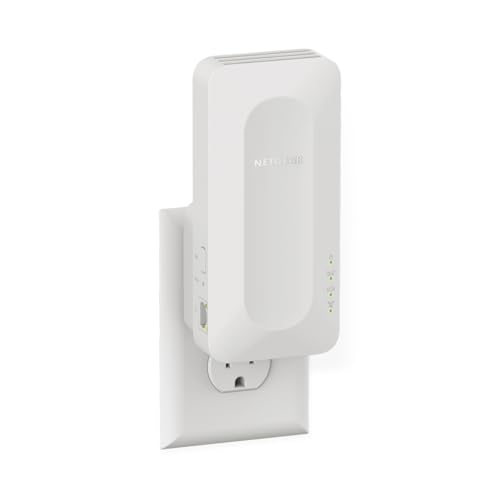
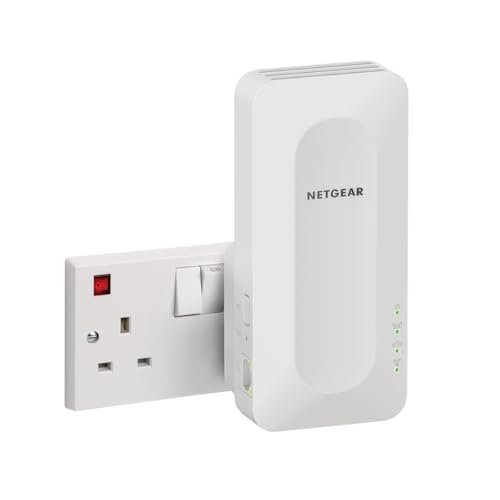
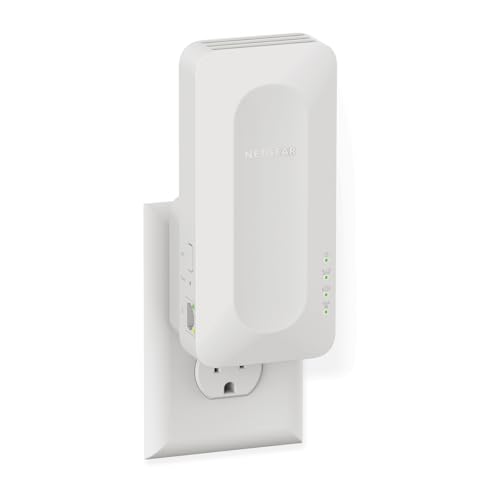
Netgear EAX11 Review | 63 Data compared

Avg. price:~£90Wi-Fi version:Wi-Fi 6 (802.11ax)Wi-Fi speed:1600 MbpsCoverage area:111 m²

Netgear EAX11 Review: Compare 63 technical specifications and user reviews to see how this product ranks in the Wi-Fi extenders category and whether it is worth buying.

7.6

Overall score

Score
7.6/ 10
✕
What it is
An overall evaluation of the Wi-Fi extender's quality, based on technical analyses and user reviews.
When it matters
When you need a quick reference to spot the best Wi‑Fi extenders overall.
Score distribution
â–¼
<55-66-77-88-99-10
Score components

80%

7.9

Technical score

20%

6.4

User score

â–²Better than 63% of wi-fi-extenders
7.9

Technical score

Technical score
7.9/ 10
✕
What it is
An assessment of technical performance for products in the Wi-Fi extenders category across these key areas: Wi-Fi Performance, Network & Security, Ports, Setup & Management, Hardware & Deployment.
When it matters
When you want to compare Wi‑Fi extenders based on speed, coverage, ports, and wireless features.
Score distribution
â–¼
<55-66-77-88-99-10
Score components

40%

6.6

Wi-Fi Performance

30%

9.0

Network & Security

12%

10

Setup & Management

10%

6.9

Hardware & Deployment

8%

7.8

Ports

â–²Better than 70% of wi-fi-extenders
6.4

User score

User score
6.4/ 10
✕
What it is
A rating that combines user reviews and the total number of reviews received by the Wi-Fi extender.
When it matters
When you want to know how a Wi‑Fi extender performs in daily use and how reliably it maintains a stable connection over time according to user feedback.
Score distribution
â–¼
<55-66-77-88-99-10
Score components

70%

7.6

User ratings

30%

3.6

Number of reviews

Based on 20 buyer reviews from online shops.
How we calculate this
User ratings – average star rating across all shop listings, weighted by how many reviews each has, on a 1–10 scale.
Number of reviews – how many buyer reviews the product has, on a logarithmic scale; the 8% most-reviewed models in the category get 10.
â–¼Worse than 99% of wi-fi-extenders
  • netgear-eax11
  • netgear-eax11
  • netgear-eax11
  • netgear-eax11
  • netgear-eax11
  • netgear-eax11
netgear-eax11
netgear-eax11
netgear-eax11
netgear-eax11
netgear-eax11
netgear-eax11

Best prices

    N/A~ £90

Best rankings

Available: ranking among products currently available (including other versions of this product).All: ranking among all products in the database.
Loading...
Loading category ranking...

Technical Specifications of Wi-Fi extender Netgear EAX11

Technical score
Technical score
7.9/ 10
✕
What it is
An assessment of technical performance for products in the Wi-Fi extenders category across these key areas: Wi-Fi Performance, Network & Security, Ports, Setup & Management, Hardware & Deployment.
When it matters
When you want to compare Wi‑Fi extenders based on speed, coverage, ports, and wireless features.
Score distribution
â–¼
<55-66-77-88-99-10
Score components:

40%

6.6

Wi-Fi Performance

30%

9.0

Network & Security

12%

10

Setup & Management

10%

6.9

Hardware & Deployment

8%

7.8

Ports

7.9
User score
User score
6.4/ 10
✕
What it is
A rating that combines user reviews and the total number of reviews received by the Wi-Fi extender.
When it matters
When you want to know how a Wi‑Fi extender performs in daily use and how reliably it maintains a stable connection over time according to user feedback.
Score distribution
â–¼
<55-66-77-88-99-10
Score components

70%

7.6

User ratings

30%

3.6

Number of reviews

Based on 20 buyer reviews from online shops.
How we calculate this
User ratings – average star rating across all shop listings, weighted by how many reviews each has, on a 1–10 scale.
Number of reviews – how many buyer reviews the product has, on a logarithmic scale; the 8% most-reviewed models in the category get 10.
6.4
Popularity
Popularity
3.6/ 10
✕
What it is
An indicator based on the number of reviews received by the Wi-Fi extender.
When it matters
When you prefer to buy a Wi‑Fi extender that has already been chosen and reviewed by many other users.
Score distribution
â–¼
<55-66-77-88-99-10
Popularity:
Netgear EAX11 has a popularity score of 3.6 points, which is lower than 69.6% of Wi-Fi extenders.
3.6
Value for money
Value for money
8.3/ 10
✕
What it is
An indicator that combines the Wi-Fi extender's overall rating with its cost.
When it matters
When you are looking for a Wi‑Fi extender with a good balance between performance and price.
Score distribution
â–¼
<55-66-77-88-99-10
Score components:

60%

7.6

Overall score

40%

10

Price

8.3
Wi-Fi version
Wi-Fi 6 (802.11ax)
Wi-Fi version
Wi-Fi 6 (802.11ax)
This wi-fi extender supports Wi-Fi 6 (802.11ax), more advanced than 54.9% of Wi-Fi extenders and equal to 36.3% of Wi-Fi extenders.
Wi-Fi bands
Dual-band
Wi-Fi bands
Dual-band
This wi-fi extender supports Dual-band, more versatile than 10.8% of Wi-Fi extenders and equal to 74.5% of Wi-Fi extenders.
6 GHz band support
no
6 GHz band support
no
This wi-fi extender does not support the 6 GHz band. 5.9% of Wi-Fi extenders support the 6 GHz band.
Wi-Fi speed
1,600 Mbps
Wi-Fi speed
1,600 Mbps
This wi-fi extender reaches 1,600 Mbps Wi-Fi speed, slower than 58.8% of Wi-Fi extenders and equal to 1% of Wi-Fi extenders.
Max speed 2.4 GHz
400 Mbps
Max speed 2.4 GHz
400 Mbps
This wi-fi extender reaches 400 Mbps on 2.4 GHz, slower than 52% of Wi-Fi extenders and equal to 8.8% of Wi-Fi extenders.
Show more
Ethernet backhaul
yes
Ethernet backhaul
yes
This wi-fi extender supports Ethernet backhaul. 49.5% of Wi-Fi extenders support Ethernet backhaul.
Mesh compatibility
Nighthawk Mesh
Mesh standard
proprietary mesh
Roaming feature
yes
Roaming feature
yes
This wi-fi extender supports roaming. 17.7% of Wi-Fi extenders support roaming.
Via Smart Roaming.
802.11k support
yes
802.11k support
yes
This wi-fi extender supports 802.11k. 24% of Wi-Fi extenders support 802.11k.
Show more
N. of LAN ports
1
N. of LAN ports
1
This wi-fi extender has 1 LAN port/s, more than 9.8% of Wi-Fi extenders and equal to 74.5% of Wi-Fi extenders.
Ethernet port speed
1 Gbps
Ethernet port speed
1 Gbps
This wi-fi extender offers 1 Gbps Ethernet speed, faster than 25.5% of Wi-Fi extenders and equal to 63.7% of Wi-Fi extenders.
N. of USB ports
0
N. of USB ports
0
This wi-fi extender has 0 USB port/s, fewer than 2.9% of Wi-Fi extenders and equal to 97.1% of Wi-Fi extenders.
PoE standard
N/A
Dedicated smartphone app
yes
Dedicated smartphone app
yes
This wi-fi extender comes with a dedicated smartphone app. 15.7% of Wi-Fi extenders come with a dedicated smartphone app.
Nighthawk app.
Web UI management
yes
Web UI management
yes
This wi-fi extender has a web management interface. 2% of Wi-Fi extenders have a web management interface.
Web UI at mywifiext.net.
Automatic firmware updates
yes
Automatic firmware updates
yes
This wi-fi extender has automatic firmware updates. 54.9% of Wi-Fi extenders have automatic firmware updates.
LED control
yes
LED control
yes
This wi-fi extender has LED control. 14.7% of Wi-Fi extenders have LED control.
Buttons present
wps, reset
Show more
Mounting type
wall-plug
Portable design
yes
Portable design
yes
This wi-fi extender has a portable design. 34.3% of Wi-Fi extenders have a portable design.
Height
149 mm
Height
149 mm
This wi-fi extender is 149 mm tall, taller than 61.8% of Wi-Fi extenders and equal to 5.9% of Wi-Fi extenders.
Width
68.4 mm
Width
68.4 mm
This wi-fi extender is 68.4 mm wide, narrower than 82.4% of Wi-Fi extenders and equal to 3.9% of Wi-Fi extenders.
Thickness
52.3 mm
Thickness
52.3 mm
This wi-fi extender is 52.3 mm thick, thicker than 63.7% of Wi-Fi extenders and equal to 3.9% of Wi-Fi extenders.
Show more

Netgear EAX11 vs the average Wi-Fi extender

246810TotalWi-Fi PerformanceNetwork & SecurityPortsSetup & ManagementHardware & Deployment
  • Modern Wi-Fi standard
    Wi-Fi version
    Wi-Fi 6 (802.11ax)
    This wi-fi extender supports a more advanced Wi-Fi version than the average Wi-Fi extender (Wi-Fi 6 (802.11ax) vs Wi-Fi 5 (802.11ac)). The average Wi-Fi extender supports Wi-Fi Wi-Fi 5 (802.11ac).
    Wi-Fi 6 (802.11ax) vs Wi-Fi 5 (802.11ac)
  • Supports OFDMA
    OFDMA support
    yes
    This wi-fi extender supports OFDMA, while the average Wi-Fi extender does not. 45.6% of Wi-Fi extenders support OFDMA.
    DL/UL OFDMA.
  • Guest network
    Guest network
    yes
    This wi-fi extender has a guest network, while the average Wi-Fi extender does not. 38.8% of Wi-Fi extenders have a guest network.
    Supports dedicated guest SSID broadcast
  • Automatic firmware updates
    Automatic firmware updates
    yes
    This wi-fi extender has automatic firmware updates, while the average Wi-Fi extender does not. 45.6% of Wi-Fi extenders have automatic firmware updates.
  • 8x more flash storage
    Flash storage
    128 MB
    This wi-fi extender has more flash storage than the average Wi-Fi extender (128 MB vs 16 MB). The average Wi-Fi extender has 16 MB of flash storage.
    128 MB vs 16 MB
  • Supports BSS coloring
    BSS coloring
    yes
    This wi-fi extender supports BSS coloring, while the average Wi-Fi extender does not. 45.6% of Wi-Fi extenders support BSS coloring.
  • 4.1 W lower power consumption
    Operating power consumption
    5.4 W
    This wi-fi extender uses less power than the average Wi-Fi extender (5.4 W vs 9.5 W). The average Wi-Fi extender uses 9.5 W of power.
    5.4 W vs 9.5 W
  • Advanced QAM level
    QAM level
    1024-QAM
    This wi-fi extender uses a more advanced QAM level than the average Wi-Fi extender (1024-QAM vs 256-QAM). The average Wi-Fi extender uses 256-QAM QAM.
    1,024-QAM vs 256-QAM
  • Modern Wi-Fi standard
    Wi-Fi version
    Wi-Fi 6 (802.11ax)
    This wi-fi extender supports a more advanced Wi-Fi version than the average Wi-Fi extender (Wi-Fi 6 (802.11ax) vs Wi-Fi 5 (802.11ac)). The average Wi-Fi extender supports Wi-Fi Wi-Fi 5 (802.11ac).
    Wi-Fi 6 (802.11ax) vs Wi-Fi 5 (802.11ac)
  • Supports OFDMA
    OFDMA support
    yes
    This wi-fi extender supports OFDMA, while the average Wi-Fi extender does not. 45.6% of Wi-Fi extenders support OFDMA.
    DL/UL OFDMA.
  • Supports BSS coloring
    BSS coloring
    yes
    This wi-fi extender supports BSS coloring, while the average Wi-Fi extender does not. 45.6% of Wi-Fi extenders support BSS coloring.
  • Advanced QAM level
    QAM level
    1024-QAM
    This wi-fi extender uses a more advanced QAM level than the average Wi-Fi extender (1024-QAM vs 256-QAM). The average Wi-Fi extender uses 256-QAM QAM.
    1,024-QAM vs 256-QAM
  • Supports Target Wake Time
    Target Wake Time (TWT)
    yes
    This wi-fi extender supports Target Wake Time, while the average Wi-Fi extender does not. 44.7% of Wi-Fi extenders support Target Wake Time.
  • Guest network
    Guest network
    yes
    This wi-fi extender has a guest network, while the average Wi-Fi extender does not. 38.8% of Wi-Fi extenders have a guest network.
    Supports dedicated guest SSID broadcast
  • Automatic firmware updates
    Automatic firmware updates
    yes
    This wi-fi extender has automatic firmware updates, while the average Wi-Fi extender does not. 45.6% of Wi-Fi extenders have automatic firmware updates.
  • 8x more flash storage
    Flash storage
    128 MB
    This wi-fi extender has more flash storage than the average Wi-Fi extender (128 MB vs 16 MB). The average Wi-Fi extender has 16 MB of flash storage.
    128 MB vs 16 MB
  • 4.1 W lower power consumption
    Operating power consumption
    5.4 W
    This wi-fi extender uses less power than the average Wi-Fi extender (5.4 W vs 9.5 W). The average Wi-Fi extender uses 9.5 W of power.
    5.4 W vs 9.5 W
  • 13 mm narrower width
    Width
    68.4 mm
    This wi-fi extender is narrower than the average Wi-Fi extender (68.4 mm vs 81.4 mm). The average Wi-Fi extender has a width of 81.4 mm.
    68.4 mm vs 81.4 mm
  • No QoS support
    QoS support
    no
    This wi-fi extender does not support QoS, while the average Wi-Fi extender does. 52.4% of Wi-Fi extenders support QoS.
  • 26% smaller coverage area
    Coverage area
    111 m²
    This wi-fi extender covers a smaller area than the average Wi-Fi extender (111 m² vs 150 m²). The average Wi-Fi extender covers 150 m².
    111 m² vs 150 m²
  • 16 fewer connected devices
    Max connected devices
    15
    This wi-fi extender supports fewer connected devices than the average Wi-Fi extender (15 vs 31). The average Wi-Fi extender supports up to 31 connected devices.
    15 vs 31
  • 24.8% lower user score
    User score
    6.4/ 10
    ✕
    What it is
    A rating that combines user reviews and the total number of reviews received by the Wi-Fi extender.
    When it matters
    When you want to know how a Wi‑Fi extender performs in daily use and how reliably it maintains a stable connection over time according to user feedback.
    Score distribution
    â–¼
    â–¼
    <55-66-77-88-99-10
    Netgear EAX11
    the average Wi-Fi extender
    Netgear EAX11 has a lower user score than the average Wi-Fi extender (6.41 vs 8.000).
    6.41 vs 8
  • 9.9% slower Wi-Fi speed
    Wi-Fi speed
    1,600 Mbps
    This wi-fi extender reaches slower Wi-Fi speed than the average Wi-Fi extender (1600 Mbps vs 1775 Mbps). The average Wi-Fi extender reaches 1775 Mbps Wi-Fi speed.
    1,600 Mbps vs 1,775 Mbps
  • 50 Mbps slower 2.4 GHz speed
    Max speed 2.4 GHz
    400 Mbps
    This wi-fi extender reaches a slower 2.4 GHz speed than the average Wi-Fi extender (400 Mbps vs 450 Mbps). The average Wi-Fi extender reaches 450 Mbps on 2.4 GHz.
    400 Mbps vs 450 Mbps
  • 6.3 mm thicker
    Thickness
    52.3 mm
    This wi-fi extender is thicker than the average Wi-Fi extender (52.3 mm vs 46 mm). The average Wi-Fi extender has a thickness of 46 mm.
    52.3 mm vs 46 mm
  • 27 mm taller
    Height
    149 mm
    This wi-fi extender is taller than the average Wi-Fi extender (149 mm vs 122 mm). The average Wi-Fi extender has a height of 122 mm.
    149 mm vs 122 mm
  • 24.8% lower user score
    User score
    6.4/ 10
    ✕
    What it is
    A rating that combines user reviews and the total number of reviews received by the Wi-Fi extender.
    When it matters
    When you want to know how a Wi‑Fi extender performs in daily use and how reliably it maintains a stable connection over time according to user feedback.
    Score distribution
    â–¼
    â–¼
    <55-66-77-88-99-10
    Netgear EAX11
    the average Wi-Fi extender
    Netgear EAX11 has a lower user score than the average Wi-Fi extender (6.41 vs 8.000).
    6.41 vs 8
  • 81.6% less popular
    Netgear EAX11 has a lower popularity than the average Wi-Fi extender (3.63 vs 6.6).
    3.63 vs 6.59
  • 28.6% more expensive
    Netgear EAX11 is more expensive than the average Wi-Fi extender (£90 vs £70).
    £90 vs £70
  • 26% smaller coverage area
    Coverage area
    111 m²
    This wi-fi extender covers a smaller area than the average Wi-Fi extender (111 m² vs 150 m²). The average Wi-Fi extender covers 150 m².
    111 m² vs 150 m²
  • 16 fewer connected devices
    Max connected devices
    15
    This wi-fi extender supports fewer connected devices than the average Wi-Fi extender (15 vs 31). The average Wi-Fi extender supports up to 31 connected devices.
    15 vs 31
  • 9.9% slower Wi-Fi speed
    Wi-Fi speed
    1,600 Mbps
    This wi-fi extender reaches slower Wi-Fi speed than the average Wi-Fi extender (1600 Mbps vs 1775 Mbps). The average Wi-Fi extender reaches 1775 Mbps Wi-Fi speed.
    1,600 Mbps vs 1,775 Mbps
  • 50 Mbps slower 2.4 GHz speed
    Max speed 2.4 GHz
    400 Mbps
    This wi-fi extender reaches a slower 2.4 GHz speed than the average Wi-Fi extender (400 Mbps vs 450 Mbps). The average Wi-Fi extender reaches 450 Mbps on 2.4 GHz.
    400 Mbps vs 450 Mbps
  • No QoS support
    QoS support
    no
    This wi-fi extender does not support QoS, while the average Wi-Fi extender does. 52.4% of Wi-Fi extenders support QoS.
  • 6.3 mm thicker
    Thickness
    52.3 mm
    This wi-fi extender is thicker than the average Wi-Fi extender (52.3 mm vs 46 mm). The average Wi-Fi extender has a thickness of 46 mm.
    52.3 mm vs 46 mm
  • 27 mm taller
    Height
    149 mm
    This wi-fi extender is taller than the average Wi-Fi extender (149 mm vs 122 mm). The average Wi-Fi extender has a height of 122 mm.
    149 mm vs 122 mm

Video reviews

Hands-on testing, unboxing, and real-world video evaluations
Third-party reviews

Based on 20 buyer reviews from online shops.
Reviews last updated: June 2026 · How we calculate this

What we like about Netgear EAX11

  • Seamless mesh roaming that uses the same network name (SSID) as the main router
  • Noticeable improvement in signal stability for dead zones like back bedrooms and outdoor cameras
  • Compact wall-plug design that typically does not block the second power outlet
  • Provides a Gigabit Ethernet port for stable wired connections to devices like gaming consoles
  • Effective at reducing lag during 4K streaming and online gaming
  • Straightforward setup process for many users via the Nighthawk app

What we don't like about Netgear EAX11

  • App-based setup can be finicky or slow for some users, occasionally requiring manual resets
  • Device can get warm during heavy data use or streaming
  • Occasional signal drops or connection 'hiccups' reported in high-interference areas
  • Premium price point compared to basic non-WiFi 6 extenders
  • Missing a pass-through power outlet, occupying one wall socket entirely
  • Limited effectiveness if placed too far from the primary router

Verdict

The Netgear EAX11 is a wall-plug WiFi 6 mesh extender offering AX1600 dual-band speeds up to 1.6Gbps (0.4Gbps on 2.4GHz and 1.2Gbps on 5GHz) to cover approximately 1,200 square feet and support up to 15 devices. Its main characteristics include 4-stream MU-MIMO technology, OFDMA for efficient data transmission, WPA3 security, and a 1.5GHz quad-core processor. Pros include seamless roaming under a single network name, backward compatibility with older WiFi generations, and a built-in Gigabit Ethernet port for wired devices. However, some cons include the lack of a dedicated tri-band backhaul, which can lead to reduced speeds compared to high-end mesh systems, and potential limited coverage in very large or multi-story homes.

Compare Netgear EAX11 with other products in the Wi-Fi extenders category

1Product to compare no. 1
VS
2Product to compare no. 2
VS
3Product to compare no. 3 (optional)

Graphic comparison of Netgear EAX11 and other products in the Wi-Fi extenders category

No results found