Scored using Headphones Methodology v1.0
Headphones Methodology v1.0
Mathematical & Unbiased Scoring
Products in this category are scored under Frontum Headphones Methodology v1.0: technical specifications plus authentic consumer ratings, with 0% commercial bias.
Explore Headphones Methodology v1.0

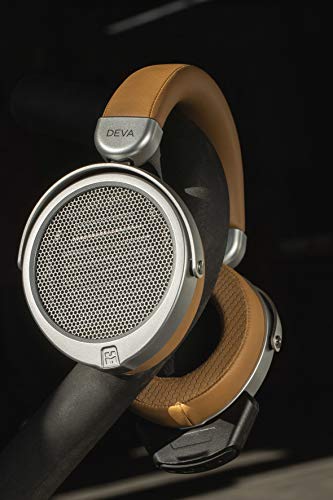
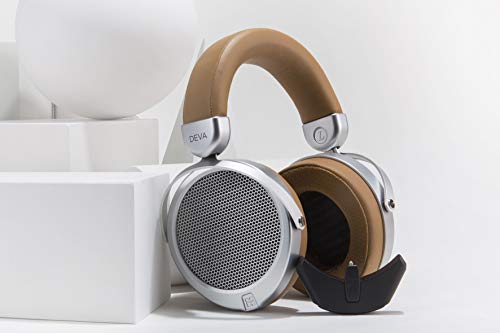
HiFiMAN Deva Review | 93 Data compared

Avg. price:~£170Form factor:over-earConnectivity:wirelessBattery life:7 hoursActive noise cancellation (ANC):no

HiFiMAN Deva Review: Compare 93 technical specifications and user reviews to see how this product ranks in the Headphones category and whether it is worth buying.

HiFiMAN Deva
6.1/10

Overall score

Score
6.1/ 10
✕
What it is
An overall evaluation of the headphones' quality, based on technical analyses and user reviews.
When it matters
When you need a quick reference to identify the best headphones on the market.
Score distribution
â–¼
<55-66-77-88-99-10
Score components

80%

5.6

Technical score

20%

7.8

User score

â–¼Worse than 59% of headphones
7.1

Value for money

Value for money
7.1/ 10
✕
What it is
An indicator that combines the headphones' overall rating with their cost.
When it matters
When you are looking for headphones that offer a strong balance of performance, features, and price.
Score distribution
â–¼
<55-66-77-88-99-10
Score components

70%

6.1

Overall score

30%

9.6

Price

â–¼Worse than 67%
5.6

Technical score

Technical score
5.6/ 10
✕
What it is
An assessment of technical performance for products in the Headphones category across these key areas: Sound, Calls & Controls, Connectivity, Features, Battery, Design.
When it matters
When you want to compare headphones based on technical performance and available features.
Score distribution
â–¼
<55-66-77-88-99-10
Score components

52%

5.2

Sound

20%

5.3

Features

10%

5.4

Design

8%

8.0

Connectivity

6%

6.7

Battery

4%

6.9

Calls & Controls

â–¼Worse than 66%
7.8

User score

User score
7.8/ 10
✕
What it is
A rating that combines user reviews and the total number of reviews received by the headphones.
When it matters
When you want to understand how headphones perform in real listening and how reliable they are in terms of comfort, audio quality, battery life, and long-term use.
Score distribution
â–¼
<55-66-77-88-99-10
Score components

70%

8.4

User ratings

30%

6.3

Number of reviews

Based on ratings from across the web.
â–¼Worse than 66%
  • hifiman-deva
  • hifiman-deva
  • hifiman-deva
  • hifiman-deva
  • hifiman-deva
hifiman-deva
hifiman-deva
hifiman-deva
hifiman-deva
hifiman-deva
Where to buy
*As an Amazon Associate, we earn from qualifying purchases.
Loading...
Loading category ranking...

Technical Specifications of pair of headphones HiFiMAN Deva

Technical score
Technical score
5.6/ 10
✕
What it is
An assessment of technical performance for products in the Headphones category across these key areas: Sound, Calls & Controls, Connectivity, Features, Battery, Design.
When it matters
When you want to compare headphones based on technical performance and available features.
Score distribution
â–¼
<55-66-77-88-99-10
Score components:

52%

5.2

Sound

20%

5.3

Features

10%

5.4

Design

8%

8.0

Connectivity

6%

6.7

Battery

4%

6.9

Calls & Controls

5.6
User score
User score
7.8/ 10
✕
What it is
A rating that combines user reviews and the total number of reviews received by the headphones.
When it matters
When you want to understand how headphones perform in real listening and how reliable they are in terms of comfort, audio quality, battery life, and long-term use.
Score distribution
â–¼
<55-66-77-88-99-10
Score components

70%

8.4

User ratings

30%

6.3

Number of reviews

Based on ratings from across the web.
7.8
Popularity
Popularity
6.3/ 10
✕
What it is
An indicator based on the number of reviews received by the headphones.
When it matters
When you prefer headphones that have already been chosen and reviewed by many other users.
Score distribution
â–¼
<55-66-77-88-99-10
Popularity:
HiFiMAN Deva has a popularity score of 6.3 points, which is higher than that of 55% of products in this category.
6.3
Value for money
Value for money
7.1/ 10
✕
What it is
An indicator that combines the headphones' overall rating with their cost.
When it matters
When you are looking for headphones that offer a strong balance of performance, features, and price.
Score distribution
â–¼
<55-66-77-88-99-10
Score components:

70%

6.1

Overall score

30%

9.6

Price

7.1
Active noise cancellation (ANC)
no
This pair of headphones does not support active noise cancellation. 27.5% of headphones support active noise cancellation.
Driver type
planar
Driver size
97 mm
This pair of headphones uses a driver size of 97 mm, larger driver size than 98.6% of headphones.
Number of drivers
1
This pair of headphones uses 1 drivers, fewer drivers than 4% of headphones and equal to 96% of headphones.
Lowest frequency
20 Hz
This pair of headphones reaches a lowest frequency of 20 Hz, higher lowest frequency than 50.8% of headphones and equal to 47.3% of headphones.
Show more
Noise-canceling microphone
no
This pair of headphones does not support a noise-canceling microphone. 39% of headphones support noise-canceling microphones.
Can be used as a headset
yes
This pair of headphones is headset-ready, 84.8% is not. 15.2% of headphones can be used as headsets.
Number of microphones
1
This pair of headphones has 1 microphones, more microphones than 26.9% of headphones and equal to 50.9% of headphones.
Boom microphone
no
This pair of headphones does not include a boom microphone. 13.5% of headphones have a boom microphone.
Microphone SNR
?
Show more
Connectivity
wireless
This pair of headphones supports wireless connectivity, more flexible connectivity than 50.8% of headphones and equal to 49.2% of headphones.
Bluetooth version
5
This pair of headphones uses Bluetooth version 5, newer Bluetooth version than 70.9% of headphones and equal to 13.1% of headphones.
Maximum Bluetooth range
10 m
This pair of headphones offers a Bluetooth range of 10 m, higher Bluetooth range than 2.7% of headphones and equal to 80.6% of headphones.
Audio latency
50 ms
This pair of headphones has audio latency of 50 ms, lower audio latency than 73.1% of headphones and equal to 2.7% of headphones.
Multipoint support
yes
This pair of headphones supports multipoint. 69.4% of headphones support multipoint.
Show more
Ambient sound mode
no
This pair of headphones does not offer ambient sound mode. 24.9% of headphones support ambient sound mode.
EQ support
no
This pair of headphones does not support EQ customization. 23.2% of headphones support EQ.
Companion app
yes
This pair of headphones works with a companion app. 78.4% of headphones support companion apps.
Adjustable ANC levels
N/A
Voice assistant support
yes
This pair of headphones supports voice assistants. 39.2% of headphones support voice assistants.
Show more
Battery life
7 hours
This pair of headphones offers battery life of 7 hours, lower battery life than 97.8% of headphones and equal to 0.5% of headphones.
Battery life with ANC
N/A
Charging time
2 hours
This pair of headphones needs 2 hours to charge, lower charging time than 47.8% of headphones and equal to 39% of headphones.
Quick charge
yes
This pair of headphones supports quick charge. 67% of headphones support quick charge.
Battery capacity
?
Show more
Brand name
HiFiMAN
Form factor
over-ear
Weight
360 g
This pair of headphones weighs 360 g, heavier than 92.2% of headphones and equal to 0.4% of headphones.
Acoustic design
open-back
Clamp force
5.9
This pair of headphones has a clamp force of 5.9, higher clamp force than 88% of headphones and equal to 0.5% of headphones.
Show more

HiFiMAN Deva vs the average pair of headphones

246810TotalDesignSoundBatteryConnectivityCalls & ControlsFeatures
  • 57 mm larger driver size
    This pair of headphones uses a larger driver size than the average pair of headphones (97 mm vs 40 mm). The average headphones use a driver size of 40 mm.
    97 mm vs 40 mm
  • Companion app support
    This pair of headphones works with a companion app, the average pair of headphones does not. 21.6% of headphones support companion apps.
  • Multipoint support
    This pair of headphones supports multipoint, the average pair of headphones does not. 30.6% of headphones support multipoint.
  • More flexible connectivity
    This pair of headphones offers more flexible connectivity than the average pair of headphones (wireless vs wired). The average headphones support wired connectivity.
    wireless vs wired
  • LDAC support
    This pair of headphones supports LDAC, the average pair of headphones does not. 8.1% of headphones support LDAC.
  • 100 ms lower audio latency
    This pair of headphones has a lower audio latency than the average pair of headphones (50 ms vs 150 ms). The average headphones have audio latency of 150 ms.
    50 ms vs 150 ms
  • AptX HD support
    This pair of headphones supports aptX HD, the average pair of headphones does not. 7.6% of headphones support aptX HD.
  • Quick charge support
    This pair of headphones supports quick charge, the average pair of headphones does not. 33% of headphones support quick charge.
  • 13 mm more spacious earcup width
    This pair of headphones offers more spacious earcup width than the average pair of headphones (57 mm vs 44 mm). The average headphones offer an inner earcup width of 44 mm.
    57 mm vs 44 mm
  • 0.8 m longer cable length
    This pair of headphones offers a more useful cable length than the average pair of headphones (2 m vs 1.2 m). The average headphones have a cable length of 1.2 m.
    2 m vs 1.2 m
  • Open-back design
    This pair of headphones uses an open-back design, while the average pair of headphones does not. 9.1% of headphones have an open-back design.
  • 57 mm larger driver size
    This pair of headphones uses a larger driver size than the average pair of headphones (97 mm vs 40 mm). The average headphones use a driver size of 40 mm.
    97 mm vs 40 mm
  • 0.2 % lower distortion
    This pair of headphones has a lower total harmonic distortion than the average pair of headphones (0.1 % vs 0.3 %). The average headphones have total harmonic distortion of 0.3 %.
    0.1 % vs 0.3 %
  • Quick charge support
    This pair of headphones supports quick charge, the average pair of headphones does not. 33% of headphones support quick charge.
  • USB-C charging
    This pair of headphones uses USB-C charging, the average pair of headphones does not. 29.5% of headphones use USB Type-C.
  • Play while charging
    This pair of headphones can play while charging, the average pair of headphones cannot. 29.1% of headphones support play while charging.
  • Removable battery
    This pair of headphones has a removable battery, the average pair of headphones does not. 7.8% of headphones have a removable battery.
  • Rechargeable battery
    This pair of headphones has a rechargeable battery, the average pair of headphones does not. 47.9% of headphones have a rechargeable battery.
  • Multipoint support
    This pair of headphones supports multipoint, the average pair of headphones does not. 30.6% of headphones support multipoint.
  • More flexible connectivity
    This pair of headphones offers more flexible connectivity than the average pair of headphones (wireless vs wired). The average headphones support wired connectivity.
    wireless vs wired
  • LDAC support
    This pair of headphones supports LDAC, the average pair of headphones does not. 8.1% of headphones support LDAC.
  • 100 ms lower audio latency
    This pair of headphones has a lower audio latency than the average pair of headphones (50 ms vs 150 ms). The average headphones have audio latency of 150 ms.
    50 ms vs 150 ms
  • AptX HD support
    This pair of headphones supports aptX HD, the average pair of headphones does not. 7.6% of headphones support aptX HD.
  • AptX Low Latency
    This pair of headphones supports aptX Low Latency, the average pair of headphones does not. 8% of headphones support aptX Low Latency.
  • AAC codec support
    This pair of headphones supports AAC, the average pair of headphones does not. 32.2% of headphones support AAC.
  • LHDC support
    This pair of headphones supports LHDC, the average pair of headphones does not. 2.1% of headphones support LHDC.
  • AptX support
    This pair of headphones supports aptX, the average pair of headphones does not. 18.4% of headphones support aptX.
  • Low-latency game mode
    This pair of headphones includes a low-latency game mode, the average pair of headphones does not. 21.2% of headphones support low-latency game mode.
  • On-device controls
    This pair of headphones includes on-device controls, the average pair of headphones does not. 46.8% of headphones support on-device controls.
  • Sidetone support
    This pair of headphones supports sidetone, the average pair of headphones does not. 25.3% of headphones support sidetone.
  • Quick mic mute
    This pair of headphones includes a quick mic mute, the average pair of headphones does not. 29.3% of headphones support a mute function.
  • Companion app support
    This pair of headphones works with a companion app, the average pair of headphones does not. 21.6% of headphones support companion apps.
  • No passive noise reduction
    This pair of headphones does not offer passive noise reduction, while the average pair of headphones does. 82.6% of headphones have passive noise reduction.
  • 65.1% higher weight
    This pair of headphones is heavier than the average pair of headphones (360 g vs 218 g). The average pair of headphones weighs 218 g.
    360 g vs 218 g
  • 8.5 dB/mW lower sensitivity
    This pair of headphones has a lower sensitivity than the average pair of headphones (93.5 dB/mW vs 102 dB/mW). The average headphones have sensitivity of 102 dB/mW.
    93.5 dB/mW vs 102 dB/mW
  • 23 hours shorter battery life
    This pair of headphones has a lower battery life than the average pair of headphones (7 hours vs 30 hours). The average headphones offer battery life of 30 hours.
    7 hours vs 30 hours
  • 1.6 higher clamp force
    This pair of headphones has a higher clamp force than the average pair of headphones (5.9 vs 4.3). The average headphones have a clamp force of 4.3.
    5.9 vs 4.3
  • 2 Hz weaker bass extension
    This pair of headphones has a higher lowest frequency than the average pair of headphones (20 Hz vs 18 Hz). The average headphones reach a lowest frequency of 18 Hz.
    20 Hz vs 18 Hz
  • Tangle-prone cable
    This pair of headphones uses a tangle-prone cable, while the average pair of headphones is easier to manage. 64.2% of headphones use a tangle-free cable.
  • No travel bag
    This pair of headphones does not include a travel bag, the average pair of headphones does. 65.4% of headphones include a travel bag.
  • 88.9% more expensive
    HiFiMAN Deva is more expensive than the average pair of headphones (£170 vs £90).
    £170 vs £90
  • 3.1% lower user score
    User score
    7.8/ 10
    ✕
    What it is
    A rating that combines user reviews and the total number of reviews received by the headphones.
    When it matters
    When you want to understand how headphones perform in real listening and how reliable they are in terms of comfort, audio quality, battery life, and long-term use.
    Score distribution
    ▼▼
    <55-66-77-88-99-10
    HiFiMAN Deva
    the average pair of headphones
    HiFiMAN Deva has a lower user score than the average pair of headphones (7.76 vs 8).
    7.76 vs 8
  • 2% worse value for money
    HiFiMAN Deva has worse value for money than the average pair of headphones (7.13 vs 7.3).
    7.13 vs 7.27
  • 65.1% higher weight
    This pair of headphones is heavier than the average pair of headphones (360 g vs 218 g). The average pair of headphones weighs 218 g.
    360 g vs 218 g
  • 1.6 higher clamp force
    This pair of headphones has a higher clamp force than the average pair of headphones (5.9 vs 4.3). The average headphones have a clamp force of 4.3.
    5.9 vs 4.3
  • Tangle-prone cable
    This pair of headphones uses a tangle-prone cable, while the average pair of headphones is easier to manage. 64.2% of headphones use a tangle-free cable.
  • No travel bag
    This pair of headphones does not include a travel bag, the average pair of headphones does. 65.4% of headphones include a travel bag.
  • No passive noise reduction
    This pair of headphones does not offer passive noise reduction, while the average pair of headphones does. 82.6% of headphones have passive noise reduction.
  • 8.5 dB/mW lower sensitivity
    This pair of headphones has a lower sensitivity than the average pair of headphones (93.5 dB/mW vs 102 dB/mW). The average headphones have sensitivity of 102 dB/mW.
    93.5 dB/mW vs 102 dB/mW
  • 2 Hz weaker bass extension
    This pair of headphones has a higher lowest frequency than the average pair of headphones (20 Hz vs 18 Hz). The average headphones reach a lowest frequency of 18 Hz.
    20 Hz vs 18 Hz
  • 9.5 dB SPL lower sound pressure level
    This pair of headphones has a lower sound pressure level than the average pair of headphones (93.5 dB SPL vs 103 dB SPL). The average headphones reach a sound pressure level of 103 dB SPL.
    93.5 dB SPL vs 103 dB SPL
  • 23 hours shorter battery life
    This pair of headphones has a lower battery life than the average pair of headphones (7 hours vs 30 hours). The average headphones offer battery life of 30 hours.
    7 hours vs 30 hours

Video reviews

Hands-on testing, unboxing, and real-world video evaluations

8.0
Headphone PH
≈ estimated
19/02/2021
Hands-on review · wired, USB and Bluetooth sound comparison
Verdict
HiFiMAN Deva is a good buy for wireless use at home, but it does not have the best sound at this price.
9.0
Passion for Sound
≈ estimated
09/02/2021
Hands-on review · sound comparisons, Bluetooth vs cable
Verdict
HiFiMAN Deva is not perfect, but it is an impressive buy for the price.
9.0
Soundnews
≈ estimated
11/08/2020
Hands-on review · wired and wireless tests, measurements
Verdict
HiFiMAN Deva is hard to beat for the price, but it is best used at home rather than on the go.
5.0
Joshua Valour
≈ estimated
20/07/2020
Hands-on review · build, amp output and Bluetooth module
Verdict
HiFiMAN Deva is not the best sounding option, and the Sundara is the stronger choice for most listeners.
9.0
Wheezy Tech
≈ estimated
11/07/2020
Hands-on review · wired-only version compared with rivals
Verdict
HiFiMAN Deva is an excellent wired choice for its price and a clear step up for beginners moving to planar headphones.
9.0
Steve Guttenberg Audiophiliac
≈ estimated
09/07/2020
Hands-on comparison · wired listening and rival test
Verdict
HiFiMAN Deva is a great-sounding open headphone, best enjoyed wired at home rather than on the go.
9.0
the Honest Audiophile
≈ estimated
01/06/2020
Hands-on review · Bluetooth, wired and portable use
Verdict
HiFiMAN Deva is the favourite Bluetooth headphone so far, recommended despite a weak built-in microphone.
9.0
Geekology
≈ estimated
21/04/2020
Unboxing and hands-on review · sound, comfort and battery
Verdict
HiFiMAN Deva is a great-sounding wireless headphone with fantastic value, though it has minor comfort and dongle quirks.
7.0
Joshua Valour
≈ estimated
08/04/2020
First impressions · two hours of listening, build and sound
Verdict
HiFiMAN Deva sounds like a middle option between two other models, and the final verdict is still pending.
Overview video
Not graded
Not graded

Expert reviews

In-depth analysis and verdict from leading tech publications

H
headfonia.com
09/04/2020
Summary of the review
headfonics.com
15/05/2020
Hands-on review · Bluetooth module
Verdict
The HiFiMAN Deva is a stylish open-back headphone whose detachable Bluemini module offers wireless, USB and analog wired use, though phones need an extra cable.
theheadphonelist.com
23/10/2020
Hands-on review · Wireless planar
Verdict
The HiFiMAN Deva is a good pick for TV and PC listeners who want wireless use without sacrificing sound quality.
english.achoreviews.com
23/08/2020
Hands-on review · Planar clarity
Verdict
The HiFiMAN Deva is a clean, detailed planar headphone with a stylish look, best for listeners who want clarity over deep rumble.
nobordersaudiophile.wordpress.com
23/04/2020
Hands-on review · Multi-connection
Verdict
The HiFiMAN Deva is a versatile open headphone whose Bluemini module suits wireless listening, though its plastic build feels cheap and its open back leaks sound.
moonstarreviews.net
17/08/2020
Hands-on review · Stylish planar
Verdict
The HiFiMAN Deva is a stylish, comfortable planar headphone whose Bluemini works as a Bluetooth receiver and USB DAC, though battery life drops with LDAC.
headphone.ph
17/02/2021
Hands-on review · Wireless open-back
Verdict
The HiFiMAN Deva is a good choice for anyone wanting a first open-back headphone that also works wirelessly, though its battery life is poor.
headphone.guru
06/07/2020
Hands-on review · Hi-res playback
Verdict
The HiFiMAN Deva delivers open, detailed sound and a strong wireless range for its price, though its bass needs a few decibels of EQ boost to feel full.
pcmag.com
01/09/2020
Hands-on review · Bluetooth dongle
Verdict
The HiFiMAN Deva is a comfortable, accurate planar headphone with optional Bluetooth, though it leaks a lot of sound and includes few accessories.
ear-fidelity.com
21/02/2021
Hands-on review · Wired version
Verdict
The wired HiFiMAN Deva is a comfortable planar headphone with wide staging and punchy bass, though its basic one-sided cable is its weak point.
homestudiobasics.com
03/01/2023
Video review · Build and comfort
Verdict
The HiFiMAN Deva fixes many earlier build problems and feels very comfortable, though its thick headband may not suit everyone.
headfonia.com
19/10/2020
Hands-on test · Wired planar
Verdict
The HiFiMAN Deva is a clear, comfortable headphone that suits jazz and acoustic music, but needs more bass punch for R&B and EDM.
soundphilereview.com
23/03/2021
Hands-on review · Wired and wireless
Verdict
The HiFiMAN Deva is a wide-sounding headphone that works wired or wireless, though its Bluemini module is basic and can cut out at low battery.
laptopmag.com
14/03/2021
Hands-on review · Open-back planar
Verdict
The HiFiMAN Deva is an attractive, comfortable headphone with detailed sound and long wireless battery life, but its open back leaks sound, so quiet rooms suit it best.
everydaylistening.net
06/08/2020
Review · TV and PC wireless
Verdict
The HiFiMAN Deva is a balanced, versatile headphone whose wireless module suits TV and PC use, though its plastic build feels less upmarket than the Sundara.
on-mag.fr
14/01/2021
Private listening test · Wireless open-back
Verdict
The HiFiMAN Deva sounds better than most wireless headphones in its class, but its size and open cups make it better suited to home listening than commuting.
O
on-mag.fr
Non daté
Summary of the review
chifi.fr
16/06/2021
Hands-on test · Three-in-one planar
Verdict
The HiFiMAN Deva is a planar headphone that sounds excellent for its price, with precise bass and clear instruments, though it looks cheap and can slip on the head.
A
afdigitale.it
07/07/2020
Summary of the review
risparmia-online.it
10/07/2021
Value review · Wireless planar
Verdict
The HiFiMAN Deva is a versatile, great-value planar headphone with precise sound, though it lacks the punch of pricier models.

Third-party reviews

Based on ratings from across the web.
Reviews last updated: November 2026 · How we calculate this

What customers like about HiFiMAN Deva

  • Wide and holographic soundstage for the price
  • Detailed and airy presentation characteristic of planar drivers
  • Excellent value, especially the wired-only version
  • Highly comfortable for long sessions with soft, breathable ear pads
  • Versatile connectivity options including Bluetooth (via Bluemini), USB-C, and traditional wired
  • Natural and organic timbre, often compared favorably to dynamic drivers
  • Supports high-quality wireless codecs like LDAC and aptX-HD

What customers don't like about HiFiMAN Deva

  • Open-back design results in significant sound leakage and zero noise isolation
  • Lack of sub-bass impact and 'slam' compared to closed-back or higher-end models
  • Bluemini module battery life is relatively short (typically 7-10 hours)
  • Can sound peaky or harsh in the treble on certain tracks
  • Build quality uses a lot of plastic, which some users find less premium than competitors
  • Bluemini module lacks physical volume and track navigation buttons
  • No carrying case or travel accessories included in the standard package

Verdict

The Hifiman Deva is a versatile open-back planar magnetic headphone featuring the ultra-thin Neo 'supernano' diaphragm (NsD) for rapid transient response and high-fidelity sound. It offers a low impedance of 18Ω and a sensitivity of 93.5dB, making it relatively easy to drive compared to typical planar models, and operates across a wide 20Hz–20kHz frequency range. Weighing approximately 360g, it provides a spacious and detailed soundstage with a natural, airy tonality that excels in imaging. Its primary advantage is its modular design, allowing it to switch between a wired 3.5mm TRRS balanced connection and wireless operation via the detachable Bluemini module, which supports high-resolution codecs like LDAC and aptX HD. However, users have noted that it suffers from sub-bass roll-off and a somewhat recessed midrange, while the light clamping force and lack of an included carry case may impact stability and portability.

Compare HiFiMAN Deva with other products in the Headphones category

1Product to compare no. 1
VS
2Product to compare no. 2
VS
3Product to compare no. 3 (optional)

Graphic comparison of HiFiMAN Deva and other products in the Headphones category

No results found