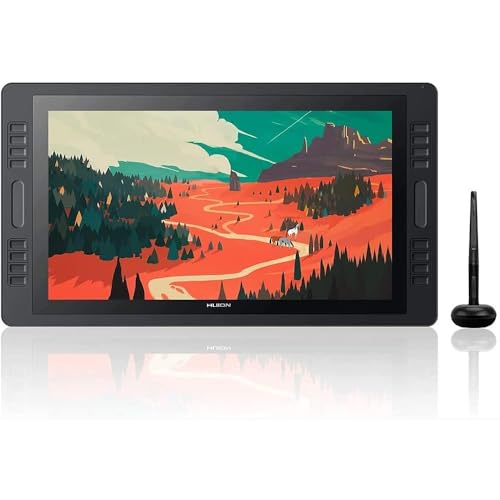
Wacom One Review | 66 Data compared

double-arrow
  • Avg. price in UK: ~£380
  • Avg. price in US: ~$300
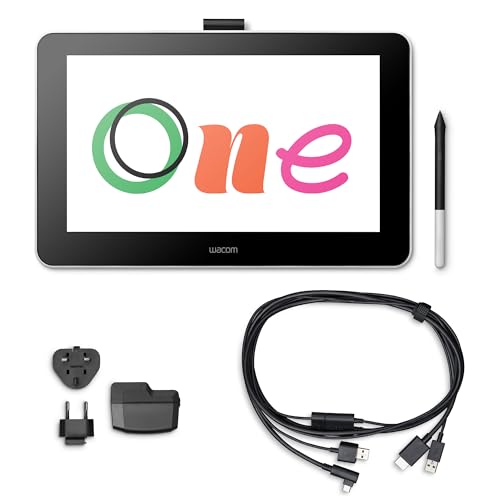
  • Type: pen display
  • Active drawing area: 48,804 mm²
  • Resolution: 1920x1080
  • Pen pressure levels: 4,096
  • Report rate: ?

Wacom One review. Compare 66 technical specifications and user reviews to see how it ranks among drawing tablets and if it is worth buying.

6.4

Overall score

What it is: An overall evaluation of the drawing tablet's quality, based on technical analyses and user reviews.

When it matters: When you need a quick reference to identify the best drawing tablets on the market.

Score components:

90.0%

6.1

Technical Score

10.0%

9.1

User score

Good
6.1

Technical Score

What it is: An assessment of the drawing tablet's technical performance, covering eight key areas: drawing accuracy, pen performance, pressure sensitivity, tilt support, display quality, connectivity, software support, and design.

When it matters: When you want to compare drawing tablets based on technical performance and available features.

Score components:

50.0%

6.9

Pen & Input

40.0%

5.2

Display & Color

4.0%

8.7

Form Factor

3.0%

5.1

Connectivity

3.0%

2.0

Controls & Extras

Good
9.1

User score

What it is: A rating that combines user reviews and the total number of reviews received by the drawing tablet.

When it matters: When you want to know how a drawing tablet performs in real use and how reliable it remains over time according to user feedback.

Score components:

70.0%

8.7

User reviews

30.0%

10

Popularity

User score:
United Kingdom
amazon
4.4
(1806)
amazon
4.2
(97)
amazon
4.2
(37)
amazon
4.7
(28)
United States
Amazon_logo.png
4.5
(1771)
Amazon_logo.png
3.8
(186)
Amazon_logo.png
4.3
(97)
Amazon_logo.png
4.7
(28)

(Reviews last updated: July 2026)

Exceptional
  • 8.6
    Kids

    Score components:

    45.0%

    9.1

    Weight

    45.0%

    8.5

    Price

    10.0%

    6.4

    Counted score

  • wacom-one
  • wacom-one
  • wacom-one
  • wacom-one
  • wacom-one
  • wacom-one
wacom-one
wacom-one
wacom-one
wacom-one
wacom-one
wacom-one

Best prices in UK

Best rankings

?

Available: ranking among products currently available (including other versions of this product).
All: ranking among all products in the database.

Verdict

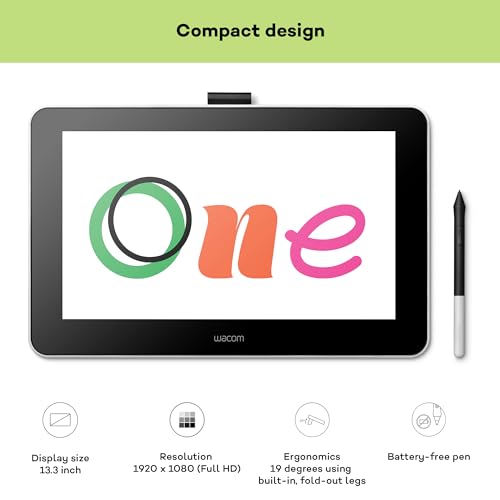
The Wacom One is a versatile entry-level creative tool available as both a 13.3-inch or 14-inch pen display (Full HD 1920 x 1080 resolution) and as a non-screen pen tablet in small and medium sizes. Key characteristics include a battery-free EMR stylus with 4,096 levels of pressure sensitivity (2,048 on 'One by Wacom' models), 60 degrees of tilt support, and compatibility with Windows, macOS, Android, and Chromebooks. Main pros include its natural paper-like surface friction, single-cable USB-C connectivity for simplified setup, and a laminated display that significantly reduces parallax on screen models. However, notable cons include the lack of built-in express keys, limited color gamut coverage (typically 72% NTSC on older models), and some users find the lightweight plastic pen feels less premium compared to high-end Pro series accessories.

Technical Specifications of Wacom One

Technical Score

What it is: An assessment of the drawing tablet's technical performance, covering eight key areas: drawing accuracy, pen performance, pressure sensitivity, tilt support, display quality, connectivity, software support, and design.

When it matters: When you want to compare drawing tablets based on technical performance and available features.

Score components:

50.0%

6.9

Pen & Input

40.0%

5.2

Display & Color

4.0%

8.7

Form Factor

3.0%

5.1

Connectivity

3.0%

2.0

Controls & Extras

6.1
Wacom One has a technical score of 6.1 points, which is lower than 84.5% of drawing tablets.
User score

What it is: A rating that combines user reviews and the total number of reviews received by the drawing tablet.

When it matters: When you want to know how a drawing tablet performs in real use and how reliable it remains over time according to user feedback.

Score components:

70.0%

8.7

User reviews

30.0%

10

Popularity

User score:
United Kingdom
amazon
4.4
(1806)
amazon
4.2
(97)
amazon
4.2
(37)
amazon
4.7
(28)
United States
Amazon_logo.png
4.5
(1771)
Amazon_logo.png
3.8
(186)
Amazon_logo.png
4.3
(97)
Amazon_logo.png
4.7
(28)

(Reviews last updated: July 2026)

9.1
Wacom One has a user score of 9.08 points, which is higher than 76.3% of drawing tablets.
Popularity
What it is: An indicator based on the number of reviews received by the drawing tablet.
When it matters: When you prefer to buy a product chosen and reviewed by many other consumers.
10
Wacom One has a popularity of 10 points, which is higher than 66% of products in this category.
Ratio quality/price

What it is: An indicator that combines the drawing tablet's overall rating with its cost.

When it matters: When you are looking for a drawing tablet with a good balance between quality and price.

Score components:

60.0%

6.4

Overall score

40.0%

8.5

Price

7.0
Wacom One has a quality-to-price ratio of 7 points, which is lower than 82.5% of products in this category.
Type
What it is: Identifies whether the device is a screenless pen tablet or a pen display with its own built-in screen.
When it matters: When you are choosing between a screenless setup and direct on-screen drawing, because the device type changes how you position your hand, eyes, and workspace.

Importance: LOW

pen display
Display
What it is: Indicates whether the tablet itself includes an integrated screen instead of relying only on an external monitor.
When it matters: When you are deciding whether you want to draw directly on the tablet instead of looking at a separate monitor.

Importance: LOW

yes
Wacom One has a display. This feature is present on 47.9% of drawing tablets.
Compatibility
What it is: Shows which operating systems or platforms the tablet officially supports for drivers, software, and core input functions.
When it matters: When you need the tablet to work reliably with your current computer, phone, or creative software environment without driver problems.

Importance: LOW

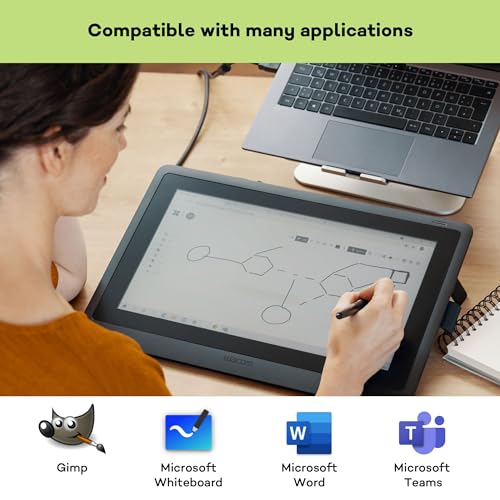
Windows / macOS / ChromeOS / Android
Wireless capability
What it is: Indicates whether the tablet can operate without a constant wired connection to the host device.
When it matters: When you want a cleaner desk, easier repositioning, or more flexibility for mobile use without a permanent cable tether.

Importance: LOW

yes
Wacom One supports wireless use. This feature is present on 18% of drawing tablets.
Weight
What it is: Measures the total mass of the tablet, which affects portability, desk stability, and carrying comfort.
When it matters: When you move the tablet between rooms, carry it in a bag, or want it to feel stable without being cumbersome on the desk.

Importance: LOW

1,000 g
Wacom One weighs 1000 g, heavier than 60.4% of drawing tablets and equal to 0.5% of drawing tablets.
Includes integrated legs.
Show more
Active drawing area
What it is: Represents the usable surface where pen input is detected for drawing, writing, or navigation.
When it matters: When you want enough working space for broad arm movements, long strokes, or detailed retouching without feeling cramped.

Importance: HIGH

48,804 mm²
Wacom One offers an active drawing area of 48804 mm², larger than that of 61.4% of drawing tablets.
294 x 166 mm.
Screen size
What it is: Measures the diagonal size of the built-in display, usually in inches, for pen display models.
When it matters: When you work directly on a pen display and need enough room for menus, canvas space, and hand placement at the same time.

Importance: HIGH

13.3 inch
Wacom One has a screen size of 13.3 inch, smaller than that of 72% of drawing tablets and equal to that of 11.8% of drawing tablets.
Resolution
What it is: Shows the total number of display pixels available across the panel and defines image detail.
When it matters: When you want interface elements, brush edges, and artwork details to look clean on a built-in display.

Importance: HIGH

1920x1080
Wacom One has a display resolution of 1920x1080, higher than that of 52.6% of drawing tablets and equal to that of 27.3% of drawing tablets.
Pixel density
What it is: Measures how many pixels are packed into each inch of the display, affecting sharpness and fine detail.
When it matters: When you are sensitive to visible pixels while drawing fine lines, reading small text, or checking detailed artwork.

Importance: MEDIUM

166 ppi
Wacom One has a pixel density of 166 ppi, higher than that of 47.3% of drawing tablets and equal to that of 9.7% of drawing tablets.
Typical brightness
What it is: Represents the usual screen luminance the display can sustain in normal operation, usually measured in nits.
When it matters: When you work in bright rooms and need the display to remain clearly visible without washing out.

Importance: MEDIUM

285 nits
Wacom One has a typical brightness of 285 nits, higher than that of 80.2% of drawing tablets.
Show more
Stylus included
What it is: Indicates whether a compatible drawing pen is included in the box rather than sold separately.
When it matters: When you want to start drawing immediately and avoid paying extra for a compatible pen after buying the tablet.

Importance: HIGH

yes
Wacom One comes with a stylus. This feature is present on 100% of drawing tablets.
Pen technology
What it is: Identifies the stylus input technology used, such as EMR, AES, active, or passive implementations.
When it matters: When you compare drawing feel, charging needs, and compatibility between different pen systems.

Importance: HIGH

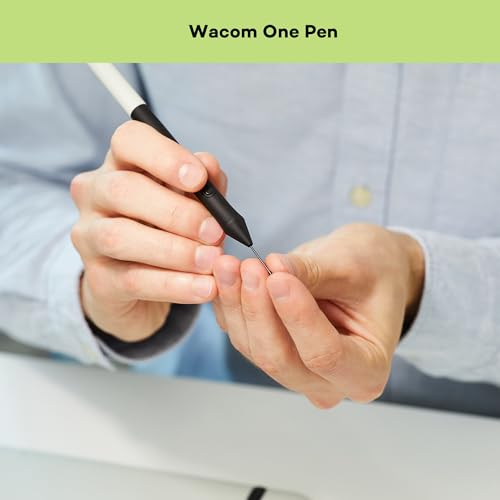
EMR (battery-free)
Wacom One uses EMR (battery-free) pen technology, more advanced than that of 4.6% of drawing tablets and equal to that of 95.4% of drawing tablets.
Pen pressure levels
What it is: Shows how many distinct pressure steps the stylus can register while drawing or writing.
When it matters: When you vary line weight and brush intensity often, because more pressure steps can give finer control over stroke response.

Importance: HIGH

4,096
Wacom One supports 4,096 pen pressure levels, fewer than 91.2% of drawing tablets and equal to 4.2% of drawing tablets.
Pen resolution
What it is: Measures the positional precision of the pen input system, commonly expressed in lines per inch.
When it matters: When you need accurate cursor placement for detailed illustration, masking, or careful selection work.

Importance: HIGH

2,540 LPI
Wacom One supports a pen resolution of 2540 LPI, lower than that of 95.3% of drawing tablets and equal to that of 4.7% of drawing tablets.
Report rate
What it is: Shows how often the pen position is reported to the system, which influences cursor responsiveness.
When it matters: When you want pen tracking to feel snappy during fast strokes, handwriting, or quick gesture-based work.

Importance: HIGH

?
Show more
Bluetooth connectivity
What it is: Indicates whether the tablet supports Bluetooth for wireless connection to compatible devices or accessories.
When it matters: When you want wireless pairing with accessories or a less cable-heavy setup around the tablet.

Importance: LOW

no
Wacom One does not support Bluetooth. 13% of drawing tablets support Bluetooth.
USB 3.2 Gen 2 (USB-C) ports
What it is: Counts the available USB 3.2 Gen 2 Type-C ports for high-speed data, charging, or display-related connections.
When it matters: When you want modern high-bandwidth Type-C connections for data, charging, or display-oriented accessories.

Importance: LOW

0
Wacom One has 0 USB 3.2 Gen 2 (USB-C) ports, fewer than 20.6% of drawing tablets and equal to 79.4% of drawing tablets.
USB 3.2 Gen 1 (USB-C) ports
What it is: Counts the available USB 3.2 Gen 1 Type-C ports used for general data, charging, or accessory links.
When it matters: When you need flexible Type-C connectivity for everyday data links, charging, or accessory support.

Importance: LOW

?
USB 3.2 Gen 2 (USB-A) ports
What it is: Counts the available USB 3.2 Gen 2 Type-A ports for high-speed data transfer and peripheral connection.
When it matters: When you plan to connect fast external storage or peripherals directly and want enough high-speed Type-A ports.

Importance: LOW

0
Wacom One has 0 USB 3.2 Gen 2 (USB-A) ports, fewer than 1.3% of drawing tablets and equal to 98.7% of drawing tablets.
USB 3.2 Gen 1 (USB-A) ports
What it is: Counts the available USB 3.2 Gen 1 Type-A ports for standard high-speed peripheral and storage connections.
When it matters: When you still use standard USB-A devices and want enough direct ports without carrying a hub.

Importance: LOW

0
Wacom One has 0 USB 3.2 Gen 1 (USB-A) ports, fewer than 1.9% of drawing tablets and equal to 98.1% of drawing tablets.
Show more
N. of express keys
What it is: Counts the programmable shortcut keys built into the tablet for quick access to commands.
When it matters: When you rely on shortcut-heavy workflows and want more actions accessible on the tablet without reaching for the keyboard.

Importance: LOW

0
Wacom One has 0 express keys, fewer than 71.9% of drawing tablets and equal to 28.1% of drawing tablets.
N. of dials
What it is: Counts the physical dials or rotary controls available for shortcuts, zoom, brush size, or similar functions.
When it matters: When you want physical rotary controls for zoom, brush size, timeline scrubbing, or other actions you repeat constantly.

Importance: LOW

0
Wacom One has 0 dials, fewer than 22.8% of drawing tablets and equal to 77.2% of drawing tablets.
Stand included
What it is: Indicates whether a separate stand is included to support the tablet at adjustable working angles.
When it matters: When you want an ergonomic drawing angle right away and do not want to budget for a separate stand after purchase.

Importance: LOW

no
Wacom One does not come with a stand. 29.1% of drawing tablets come with a stand.
Built-in legs only; stand sold separately.
Fold-out legs
What it is: Indicates whether the tablet has built-in fold-out legs for basic angle adjustment on a desk.
When it matters: When you want a quick built-in way to tilt the tablet without buying a separate stand first.

Importance: LOW

yes
Wacom One has fold-out legs. This feature is present on 6.8% of drawing tablets.
Pen stand included
What it is: Indicates whether a dedicated holder or stand for the stylus is included in the package.
When it matters: When you want the stylus stored safely on the desk instead of rolling around or getting misplaced between sessions.

Importance: LOW

no
Wacom One does not come with a pen stand. 59.6% of drawing tablets come with a pen stand.
Only loop/clip storage.
Show more

Wacom One vs the average drawing tablet

  • 32.1% lighter pen
    Wacom One includes a lighter pen than the average drawing tablet (9 g vs 13.25 g). The average drawing tablet pen weighs 13.25 g.
    What it is: Measures the mass of the stylus itself, which affects long-session comfort and handling feel.
    When it matters: When hand comfort matters during long drawing sessions and you are sensitive to how heavy a stylus feels over time.

    Importance: HIGH

    Wacom One includes a lighter pen than the average drawing tablet (9 g vs 13.25 g). The average drawing tablet pen weighs 13.25 g.9 g vs 13.25 g
  • Anti-reflection coating
    Wacom One has an anti-reflection coating, while the average drawing tablet does not. 47.7% of drawing tablets have an anti-reflection coating.
    What it is: Indicates the presence of a surface treatment that reduces glare and reflections on the screen.
    When it matters: When you work near windows or bright lights and need the screen to stay readable without heavy reflections.

    Importance: LOW

    Wacom One has an anti-reflection coating, while the average drawing tablet does not. 47.7% of drawing tablets have an anti-reflection coating.
  • 35 nits brighter display
    Wacom One has higher typical brightness than the average drawing tablet (285 nits vs 250 nits). The average drawing tablet has a typical brightness of 250 nits.
    What it is: Represents the usual screen luminance the display can sustain in normal operation, usually measured in nits.
    When it matters: When you work in bright rooms and need the display to remain clearly visible without washing out.

    Importance: MEDIUM

    Wacom One has higher typical brightness than the average drawing tablet (285 nits vs 250 nits). The average drawing tablet has a typical brightness of 250 nits.285 nits vs 250 nits
  • Integrated display
    Wacom One has a display, while the average drawing tablet does not. 48.2% of drawing tablets have a display.
    What it is: Indicates whether the tablet itself includes an integrated screen instead of relying only on an external monitor.
    When it matters: When you are deciding whether you want to draw directly on the tablet instead of looking at a separate monitor.

    Importance: LOW

    Wacom One has a display, while the average drawing tablet does not. 48.2% of drawing tablets have a display.
  • Supports wireless use
    Wacom One supports wireless use, while the average drawing tablet does not. 18.5% of drawing tablets support wireless use.
    What it is: Indicates whether the tablet can operate without a constant wired connection to the host device.
    When it matters: When you want a cleaner desk, easier repositioning, or more flexibility for mobile use without a permanent cable tether.

    Importance: LOW

    Wacom One supports wireless use, while the average drawing tablet does not. 18.5% of drawing tablets support wireless use.
  • 0.3 m longer cable
    Wacom One has a longer cable than the average drawing tablet (1.8 m vs 1.5 m). The average drawing tablet has a cable length of 1.5 m.
    What it is: Measures the length of the supplied cable used for connection, power, or both.
    When it matters: When your computer is not right next to the tablet and you need enough cable slack for a comfortable setup.

    Importance: LOW

    Wacom One has a longer cable than the average drawing tablet (1.8 m vs 1.5 m). The average drawing tablet has a cable length of 1.5 m.1.8 m vs 1.5 m
  • 8040 mm² larger work area
    Wacom One has a larger active drawing area than the average drawing tablet (48804 mm² vs 40764 mm²). The average drawing tablet offers an active drawing area of 40764 mm².
    294x166 mm.
    What it is: Represents the usable surface where pen input is detected for drawing, writing, or navigation.
    When it matters: When you want enough working space for broad arm movements, long strokes, or detailed retouching without feeling cramped.

    Importance: HIGH

    Wacom One has a larger active drawing area than the average drawing tablet (48804 mm² vs 40764 mm²). The average drawing tablet offers an active drawing area of 40764 mm².48804 mm² vs 40764 mm²
  • 13.5% higher user score
    Wacom One has a higher user score than the average drawing tablet (9.08 vs 8).
    What it is: A rating that combines user reviews and the total number of reviews received by the drawing tablet.
    When it matters: When you want to know how a drawing tablet performs in real use and how reliable it remains over time according to user feedback.
    Wacom One has a higher user score than the average drawing tablet (9.08 vs 8).9.08 vs 8
  • Integrated display
    Wacom One has a display, while the average drawing tablet does not. 48.2% of drawing tablets have a display.
  • Supports wireless use
    Wacom One supports wireless use, while the average drawing tablet does not. 18.5% of drawing tablets support wireless use.
  • Anti-reflection coating
    Wacom One has an anti-reflection coating, while the average drawing tablet does not. 47.7% of drawing tablets have an anti-reflection coating.
  • 35 nits brighter display
    Wacom One has higher typical brightness than the average drawing tablet (285 nits vs 250 nits). The average drawing tablet has a typical brightness of 250 nits.
  • 8040 mm² larger work area
    Wacom One has a larger active drawing area than the average drawing tablet (48804 mm² vs 40764 mm²). The average drawing tablet offers an active drawing area of 40764 mm².
  • 32.1% lighter pen
    Wacom One includes a lighter pen than the average drawing tablet (9 g vs 13.25 g). The average drawing tablet pen weighs 13.25 g.
  • 0.3 m longer cable
    Wacom One has a longer cable than the average drawing tablet (1.8 m vs 1.5 m). The average drawing tablet has a cable length of 1.5 m.
  • 4.1 mm thicker body
    Wacom One is thicker than the average drawing tablet (14.6 mm vs 10.5 mm). The average drawing tablet is 10.5 mm thick.
  • 32.5% heavier design
    Wacom One is heavier than the average drawing tablet (1000 g vs 755 g). The average drawing tablet weighs 755 g.
    Includes integrated legs.
  • Older release
    Wacom One was released earlier than the average drawing tablet.
    January 2020.
  • 22 % narrower Adobe RGB coverage
    Wacom One covers less Adobe RGB than the average drawing tablet (70% vs 92%). The average drawing tablet covers 92% of Adobe RGB.
  • 2.3 inch smaller display
    Wacom One has a smaller screen than the average drawing tablet (13.3 inch vs 15.6 inch). The average drawing tablet has a screen size of 15.6 inch.
  • 8 ° narrower horizontal viewing angle
    Wacom One offers a narrower horizontal viewing angle than the average drawing tablet (170 ° vs 178 °). The average drawing tablet offers a horizontal viewing angle of 178 °.
  • 8 ° narrower vertical viewing angle
    Wacom One offers a narrower vertical viewing angle than the average drawing tablet (170 ° vs 178 °). The average drawing tablet offers a vertical viewing angle of 178 °.
  • 2 ms slower response
    Wacom One has a slower response time than the average drawing tablet (16 ms vs 14 ms). The average drawing tablet has a response time of 14 ms.
  • 7 fewer nibs included
    Wacom One includes fewer replacement nibs than the average drawing tablet (3 vs 10). The average drawing tablet includes 10 replacement nibs.
  • 4096 lower pen pressure levels
    Wacom One supports fewer pen pressure levels than the average drawing tablet (4096 vs 8192). The average drawing tablet supports 8192 pen pressure levels.
  • 2540 LPI lower pen resolution
    Wacom One supports a lower pen resolution than the average drawing tablet (2540 LPI vs 5080 LPI). The average drawing tablet supports a pen resolution of 5080 LPI.
  • 1 fewer pen buttons
    Wacom One has fewer pen buttons than the average drawing tablet (1 vs 2). The average drawing tablet pen has 2 buttons.
  • 6 fewer express keys
    Wacom One has fewer express keys than the average drawing tablet (0 vs 6). The average drawing tablet has 6 express keys.
  • No pen stand included
    Wacom One does not come with a pen stand, while the average drawing tablet does. 59.3% of drawing tablets come with a pen stand.
    Only loop/clip storage.
  • 7 fewer nibs included
    Wacom One includes fewer replacement nibs than the average drawing tablet (3 vs 10). The average drawing tablet includes 10 replacement nibs.
    What it is: Counts how many replacement pen nibs are included with the tablet or stylus package.
    When it matters: When you want spare nibs in the box so heavy use does not force an immediate extra purchase.

    Importance: HIGH

    Wacom One includes fewer replacement nibs than the average drawing tablet (3 vs 10). The average drawing tablet includes 10 replacement nibs.3 vs 10
  • 22 % narrower Adobe RGB coverage
    Wacom One covers less Adobe RGB than the average drawing tablet (70% vs 92%). The average drawing tablet covers 92% of Adobe RGB.
    What it is: Shows what percentage of the Adobe RGB color space the display can reproduce.
    When it matters: When you do print-oriented creative work and need the display to represent a wider color space accurately.

    Importance: HIGH

    Wacom One covers less Adobe RGB than the average drawing tablet (70% vs 92%). The average drawing tablet covers 92% of Adobe RGB.70 % vs 92 %
  • 4096 lower pen pressure levels
    Wacom One supports fewer pen pressure levels than the average drawing tablet (4096 vs 8192). The average drawing tablet supports 8192 pen pressure levels.
    What it is: Shows how many distinct pressure steps the stylus can register while drawing or writing.
    When it matters: When you vary line weight and brush intensity often, because more pressure steps can give finer control over stroke response.

    Importance: HIGH

    Wacom One supports fewer pen pressure levels than the average drawing tablet (4096 vs 8192). The average drawing tablet supports 8192 pen pressure levels.4,096 vs 8,192
  • 2540 LPI lower pen resolution
    Wacom One supports a lower pen resolution than the average drawing tablet (2540 LPI vs 5080 LPI). The average drawing tablet supports a pen resolution of 5080 LPI.
    What it is: Measures the positional precision of the pen input system, commonly expressed in lines per inch.
    When it matters: When you need accurate cursor placement for detailed illustration, masking, or careful selection work.

    Importance: HIGH

    Wacom One supports a lower pen resolution than the average drawing tablet (2540 LPI vs 5080 LPI). The average drawing tablet supports a pen resolution of 5080 LPI.2540 LPI vs 5080 LPI
  • 1 fewer pen buttons
    Wacom One has fewer pen buttons than the average drawing tablet (1 vs 2). The average drawing tablet pen has 2 buttons.
    What it is: Counts the programmable buttons available directly on the stylus.
    When it matters: When you like putting undo, modifier keys, or tool switches directly on the pen to reduce keyboard reach.

    Importance: MEDIUM

    Wacom One has fewer pen buttons than the average drawing tablet (1 vs 2). The average drawing tablet pen has 2 buttons.1 vs 2
  • 6 fewer express keys
    Wacom One has fewer express keys than the average drawing tablet (0 vs 6). The average drawing tablet has 6 express keys.
    What it is: Counts the programmable shortcut keys built into the tablet for quick access to commands.
    When it matters: When you rely on shortcut-heavy workflows and want more actions accessible on the tablet without reaching for the keyboard.

    Importance: LOW

    Wacom One has fewer express keys than the average drawing tablet (0 vs 6). The average drawing tablet has 6 express keys.0 vs 6
  • 2.3 inch smaller display
    Wacom One has a smaller screen than the average drawing tablet (13.3 inch vs 15.6 inch). The average drawing tablet has a screen size of 15.6 inch.
    What it is: Measures the diagonal size of the built-in display, usually in inches, for pen display models.
    When it matters: When you work directly on a pen display and need enough room for menus, canvas space, and hand placement at the same time.

    Importance: HIGH

    Wacom One has a smaller screen than the average drawing tablet (13.3 inch vs 15.6 inch). The average drawing tablet has a screen size of 15.6 inch.13.3 inch vs 15.6 inch
  • 8 ° narrower horizontal viewing angle
    Wacom One offers a narrower horizontal viewing angle than the average drawing tablet (170 ° vs 178 °). The average drawing tablet offers a horizontal viewing angle of 178 °.
    What it is: Shows how far the display can be viewed from the side before image quality starts to shift noticeably.
    When it matters: When you often shift position at the desk or show your screen to someone sitting beside you.

    Importance: LOW

    Wacom One offers a narrower horizontal viewing angle than the average drawing tablet (170 ° vs 178 °). The average drawing tablet offers a horizontal viewing angle of 178 °.170 ° vs 178 °

Graphic comparison of Wacom One and

Attribute category
Attribute
No results found

Third-party reviews

What customers like about Wacom One?

  • Excellent entry-level value for beginners and students
  • Smooth and precise pen performance with battery-free technology
  • Simple setup with single USB-C cable support on compatible devices
  • Highly compatible with Chromebooks, PC, Mac, and some Android devices
  • Lightweight and portable design compared to larger pen displays
  • Reliable build quality typical of the Wacom brand name

What customers dislike about Wacom One?

  • Lower pressure sensitivity levels (2,048) compared to rivals in the same price range
  • Lack of physical shortcut keys on the tablet body
  • Higher Initial Activation Force (IAF) can make light strokes feel less responsive to some users
  • Older models lack USB-C connectivity, requiring multiple cables for setup
  • Fewer included accessories compared to brands like Huion or XP-Pen
  • Pen may lack premium features like an eraser tip or multiple side buttons

Expert reviews

T
techradar.com
07/02/2023
Summary of the review
P
pcmag.com
31/01/2020
Summary of the review
C
creativebloq.com
11/03/2020
Summary of the review
P
petapixel.com
29/03/2021
Summary of the review
T
trustedreviews.com
23/02/2023
Summary of the review
T
terrywhite.com
29/01/2020
Summary of the review
P
photoshopcafe.com
17/01/2020
Summary of the review
M
macsources.medium.com
18/02/2020
Summary of the review
U
uk.pcmag.com
23/11/2024
Summary of the review
P
pcmag.com
23/11/2024
Summary of the review
M
mashable.com
19/11/2025
Summary of the review
E
ephotozine.com
16/10/2023
Summary of the review
S
seriousinsights.net
19/12/2023
Summary of the review
C
cgmagonline.com
26/12/2023
Summary of the review
G
geekdad.com
19/01/2023
Summary of the review
L
laptopmag.com
19/04/2020
Summary of the review
T
techrush.de
09/11/2023
Summary of the review
G
galaxus.de
07/09/2020
Summary of the review
C
calumet.de
Ohne Datum
Summary of the review
D
drawyourweapon.com
19/01/2024
Summary of the review
M
matablettegraphique.fr
26/04/2026
Summary of the review
T
tablette-graphique.net
26/04/2026
Summary of the review
D
drawyourweapon.com
19/01/2024
Summary of the review
A
appareilphoto.net
26/05/2021
Summary of the review
M
macitynet.it
26/01/2020
Summary of the review
G
grafigata.com
01/03/2021
Summary of the review
T
techprincess.it
21/01/2021
Summary of the review
G
gamesource.it
05 Dic 2022
Summary of the review
G
gadgetgear.nl
13/06/2020
Summary of the review
C
coolesuggesties.nl
07/04/2020
Summary of the review

Video reviews

Compare Wacom One with

VS
VS

Compare