Scored using Projectors Methodology v1.0
Projectors Methodology v1.0
Mathematical & Unbiased Scoring
Products in this category are scored under Frontum Projectors Methodology v1.0: technical specifications plus authentic consumer ratings, with 0% commercial bias.
Explore Projectors Methodology v1.0

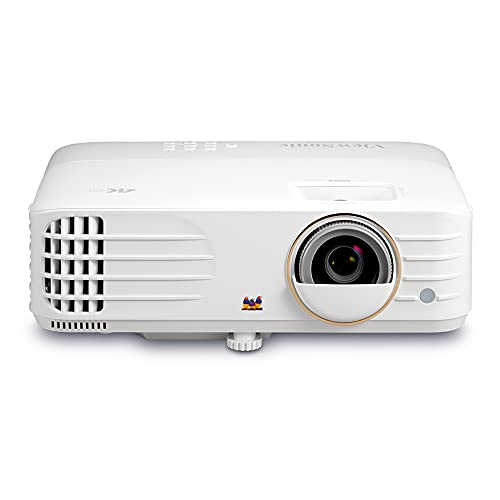
ViewSonic PX701 4K Review | 84 Data compared

Avg. price:~£770Native panel resolution:3840x2160ANSI lumens:3200Throw ratio:1.5-1.65:1Lamp life:6000 hours

ViewSonic PX701 4K Review: Compare 84 technical specifications and user reviews to see how this product ranks in the Projectors category and whether it is worth buying.
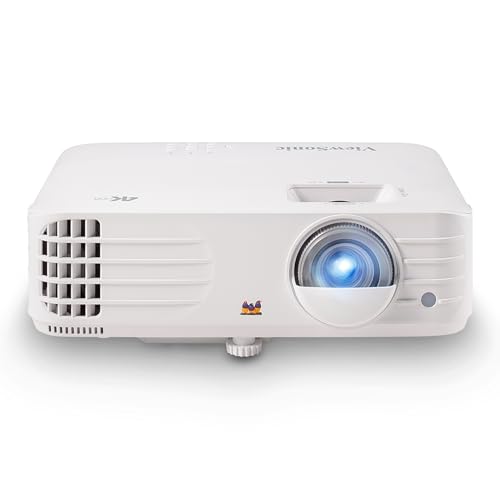
ViewSonic PX701 4K
7.0/10

Overall score

Score
7.0/ 10
✕
What it is
An overall evaluation of the projector's quality, based on technical analyses and user reviews.
When it matters
When you need a quick reference to identify the best projectors on the market.
Score distribution
▼
<55-66-77-88-99-10
Score components

90%

6.8

Technical score

10%

8.9

User score

▲Better than 68% of projectors
6.9

Value for money

Value for money
6.9/ 10
✕
What it is
An indicator that combines the projector's overall rating with its cost.
When it matters
When you are looking for a projector with a good balance between quality and price.
Score distribution
▼
<55-66-77-88-99-10
Score components

70%

7.0

Overall score

30%

6.5

Price

▲Better than 66%
6.8

Technical score

Technical score
6.8/ 10
✕
What it is
An assessment of technical performance for products in the Projectors category across these key areas: Image Quality, Projection & Lens, HDMI & Gaming, Connectivity, Audio & Features, Design & Power.
When it matters
When you want to compare projectors based on technical performance and available features.
Score distribution
▼
<55-66-77-88-99-10
Score components

42%

8.2

Image Quality

22%

5.7

Projection & Lens

12%

7.2

HDMI & Gaming

10%

5.6

Audio & Features

8%

5.2

Connectivity

6%

5.1

Design & Power

▲Better than 64%
8.9

User score

User score
8.9/ 10
✕
What it is
A rating that combines user reviews and the total number of reviews received by the projector.
When it matters
When you want to know how a projector performs in real use and how reliable it remains over time according to user feedback.
Score distribution
▼
<55-66-77-88-99-10
Score components

70%

8.4

User ratings

30%

10

Number of reviews

Based on ratings from across the web.
▲Better than 89%
  • viewsonic-px701-4k
  • viewsonic-px701-4k
  • viewsonic-px701-4k
  • viewsonic-px701-4k
  • viewsonic-px701-4k
  • viewsonic-px701-4k
  • viewsonic-px701-4k
  • viewsonic-px701-4k
  • viewsonic-px701-4k
viewsonic-px701-4k
viewsonic-px701-4k
viewsonic-px701-4k
viewsonic-px701-4k
viewsonic-px701-4k
viewsonic-px701-4k
viewsonic-px701-4k
viewsonic-px701-4k
viewsonic-px701-4k
Where to buy
*As an Amazon Associate, we earn from qualifying purchases.
Best rankings
Available: ranking among products currently available (including other versions of this product).All: ranking among all products in the database.

What owners say about the ViewSonic PX701-4K

Based on 34 owners sharing their experience in online comments

35%positive27%mixed38%negative

Owners praise the detailed picture for films and gaming, while washed out colors and unreliable input behavior undermine the experience.

What owners dislike

  • Owners report washed-out or dull colors, reddish yellows, purple fringes around white text, and grey-looking blacks.6
  • On a PC, owners see only 4K at 30Hz and Ultra Fast Input stays off, so 1080p cannot be selected; some games switch automatically.3
  • Owners see a green flash and source search when switching between games and apps, or a black-and-white screen for seconds when returning home.3

Points mentioned by at least 3 owners, most mentioned first.

Loading...
Loading category ranking...

Technical Specifications of projector ViewSonic PX701 4K

Technical score
Technical score
6.8/ 10
✕
What it is
An assessment of technical performance for products in the Projectors category across these key areas: Image Quality, Projection & Lens, HDMI & Gaming, Connectivity, Audio & Features, Design & Power.
When it matters
When you want to compare projectors based on technical performance and available features.
Score distribution
▼
<55-66-77-88-99-10
Score components:

42%

8.2

Image Quality

22%

5.7

Projection & Lens

12%

7.2

HDMI & Gaming

10%

5.6

Audio & Features

8%

5.2

Connectivity

6%

5.1

Design & Power

6.8
User score
User score
8.9/ 10
✕
What it is
A rating that combines user reviews and the total number of reviews received by the projector.
When it matters
When you want to know how a projector performs in real use and how reliable it remains over time according to user feedback.
Score distribution
▼
<55-66-77-88-99-10
Score components

70%

8.4

User ratings

30%

10

Number of reviews

Based on ratings from across the web.
8.9
Popularity
Popularity
10/ 10
✕
What it is
An indicator based on the number of reviews received by the projector.
When it matters
When you prefer to buy a product chosen and reviewed by many other consumers.
Score distribution
▼
<55-66-77-88-99-10
Popularity:
ViewSonic PX701 4K has a popularity score of 10 points, which is higher than 89.3% of projectors.
10
Value for money
Value for money
6.9/ 10
✕
What it is
An indicator that combines the projector's overall rating with its cost.
When it matters
When you are looking for a projector with a good balance between quality and price.
Score distribution
▼
<55-66-77-88-99-10
Score components:

70%

7.0

Overall score

30%

6.5

Price

6.9
ANSI lumens
3,200
This projector reaches 3,200 ANSI lumens, brighter than 73.9% of projectors and equal to 3.2% of projectors.
Contrast ratio
12,000:1
This projector has a contrast ratio of 12000:1, higher than 50.9% of projectors and equal to 2.3% of projectors.
Dynamic contrast ratio.
Native panel resolution
3840x2160
This projector uses a native resolution of 3840x2160, higher than 91.2% of projectors and equal to 4% of projectors.
Uses XPR pixel-shifting for 4K output.
Output Resolution
3840x2160
This projector supports output resolution up to 3840x2160, higher than 69.1% of projectors and equal to 26.1% of projectors.
Projection technology
DLP
Show more
Throw ratio
1.5-1.65:1
Min throw distance
1 m
This projector needs a minimum throw distance of 1 m, shorter than 51.4% of projectors and equal to 7.4% of projectors.
Max projection size
300 inch
This projector supports projection sizes up to 300 inch, larger than 51.9% of projectors and equal to 37.9% of projectors.
Zoom ratio
1.1
This projector offers a zoom ratio of 1.1, narrower than 86.1% of projectors and equal to 12.2% of projectors.
Motorized zoom
no
This projector does not have motorized zoom. 16.3% of projectors have motorized zoom.
Show more
Input lag
4.2 ms
This projector has input lag of 4.2 ms, lower than 93.1% of projectors and equal to 4.5% of projectors.
At 1080P/240Hz.
Auto low latency mode (ALLM)
no
This projector does not support ALLM. 17.2% of projectors support ALLM.
Variable refresh rate (VRR)
no
This projector does not support VRR. 1.6% of projectors support VRR.
HDMI version
2
This projector supports HDMI 2, more modern than 45.3% of projectors and equal to 36.8% of projectors.
Max HDMI bandwidth
18 Gbps
This projector supports HDMI bandwidth up to 18 Gbps, higher than 47.7% of projectors and equal to 40.1% of projectors.
Show more
N. of HDMI ports
2
This projector has 2 HDMI port/s, more than 45% of projectors and equal to 47.7% of projectors.
Wi-Fi connectivity
no
This projector does not support Wi-Fi. 52.9% of projectors support Wi-Fi.
Wi-Fi version
N/A
Bluetooth connectivity
no
This projector does not support Bluetooth. 50.5% of projectors support Bluetooth.
Bluetooth version
N/A
Show more
Smart TV features
no
This projector does not have smart TV features. 43.8% of projectors have smart TV features.
Operating system
none
Android OS
no
This projector does not run Android OS. 18.8% of projectors run Android OS.
Dedicated smartphone app
no
This projector does not come with a dedicated smartphone app. 35.2% of projectors come with a dedicated smartphone app.
Remote control
yes
This projector includes a remote control. 1.6% of projectors include a remote control.
Show more
Light source type
lamp
This projector uses lamp light source technology, less advanced than 67.1% of projectors and equal to 33% of projectors.
Laser Light Source
no
This projector does not use a laser light source. 28.1% of projectors use a laser light source.
Lamp life
6,000 hours
This projector offers lamp life of 6,000 hours, longer than 67.1% of projectors and equal to 2.9% of projectors.
Lamp life (eco mode)
20,000 hours
This projector offers eco-mode lamp life of 20,000 hours, shorter than 36.3% of projectors and equal to 19% of projectors.
Operating power consumption
290 W
This projector uses 290 W of power, more than 64.6% of projectors and equal to 0.6% of projectors.
Show more

ViewSonic PX701 4K vs the average projector

246810TotalImage QualityProjection & LensHDMI & GamingConnectivityAudio & FeaturesDesign & Power
  • High native resolution
    This projector has a higher native panel resolution than the average projector (3840x2160 vs 1920x1080). The average projector has a native panel resolution of 1920x1080.
    Uses XPR pixel-shifting for 4K output.
    3840x2160 vs 1920x1080
  • Higher output resolution
    This projector supports a higher output resolution than the average projector (3840x2160 vs 1920x1080). The average projector outputs at 1920x1080 resolution.
    3840x2160 vs 1920x1080
  • 45.5% brighter image
    This projector has higher ANSI lumens than the average projector (3,200 vs 2,200). The average projector has 2,200 ANSI lumens.
    3,200 vs 2,200
  • 2.82x higher refresh rate
    This projector has a higher refresh rate than the average projector (240 Hz vs 85 Hz). The average projector has 85 Hz of refresh rate.
    240 Hz vs 85 Hz
  • Supports pixel shifting
    This projector supports pixel shifting, while the average projector does not. 28.4% of projectors support pixel shifting.
    Via XPR technology.
  • 22.8 ms lower input lag
    This projector has a lower input lag than the average projector (4.2 ms vs 27 ms). The average projector has 27 ms of input lag.
    At 1080P/240Hz.
    4.2 ms vs 27 ms
  • 10 degrees greater vertical keystone correction
    This projector offers more vertical keystone correction than the average projector (40 degrees degrees vs 30 degrees degrees). The average projector offers 30 degrees degrees of vertical keystone correction.
    40 degrees vs 30 degrees
  • 10 degrees greater horizontal keystone correction
    This projector offers more horizontal keystone correction than the average projector (40 degrees degrees vs 30 degrees degrees). The average projector offers 30 degrees degrees of horizontal keystone correction.
    40 degrees vs 30 degrees
  • 10.9% higher user score
    User score
    8.9/ 10
    ✕
    What it is
    A rating that combines user reviews and the total number of reviews received by the projector.
    When it matters
    When you want to know how a projector performs in real use and how reliable it remains over time according to user feedback.
    Score distribution
    ▼
    ▼
    <55-66-77-88-99-10
    ViewSonic PX701 4K
    the average projector
    ViewSonic PX701 4K has a higher user score than the average projector (8.87 vs 8.000).
    8.87 vs 8
  • 2.05x more popular
    ViewSonic PX701 4K has a higher popularity than the average projector (10 vs 4.9).
    10 vs 4.87
  • High native resolution
    This projector has a higher native panel resolution than the average projector (3840x2160 vs 1920x1080). The average projector has a native panel resolution of 1920x1080.
    Uses XPR pixel-shifting for 4K output.
    3840x2160 vs 1920x1080
  • Higher output resolution
    This projector supports a higher output resolution than the average projector (3840x2160 vs 1920x1080). The average projector outputs at 1920x1080 resolution.
    3840x2160 vs 1920x1080
  • 45.5% brighter image
    This projector has higher ANSI lumens than the average projector (3,200 vs 2,200). The average projector has 2,200 ANSI lumens.
    3,200 vs 2,200
  • 2.82x higher refresh rate
    This projector has a higher refresh rate than the average projector (240 Hz vs 85 Hz). The average projector has 85 Hz of refresh rate.
    240 Hz vs 85 Hz
  • Supports pixel shifting
    This projector supports pixel shifting, while the average projector does not. 28.4% of projectors support pixel shifting.
    Via XPR technology.
  • Supports HLG
    This projector supports HLG, while the average projector does not. 42.7% of projectors support HLG.
  • 10 degrees greater vertical keystone correction
    This projector offers more vertical keystone correction than the average projector (40 degrees degrees vs 30 degrees degrees). The average projector offers 30 degrees degrees of vertical keystone correction.
    40 degrees vs 30 degrees
  • 10 degrees greater horizontal keystone correction
    This projector offers more horizontal keystone correction than the average projector (40 degrees degrees vs 30 degrees degrees). The average projector offers 30 degrees degrees of horizontal keystone correction.
    40 degrees vs 30 degrees
  • 53.5 inch larger image size
    This projector has a higher projection size than the average projector (300 inch vs 246.5 inch). The average projector has 246.5 inch of projection size.
    300 inch vs 246.5 inch
  • 22.8 ms lower input lag
    This projector has a lower input lag than the average projector (4.2 ms vs 27 ms). The average projector has 27 ms of input lag.
    At 1080P/240Hz.
    4.2 ms vs 27 ms
  • Basic light source
    This projector has Basic light source than the average projector (lamp vs laser). The average projector uses a laser light source.
    lamp vs laser
  • No Wi-Fi support
    This projector does not support Wi-Fi, while the average projector does. 52.9% of projectors support Wi-Fi.
  • No Bluetooth support
    This projector does not support Bluetooth, while the average projector does. 50.5% of projectors support Bluetooth.
  • 10 % less horizontal lens shift
    This projector has fewer horizontal lens shift than the average projector (20 % vs 30 %). The average projector has 30 % horizontal lens shift.
    20 % vs 30 %
  • Limited HDMI format
    This projector supports a less capable max HDMI input format than the average projector (4K/60Hz vs 4K/120Hz). The average projector supports a max HDMI input format of 4K/120Hz.
    4K/60Hz vs 4K/120Hz
  • 0.2 2x narrower zoom range
    This projector has a lower zoom ratio than the average projector (1.1 vs 1.3). The average projector has 1.3 of zoom ratio.
    1.1 vs 1.3
  • 40 % less vertical lens shift
    This projector has fewer vertical lens shift than the average projector (20 % vs 60 %). The average projector has 60 % vertical lens shift.
    20 % vs 60 %
  • 14,000 hours shorter lamp life
    This projector has a lower lamp life than the average projector (6,000 hours vs 20,000 hours). The average projector has 20,000 hours of lamp life.
    6,000 hours vs 20,000 hours
  • 10 % less horizontal lens shift
    This projector has fewer horizontal lens shift than the average projector (20 % vs 30 %). The average projector has 30 % horizontal lens shift.
    20 % vs 30 %
  • 0.2 2x narrower zoom range
    This projector has a lower zoom ratio than the average projector (1.1 vs 1.3). The average projector has 1.3 of zoom ratio.
    1.1 vs 1.3
  • 40 % less vertical lens shift
    This projector has fewer vertical lens shift than the average projector (20 % vs 60 %). The average projector has 60 % vertical lens shift.
    20 % vs 60 %
  • Limited HDMI format
    This projector supports a less capable max HDMI input format than the average projector (4K/60Hz vs 4K/120Hz). The average projector supports a max HDMI input format of 4K/120Hz.
    4K/60Hz vs 4K/120Hz
  • No Wi-Fi support
    This projector does not support Wi-Fi, while the average projector does. 52.9% of projectors support Wi-Fi.
  • No Bluetooth support
    This projector does not support Bluetooth, while the average projector does. 50.5% of projectors support Bluetooth.
  • Basic light source
    This projector has Basic light source than the average projector (lamp vs laser). The average projector uses a laser light source.
    lamp vs laser
  • 14,000 hours shorter lamp life
    This projector has a lower lamp life than the average projector (6,000 hours vs 20,000 hours). The average projector has 20,000 hours of lamp life.
    6,000 hours vs 20,000 hours
  • 1 dB louder operation
    This projector has a higher audible noise than the average projector (31 dB vs 30 dB). The average projector has 30 dB of audible noise.
    31 dB vs 30 dB
  • 55 W higher power use
    This projector uses more power than the average projector (290 W vs 235 W). The average projector uses 235 W of power.
    290 W vs 235 W

Video reviews

Hands-on testing, unboxing, and real-world video evaluations

9.0
MRFOURKAY
≈ estimated
30/10/2021
Feature deep-dive · zoom and aspect ratio tests
Verdict
ViewSonic PX701-4K is great value for movies, games and PC, though some rivals offer more features.
9.5
MRFOURKAY
≈ estimated
29/10/2021
Feature deep-dive · focus, colour and gaming tests
Verdict
ViewSonic PX701-4K is outstanding for the price, especially for gaming, with a sharp lens and bright HDR picture.
9.5
MRFOURKAY
≈ estimated
25/10/2021
Hands-on review · PS5 gaming and picture tests
Verdict
ViewSonic PX701-4K is a strong pick for gaming, with low latency, bright HDR and few real drawbacks.
9.5
MRFOURKAY
≈ estimated
24/10/2021
Hands-on viewing · movie playback and gaming impressions
Verdict
ViewSonic PX701-4K impresses with its picture and low latency, and it is the most affordable way to get 4K HDR and 240Hz.
8.0
ItsTheRealMrMaD
≈ estimated
12/03/2023
First look · unboxing and setup
Verdict
ViewSonic PX701-4K looks like a good compromise at the extra cost, and the reviewer hopes it will be their last projector.
9.0
MRFOURKAY
≈ estimated
24/10/2021
First look · unboxing, setup and gaming impressions
Verdict
ViewSonic PX701-4K makes a strong first impression and is hard to beat for the money, though calibration is still to come.
9.0
PaaTing Reviews
≈ estimated
05/03/2021
Short review · UHD picture and colour tests
Verdict
ViewSonic PX701-4K delivers a striking UHD picture with rich colour and strong value for money.
Overview video
Overview video
Brand video
Overview video
Not graded

Third-party reviews

Based on ratings from across the web.
Reviews last updated: October 2026 · How we calculate this

What customers like about ViewSonic PX701 4K

  • High brightness (3,200 ANSI Lumens) makes it suitable for rooms with some ambient light.
  • Excellent gaming performance with ultra-low input lag (4.2ms at 1080p/240Hz).
  • Sharp 4K UHD resolution using pixel-shifting technology for detailed images.
  • User-friendly setup features including automatic vertical keystone and 4-corner adjustment.
  • Long lamp life of up to 20,000 hours in SuperEco+ mode.
  • High value for money as one of the most affordable 4K projectors on the market.

What customers don't like about ViewSonic PX701 4K

  • Mediocre contrast and black levels, with blacks appearing as dark gray in dark scenes.
  • Poor out-of-the-box color accuracy that is difficult to improve significantly through calibration.
  • Noticeable fan noise and reports of a high-pitched whine from some units.
  • Underwhelming 10W mono built-in speaker that lacks bass and sounds tinny.
  • Limited 1.1x optical zoom and lack of a smart OS or wireless casting capabilities.
  • Potential for rainbow artifacts due to the single-chip DLP design and color wheel.

Verdict

The ViewSonic PX701-4K is a high-brightness 4K UHD home theater and gaming projector featuring 3,200 ANSI Lumens, a 12,000:1 dynamic contrast ratio, and support for HDR10/HLG content. Key characteristics include an ultra-fast 4.2ms input lag and a 240Hz refresh rate at 1080p, making it exceptional for competitive gaming, alongside flexible installation tools like 4-corner adjustment and automatic vertical keystone. Main pros include its impressive brightness for rooms with ambient light, a long-lasting lamp life of up to 20,000 hours in SuperEco+ mode, and high-quality 4K detail using pixel-shifting technology. However, available cons include mediocre native contrast with limited shadow detail in dark scenes, poor out-of-the-box color accuracy, and a restricted 1.1x optical zoom that requires precise placement.

Compare ViewSonic PX701 4K with other products in the Projectors category

1Product to compare no. 1
VS
2Product to compare no. 2
VS
3Product to compare no. 3 (optional)

Graphic comparison of ViewSonic PX701 4K and other products in the Projectors category

No results found