
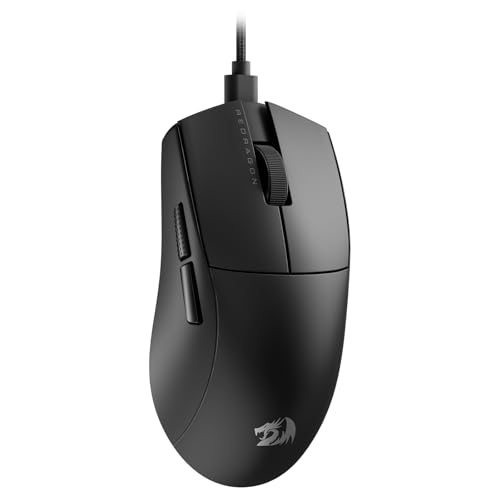
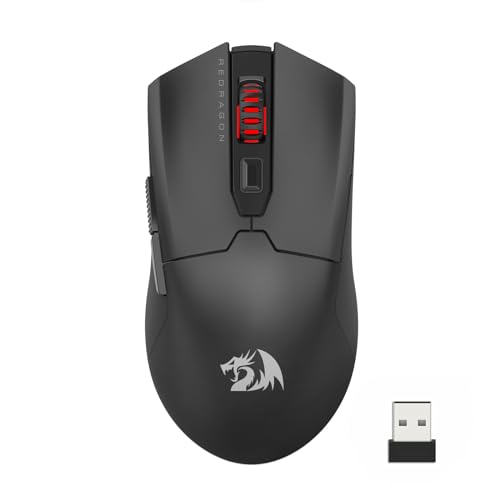
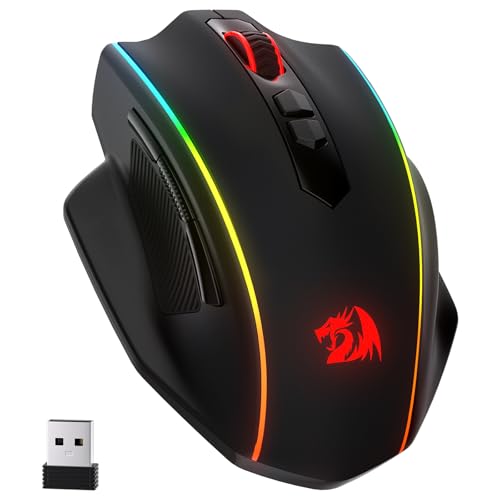
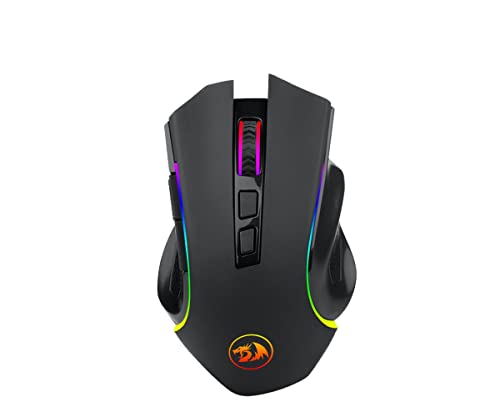
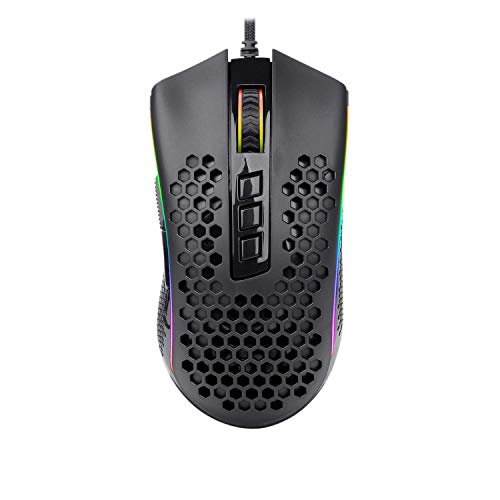
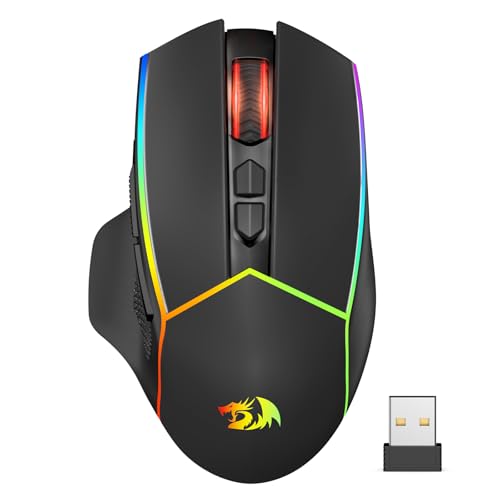
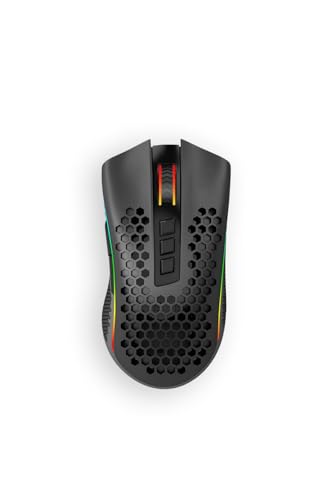
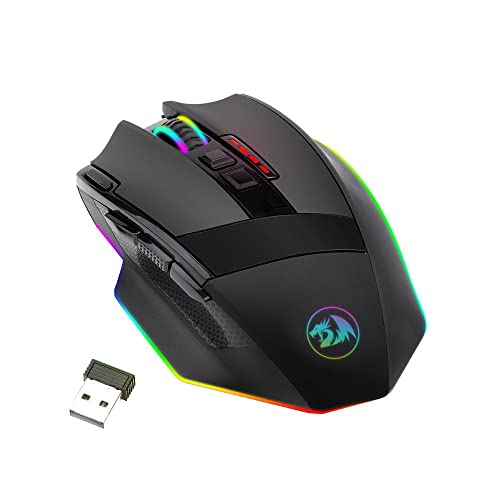
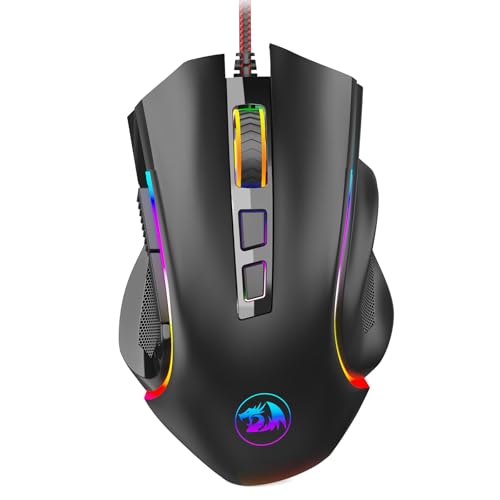
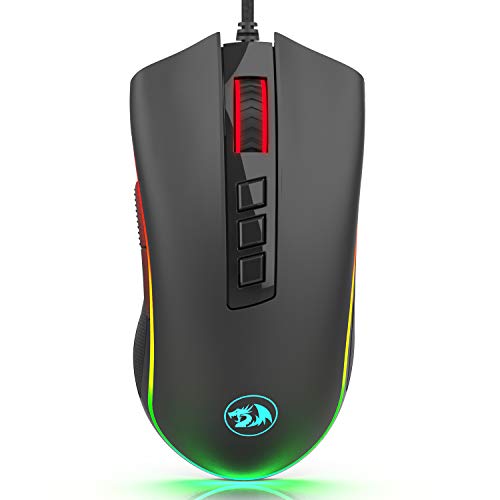
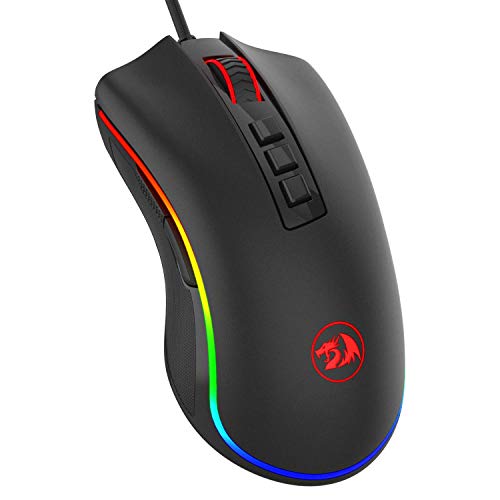
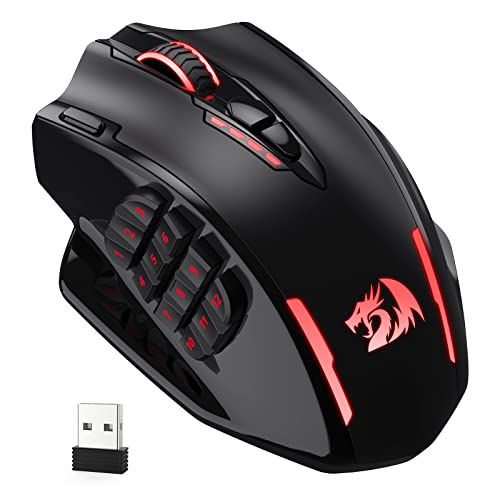
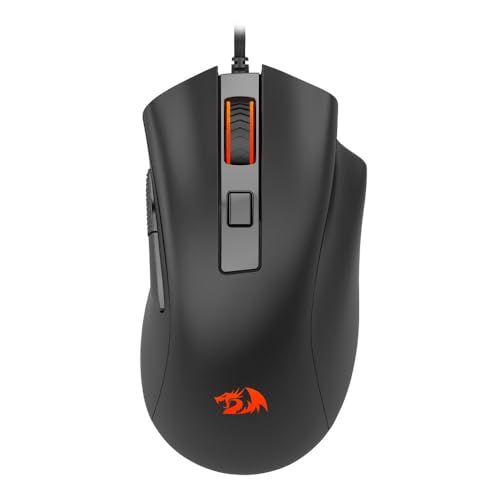
Are Redragon mice good?
Redragon mice have an average overall score of 7, ranking #16 among all mouse brands, and an average user rating of 9.3, placing them at #2 by user reviews.
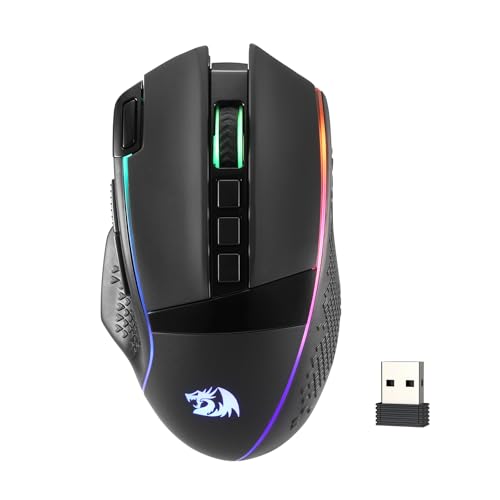
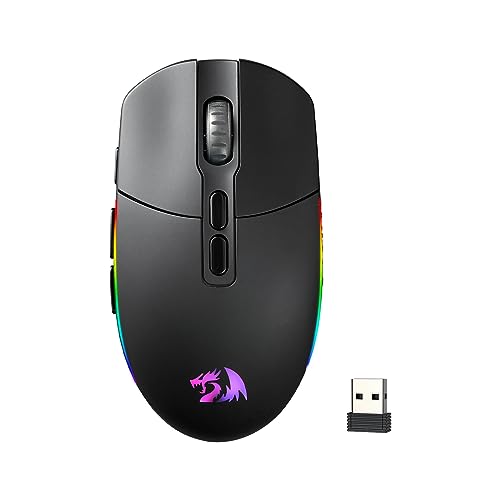
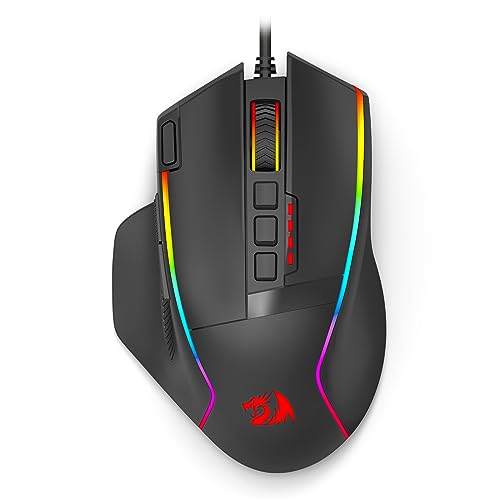
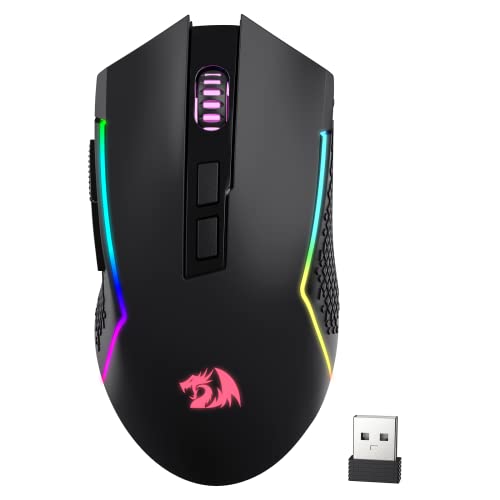
Redragon mice are generally good if you want gaming-focused hardware at aggressive prices. The current brand range is almost entirely gaming-oriented, with high-DPI sensors, frequent 1,000 Hz support, many wireless-capable options, and even a few faster-polling models that push beyond the usual budget-brand baseline.
Redragon's main strength is that the lineup is built around practical gaming value rather than around basic office use. Most models sit in the 20-£45 range, yet the catalog still reaches 16,000-32,000 DPI on many mice, includes lightweight and multi-button branches, and offers a broad mix of wired, 2.4 GHz, Bluetooth, and tri-mode options.
The tradeoff is that Redragon is still a budget gaming brand, not a top-tier premium one. Refinement, software maturity, and consistency across the whole lineup are not usually at the same level as stronger enthusiast brands, so the best Redragon mice win mainly on feature-per-euro value rather than on absolute category leadership.
The following chart ranks different mouse brands by their overall score.
[horizontal-chart-10006215032922910990025366955646244765042673557078]
What are the main advantages of Redragon mice?
The main advantages of Redragon mice are as follows.
- Strong gaming value: Redragon is built around affordable gaming specs rather than around basic office hardware. That gives the brand a clear identity for buyers who want performance-oriented features without spending much.
- Aggressive pricing: Most Redragon mice sit around 20-£45, with the broader range stretching from about £9 to £60. That makes the brand very accessible for budget gaming setups.
- High-performance spec coverage: Redragon does not stop at entry-level numbers. The lineup includes many mice with 1,000 Hz polling, several 16,000-32,000 DPI models, and even faster-polling options that push to 4,000 Hz or 8,000 Hz.
- Broad wireless choice: 27 of the 48 listed Redragon mice support wireless-capable connectivity. That gives the brand useful depth for buyers who want 2.4 GHz or tri-mode gaming without moving into premium pricing.
- Good variety inside gaming use: Redragon offers lightweight speed-focused mice, heavier multi-button designs, mainstream all-rounders, and MMO-style options. The lineup is much broader than a one-shape budget gaming brand.
- Multiple ambidextrous options: There are also plenty of ambidextrous Redragon options, which is valuable for buyers who prefer more neutral gaming shapes instead of strongly right-handed shells only.
What are the main disadvantages of Redragon mice?
The main disadvantages of Redragon mice are as follows.
- Premium refinement is limited: Redragon offers strong specs for the money, but it is still a budget gaming brand. That usually means lower polish, weaker ecosystem depth, and less premium feel than stronger enthusiast competitors.
- Office or productivity coverage is weak: The current Redragon lineup is almost entirely gaming-oriented. If you want silent office features, business ergonomics, or a non-gaming workflow focus, the brand is much less suitable.
- Lineup consistency is uneven: Redragon covers many price points and variants, but quality and tuning are not always equally strong across the whole range. That makes model-by-model selection more important than trusting the brand name alone.
- Some models are heavy or specialized: Redragon includes lightweight options, but it also has quite a few heavier mice and several multi-button or MMO-style designs. Those are not ideal if you want the lightest possible universal gaming shape.
- Software maturity is not the main selling point: Redragon can offer useful gaming features, yet it is not usually chosen for category-leading software, profile ecosystems, or deep premium customization. Buyers who care about that may want more established brands.
- High spec claims do not always mean high-end overall experience: Redragon often lists impressive DPI or polling numbers, but those alone do not guarantee top-tier sensor tuning, build quality, or long-term refinement. The value is real, though it is still value-first.
Who makes Redragon mice?
Redragon mice are made by Redragon, the gaming-peripherals brand best known for budget-focused keyboards, mice, headsets, and related PC accessories. The brand is positioned around affordable gaming gear rather than around mainstream office peripherals or premium enthusiast pricing.
That brand identity matches the current mouse lineup very closely. Redragon approaches mice as gaming tools first, which is why its catalog is filled with high-DPI wired and wireless gaming models, lightweight options, and multi-button variants instead of broader office or productivity families.
What are the main Redragon mouse series?
The main Redragon mouse series are as follows.
- Budget gaming series: Models such as the M601, M602, M605, M607, M612, M614, M652, and M653 form the lower-cost side of the range. These mice are aimed at giving gaming-oriented shapes and features at very low prices.
- Mainstream gaming series: Models such as the M709, M711, M715, M716, M719, M720, M724, M805, M812, and M988 represent the core of Redragon's everyday gaming lineup. This branch mixes standard wired shapes, higher DPI ceilings, and several common all-round gaming designs.
- Wireless and tri-mode series: Models such as the M686, M690, M693, M808 Pro, M814, M915, M916, and M991 form the more cable-free side of the catalog. Their role is to bring 2.4 GHz or tri-mode flexibility into the same budget gaming focus.
- Lightweight and specialist series: Models such as the M808 lightweight branch, the M916 Pro family, the M917 ST4r Pro, the M995 Fyzu, and the M908 MMO-style line target more specific gaming preferences. These mice are built for lower weight, faster polling, or broader button counts rather than for one generic shape.
Redragon's lineup is not divided by office versus gaming use the way some broader brands are. The main split is inside gaming itself, between cheaper entry models, mainstream all-rounders, wireless variants, and lighter or more specialized branches.
How much do Redragon mice cost?
Redragon mice usually cost about 10-£60, with most models concentrated in the 20-£45 range, so the brand sits firmly in the affordable gaming segment. Redragon is not priced like a premium mouse brand, and that low entry point is one of its biggest selling points.
That pricing matches the hardware direction. Redragon offers gaming-focused mice with frequent 1,000 Hz polling, many 8,000-32,000 DPI-class options, a large number of wireless-capable models, and several lightweight or specialist designs, while still keeping the lineup in budget-friendly price bands.
This chart visualizes Redragon mouse prices.
[vertical-chart-12517646220688744727074583230790295485164007053566]
How do Redragon mice compare with Logitech models?
Redragon mice usually compare with Logitech models as the cheaper, more gaming-value-focused alternative, while Logitech is the broader and more mature brand across office, productivity, and gaming. Redragon is stronger when you want aggressive gaming specs for less money, whereas Logitech is usually stronger if you want deeper refinement, a wider ecosystem, and more proven premium options.
Redragon stays tightly concentrated between £9 and £60 and focuses almost entirely on gaming use. Logitech stretches far more broadly in both price and use-case coverage, so Redragon makes the most sense for budget gaming buyers, while Logitech is the safer all-around brand if you need more segment depth or higher-end polish.
What should you consider while choosing the best Redragon mouse?
The main technical criteria for the best Redragon mouse are as follows.
- Gaming branch: Redragon is easiest to shop by gaming sub-type. The lightweight branch fits lower-mass, faster movement; the mainstream all-round side is the safer middle when you want balance; the MMO branch is only justified when side-button density will genuinely be used; and the wireless side makes sense when cable freedom matters enough to justify the usual charging and price tradeoffs.
- Sensor and polling tier: The brand spans from 125 Hz entry hardware to 4,000-8,000 Hz higher-end models and up to 32,000 DPI-class sensors, so the technical ceiling is wider than many buyers expect. That means you should not assume every Redragon mouse is just a budget gaming clone; some are basic, while others are trying to compete in a much faster response tier.
- Connection stack: Wired, 2.4 GHz, Bluetooth, and tri-mode designs all appear, which makes desk setup an early buying filter. If the mouse will mostly stay on one gaming desk, wired or 2.4 GHz usually makes the cleanest sense; Bluetooth matters more when mixed-device convenience is part of the reason to buy.
- Shape and weight: The range here spans about 42-166 g with both right-handed and ambidextrous forms, so movement feel varies dramatically. The lower end suits quicker handling, while the heavier end usually means more body, more buttons, or a more comfort-first design that should be bought deliberately rather than by accident.
- Button density: The catalog runs from simple 5-button lightweight shells to much denser MMO-oriented layouts. Keep the simpler layouts if fast movement and grip security matter most, and only move into the heavier many-button side when the genre or workflow can actually exploit it.
- Value profile: Redragon is strongest when feature count per euro matters more than long-established polish, top software depth, or brand prestige. It rewards buyers who know which feature class they need, because on paper two Redragon mice can look similar while feeling very different once weight, shell shape, and button density are taken seriously.