Scored using eReaders Methodology v1.0
eReaders Methodology v1.0
Mathematical & Unbiased Scoring
Products in this category are evaluated mathematically under Frontumo eReaders Methodology v1.0 using verified laboratory benchmarks, technical specifications, and authentic consumer ratings with 0% commercial bias.
Explore eReaders Methodology v1.0

Sony Prs T1 Review | 68 Data compared

Avg. price:~£140Screen size:6 inchesPixel density:166 ppiInternal storage:2 GBBattery life:15 hoursSupported bookstore ecosystem:Sony Open Ecosystem

Sony Prs T1 Review: Compare 68 technical specifications and user reviews to see how this product ranks in the eReaders category and whether it is worth buying.

5.0

Overall score

Score
5.0/ 10
✕
What it is
An overall evaluation of the eReader's quality, based on technical analyses and user reviews.
When it matters
When you need a quick reference to identify the best eReaders on the market.
Score distribution
â–¼
<55-66-77-88-99-10
Score components

90%

4.7

Technical score

10%

7.2

User score

â–¼Worse than 86% of ereaders
4.7

Technical score

Technical score
4.7/ 10
✕
What it is
An assessment of the eReader's technical performance, covering key areas such as display quality, reading features, battery life, format support, ecosystem, and design.
When it matters
When you want to compare eReaders based on technical performance and available features.
Score distribution
â–¼
<55-66-77-88-99-10
Score components

25%

3.9

Display

22%

6.0

Reading

18%

3.5

Battery

14%

4.9

Hardware

12%

4.0

Connectivity

9%

7.0

Design

â–¼Worse than 86% of ereaders
7.2

User score

User score
7.2/ 10
✕
What it is
A rating that combines user reviews and the total number of reviews received by the eReader.
When it matters
When you want to know how an eReader feels in daily reading and how reliable it is for screen comfort, battery life, and library management according to user feedback.
Score distribution
â–¼
<55-66-77-88-99-10
Score components

70%

7.8

User ratings

30%

6.0

Number of reviews

Based on 416 buyer reviews from online shops.
How we calculate this
User ratings – average star rating across all shop listings, weighted by how many reviews each has, on a 1–10 scale.
Number of reviews – how many buyer reviews the product has, on a logarithmic scale; the 8% most-reviewed models in the category get 10.
â–¼Worse than 76% of ereaders
  • sony-prs-t1
  • sony-prs-t1
  • sony-prs-t1
sony-prs-t1
sony-prs-t1
sony-prs-t1

Best prices

*As an Amazon Associate, we earn from qualifying purchases.

Best rankings

Available: ranking among products currently available (including other versions of this product).All: ranking among all products in the database.
Loading...
Loading category ranking...

Technical Specifications of eReader Sony Prs T1

Technical score
Technical score
4.7/ 10
✕
What it is
An assessment of the eReader's technical performance, covering key areas such as display quality, reading features, battery life, format support, ecosystem, and design.
When it matters
When you want to compare eReaders based on technical performance and available features.
Score distribution
â–¼
<55-66-77-88-99-10
Score components:

25%

3.9

Display

22%

6.0

Reading

18%

3.5

Battery

14%

4.9

Hardware

12%

4.0

Connectivity

9%

7.0

Design

4.7
User score
User score
7.2/ 10
✕
What it is
A rating that combines user reviews and the total number of reviews received by the eReader.
When it matters
When you want to know how an eReader feels in daily reading and how reliable it is for screen comfort, battery life, and library management according to user feedback.
Score distribution
â–¼
<55-66-77-88-99-10
Score components

70%

7.8

User ratings

30%

6.0

Number of reviews

Based on 416 buyer reviews from online shops.
How we calculate this
User ratings – average star rating across all shop listings, weighted by how many reviews each has, on a 1–10 scale.
Number of reviews – how many buyer reviews the product has, on a logarithmic scale; the 8% most-reviewed models in the category get 10.
7.2
Popularity
Popularity
6.0/ 10
✕
What it is
An indicator based on the number of reviews received by the eReader.
When it matters
When you prefer to choose an eReader reviewed and selected by many other buyers.
Score distribution
â–¼
<55-66-77-88-99-10
Popularity:
Sony Prs T1 has a popularity score of 6 points, which is higher than that of 58.2% of products in this category.
6.0
Value for money
Value for money
6.4/ 10
✕
What it is
An indicator that combines the eReader's overall rating with its cost.
When it matters
When you are looking for an eReader with a good balance between reading comfort, features, and price.
Score distribution
â–¼
<55-66-77-88-99-10
Score components:

60%

5.0

Overall score

40%

9.8

Price

6.4
Brand name
Sony
Screen size
6 inches
Screen size
6 inches
This ereader has a screen size of 6 inches which is smaller than 57.4% on this spec and equal to 40.2% of eReaders.
Screen resolution
600x800 px
Screen resolution
600x800 px
This ereader uses a screen resolution of 600x800 px, which is less sharp than that of 83.6% of eReaders and the same as that of 15.6% of eReaders.
Pixel density
166 ppi
Pixel density
166 ppi
This ereader has a pixel density of 166 ppi which is lower than 89.3% on this spec and equal to 1.6% of eReaders.
E-paper display
yes
E-paper display
yes
This ereader uses an e-paper display. 2.5% of eReaders have an e-paper display.
Show more
Supported file types
3
Supported file types
3
This ereader supports 3 file types which is fewer than 94.9% on this spec and equal to 1.7% of eReaders.
PDF reflow support
yes
PDF reflow support
yes
This ereader offers PDF reflow. 45.5% of eReaders support PDF reflow.
Annotation support
yes
Annotation support
yes
This ereader offers annotation support. 1.6% of eReaders offer annotation support.
Dictionary
yes
Dictionary
yes
This ereader includes a built-in dictionary. 0.8% of eReaders include a built-in dictionary.
Text-to-speech
no
Text-to-speech
no
This ereader does not offer text-to-speech. 64.8% of eReaders include text-to-speech.
Show more
Battery life
15 hours
Battery life
15 hours
This ereader offers 15 hours of battery life which is shorter than 65.6% on this spec and equal to 16.7% of eReaders.
Battery capacity
1,000 mAh
Battery capacity
1,000 mAh
This ereader has a battery capacity of 1,000 mAh which is lower than 85.1% on this spec and equal to 9.9% of eReaders.
Charging time
2 hours
Charging time
2 hours
This ereader takes 2 hours to charge which is quicker than 49.1% on this spec and equal to 40% of eReaders.
2.5 hours via computer USB, 2 hours via optional AC adapter
Wireless charging
no
Wireless charging
no
This ereader does not offer wireless charging. 7.4% of eReaders offer wireless charging.
Internal storage
2 GB
Internal storage
2 GB
This ereader offers 2 GB of internal storage which is less than 81.2% on this spec and equal to 17.2% of eReaders.
RAM capacity
0.256 GB
RAM capacity
0.256 GB
This ereader offers 0.256 GB of RAM which is less than 71.3% on this spec and equal to 15.6% of eReaders.
CPU base clock speed
1x 0.8 GHz
CPU base clock speed
1x 0.8 GHz
This ereader has a CPU base clock speed of 1x0.8 GHz, which is slower than that of 76% of eReaders and the same as that of 14.9% of eReaders.
Operating system
Android
Operating system
Android
This ereader runs Android, which is more advanced than that of 96.7% of eReaders and the same as that of 3.3% of eReaders.
Memory card slot
yes
Memory card slot
yes
This ereader has a memory card slot. 57.4% of eReaders have a memory card slot.
Show more
Wi-Fi connectivity
yes
Wi-Fi connectivity
yes
This ereader connects over Wi-Fi. 6.6% of eReaders have Wi-Fi.
Wi-Fi version
Wi-Fi 4 (802.11n)
Wi-Fi version
Wi-Fi 4 (802.11n)
This ereader supports Wi-Fi Wi-Fi 4 (802.11n), which is newer than that of 10.7% of eReaders and the same as that of 46.7% of eReaders.
Wi-Fi bands supported
2.4 GHz
Wi-Fi bands supported
2.4 GHz
This ereader supports 2.4 GHz Wi-Fi bands, which is broader than that of 6.6% of eReaders and the same as that of 50% of eReaders.
Bluetooth
no
Bluetooth
no
This ereader does not connect over Bluetooth. 60.7% of eReaders have Bluetooth.
Bluetooth version
N/A
Show more
Weight
168 g
Weight
168 g
This ereader weighs 168 g which is lighter than 86.1% on this spec.
Thickness
8.9 mm
Thickness
8.9 mm
This ereader is 8.9 mm thick which is thicker than 67.8% on this spec.
Height
173 mm
Height
173 mm
This ereader is 173 mm tall which is shorter than 49.2% on this spec and equal to 0.8% of eReaders.
Width
110 mm
Width
110 mm
This ereader is 110 mm wide which is narrower than 86.9% on this spec and equal to 1.6% of eReaders.
Water resistance (splashproof)
no
Water resistance (splashproof)
no
This ereader does not have water resistance against splashes. 25% of eReaders have water resistance against splashes.
Show more

Sony Prs T1 vs the average eReader

246810TotalDisplayReadingBatteryHardwareConnectivityDesign
  • More advanced operating system
    Operating system
    Android
    This ereader uses Android, a more advanced operating system than Kindle OS on the average eReader.
    Android vs Kindle OS
  • Memory card slot
    Memory card slot
    yes
    This ereader includes a memory card slot, while the average eReader does not. 43.1% of eReaders include a memory card slot.
  • Page-turn buttons
    Page-turn buttons
    yes
    This ereader has page-turn buttons, while the average eReader does not. 44.7% of eReaders have page-turn buttons.
  • 3.5 mm jack
    3.5 mm headphone jack
    yes
    This ereader has a 3.5 mm headphone jack, while the average eReader does not. 15.6% of eReaders have a 3.5 mm headphone jack.
  • Supports stylus
    Stylus support
    yes
    This ereader supports a stylus, while the average eReader does not. 38.2% of eReaders support a stylus.
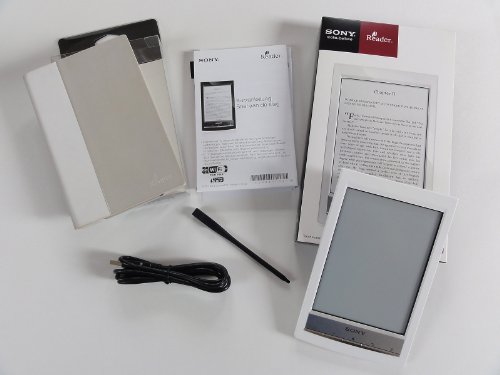
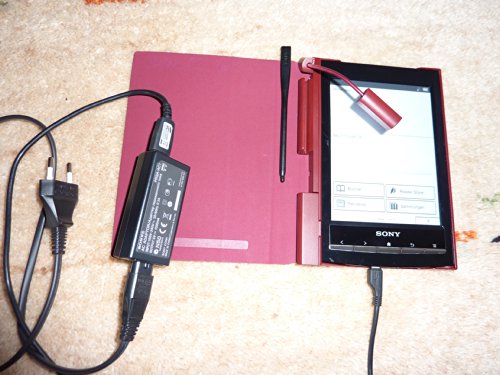
    stylus is included in the box for writing/annotating
  • 21.1% lighter
    Weight
    168 g
    This ereader is lighter than the average eReader (168 g vs 213 g). The average eReader weighs 213 g.
    168 g vs 213 g
  • Stylus included
    Stylus included
    yes
    This ereader includes a stylus, while the average eReader does not. 29.3% of eReaders include a stylus.
    Stylus included in the box.
  • 17.6 mm narrower
    Width
    110 mm
    This ereader is narrower than the average eReader (110 mm vs 127.6 mm). The average eReader width is 127.6 mm.
    110 mm vs 127.6 mm
  • Supports stylus
    Stylus support
    yes
    This ereader supports a stylus, while the average eReader does not. 38.2% of eReaders support a stylus.
    stylus is included in the box for writing/annotating
  • Stylus included
    Stylus included
    yes
    This ereader includes a stylus, while the average eReader does not. 29.3% of eReaders include a stylus.
    Stylus included in the box.
  • More advanced operating system
    Operating system
    Android
    This ereader uses Android, a more advanced operating system than Kindle OS on the average eReader.
    Android vs Kindle OS
  • Memory card slot
    Memory card slot
    yes
    This ereader includes a memory card slot, while the average eReader does not. 43.1% of eReaders include a memory card slot.
  • 3.5 mm jack
    3.5 mm headphone jack
    yes
    This ereader has a 3.5 mm headphone jack, while the average eReader does not. 15.6% of eReaders have a 3.5 mm headphone jack.
  • Page-turn buttons
    Page-turn buttons
    yes
    This ereader has page-turn buttons, while the average eReader does not. 44.7% of eReaders have page-turn buttons.
  • 21.1% lighter
    Weight
    168 g
    This ereader is lighter than the average eReader (168 g vs 213 g). The average eReader weighs 213 g.
    168 g vs 213 g
  • 17.6 mm narrower
    Width
    110 mm
    This ereader is narrower than the average eReader (110 mm vs 127.6 mm). The average eReader width is 127.6 mm.
    110 mm vs 127.6 mm
  • Limited bookstore ecosystem
    Supported bookstore ecosystem
    Sony Open Ecosystem
    This ereader uses the Sony Open Ecosystem bookstore ecosystem, while the average eReader uses Android Open Ecosystem.
    Sony eBookstore, Kobo, Google Books, and other Adobe DRM or DRM-free EPUB/PDF stores.
    Sony Open Ecosystem vs Android Open Ecosystem
  • Less advanced E-Ink technology
    E-Ink technology
    Pearl
    This ereader uses Pearl E-Ink technology, while the average eReader uses Carta Plus.
    Pearl vs Carta Plus
  • No front light
    Front light
    no
    This ereader does not include front light, while the average eReader does. 74% of eReaders include front light.
  • 37.4% lower pixel density
    Pixel density
    166 ppi
    This ereader has a lower pixel density than the average eReader (166 ppi vs 265 ppi). The average eReader has a pixel density of 265 ppi.
    166 ppi vs 265 ppi
  • Lower screen resolution
    Screen resolution
    600x800 px
    This ereader supports lower screen resolution than the average eReader (600x800 px vs 1072x1448 px). The average eReader supports 1072x1448 px screen resolution.
    600x800 px vs 1072x1448 px
  • No USB Type-C
    USB Type-C
    no
    This ereader does not have USB Type-C, while the average eReader does. 51.2% of eReaders have USB Type-C.
  • 12 fewer supported file formats
    Supported file types
    3
    This ereader supports fewer file types than the average eReader (3 vs 15).
    3 vs 15
  • No Bluetooth audio
    Bluetooth audio support
    no
    This ereader does not support Bluetooth audio, while the average eReader does. 57.4% of eReaders support Bluetooth audio.
  • 13.5% worse value for money
    Sony Prs T1 has worse value for money than the average eReader (6.42 vs 7.3).
    6.42 vs 7.28
  • 10.5% lower user score
    User score
    7.2/ 10
    ✕
    What it is
    A rating that combines user reviews and the total number of reviews received by the eReader.
    When it matters
    When you want to know how an eReader feels in daily reading and how reliable it is for screen comfort, battery life, and library management according to user feedback.
    Score distribution
    ▼▼
    <55-66-77-88-99-10
    Sony Prs T1
    the average eReader
    Sony Prs T1 has a lower user score than the average eReader (7.24 vs 8.000).
    7.24 vs 8
  • Less advanced E-Ink technology
    E-Ink technology
    Pearl
    This ereader uses Pearl E-Ink technology, while the average eReader uses Carta Plus.
    Pearl vs Carta Plus
  • No front light
    Front light
    no
    This ereader does not include front light, while the average eReader does. 74% of eReaders include front light.
  • 37.4% lower pixel density
    Pixel density
    166 ppi
    This ereader has a lower pixel density than the average eReader (166 ppi vs 265 ppi). The average eReader has a pixel density of 265 ppi.
    166 ppi vs 265 ppi
  • Lower screen resolution
    Screen resolution
    600x800 px
    This ereader supports lower screen resolution than the average eReader (600x800 px vs 1072x1448 px). The average eReader supports 1072x1448 px screen resolution.
    600x800 px vs 1072x1448 px
  • No color temperature adjustment
    Color temperature adjustment
    no
    This ereader does not support color temperature adjustment, while the average eReader does. 51.6% of eReaders support color temperature adjustment.
  • 1 inches smaller screen size
    Screen size
    6 inches
    This ereader has a smaller screen than the average eReader (6 inches vs 7 inches). The average eReader screen size is 7 inches.
    6 inches vs 7 inches
  • 5 fewer front-light LEDs
    N. of front-light LEDs
    0
    This ereader has fewer front-light LEDs than the average eReader (0 vs 5). The average eReader has 5 front-light LEDs.
    0 vs 5
  • Basic touchscreen technology
    Touchscreen technology
    infrared
    This ereader uses infrared touchscreen technology, while the average eReader uses capacitive.
    infrared vs capacitive
  • Limited bookstore ecosystem
    Supported bookstore ecosystem
    Sony Open Ecosystem
    This ereader uses the Sony Open Ecosystem bookstore ecosystem, while the average eReader uses Android Open Ecosystem.
    Sony eBookstore, Kobo, Google Books, and other Adobe DRM or DRM-free EPUB/PDF stores.
    Sony Open Ecosystem vs Android Open Ecosystem
  • 12 fewer supported file formats
    Supported file types
    3
    This ereader supports fewer file types than the average eReader (3 vs 15).
    3 vs 15
  • No cloud sync
    Cloud sync support
    no
    This ereader does not support cloud sync, while the average eReader does. 80% of eReaders support cloud sync.
    sync via PC software only
  • Limited DRM support
    DRM schemes supported
    Adobe DRM
    This ereader supports fewer DRM schemes than the average eReader (Adobe DRM vs Adobe DRM, Social DRM).
    Adobe DRM vs Adobe DRM, Social DRM
  • No text-to-speech
    Text-to-speech
    no
    This ereader does not support text-to-speech, while the average eReader does. 64.2% of eReaders support text-to-speech.
  • No folder support
    Folder support
    no
    This ereader does not support folders, while the average eReader does. 54.5% of eReaders support folders.
  • Limited library support
    Library lending platforms supported
    OverDrive
    This ereader supports fewer library lending platforms than the average eReader (OverDrive vs OverDrive, Libby).
    OverDrive vs OverDrive, Libby
  • No parental controls
    Parental controls
    no
    This ereader does not have parental controls, while the average eReader does.
  • 4 fewer supported languages
    N. of supported languages
    6
    This ereader supports fewer languages than the average eReader (6 vs 10). The average eReader supports 10 languages.
    6 vs 10
  • 6 hours shorter battery life
    Battery life
    15 hours
    This ereader offers shorter battery life than the average eReader (15 hours vs 21 hours). The average eReader offers 21 hours of battery life.
    15 hours vs 21 hours
  • 36.1% smaller battery capacity
    Battery capacity
    1,000 mAh
    This ereader has a smaller battery than the average eReader (1000 mAh vs 1565 mAh). The average eReader battery has a capacity of 1565 mAh.
    1,000 mAh vs 1,565 mAh
  • 87.5% less storage
    Internal storage
    2 GB
    This ereader offers less internal storage than the average eReader (2 GB vs 16 GB). The average eReader provides 16 GB of internal storage.
    2 GB vs 16 GB
  • 0.26 GB less RAM
    RAM capacity
    0.256 GB
    This ereader has less RAM than the average eReader (0.3 GB vs 0.5 GB). The average eReader has 0.512 GB of RAM.
    0.256 GB vs 0.512 GB
  • Slower CPU base clock speed
    CPU base clock speed
    1 x 0.8 GHz
    This ereader has a slower CPU base clock speed than the average eReader (1x0.8 GHz vs 1x1 GHz). The average eReader has a CPU base clock speed of 1x1 GHz.
    1x0.8 GHz vs 1x1 GHz
  • No USB Type-C
    USB Type-C
    no
    This ereader does not have USB Type-C, while the average eReader does. 51.2% of eReaders have USB Type-C.
  • No Bluetooth
    Bluetooth
    no
    This ereader does not have Bluetooth, while the average eReader does. 60.2% of eReaders have Bluetooth.
  • No Bluetooth audio
    Bluetooth audio support
    no
    This ereader does not support Bluetooth audio, while the average eReader does. 57.4% of eReaders support Bluetooth audio.
  • No OTA updates
    OTA updates supported
    no
    This ereader does not support OTA updates, while the average eReader does. 81.7% of eReaders support OTA updates.
  • 10 older
    Release date
    2011
    This ereader is older than the average eReader (2011 vs 2021). The average eReader was released in 2021.
    2,011 vs 2,021
  • 0.8 mm thicker
    Thickness
    8.9 mm
    This ereader is thicker than the average eReader (8.9 mm vs 8.1 mm). The average eReader thickness is 8.1 mm.
    8.9 mm vs 8.1 mm

Video reviews

Hands-on testing, unboxing, and real-world video evaluations

Not graded yet
Not graded yet
Not graded yet
Not graded yet
Not graded yet
Not graded yet
Not graded yet
Not graded yet
Not graded yet
Not graded yet

Third-party reviews

Based on 416 buyer reviews from online shops.
Reviews last updated: October 2026 · How we calculate this

What we like about Sony Prs T1

  • Extremely lightweight and slim design, making it comfortable for long reading sessions
  • High-contrast E Ink Pearl display with crisp text and a very white background
  • Native support for public library lending and multiple formats like EPUB and PDF
  • Responsive infrared touchscreen that supports multi-touch gestures like pinch-to-zoom
  • Includes physical hardware buttons for page turns and navigation as an alternative to touch
  • Expandable storage via a micro SD card slot (up to 32GB)
  • Versatile note-taking capabilities, including handwriting with a stylus and an on-screen keyboard

What we don't like about Sony Prs T1

  • No built-in screen lighting, requiring an external light source for reading in the dark
  • Glossy bezel is highly reflective and can cause distracting glare while reading
  • No internal storage slot for the included stylus, making it easy to lose
  • Clunky and slow official desktop software and built-in Reader Store interface
  • Frequent full-screen refreshes (flashing to black) during page turns can be distracting
  • The plastic chassis feels less premium than the metal builds of previous Sony models
  • Web browser and store navigation are often sluggish and cumbersome

Verdict

The Sony PRS-T1 is an ultra-lightweight e-reader featuring a 6-inch E Ink Pearl touchscreen with 800x600 resolution and 16 levels of greyscale. It includes 2GB of internal storage (expandable to 32GB via microSD), built-in Wi-Fi for direct book downloads, and a 3.5mm headphone jack for MP3 and AAC audio playback. Its primary pros are its exceptionally slim 168g design, responsive infrared touch interface with pinch-to-zoom, and versatile PDF reflow capabilities. However, notable cons include the lack of a built-in reading light, a glossy bezel that can catch reflections, and occasional software lag or freezes during heavy browsing.

Compare Sony Prs T1 with other eReaders

1Product to compare no. 1
VS
2Product to compare no. 2
VS
3Product to compare no. 3 (optional)

Graphic comparison of Sony Prs T1 and other eReaders

No results found