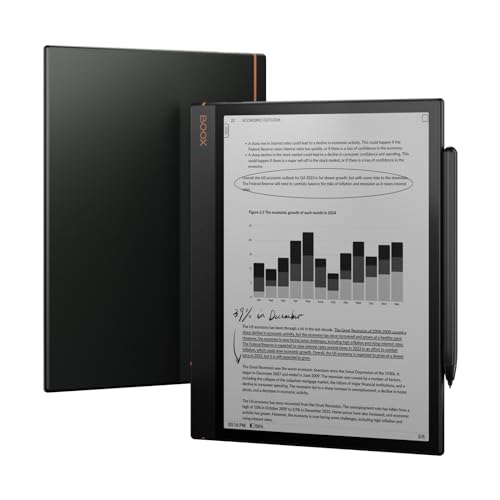
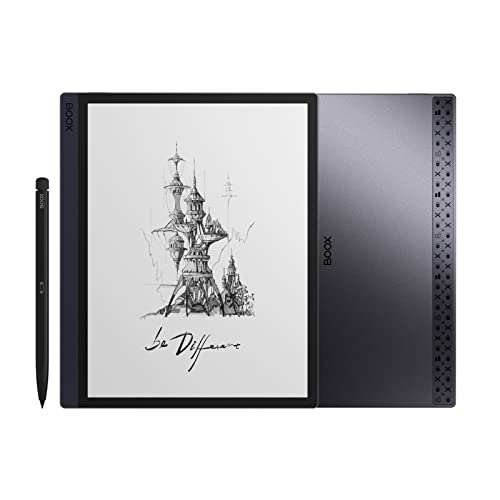
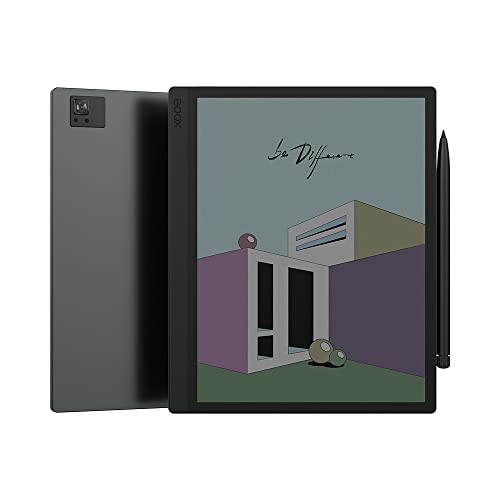
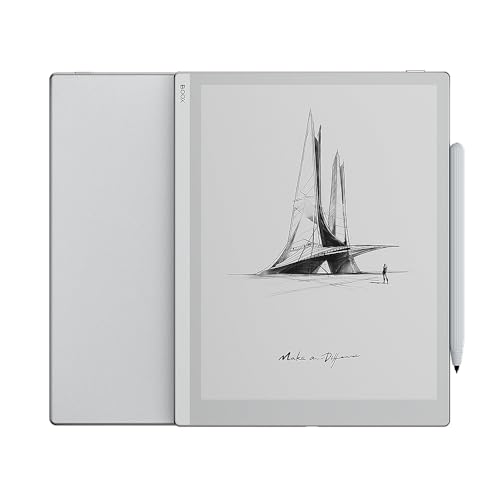
Scored using eReaders Methodology v1.0
eReaders Methodology v1.0
Mathematical & Unbiased Scoring
Products in this category are evaluated mathematically under Frontumo eReaders Methodology v1.0 using verified laboratory benchmarks, technical specifications, and authentic consumer ratings with 0% commercial bias.
Explore eReaders Methodology v1.0

Onyx Boox Note 4 Review | 68 Data compared

Avg. price:~£480Screen size:10.3 inchesPixel density:227 ppiInternal storage:64 GBBattery life:?Supported bookstore ecosystem:Android Open Ecosystem

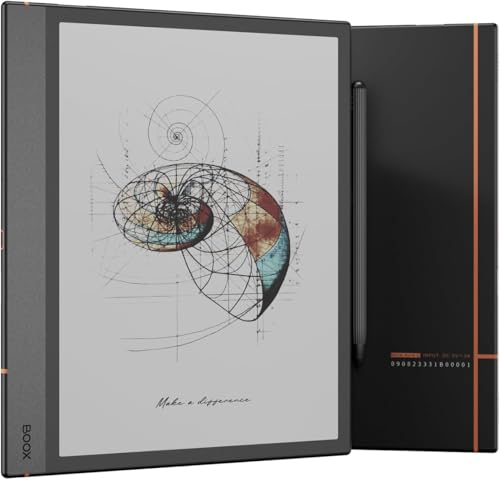
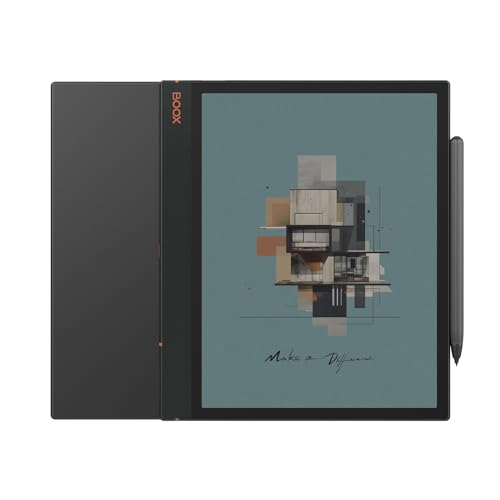
Onyx Boox Note 4 Review: Compare 68 technical specifications and user reviews to see how this product ranks in the eReaders category and whether it is worth buying.

8.0

Overall score

Score
8.0/ 10
✕
What it is
An overall evaluation of the eReader's quality, based on technical analyses and user reviews.
When it matters
When you need a quick reference to identify the best eReaders on the market.
Score distribution
â–¼
<55-66-77-88-99-10
Score components

90%

8.0

Technical score

10%

?

User score

★Better than 92% of ereaders
8.0

Technical score

Technical score
8.0/ 10
✕
What it is
An assessment of the eReader's technical performance, covering key areas such as display quality, reading features, battery life, format support, ecosystem, and design.
When it matters
When you want to compare eReaders based on technical performance and available features.
Score distribution
â–¼
<55-66-77-88-99-10
Score components

25%

8.3

Display

22%

9.3

Reading

18%

8.4

Battery

14%

7.2

Hardware

12%

8.7

Connectivity

9%

3.6

Design

â–²Better than 88% of ereaders
?

User score

User score
8.0/ 10
✕
What it is
A rating that combines user reviews and the total number of reviews received by the eReader.
When it matters
When you want to know how an eReader feels in daily reading and how reliable it is for screen comfort, battery life, and library management according to user feedback.
Score distribution
â–¼
<55-66-77-88-99-10
Score components

70%

?

User ratings

30%

?

Number of reviews

  • No image
No image

Best prices

    N/A~ £480

Best rankings

Available: ranking among products currently available (including other versions of this product).All: ranking among all products in the database.
Loading...
Loading category ranking...

Technical Specifications of eReader Onyx Boox Note 4

Technical score
Technical score
8.0/ 10
✕
What it is
An assessment of the eReader's technical performance, covering key areas such as display quality, reading features, battery life, format support, ecosystem, and design.
When it matters
When you want to compare eReaders based on technical performance and available features.
Score distribution
â–¼
<55-66-77-88-99-10
Score components:

25%

8.3

Display

22%

9.3

Reading

18%

8.4

Battery

14%

7.2

Hardware

12%

8.7

Connectivity

9%

3.6

Design

8.0
User score
User score
8.0/ 10
✕
What it is
A rating that combines user reviews and the total number of reviews received by the eReader.
When it matters
When you want to know how an eReader feels in daily reading and how reliable it is for screen comfort, battery life, and library management according to user feedback.
Score distribution
â–¼
<55-66-77-88-99-10
Score components

70%

?

User ratings

30%

?

Number of reviews

?
Popularity
Popularity
1.0/ 10
✕
What it is
An indicator based on the number of reviews received by the eReader.
When it matters
When you prefer to choose an eReader reviewed and selected by many other buyers.
Score distribution
â–¼
<55-66-77-88-99-10
Popularity:
Onyx Boox Note 4 has a popularity score of 1 point, which is lower than that of 72.1% of products in this category.
1.0
Value for money
Value for money
8.0/ 10
✕
What it is
An indicator that combines the eReader's overall rating with its cost.
When it matters
When you are looking for an eReader with a good balance between reading comfort, features, and price.
Score distribution
â–¼
<55-66-77-88-99-10
Score components:

60%

8.0

Overall score

40%

8.0

Price

8.0
Brand name
Onyx
Screen size
10.3 inches
Screen size
10.3 inches
This ereader has a screen size of 10.3 inches which is larger than 86.9% on this spec and equal to 11.5% of eReaders.
Screen resolution
1404x1872 px
Screen resolution
1404x1872 px
This ereader uses a screen resolution of 1404x1872 px, which is sharper than that of 73.8% of eReaders and the same as that of 17.2% of eReaders.
Pixel density
227 ppi
Pixel density
227 ppi
This ereader has a pixel density of 227 ppi which is lower than 51.6% on this spec and equal to 7.4% of eReaders.
E-paper display
yes
E-paper display
yes
This ereader uses an e-paper display. 2.5% of eReaders have an e-paper display.
Show more
Supported file types
21
Supported file types
21
This ereader supports 21 file types which is more than 76.3% on this spec and equal to 4.2% of eReaders.
PDF reflow support
yes
PDF reflow support
yes
This ereader offers PDF reflow. 45.5% of eReaders support PDF reflow.
Annotation support
yes
Annotation support
yes
This ereader offers annotation support. 1.6% of eReaders offer annotation support.
Dictionary
yes
Dictionary
yes
This ereader includes a built-in dictionary. 0.8% of eReaders include a built-in dictionary.
Text-to-speech
yes
Text-to-speech
yes
This ereader offers text-to-speech. 36.1% of eReaders include text-to-speech.
Show more
Battery life
?
Battery capacity
3,700 mAh
Battery capacity
3,700 mAh
This ereader has a battery capacity of 3,700 mAh which is higher than 87.6% on this spec and equal to 4.1% of eReaders.
Charging time
?
Wireless charging
no
Wireless charging
no
This ereader does not offer wireless charging. 7.4% of eReaders offer wireless charging.
Internal storage
64 GB
Internal storage
64 GB
This ereader offers 64 GB of internal storage which is more than 82.8% on this spec and equal to 10.7% of eReaders.
RAM capacity
4 GB
RAM capacity
4 GB
This ereader offers 4 GB of RAM which is more than 86.9% on this spec and equal to 9.8% of eReaders.
CPU base clock speed
8x 2 GHz
CPU base clock speed
8x 2 GHz
This ereader has a CPU base clock speed of 8x2 GHz, which is faster than that of 82.6% of eReaders and the same as that of 12.4% of eReaders.
Operating system
Android 11
Operating system
Android 11
This ereader runs Android 11, which is more advanced than that of 76.2% of eReaders and the same as that of 17.2% of eReaders.
Memory card slot
no
Memory card slot
no
This ereader does not have a memory card slot. 43.4% of eReaders have a memory card slot.
Show more
Wi-Fi connectivity
yes
Wi-Fi connectivity
yes
This ereader connects over Wi-Fi. 6.6% of eReaders have Wi-Fi.
Wi-Fi version
Wi-Fi 5 (802.11ac), Wi-Fi 4 (802.11n)
Wi-Fi version
Wi-Fi 5 (802.11ac), Wi-Fi 4 (802.11n)
This ereader supports Wi-Fi Wi-Fi 5 (802.11ac), Wi-Fi 4 (802.11n), which is newer than that of 58.2% of eReaders and the same as that of 40.2% of eReaders.
Wi-Fi bands supported
2.4 GHz+5 GHz
Wi-Fi bands supported
2.4 GHz+5 GHz
This ereader supports 2.4 GHz+5 GHz Wi-Fi bands, which is broader than that of 57.4% of eReaders and the same as that of 42.6% of eReaders.
Bluetooth
yes
Bluetooth
yes
This ereader connects over Bluetooth. 40.2% of eReaders have Bluetooth.
Bluetooth can pair wireless accessories.
Bluetooth version
5
Bluetooth version
5
This ereader supports Bluetooth 5 which is newer than 58.3% on this spec and equal to 29.2% of eReaders.
Show more
Weight
385 g
Weight
385 g
This ereader weighs 385 g which is heavier than 79.5% on this spec and equal to 0.8% of eReaders.
Thickness
5.8 mm
Thickness
5.8 mm
This ereader is 5.8 mm thick which is thinner than 91.7% on this spec and equal to 5.8% of eReaders.
Height
249 mm
Height
249 mm
This ereader is 249 mm tall which is taller than 91% on this spec and equal to 1.6% of eReaders.
Width
176.5 mm
Width
176.5 mm
This ereader is 176.5 mm wide which is wider than 78.7% on this spec and equal to 0.8% of eReaders.
Water resistance (splashproof)
no
Water resistance (splashproof)
no
This ereader does not have water resistance against splashes. 25% of eReaders have water resistance against splashes.
Show more

Onyx Boox Note 4 vs the average eReader

246810TotalDisplayReadingBatteryHardwareConnectivityDesign
  • 3.3 inches larger screen size
    Screen size
    10.3 inches
    This ereader has a larger screen than the average eReader (10.3 inches vs 7 inches). The average eReader screen size is 7 inches.
    10.3 inches vs 7 inches
  • 2.36x larger battery capacity
    Battery capacity
    3,700 mAh
    This ereader has a larger battery than the average eReader (3700 mAh vs 1565 mAh). The average eReader battery has a capacity of 1565 mAh.
    3,700 mAh vs 1,565 mAh
  • 4x more storage
    Internal storage
    64 GB
    This ereader offers more internal storage than the average eReader (64 GB vs 16 GB). The average eReader provides 16 GB of internal storage.
    64 GB vs 16 GB
  • Supports handwriting recognition
    Handwriting recognition
    yes
    This ereader supports handwriting recognition, while the average eReader does not. 23.6% of eReaders support handwriting recognition.
    Built-in handwriting-to-text support.
  • 3.49 GB more RAM
    RAM capacity
    4 GB
    This ereader has more RAM than the average eReader (4 GB vs 0.5 GB). The average eReader has 0.512 GB of RAM.
    4 GB vs 0.512 GB
  • 6 more supported file formats
    Supported file types
    21
    This ereader supports a broader range of file types than the average eReader (21 vs 15).
    21 vs 15
  • Faster CPU base clock speed
    CPU base clock speed
    8 x 2 GHz
    This ereader has a faster CPU base clock speed than the average eReader (8x2 GHz vs 1x1 GHz). The average eReader has a CPU base clock speed of 1x1 GHz.
    8x2 GHz vs 1x1 GHz
  • Supports stylus
    Stylus support
    yes
    This ereader supports a stylus, while the average eReader does not. 38.2% of eReaders support a stylus.
    uses Wacom EMR technology, compatible with BOOX styluses that support handwriting
  • 3.3 inches larger screen size
    Screen size
    10.3 inches
    This ereader has a larger screen than the average eReader (10.3 inches vs 7 inches). The average eReader screen size is 7 inches.
    10.3 inches vs 7 inches
  • Higher screen resolution
    Screen resolution
    1404x1872 px
    This ereader supports higher screen resolution than the average eReader (1404x1872 px vs 1072x1448 px). The average eReader supports 1072x1448 px screen resolution.
    1404x1872 px vs 1072x1448 px
  • Auto-brightness sensor
    Auto-brightness sensor
    yes
    This ereader has an auto-brightness sensor, while the average eReader does not. 41.8% of eReaders have an auto-brightness sensor.
    Ambient light sensor enables automatic brightness adjustments.
  • Supports auto-rotate
    Auto-rotate
    yes
    This ereader supports auto-rotate, while the average eReader does not. 43.4% of eReaders support auto-rotate.
  • Supports handwriting recognition
    Handwriting recognition
    yes
    This ereader supports handwriting recognition, while the average eReader does not. 23.6% of eReaders support handwriting recognition.
    Built-in handwriting-to-text support.
  • 6 more supported file formats
    Supported file types
    21
    This ereader supports a broader range of file types than the average eReader (21 vs 15).
    21 vs 15
  • Supports stylus
    Stylus support
    yes
    This ereader supports a stylus, while the average eReader does not. 38.2% of eReaders support a stylus.
    uses Wacom EMR technology, compatible with BOOX styluses that support handwriting
  • Broader library support
    Library lending platforms supported
    OverDrive, Libby, Hoopla, BorrowBox, cloudLibrary, PrêtNumérique
    This ereader supports more library lending platforms than the average eReader (OverDrive, Libby, Hoopla, BorrowBox, cloudLibrary, PrêtNumérique vs OverDrive, Libby).
    Access comes through installable library apps.
    OverDrive, Libby, Hoopla, BorrowBox, cloudLibrary, PrêtNumérique vs OverDrive, Libby
  • Stylus included
    Stylus included
    yes
    This ereader includes a stylus, while the average eReader does not. 29.3% of eReaders include a stylus.
    BOOX Pen Plus included.
  • 2.36x larger battery capacity
    Battery capacity
    3,700 mAh
    This ereader has a larger battery than the average eReader (3700 mAh vs 1565 mAh). The average eReader battery has a capacity of 1565 mAh.
    3,700 mAh vs 1,565 mAh
  • 4x more storage
    Internal storage
    64 GB
    This ereader offers more internal storage than the average eReader (64 GB vs 16 GB). The average eReader provides 16 GB of internal storage.
    64 GB vs 16 GB
  • 3.49 GB more RAM
    RAM capacity
    4 GB
    This ereader has more RAM than the average eReader (4 GB vs 0.5 GB). The average eReader has 0.512 GB of RAM.
    4 GB vs 0.512 GB
  • Faster CPU base clock speed
    CPU base clock speed
    8 x 2 GHz
    This ereader has a faster CPU base clock speed than the average eReader (8x2 GHz vs 1x1 GHz). The average eReader has a CPU base clock speed of 1x1 GHz.
    8x2 GHz vs 1x1 GHz
  • More advanced operating system
    Operating system
    Android 11
    This ereader uses Android 11, a more advanced operating system than Kindle OS on the average eReader.
    Android 11 vs Kindle OS
  • Fingerprint scanner
    Fingerprint scanner
    yes
    This ereader has a fingerprint scanner, while the average eReader does not. 8.1% of eReaders have a fingerprint scanner.
  • Microphone included
    Microphone
    yes
    This ereader has a microphone, while the average eReader does not. 26.7% of eReaders have a microphone.
  • Supports USB OTG
    USB OTG support
    yes
    This ereader supports USB OTG, while the average eReader does not. 33.9% of eReaders support USB OTG.
    allows connection of peripherals and mass storage, though power pass-through might require a powered hub
  • 2 more speakers
    Speakers
    2
    This ereader has more speakers than the average eReader (2 vs 0). The average eReader has 0 speakers.
    Built-in speaker count reflects onboard audio hardware.
    2 vs 0
  • Better Wi-Fi bands
    Wi-Fi bands supported
    2.4 GHz+5 GHz
    This ereader supports 2.4 GHz+5 GHz Wi-Fi bands, while the average eReader supports 2.4 GHz.
    2.4 GHz+5 GHz vs 2.4 GHz
  • Newer Wi-Fi version
    Wi-Fi version
    Wi-Fi 5 (802.11ac), Wi-Fi 4 (802.11n)
    This ereader supports a newer Wi-Fi version than the average eReader (Wi-Fi 5 (802.11ac), Wi-Fi 4 (802.11n) vs Wi-Fi 4 (802.11n)).
    Wi-Fi 5 (802.11ac), Wi-Fi 4 (802.11n) vs Wi-Fi 4 (802.11n)
  • 2.3 mm thinner
    Thickness
    5.8 mm
    This ereader is thinner than the average eReader (5.8 mm vs 8.1 mm). The average eReader thickness is 8.1 mm.
    5.8 mm vs 8.1 mm
  • Limited DRM support
    DRM schemes supported
    No native DRM support
    This ereader supports fewer DRM schemes than the average eReader (No native DRM support vs Adobe DRM, Social DRM).
    Relies on third-party Android apps for DRM-protected content.
    No native DRM support vs Adobe DRM, Social DRM
  • Less advanced E-Ink technology
    E-Ink technology
    Carta
    This ereader uses Carta E-Ink technology, while the average eReader uses Carta Plus.
    Carta vs Carta Plus
  • 80.8% heavier
    Weight
    385 g
    This ereader is heavier than the average eReader (385 g vs 213 g). The average eReader weighs 213 g.
    385 g vs 213 g
  • 76 mm taller
    Height
    249 mm
    This ereader is taller than the average eReader (249 mm vs 173 mm). The average eReader height is 173 mm.
    249 mm vs 173 mm
  • 14.3% lower pixel density
    Pixel density
    227 ppi
    This ereader has a lower pixel density than the average eReader (227 ppi vs 265 ppi). The average eReader has a pixel density of 265 ppi.
    227 ppi vs 265 ppi
  • 48.9 mm wider
    Width
    176.5 mm
    This ereader is wider than the average eReader (176.5 mm vs 127.6 mm). The average eReader width is 127.6 mm.
    176.5 mm vs 127.6 mm
  • 2.82x more expensive
    Onyx Boox Note 4 is more expensive than the average eReader (£480 vs £170).
    £480 vs £170
  • 5.44x less popular
    Onyx Boox Note 4 is less popular than the average eReader (1 vs 5.4).
    1 vs 5.44
  • 2.82x more expensive
    Onyx Boox Note 4 is more expensive than the average eReader (£480 vs £170).
    £480 vs £170
  • 5.44x less popular
    Onyx Boox Note 4 is less popular than the average eReader (1 vs 5.4).
    1 vs 5.44
  • Less advanced E-Ink technology
    E-Ink technology
    Carta
    This ereader uses Carta E-Ink technology, while the average eReader uses Carta Plus.
    Carta vs Carta Plus
  • 14.3% lower pixel density
    Pixel density
    227 ppi
    This ereader has a lower pixel density than the average eReader (227 ppi vs 265 ppi). The average eReader has a pixel density of 265 ppi.
    227 ppi vs 265 ppi
  • Limited DRM support
    DRM schemes supported
    No native DRM support
    This ereader supports fewer DRM schemes than the average eReader (No native DRM support vs Adobe DRM, Social DRM).
    Relies on third-party Android apps for DRM-protected content.
    No native DRM support vs Adobe DRM, Social DRM
  • Versions older Bluetooth
    Bluetooth version
    5.0
    This ereader supports an older Bluetooth version than the average eReader (5 vs 5.1).
    5.0 vs 5.1
  • 80.8% heavier
    Weight
    385 g
    This ereader is heavier than the average eReader (385 g vs 213 g). The average eReader weighs 213 g.
    385 g vs 213 g
  • 76 mm taller
    Height
    249 mm
    This ereader is taller than the average eReader (249 mm vs 173 mm). The average eReader height is 173 mm.
    249 mm vs 173 mm
  • 48.9 mm wider
    Width
    176.5 mm
    This ereader is wider than the average eReader (176.5 mm vs 127.6 mm). The average eReader width is 127.6 mm.
    176.5 mm vs 127.6 mm

Third-party reviews

What we like about Onyx Boox Note 4

  • Runs Android 13 with full access to the Google Play Store for third-party apps
  • Excellent writing experience with a textured screen that feels like paper and zero noticeable lag
  • Versatile 10.3-inch Kaleido 3 color E-ink display is great for comics and PDF annotations
  • Snappy performance with 6GB of RAM and a faster octa-core processor compared to previous models
  • Flexible storage with a microSD card slot supporting up to 2TB
  • Useful productivity features like split-screen mode and built-in OCR for handwriting-to-text
  • Long-lasting battery life that can last for weeks under light-to-moderate use

What we don't like about Onyx Boox Note 4

  • Relatively expensive compared to non-color E-ink devices or base-model iPads
  • Screen appears darker than black-and-white E-ink displays, often requiring the front light even in well-lit rooms
  • Color resolution (150 PPI) is noticeably less sharp than the black-and-white resolution (300 PPI)
  • Built-in speakers are weak with poor bass and low maximum volume
  • Lacks physical volume buttons, requiring manual swiping on the screen to adjust audio
  • No IP rating for water or dust resistance
  • The device is quite heavy (420-430g) and can be tiring to hold with one hand for long periods

Verdict

The Onyx Boox Note Air4 C is a versatile 10.3-inch e-ink tablet featuring a Kaleido 3 color display that delivers 300 PPI for monochrome content and 150 PPI for 4,096 colors. Driven by a 2.8GHz octa-core processor and 6GB of LPDDR4X RAM, the device runs on Android 13 with full Google Play Store access, supported by 64GB of internal storage and a microSD slot expandable up to 2TB. Main pros include its smooth performance aided by BSR (Boox Super Refresh) technology, a premium aluminum-magnesium build with a built-in fingerprint sensor, and a highly customizable note-taking experience with an included 4,096-level pressure-sensitive stylus. However, notable cons include muted color vibrancy compared to LCD screens, weak dual speakers, and a significant battery drain when using high-refresh modes or color content compared to monochrome e-readers.

Compare Onyx Boox Note 4 with other eReaders

1Product to compare no. 1
VS
2Product to compare no. 2
VS
3Product to compare no. 3 (optional)

Graphic comparison of Onyx Boox Note 4 and other eReaders

No results found