Scored using Smartwatches Methodology v3.0
Smartwatches Methodology v3.0
Mathematical & Unbiased Scoring
Products in this category are scored under Frontum Smartwatches Methodology v3.0: the technical score from the specifications is the base, and independent expert and video reviews (up to ±0.5 points), owner opinions (up to ±0.3) and best-of lists (up to +0.3) move it up or down.
Explore Smartwatches Methodology v3.0

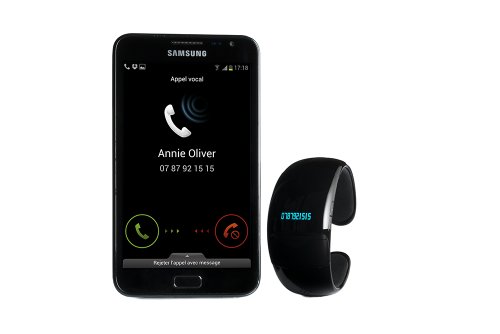
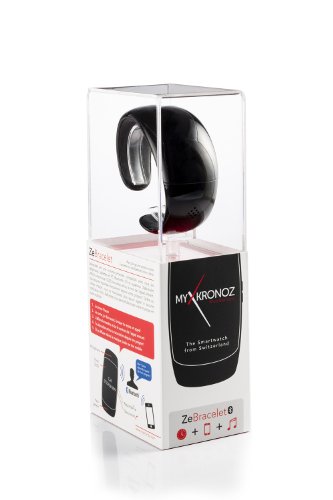
Mykronoz ZeBracelet review: 127 specs compared

Avg. price:~£60Screen size:0.70 inchBattery life:3 daysDisplay type:OLED

Mykronoz ZeBracelet Review: Compare 127 technical specifications and 4 expert and video reviews to see how this product ranks in the Smartwatches category and whether it is worth buying.

Mykronoz ZeBracelet
5.3/10

Overall score

Score
5.3/ 10
✕
What it is
Our main score for this model, 1–10. It combines specs, best-of lists, expert reviews and owners.
How we count it
Parts: Technical score 35%, List score 30%, Reviews score 25%, Sentiment score 10%
Marks: Each part gets a mark out of 10. For reviews, lists and owners, a typical model in this category gets about 8 and the best one gets 10.
No data yet: A part with no data shows "?". It counts as the mark of a weaker model in this category (4 in 5 models with data score higher). This way, models with reviews, lists and owners usually come out ahead.
Score distribution
â–¼
<55-66-77-88-99-10
Score components

35%

3.9

Technical score

30%

?

List scoreNot enough data yet, so we use 7.5, the mark of a weaker model in this category

25%

3.9

Reviews score

10%

?

Sentiment scoreNot enough data yet, so we use 6.8, the mark of a weaker model in this category

â–¼Worse than 98% of smartwatches
6.7

Value for money

Value for money
6.7/ 10
✕
What it is
An indicator that combines the smartwatch's overall rating with its cost.
When it matters
When you are looking for a smartwatch with a good balance between quality and price.
Score distribution
â–¼
<55-66-77-88-99-10
Score components

70%

5.3

Overall score

30%

10

Price

â–¼Worse than 96%
3.9

Technical score

Technical score
3.9/ 10
✕
What it is
How good the specs are compared with the other models in this category, 1–10.
How we count it
Areas: We rate the specs in each area against the other models in this category.
Weighting: The areas that matter most to buyers count more. The shares are shown under Score components.
Share: The technical score is 35% of the overall score.
Score distribution
â–¼
<55-66-77-88-99-10
Score components

24%

2.0

Health

21%

6.3

Fitness

16%

3.0

Battery

14%

4.9

Smart features

12%

2.4

Connectivity

9%

4.6

Display & Design

4%

5.7

Hardware

â–¼Worse than 98%
3.9

Reviews score

Reviews score
3.9/ 10
✕
What it is
Average grade from independent test sites, magazines and video reviewers, 1–10.
How we count it
Grades: Each review's own score is converted to 1–10; without one, we grade the review ourselves. Every review counts the same: written or video, short or full test.
Score: The average grade is 80% of the review mark; the number of reviews is the other 20% (1 review = 5, the typical number in this category = 8, the most-reviewed model = 10).
Enough data: With few reviews, the average grade is pulled toward the typical grade of this category. No reviews yet: 7.4 for now.
Share: Reviews count 25% of the overall score.
Score distribution
â–¼
<55-66-77-88-99-10

3.9

Mark 7.1 is below the typical mark 7.9 of this category, so it cannot lift the score above the technical score

80%

7.3

Average grade

20%

6.4

Popularity

Grades by review (4)
2 reviews + 2 videos, average 6.3/10. We use 5 reviews; the 1 missing counts as the category's typical 8.0: (6.3 × 4 + 8.0 × 1) ÷ 5 = 6.6. Reviews count 25% of the overall score.
User ratings collected online are not part of this score.
â–¼Worse than 98%
?

List score

List score
7.5/ 10
✕
What it is
How often independent test sites, magazines and video reviewers put this model in their best-of lists for this category.
How we count it
Points: The model in the most lists of this category gets 10; the others get 8 to 10 in proportion. In no list yet: 7.5. Lists count 30% of the overall score.
Enough data: Every list counts, even a single one. With fewer than 5 best-of lists in the category, this part is left out.
Lists with this model (0)
Not in any best-of list yet, so this part counts as 7.5. Models in a list get 8 to 10.
Not in any best-of list yet
  • mykronoz-zebracelet
  • mykronoz-zebracelet
  • mykronoz-zebracelet
mykronoz-zebracelet
mykronoz-zebracelet
mykronoz-zebracelet
Where to buy
    N/A~ £60
Best rankings
Available: ranking among products currently available (including other versions of this product).All: ranking among all products in the database.

What reviewers say about the Mykronoz ZeBracelet

Based on 2 · 2

Reviewers love the design and mostly like the call buttons, though opinions on those aren't unanimous.
Praised
Pick a topic to see who said what
Loading...
Loading category ranking...

Technical Specifications of smartwatch Mykronoz ZeBracelet

Technical score
Technical score
3.9/ 10
✕
What it is
How good the specs are compared with the other models in this category, 1–10.
How we count it
Areas: We rate the specs in each area against the other models in this category.
Weighting: The areas that matter most to buyers count more. The shares are shown under Score components.
Share: The technical score is 35% of the overall score.
Score distribution
â–¼
<55-66-77-88-99-10
Score components:

24%

2.0

Health

21%

6.3

Fitness

16%

3.0

Battery

14%

4.9

Smart features

12%

2.4

Connectivity

9%

4.6

Display & Design

4%

5.7

Hardware

3.9
Reviews score
3.9
List score
?
Value for money
Value for money
6.7/ 10
✕
What it is
An indicator that combines the smartwatch's overall rating with its cost.
When it matters
When you are looking for a smartwatch with a good balance between quality and price.
Score distribution
â–¼
<55-66-77-88-99-10
Score components:

70%

5.3

Overall score

30%

10

Price

6.7
Heart rate monitor
no
This smartwatch does not include a heart rate monitor. 90.7% of smartwatches include a heart rate monitor.
Blood oxygen monitoring
no
This smartwatch does not support blood oxygen monitoring. 69.7% of smartwatches support blood oxygen monitoring.
ECG
no
This smartwatch does not support ECG. 18.2% of smartwatches support ECG.
Irregular heart rate warnings
no
This smartwatch does not support irregular heart rate warnings. 50.6% of smartwatches support irregular heart rate warnings.
HRV tracking
no
This smartwatch does not support HRV tracking. 45.2% of smartwatches support HRV tracking.
Show more
Accelerometer
yes
This smartwatch includes an accelerometer. 0.5% of smartwatches include an accelerometer.
Barometer
no
This smartwatch does not include a barometer. 53.6% of smartwatches include a barometer.
Gyroscope
no
This smartwatch does not include a gyroscope. 71.3% of smartwatches include a gyroscope.
Cadence sensor
no
This smartwatch does not include a cadence sensor. 32.9% of smartwatches include a cadence sensor.
Distance tracking
yes
This smartwatch supports distance tracking. 3.7% of smartwatches support distance tracking.
Show more
Battery life
3 days
This smartwatch lasts 3 days on a charge, which is shorter than 76.7% of Smartwatches and the same as 3.5% of Smartwatches.
Converted from the reported 72-hour battery life.
Battery life in training mode
3 h
This smartwatch records workouts for 3 h on a charge, which is shorter than 97.3% of Smartwatches and the same as 1.3% of Smartwatches.
Battery life with GPS on
N/A
Battery power
150 mAh
This smartwatch has a 150 mAh battery, which is smaller than 95.8% of Smartwatches and the same as 0.5% of Smartwatches.
Charge time
?
Show more
Operating system
Proprietary OS
This smartwatch runs Proprietary OS, which is less advanced than the system in 54.2% of Smartwatches and equal to 42% of Smartwatches.
Software update frequency
ended
This smartwatch has ended software update support which is less active than that of 46.1% of smartwatches and equal to that of 53.9% of smartwatches.
Third-party app support
no
This smartwatch does not support third-party apps. 51.6% of smartwatches support third-party apps.
Notifications
yes
This smartwatch supports notifications. 0.3% of smartwatches support notifications.
Voice assistant support
yes
This smartwatch supports voice assistants. 30.8% of smartwatches support voice assistants.
Show more
What reviewers say
Cellular module
no
This smartwatch does not include a cellular module. 16.7% of smartwatches include a cellular module.
SIM cards
0
GPS
no
This smartwatch does not support GPS. 59.8% of smartwatches support GPS.
Galileo support
no
This smartwatch does not support Galileo navigation. 43.6% of smartwatches support Galileo navigation.
Dual-frequency GPS
no
This smartwatch does not support dual-frequency GPS. 15.1% of Smartwatches offer this.
Show more
Screen size
0.7 inch
This smartwatch has a 0.7 inch screen, which is smaller than 98.8% of Smartwatches and the same as 0.3% of Smartwatches.
Display type
OLED
This smartwatch uses OLED, which is less advanced than the screen in 53.2% of Smartwatches and equal to 9.1% of Smartwatches.
Resolution
32x 128
This smartwatch has a display resolution of 32x128 which is lower than that of 98.8% of smartwatches and equal to that of 0.3% of smartwatches.
Pixel density
188 ppi
This smartwatch has a pixel density of 188 ppi, which is lower than 96% of Smartwatches.
Display brightness
?
Show more
What reviewers say
CPU speed
?
Processor model
?
RAM
?
Internal storage
0 GB
This smartwatch has 0 GB of internal storage, which is less than 76.5% of Smartwatches and equal to 23.5% of Smartwatches.
No local user storage for apps/media.
External memory slot
no
This smartwatch does not include an external memory slot. 0.3% of smartwatches include an external memory slot.
Show more

Mykronoz ZeBracelet vs the average smartwatch

246810TotalHealthFitnessBatteryConnectivityDisplay & DesignSmart featuresHardware
  • 15 °C higher heat tolerance
    This smartwatch tolerates a higher temperature than the average smartwatch (60 °C vs 45 °C). The average smartwatch is rated up to 45 °C.
    60 °C vs 45 °C
  • 15 °C higher heat tolerance
    This smartwatch tolerates a higher temperature than the average smartwatch (60 °C vs 45 °C). The average smartwatch is rated up to 45 °C.
    60 °C vs 45 °C
  • 44.3% lower review score
    Reviews score
    3.9/ 10
    ✕
    What it is
    Average grade from independent test sites, magazines and video reviewers, 1–10.
    How we count it
    Grades: Each review's own score is converted to 1–10; without one, we grade the review ourselves. Every review counts the same: written or video, short or full test.
    Score: The average grade is 80% of the review mark; the number of reviews is the other 20% (1 review = 5, the typical number in this category = 8, the most-reviewed model = 10).
    Enough data: With few reviews, the average grade is pulled toward the typical grade of this category. No reviews yet: 7.4 for now.
    Share: Reviews count 25% of the overall score.
    Score distribution
    â–¼
    <55-66-77-88-99-10

    3.9

    Mark 7.1 is below the typical mark 7.9 of this category, so it cannot lift the score above the technical score

    80%

    7.3

    Average grade

    20%

    6.4

    Popularity

    Grades by review (4)
    2 reviews + 2 videos, average 6.3/10. We use 5 reviews; the 1 missing counts as the category's typical 8.0: (6.3 × 4 + 8.0 × 1) ÷ 5 = 6.6. Reviews count 25% of the overall score.
    User ratings collected online are not part of this score.
    3.9 vs 7.0
  • No VO2 max measurement
    This smartwatch does not measure VO2 max, the average smartwatch does. 51.3% of smartwatches measure VO2 max.
  • No blood oxygen monitoring
    This smartwatch does not support blood oxygen monitoring, the average smartwatch does. 69.6% of smartwatches support blood oxygen monitoring.
  • No GPS support
    This smartwatch does not support GPS, the average smartwatch does. 59.7% of smartwatches support GPS.
  • No third-party apps
    This smartwatch does not support third-party apps, the average smartwatch does. 51.6% of smartwatches support third-party apps.
  • No irregular heart rate alerts
    This smartwatch does not support irregular heart rate warnings, the average smartwatch does. 50.6% of smartwatches support irregular heart rate warnings.
  • No stress monitoring
    This smartwatch does not support stress monitoring, the average smartwatch does. 68.7% of smartwatches support stress monitoring.
  • No heart rate monitor
    This smartwatch does not include a heart rate monitor, the average smartwatch does. 90.5% of smartwatches include a heart rate monitor.
  • 44.3% lower review score
    Reviews score
    3.9/ 10
    ✕
    What it is
    Average grade from independent test sites, magazines and video reviewers, 1–10.
    How we count it
    Grades: Each review's own score is converted to 1–10; without one, we grade the review ourselves. Every review counts the same: written or video, short or full test.
    Score: The average grade is 80% of the review mark; the number of reviews is the other 20% (1 review = 5, the typical number in this category = 8, the most-reviewed model = 10).
    Enough data: With few reviews, the average grade is pulled toward the typical grade of this category. No reviews yet: 7.4 for now.
    Share: Reviews count 25% of the overall score.
    Score distribution
    â–¼
    <55-66-77-88-99-10

    3.9

    Mark 7.1 is below the typical mark 7.9 of this category, so it cannot lift the score above the technical score

    80%

    7.3

    Average grade

    20%

    6.4

    Popularity

    Grades by review (4)
    2 reviews + 2 videos, average 6.3/10. We use 5 reviews; the 1 missing counts as the category's typical 8.0: (6.3 × 4 + 8.0 × 1) ÷ 5 = 6.6. Reviews count 25% of the overall score.
    User ratings collected online are not part of this score.
    3.9 vs 7.0
  • 16.1% worse value for money
    Mykronoz ZeBracelet has a lower value-for-money score than the average smartwatch (6.68 vs 7.8).
    6.68 vs 7.76
  • No VO2 max measurement
    This smartwatch does not measure VO2 max, the average smartwatch does. 51.3% of smartwatches measure VO2 max.
  • No blood oxygen monitoring
    This smartwatch does not support blood oxygen monitoring, the average smartwatch does. 69.6% of smartwatches support blood oxygen monitoring.
  • No irregular heart rate alerts
    This smartwatch does not support irregular heart rate warnings, the average smartwatch does. 50.6% of smartwatches support irregular heart rate warnings.
  • No stress monitoring
    This smartwatch does not support stress monitoring, the average smartwatch does. 68.7% of smartwatches support stress monitoring.
  • No heart rate monitor
    This smartwatch does not include a heart rate monitor, the average smartwatch does. 90.5% of smartwatches include a heart rate monitor.
  • No cycle tracking
    This smartwatch does not support menstrual cycle tracking, the average smartwatch does. 66.8% of smartwatches support menstrual cycle tracking.
  • 8 years older
    This smartwatch was released earlier than the average smartwatch (2013 vs 2021). The average smartwatch was released in 2021.
    September 2013
    2013 vs 2021
  • No barometer
    This smartwatch does not include a barometer, the average smartwatch does. 53.6% of smartwatches include a barometer.
  • No pace tracking
    This smartwatch does not support pace tracking, the average smartwatch does. 80.6% of smartwatches support pace tracking.
  • No route tracking
    This smartwatch does not support route tracking, the average smartwatch does. 77% of smartwatches support route tracking.
  • No gyroscope
    This smartwatch does not include a gyroscope, the average smartwatch does. 71.2% of smartwatches include a gyroscope.
  • No auto-pause
    This smartwatch does not support auto pause, the average smartwatch does. 62.6% of smartwatches support auto pause.
  • No swim mode
    This smartwatch does not include a swim sport mode, the average smartwatch does. 76.9% of smartwatches include a swim sport mode.
  • No route support
    This smartwatch does not support route support, the average smartwatch does. 54.4% of smartwatches support route support.
  • No exercise tagging
    This smartwatch does not support exercise tagging, the average smartwatch does. 94.2% of smartwatches support exercise tagging.
  • 17 h shorter training battery life
    This smartwatch lasts less time in training mode than the average smartwatch (3 h vs 20 h). The average smartwatch lasts 20 h in training mode.
    3 h vs 20 h
  • 4 days shorter battery life
    This smartwatch runs for less time per charge than the average smartwatch (3 days vs 7 days). The average smartwatch runs for 7 days on a charge.
    Converted from the reported 72-hour battery life.
    3 days vs 7 days
  • No low-power mode
    This smartwatch does not include a low power mode, the average smartwatch does. 93.1% of smartwatches include a low power mode.
  • 155 mAh smaller battery capacity
    This smartwatch has a smaller battery than the average smartwatch (150 mAh vs 305 mAh). The average smartwatch has a 305 mAh battery.
    150 mAh vs 305 mAh
  • Basic battery type
    This smartwatch uses a Li-ion battery, while the average smartwatch uses Li-Po.
    Li-ion vs Li-Po
  • No GPS support
    This smartwatch does not support GPS, the average smartwatch does. 59.7% of smartwatches support GPS.
  • No compass
    This smartwatch does not include a compass, the average smartwatch does. 56.7% of smartwatches include a compass.
  • Less current Bluetooth version
    This smartwatch uses a less current Bluetooth version than the average smartwatch (2.1 vs 5).
    2.1 vs 5
  • 49 m shallower water rating
    This smartwatch is rated for shallower water than the average smartwatch (1 m vs 50 m). The average smartwatch is rated to 50 m.
    1 m vs 50 m
  • No always-on display
    This smartwatch does not have an always-on display, the average smartwatch does. 70.3% of smartwatches have an always-on display.
  • 0.7 inch smaller display
    This smartwatch has a smaller screen than the average smartwatch (0.7 inch vs 1.4 inch). The average smartwatch has a 1.4 inch screen.
    0.7 inch vs 1.4 inch
  • No ambient light sensor
    This smartwatch does not include an ambient light sensor, the average smartwatch does. 63.5% of smartwatches include an ambient light sensor.
  • More basic display
    This smartwatch uses a more basic screen than the average smartwatch (OLED vs AMOLED).
    OLED vs AMOLED
  • Lower resolution
    This smartwatch has a display resolution of 32x128, while the average smartwatch reaches 360x360.
    32x128 vs 360x360
  • 138 ppi less sharp screen
    This smartwatch has a less sharp screen than the average smartwatch (188 ppi vs 326 ppi). The average smartwatch has a pixel density of 326 ppi.
    188 ppi vs 326 ppi
  • 35 mm taller case
    This smartwatch has a taller case than the average smartwatch (80 mm vs 45 mm). The average smartwatch is 45 mm tall.
    80 mm vs 45 mm
  • Less practical form
    This smartwatch uses a rectangular form, while the average smartwatch uses round.
    rectangular vs round
  • 0.8 mm thicker
    This smartwatch is thicker than the average smartwatch (12.5 mm vs 11.7 mm). The average smartwatch is 11.7 mm thick.
    12.5 mm vs 11.7 mm
  • No touchscreen
    This smartwatch does not have a touch screen, the average smartwatch does. 91.5% of smartwatches have a touch screen.
  • 16.5 mm wider strap
    This smartwatch has a wider strap than the average smartwatch (38.5 mm vs 22 mm). The average smartwatch has a 22 mm strap.
    Uses proprietary/non-standard band connector.
    38.5 mm vs 22 mm
  • No third-party apps
    This smartwatch does not support third-party apps, the average smartwatch does. 51.6% of smartwatches support third-party apps.
  • No passcode
    This smartwatch does not include passcode protection, the average smartwatch does. 70.4% of smartwatches include passcode protection.
  • No phone finder
    This smartwatch does not include phone finder, the average smartwatch does. 96.4% of smartwatches include phone finder.
  • No calendar sync
    This smartwatch does not support calendar sync, the average smartwatch does. 95.3% of smartwatches support calendar sync.
  • No widget support
    This smartwatch does not support widgets, the average smartwatch does. 84.4% of smartwatches support widgets.
  • No gesture control
    This smartwatch does not support gesture control, the average smartwatch does. 79.6% of smartwatches support gesture control.
  • Limited personalization
    This smartwatch does not support personalization, the average smartwatch does. 99% of smartwatches support personalization.

Video reviews

Hands-on testing, unboxing, and real-world video evaluations

7.0
Android Advice & Tutorials
≈ estimated
05/05/2014
Hands-on review · calls, music and setup
Verdict
Mykronoz ZeBracelet is a nice-looking budget bracelet for women who want basic call alerts and music, not a full smartwatch.
8.0
twinklybird
≈ estimated
20/07/2013
Short personal review · calls, music and volume
Verdict
Mykronoz ZeBracelet is a cheap, attractive bracelet watch the reviewer likes, despite weak volume and short range.
Not graded
Brand video

Expert reviews

In-depth analysis and verdict from leading tech publications
3.0
memeburn.com
✓ explicit
12/02/2014
Personal review · Bluetooth bracelet
Verdict
The Mykronoz ZeBracelet is a stylish black bangle that takes calls and shows the time, but tinny music, unreliable buttons and loud calls let it down.
7.0
techwalls.com
≈ estimated
27/02/2014
Hands-on review · Simple bracelet watch
Verdict
The Mykronoz ZeBracelet is a sleek, solidly built bracelet that handles calls well, but its small screen and missing caller names hold it back.

Third-party reviews

What customers like about Mykronoz ZeBracelet

  • Stylish, 'futuristic' bracelet design that appeals to users seeking jewelry-like tech.
  • Effective hands-free calling directly from the wrist with decent speaker volume.
  • Simple initial Bluetooth setup and connectivity with smartphones.
  • Vibrating alerts for incoming calls are useful in noisy environments or meetings.
  • Affordable price point compared to high-end smartwatches.

What customers don't like about Mykronoz ZeBracelet

  • Software and firmware are often described as buggy or unpolished.
  • Lack of privacy during calls as audio is played through an external speaker.
  • Limited fitness tracking capabilities (no heart rate monitor or GPS on original models).
  • Hardware can be uncomfortable; some users reported a 'burning' sensation from intense vibrations.
  • Proprietary charging clips are often reported as cumbersome or fragile.
  • Device lacks water resistance, making it unsuitable for swimming or showering.

Verdict

The Mykronoz ZeBracelet is a stylish, Swiss-designed smartwatch featuring a 128 x 32 pixel OLED display and Bluetooth 2.1 connectivity for hands-free calling and music streaming. Key specifications include a 150mAh Li-ion battery providing 2-3 hours of talk time and up to 72 hours of standby, a built-in microphone and speaker for managing calls directly from the wrist, and an anti-loss vibration alert that triggers when the paired device is more than 10 meters away. Its main advantages are the elegant, bracelet-like aesthetic that doubles as a fashion accessory and its compatibility with both Android and iOS devices; however, it lacks water resistance, a touchscreen, and advanced health sensors like a heart rate monitor or accelerometer.

Compare Mykronoz ZeBracelet with other Smartwatches

1Product to compare no. 1
VS
2Product to compare no. 2
VS
3Product to compare no. 3 (optional)

Graphic comparison of Mykronoz ZeBracelet and other Smartwatches

No results found