Scored using Smartwatches Methodology v3.0
Smartwatches Methodology v3.0
Mathematical & Unbiased Scoring
Products in this category are scored under Frontum Smartwatches Methodology v3.0: the technical score from the specifications is the base, and independent expert and video reviews (up to ±0.5 points), owner opinions (up to ±0.3) and best-of lists (up to +0.3) move it up or down.
Explore Smartwatches Methodology v3.0

Mota G2 Pro review: 127 specs compared

Avg. price:~£450Screen size:?Battery life:3 daysDisplay type:OLED

Mota G2 Pro Review: Compare 127 technical specifications and 2 expert reviews to see how this product ranks in the Smartwatches category and whether it is worth buying.
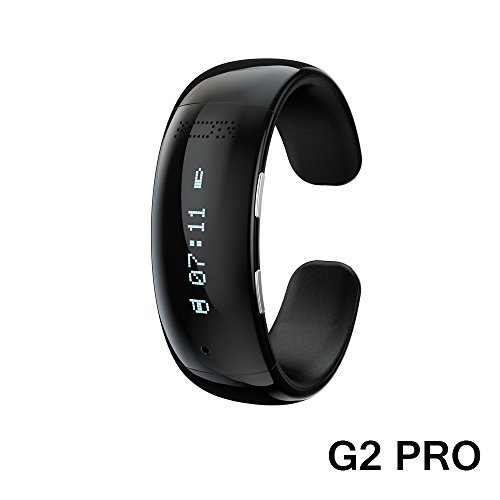
Mota G2 Pro
5.4/10

Overall score

Score
5.4/ 10
✕
What it is
Our main score for this model, 1–10. It combines specs, best-of lists, expert reviews and owners.
How we count it
Parts: Technical score 35%, List score 30%, Reviews score 25%, Sentiment score 10%
Marks: Each part gets a mark out of 10. For reviews, lists and owners, a typical model in this category gets about 8 and the best one gets 10.
No data yet: A part with no data shows "?". It counts as the mark of a weaker model in this category (4 in 5 models with data score higher). This way, models with reviews, lists and owners usually come out ahead.
Score distribution
â–¼
<55-66-77-88-99-10
Score components

35%

3.7

Technical score

30%

?

List scoreNot enough data yet, so we use 7.5, the mark of a weaker model in this category

25%

3.7

Reviews score

10%

9.4

Sentiment score

â–¼Worse than 96% of smartwatches
6.2

Value for money

Value for money
6.2/ 10
✕
What it is
An indicator that combines the smartwatch's overall rating with its cost.
When it matters
When you are looking for a smartwatch with a good balance between quality and price.
Score distribution
â–¼
<55-66-77-88-99-10
Score components

70%

5.4

Overall score

30%

8.1

Price

â–¼Worse than 99%
3.7

Technical score

Technical score
3.7/ 10
✕
What it is
How good the specs are compared with the other models in this category, 1–10.
How we count it
Areas: We rate the specs in each area against the other models in this category.
Weighting: The areas that matter most to buyers count more. The shares are shown under Score components.
Share: The technical score is 35% of the overall score.
Score distribution
â–¼
<55-66-77-88-99-10
Score components

24%

1.0

Health

21%

3.5

Fitness

16%

4.1

Battery

14%

5.3

Smart features

12%

3.4

Connectivity

9%

7.2

Display & Design

4%

7.8

Hardware

â–¼Worse than 99%
3.7

Reviews score

Reviews score
3.7/ 10
✕
What it is
Average grade from independent test sites, magazines and video reviewers, 1–10.
How we count it
Grades: Each review's own score is converted to 1–10; without one, we grade the review ourselves. Every review counts the same: written or video, short or full test.
Score: The average grade is 80% of the review mark; the number of reviews is the other 20% (1 review = 5, the typical number in this category = 8, the most-reviewed model = 10).
Enough data: With few reviews, the average grade is pulled toward the typical grade of this category. No reviews yet: 7.4 for now.
Share: Reviews count 25% of the overall score.
Score distribution
â–¼
<55-66-77-88-99-10

3.7

Mark 6.9 is below the typical mark 7.9 of this category, so it cannot lift the score above the technical score

80%

7.3

Average grade

20%

5.7

Popularity

Grades by review (2)
2 reviews, average 5.0/10. We use 5 reviews; the 3 missing count as the category's typical 8.0: (5.0 × 2 + 8.0 × 3) ÷ 5 = 6.8. Reviews count 25% of the overall score.
User ratings collected online are not part of this score.
â–¼Worse than 99%
?

List score

List score
7.5/ 10
✕
What it is
How often independent test sites, magazines and video reviewers put this model in their best-of lists for this category.
How we count it
Points: The model in the most lists of this category gets 10; the others get 8 to 10 in proportion. In no list yet: 7.5. Lists count 30% of the overall score.
Enough data: Every list counts, even a single one. With fewer than 5 best-of lists in the category, this part is left out.
Lists with this model (0)
Not in any best-of list yet, so this part counts as 7.5. Models in a list get 8 to 10.
Not in any best-of list yet
  • mota-g2-pro
mota-g2-pro
Where to buy
*As an Amazon Associate, we earn from qualifying purchases.
Best rankings
Available: ranking among products currently available (including other versions of this product).All: ranking among all products in the database.

What owners say about the Mota G2 Pro

Based on 70 owners sharing their experience in online comments

66%positive0%mixed34%negative

Owners praise the G2 Pro’s speed and capable ride, while battery, tire and reliability problems are the main frustrations.

What owners dislike

  • Owners struggle to find replacement tyres and inner tubes for this model. Rear tubes and tyres have been punctured or worn quickly, and some report a noisy front bearing.7
  • After a handlebar pipe change, one owner's scooter would only reach about 22 km/h. Another says the top speed is well below what they expected.5
  • Owners report the battery indicator stays full until the scooter shuts off, and that range is shorter than expected. One says advertised speed and battery life seem overstated.5
  • Owners report failures soon after purchase, including LEDs that stopped working after a throttle short. One says performance dropped by half after three days.5

Points mentioned by at least 3 owners, most mentioned first.

Loading...
Loading category ranking...

Technical Specifications of smartwatch Mota G2 Pro

Technical score
Technical score
3.7/ 10
✕
What it is
How good the specs are compared with the other models in this category, 1–10.
How we count it
Areas: We rate the specs in each area against the other models in this category.
Weighting: The areas that matter most to buyers count more. The shares are shown under Score components.
Share: The technical score is 35% of the overall score.
Score distribution
â–¼
<55-66-77-88-99-10
Score components:

24%

1.0

Health

21%

3.5

Fitness

16%

4.1

Battery

14%

5.3

Smart features

12%

3.4

Connectivity

9%

7.2

Display & Design

4%

7.8

Hardware

3.7
Reviews score
3.7
List score
?
Value for money
Value for money
6.2/ 10
✕
What it is
An indicator that combines the smartwatch's overall rating with its cost.
When it matters
When you are looking for a smartwatch with a good balance between quality and price.
Score distribution
â–¼
<55-66-77-88-99-10
Score components:

70%

5.4

Overall score

30%

8.1

Price

6.2
Heart rate monitor
no
This smartwatch does not include a heart rate monitor. 90.7% of smartwatches include a heart rate monitor.
Blood oxygen monitoring
no
This smartwatch does not support blood oxygen monitoring. 69.7% of smartwatches support blood oxygen monitoring.
ECG
no
This smartwatch does not support ECG. 18.2% of smartwatches support ECG.
Irregular heart rate warnings
no
This smartwatch does not support irregular heart rate warnings. 50.6% of smartwatches support irregular heart rate warnings.
HRV tracking
no
This smartwatch does not support HRV tracking. 45.2% of smartwatches support HRV tracking.
Show more
Accelerometer
no
This smartwatch does not include an accelerometer. 99.6% of smartwatches include an accelerometer.
Barometer
no
This smartwatch does not include a barometer. 53.6% of smartwatches include a barometer.
Gyroscope
no
This smartwatch does not include a gyroscope. 71.3% of smartwatches include a gyroscope.
Cadence sensor
no
This smartwatch does not include a cadence sensor. 32.9% of smartwatches include a cadence sensor.
Distance tracking
yes
This smartwatch supports distance tracking. 3.7% of smartwatches support distance tracking.
Show more
Battery life
3 days
This smartwatch lasts 3 days on a charge, which is shorter than 76.7% of Smartwatches and the same as 3.5% of Smartwatches.
Battery life in training mode
?
Battery life with GPS on
N/A
Battery power
340 mAh
This smartwatch has a 340 mAh battery, which is larger than 58.1% of Smartwatches and the same as 1.4% of Smartwatches.
Charge time
120 min
This smartwatch charges from empty in 120 min, which is quicker than 13.3% of Smartwatches and the same as 44.6% of Smartwatches.
Show more
Operating system
Proprietary OS
This smartwatch runs Proprietary OS, which is less advanced than the system in 54.2% of Smartwatches and equal to 42% of Smartwatches.
Software update frequency
?
Third-party app support
no
This smartwatch does not support third-party apps. 51.6% of smartwatches support third-party apps.
Notifications
yes
This smartwatch supports notifications. 0.3% of smartwatches support notifications.
Voice assistant support
yes
This smartwatch supports voice assistants. 30.8% of smartwatches support voice assistants.
Show more
Cellular module
no
This smartwatch does not include a cellular module. 16.7% of smartwatches include a cellular module.
SIM cards
0
GPS
no
This smartwatch does not support GPS. 59.8% of smartwatches support GPS.
Galileo support
no
This smartwatch does not support Galileo navigation. 43.6% of smartwatches support Galileo navigation.
Dual-frequency GPS
no
This smartwatch does not support dual-frequency GPS. 15.1% of Smartwatches offer this.
Show more
Screen size
?
Display type
OLED
This smartwatch uses OLED, which is less advanced than the screen in 53.2% of Smartwatches and equal to 9.1% of Smartwatches.
Resolution
240x 240
This smartwatch has a display resolution of 240x240 which is lower than that of 75.3% of smartwatches and equal to that of 14.1% of smartwatches.
Pixel density
459 ppi
This smartwatch has a pixel density of 459 ppi, which is higher than 78.7% of Smartwatches and equal to 1.2% of Smartwatches.
Display brightness
?
Show more
CPU speed
?
Processor model
?
RAM
?
Internal storage
?
External memory slot
no
This smartwatch does not include an external memory slot. 0.3% of smartwatches include an external memory slot.
Show more

Mota G2 Pro vs the average smartwatch

246810TotalHealthFitnessBatteryConnectivityDisplay & DesignSmart featuresHardware
  • NFC functionality
    This smartwatch supports NFC, the average smartwatch does not. 45.2% of smartwatches support NFC.
  • 9.2 mm slimmer
    This smartwatch is slimmer than the average smartwatch (2.5 mm vs 11.7 mm). The average smartwatch is 11.7 mm thick.
    2.5 mm vs 11.7 mm
  • 133 ppi sharper screen
    This smartwatch has a sharper screen than the average smartwatch (459 ppi vs 326 ppi). The average smartwatch has a pixel density of 326 ppi.
    459 ppi vs 326 ppi
  • 25.3% higher sentiment score
    9.4 vs 7.5
  • 36.1 mm narrower case
    This smartwatch has a narrower case than the average smartwatch (6.4 mm vs 42.5 mm). The average smartwatch measures 42.5 mm across.
    6.4 mm vs 42.5 mm
  • 8.2 g lighter
    This smartwatch is lighter than the average smartwatch (36.8 g vs 45 g). The average smartwatch weighs 45 g.
    36.8 g vs 45 g
  • 37.6 mm shorter case
    This smartwatch has a shorter case than the average smartwatch (7.4 mm vs 45 mm). The average smartwatch is 45 mm tall.
    7.4 mm vs 45 mm
  • 25.3% higher sentiment score
    9.4 vs 7.5
  • NFC functionality
    This smartwatch supports NFC, the average smartwatch does not. 45.2% of smartwatches support NFC.
  • 9.2 mm slimmer
    This smartwatch is slimmer than the average smartwatch (2.5 mm vs 11.7 mm). The average smartwatch is 11.7 mm thick.
    2.5 mm vs 11.7 mm
  • 133 ppi sharper screen
    This smartwatch has a sharper screen than the average smartwatch (459 ppi vs 326 ppi). The average smartwatch has a pixel density of 326 ppi.
    459 ppi vs 326 ppi
  • 36.1 mm narrower case
    This smartwatch has a narrower case than the average smartwatch (6.4 mm vs 42.5 mm). The average smartwatch measures 42.5 mm across.
    6.4 mm vs 42.5 mm
  • 8.2 g lighter
    This smartwatch is lighter than the average smartwatch (36.8 g vs 45 g). The average smartwatch weighs 45 g.
    36.8 g vs 45 g
  • 37.6 mm shorter case
    This smartwatch has a shorter case than the average smartwatch (7.4 mm vs 45 mm). The average smartwatch is 45 mm tall.
    7.4 mm vs 45 mm
  • 47.1% lower review score
    Reviews score
    3.7/ 10
    ✕
    What it is
    Average grade from independent test sites, magazines and video reviewers, 1–10.
    How we count it
    Grades: Each review's own score is converted to 1–10; without one, we grade the review ourselves. Every review counts the same: written or video, short or full test.
    Score: The average grade is 80% of the review mark; the number of reviews is the other 20% (1 review = 5, the typical number in this category = 8, the most-reviewed model = 10).
    Enough data: With few reviews, the average grade is pulled toward the typical grade of this category. No reviews yet: 7.4 for now.
    Share: Reviews count 25% of the overall score.
    Score distribution
    â–¼
    <55-66-77-88-99-10

    3.7

    Mark 6.9 is below the typical mark 7.9 of this category, so it cannot lift the score above the technical score

    80%

    7.3

    Average grade

    20%

    5.7

    Popularity

    Grades by review (2)
    2 reviews, average 5.0/10. We use 5 reviews; the 3 missing count as the category's typical 8.0: (5.0 × 2 + 8.0 × 3) ÷ 5 = 6.8. Reviews count 25% of the overall score.
    User ratings collected online are not part of this score.
    3.7 vs 7.0
  • No VO2 max measurement
    This smartwatch does not measure VO2 max, the average smartwatch does. 51.3% of smartwatches measure VO2 max.
  • No blood oxygen monitoring
    This smartwatch does not support blood oxygen monitoring, the average smartwatch does. 69.6% of smartwatches support blood oxygen monitoring.
  • No GPS support
    This smartwatch does not support GPS, the average smartwatch does. 59.7% of smartwatches support GPS.
  • No third-party apps
    This smartwatch does not support third-party apps, the average smartwatch does. 51.6% of smartwatches support third-party apps.
  • No irregular heart rate alerts
    This smartwatch does not support irregular heart rate warnings, the average smartwatch does. 50.6% of smartwatches support irregular heart rate warnings.
  • No stress monitoring
    This smartwatch does not support stress monitoring, the average smartwatch does. 68.7% of smartwatches support stress monitoring.
  • No multi-sport mode
    This smartwatch does not include a multi-sport mode, the average smartwatch does. 71.7% of smartwatches include a multi-sport mode.
  • 47.1% lower review score
    Reviews score
    3.7/ 10
    ✕
    What it is
    Average grade from independent test sites, magazines and video reviewers, 1–10.
    How we count it
    Grades: Each review's own score is converted to 1–10; without one, we grade the review ourselves. Every review counts the same: written or video, short or full test.
    Score: The average grade is 80% of the review mark; the number of reviews is the other 20% (1 review = 5, the typical number in this category = 8, the most-reviewed model = 10).
    Enough data: With few reviews, the average grade is pulled toward the typical grade of this category. No reviews yet: 7.4 for now.
    Share: Reviews count 25% of the overall score.
    Score distribution
    â–¼
    <55-66-77-88-99-10

    3.7

    Mark 6.9 is below the typical mark 7.9 of this category, so it cannot lift the score above the technical score

    80%

    7.3

    Average grade

    20%

    5.7

    Popularity

    Grades by review (2)
    2 reviews, average 5.0/10. We use 5 reviews; the 3 missing count as the category's typical 8.0: (5.0 × 2 + 8.0 × 3) ÷ 5 = 6.8. Reviews count 25% of the overall score.
    User ratings collected online are not part of this score.
    3.7 vs 7.0
  • 24.2% worse value for money
    Mota G2 Pro has a lower value-for-money score than the average smartwatch (6.25 vs 7.8).
    6.25 vs 7.76
  • 4.09x more expensive
    Mota G2 Pro is more expensive than the average smartwatch (£450 vs £110).
    £450 vs £110
  • No VO2 max measurement
    This smartwatch does not measure VO2 max, the average smartwatch does. 51.3% of smartwatches measure VO2 max.
  • No blood oxygen monitoring
    This smartwatch does not support blood oxygen monitoring, the average smartwatch does. 69.6% of smartwatches support blood oxygen monitoring.
  • No irregular heart rate alerts
    This smartwatch does not support irregular heart rate warnings, the average smartwatch does. 50.6% of smartwatches support irregular heart rate warnings.
  • No stress monitoring
    This smartwatch does not support stress monitoring, the average smartwatch does. 68.7% of smartwatches support stress monitoring.
  • No heart rate monitor
    This smartwatch does not include a heart rate monitor, the average smartwatch does. 90.5% of smartwatches include a heart rate monitor.
  • No sleep tracking
    This smartwatch does not support sleep tracking, the average smartwatch does. 93.8% of smartwatches support sleep tracking.
  • No cycle tracking
    This smartwatch does not support menstrual cycle tracking, the average smartwatch does. 66.8% of smartwatches support menstrual cycle tracking.
  • No smart scale support
    This smartwatch does not support smart scale compatibility, the average smartwatch does. 57.1% of smartwatches support smart scale compatibility.
  • 7 years older
    This smartwatch was released earlier than the average smartwatch (2014 vs 2021). The average smartwatch was released in 2021.
    September 2014
    2014 vs 2021
  • No inactivity alerts
    This smartwatch does not support inactivity alerts, the average smartwatch does. 92.6% of smartwatches support inactivity alerts.
  • No multi-sport mode
    This smartwatch does not include a multi-sport mode, the average smartwatch does. 71.7% of smartwatches include a multi-sport mode.
  • No automatic activity detection
    This smartwatch does not support automatic activity detection, the average smartwatch does. 81.8% of smartwatches support automatic activity detection.
  • No barometer
    This smartwatch does not include a barometer, the average smartwatch does. 53.6% of smartwatches include a barometer.
  • No pace tracking
    This smartwatch does not support pace tracking, the average smartwatch does. 80.6% of smartwatches support pace tracking.
  • No route tracking
    This smartwatch does not support route tracking, the average smartwatch does. 77% of smartwatches support route tracking.
  • No coaching features
    This smartwatch does not support coaching, the average smartwatch does. 58.8% of smartwatches support coaching.
  • No gyroscope
    This smartwatch does not include a gyroscope, the average smartwatch does. 71.2% of smartwatches include a gyroscope.
  • No swim mode
    This smartwatch does not include a swim sport mode, the average smartwatch does. 76.9% of smartwatches include a swim sport mode.
  • No step tracking
    This smartwatch does not support step tracking, the average smartwatch does. 99.2% of smartwatches support step tracking.
  • No route support
    This smartwatch does not support route support, the average smartwatch does. 54.4% of smartwatches support route support.
  • No accelerometer
    This smartwatch does not include an accelerometer, the average smartwatch does. 99.5% of smartwatches include an accelerometer.
  • No goal setting
    This smartwatch does not support goal setting, the average smartwatch does. 98.1% of smartwatches support goal setting.
  • No exercise tagging
    This smartwatch does not support exercise tagging, the average smartwatch does. 94.2% of smartwatches support exercise tagging.
  • 4 days shorter battery life
    This smartwatch runs for less time per charge than the average smartwatch (3 days vs 7 days). The average smartwatch runs for 7 days on a charge.
    3 days vs 7 days
  • No low-power mode
    This smartwatch does not include a low power mode, the average smartwatch does. 93.1% of smartwatches include a low power mode.
  • No GPS support
    This smartwatch does not support GPS, the average smartwatch does. 59.7% of smartwatches support GPS.
  • No compass
    This smartwatch does not include a compass, the average smartwatch does. 56.7% of smartwatches include a compass.
  • Less current Bluetooth version
    This smartwatch uses a less current Bluetooth version than the average smartwatch (3 vs 5).
    3 vs 5
  • No always-on display
    This smartwatch does not have an always-on display, the average smartwatch does. 70.3% of smartwatches have an always-on display.
  • More basic display
    This smartwatch uses a more basic screen than the average smartwatch (OLED vs AMOLED).
    OLED vs AMOLED
  • Lower resolution
    This smartwatch has a display resolution of 240x240, while the average smartwatch reaches 360x360.
    240x240 vs 360x360
  • No touchscreen
    This smartwatch does not have a touch screen, the average smartwatch does. 91.5% of smartwatches have a touch screen.
  • Less practical form
    This smartwatch uses a square form, while the average smartwatch uses round.
    square vs round
  • No third-party apps
    This smartwatch does not support third-party apps, the average smartwatch does. 51.6% of smartwatches support third-party apps.
  • No music playback
    This smartwatch does not support music playback, the average smartwatch does. 57.1% of smartwatches support music playback.
  • No passcode
    This smartwatch does not include passcode protection, the average smartwatch does. 70.4% of smartwatches include passcode protection.
  • No smart alarm
    This smartwatch does not support a smart alarm, the average smartwatch does. 50.6% of smartwatches support smart alarms.
  • No gesture control
    This smartwatch does not support gesture control, the average smartwatch does. 79.6% of smartwatches support gesture control.
  • Limited personalization
    This smartwatch does not support personalization, the average smartwatch does. 99% of smartwatches support personalization.

Expert reviews

In-depth analysis and verdict from leading tech publications

5.0
uk.pcmag.com
≈ estimated
13/06/2018
Hands-on review · Speakerphone watch
Verdict
The Mota G2 Pro works as a speakerphone on your wrist, but its plastic body feels flimsy and it does little else.
5.0
au.pcmag.com
≈ estimated
13/06/2018
Hands-on test · Wrist speakerphone
Verdict
The Mota SmartWatch G2 Pro is a capable speakerphone for your wrist, but its flimsy build and limited uses make it a weak choice.
5.0
au.pcmag.com
≈ estimated
13/06/2018
Hands-on test · Wrist speakerphone
Verdict
The Mota SmartWatch G2 Pro is a capable speakerphone for your wrist, but its flimsy build and limited uses make it a weak choice.

Third-party reviews

What customers like about Mota G2 Pro

  • Relatively inexpensive and budget-friendly
  • Surprisingly loud and clear built-in speaker for calls
  • Powerful and quiet vibration motor for notifications
  • Includes a microphone for voice control (Siri/Google Now) and calls
  • Compatible with multiple operating systems including iOS, Android, and Windows Phone
  • Features an 'Anti-Lost' vibration alert when disconnected from the phone

What customers don't like about Mota G2 Pro

  • Fragile all-plastic build quality; body is prone to cracking
  • Bulky, bangle-like design that may not fit larger wrists comfortably
  • Extremely limited functionality with no support for third-party apps
  • Tiny and grainy 1-inch display with small text
  • Short display timeout (stays lit for only 10 seconds)
  • Non-intuitive, unlabeled physical buttons that are difficult to use
  • Proprietary charging cable is required for its relatively short battery life

Verdict

The Mota SmartWatch G2 Pro is a legacy wearable designed primarily as a wrist-based speakerphone and notification hub, featuring a small 1-inch OLED display (240 x 240 resolution) and Bluetooth 3.0 connectivity with NFC pairing. Key characteristics include a built-in microphone and speaker for handling calls and activating voice assistants like Siri or Google Now, an anti-loss vibration alert, and a battery providing up to 72 hours of standby or 3 hours of talk time. Main pros include its relatively low price point, a surprisingly loud speaker for its size, and a powerful vibration motor. However, it faces notable cons such as a flimsy plastic build that is prone to cracking, a bulky design that may not fit larger wrists, a display that only stays active for 10 seconds, and a lack of support for third-party apps.

Compare Mota G2 Pro with other Smartwatches

1Product to compare no. 1
VS
2Product to compare no. 2
VS
3Product to compare no. 3 (optional)

Graphic comparison of Mota G2 Pro and other Smartwatches

No results found