Scored using Projectors Methodology v3.0
Projectors Methodology v3.0
Mathematical & Unbiased Scoring
Products in this category are scored under Frontum Projectors Methodology v3.0: the technical score from the specifications is the base, and independent expert and video reviews (up to ±0.5 points), owner opinions (up to ±0.3) and best-of lists (up to +0.3) move it up or down.
Explore Projectors Methodology v3.0

ViewSonic M1 review: 86 specs compared

Avg. price:~£330Native panel resolution:854x480ANSI lumens:?Throw ratio:1.2:1Lamp life:30000 hours

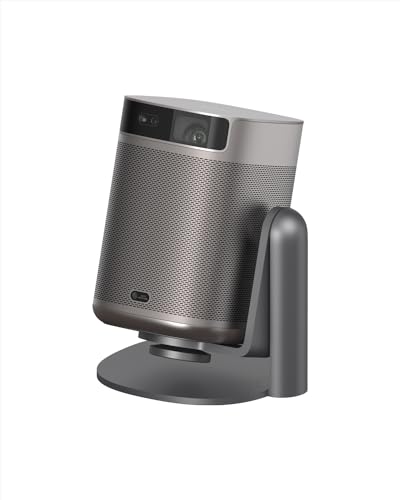
ViewSonic M1 Review: Compare 86 technical specifications, 16 expert and video reviews and 1 best-of list to see how this product ranks in the Projectors category and whether it is worth buying.
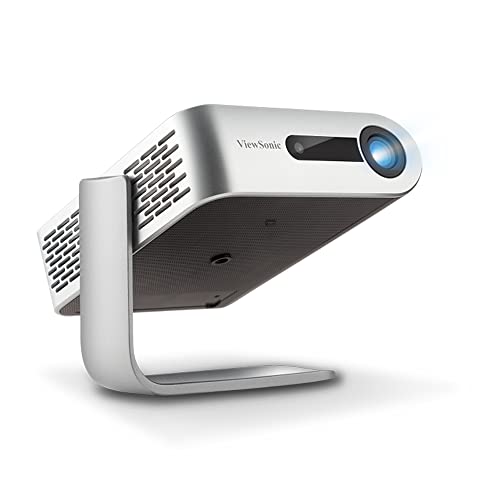
ViewSonic M1
6.4/10

Overall score

Score
6.4/ 10
✕
What it is
Our main score for this model, 1–10. It combines specs, best-of lists, expert reviews and owners.
How we count it
Parts: Technical score 35%, List score 30%, Reviews score 25%, Sentiment score 10%
Marks: Each part gets a mark out of 10. For reviews, lists and owners, a typical model in this category gets about 8 and the best one gets 10.
No data yet: A part with no data shows "?". It counts as the mark of a weaker model in this category (4 in 5 models with data score higher). This way, models with reviews, lists and owners usually come out ahead.
Score distribution
▼
<55-66-77-88-99-10
Score components

35%

5.8

Technical score

30%

5.8

List score

25%

8.3

Reviews score

10%

5.8

Sentiment score

▼Worse than 87% of projectors
7.1

Value for money

Value for money
7.1/ 10
✕
What it is
An indicator that combines the projector's overall rating with its cost.
When it matters
When you are looking for a projector with a good balance between quality and price.
Score distribution
▼
<55-66-77-88-99-10
Score components

70%

6.4

Overall score

30%

8.8

Price

▲Better than 54%
5.8

Technical score

Technical score
5.8/ 10
✕
What it is
How good the specs are compared with the other models in this category, 1–10.
How we count it
Areas: We rate the specs in each area against the other models in this category.
Weighting: The areas that matter most to buyers count more. The shares are shown under Score components.
Share: The technical score is 35% of the overall score.
Score distribution
▼
<55-66-77-88-99-10
Score components

42%

6.3

Image Quality

22%

5.1

Projection & Lens

12%

5.1

HDMI & Gaming

10%

6.1

Audio & Features

8%

4.2

Connectivity

6%

8.3

Design & Power

▼Worse than 80%
8.3

Reviews score

Reviews score
8.3/ 10
✕
What it is
Average grade from independent test sites, magazines and video reviewers, 1–10.
How we count it
Grades: Each review's own score is converted to 1–10; without one, we grade the review ourselves. Big test sites count more, short reviews half as much as full tests. A video review counts half.
Score: The average grade is 80% of the review mark; the number of reviews is the other 20% (1 review = 5, the typical number in this category = 8, the most-reviewed model = 10).
Enough data: With few reviews, the average grade is pulled toward the typical grade of this category. No reviews yet: 7.8 for now.
Share: Reviews count 25% of the overall score.
Score distribution
▼
<55-66-77-88-99-10

80%

8.2

Average grade

20%

8.8

Popularity

Grades by review (16)
12 reviews: 7 with a printed score, 5 estimated from the review. 4 video reviews, each counting half as much as a written test. Reviews count 25% of the overall score.
User ratings collected online are not part of this score.
▲Better than 51%
5.8

List score

List score
5.8/ 10
✕
What it is
How often independent test sites, magazines and video reviewers put this model in their best-of lists for this category.
How we count it
Points: The model in the most lists of this category gets 10; the others get 8 to 10 in proportion. In no list yet: 7.5. Lists count 30% of the overall score.
Enough data: Every list counts, even a single one. With fewer than 5 best-of lists in the category, this part is left out.
Lists with this model (1)
List score: in 1 of 112 lists (1%)
▲Better than 76%
  • viewsonic-m1
  • viewsonic-m1
  • viewsonic-m1
  • viewsonic-m1
  • viewsonic-m1
  • viewsonic-m1
  • viewsonic-m1
  • viewsonic-m1
viewsonic-m1
viewsonic-m1
viewsonic-m1
viewsonic-m1
viewsonic-m1
viewsonic-m1
viewsonic-m1
viewsonic-m1
Where to buy
*As an Amazon Associate, we earn from qualifying purchases.
Best rankings
Available: ranking among products currently available (including other versions of this product).All: ranking among all products in the database.

What reviewers say about the ViewSonic M1

Based on 7 · 4

Reviewers like the good sound, handy keystone correction and solid battery, but agree the picture is too dim.
Praised
Criticised
Pick a topic to see who said what

What owners say about the ViewSonic M1

Based on 84 owners sharing their experience in online comments

18%positive11%mixed71%negative

Owners praise the picture and speaker, but frequent breakdowns, battery trouble, and unreliable connections make the experience frustrating.

What owners dislike

  • Owners report the projector suddenly stops turning on, sometimes after days or months, with the power light on but no picture or response.21
  • Owners say the battery drains fast, running under three hours against a claimed six, or stops charging, so it only works when plugged in.9
  • Owners say the projector powers on and may play sound, but the screen stays black or blank, with no picture projected.7
  • Owners say laptops and some phones fail to connect over USB-C, and Android phones can take ages to pair or fail to sync at all.6
  • Owners say the 480p picture is too soft to read text, so PowerPoint slides and on-screen game text are hard to make out.6
  • Owners say some streaming apps such as Netflix won't install or play, and wireless mirroring often gives audio only or laggy video.5
  • Owners say support often does not answer warranty claims, and repairs can stall while parts are unavailable.5
  • Owners say the image can look dim in lighter rooms and on bright scenes, and that brightness feels too low overall.4
  • Owners say USB playback can stutter, a Fire TV stick may not work through the USB port, and some MKV files will not read.4
  • Owners say auto keystone does not straighten the image well, so a projector set on a table can end up tilted and hard to align.3

Points mentioned by at least 3 owners, most mentioned first.

Loading...
Loading category ranking...

Technical Specifications of projector ViewSonic M1

Technical score
Technical score
5.8/ 10
✕
What it is
How good the specs are compared with the other models in this category, 1–10.
How we count it
Areas: We rate the specs in each area against the other models in this category.
Weighting: The areas that matter most to buyers count more. The shares are shown under Score components.
Share: The technical score is 35% of the overall score.
Score distribution
▼
<55-66-77-88-99-10
Score components:

42%

6.3

Image Quality

22%

5.1

Projection & Lens

12%

5.1

HDMI & Gaming

10%

6.1

Audio & Features

8%

4.2

Connectivity

6%

8.3

Design & Power

5.8
Reviews score
8.3
List score
5.8
Value for money
Value for money
7.1/ 10
✕
What it is
An indicator that combines the projector's overall rating with its cost.
When it matters
When you are looking for a projector with a good balance between quality and price.
Score distribution
▼
<55-66-77-88-99-10
Score components:

70%

6.4

Overall score

30%

8.8

Price

7.1
ANSI lumens
?
Contrast ratio
120,000:1
This projector has a contrast ratio of 120000:1, higher than 76.7% of projectors and equal to 1% of projectors.
Dynamic contrast ratio.
Native panel resolution
854x480
This projector uses a native resolution of 854x480, lower than 95.3% of projectors and equal to 2.3% of projectors.
Output resolution
854x480
This projector supports output resolution up to 854x480, lower than 95.5% of projectors and equal to 2.3% of projectors.
Projection technology
DLP
Show more
What reviewers say
Throw ratio
1.2:1
Min throw distance
0.64 m
This projector needs a minimum throw distance of 0.64 m, shorter than 83.3% of projectors and equal to 0.9% of projectors.
Max projection size
100 inch
This projector supports projection sizes up to 100 inch, smaller than 92% of projectors and equal to 6.7% of projectors.
Zoom ratio
N/A
Motorized zoom
no
This projector does not have motorised zoom. 14.8% of projectors offer this.
Show more
What reviewers say
Input lag
33 ms
This projector has input lag of 33 ms, higher than 55.4% of projectors and equal to 1.9% of projectors.
Auto low latency mode (ALLM)
no
This projector does not switch to low-latency mode automatically. 16.1% of projectors offer this.
Variable refresh rate (VRR)
no
This projector does not support variable refresh rate. 1.8% of projectors offer this.
HDMI version
1.4
This projector supports HDMI 1.4, older than 54% of projectors and equal to 35.7% of projectors.
Max HDMI bandwidth
10.2 Gbps
This projector supports HDMI bandwidth up to 10.2 Gbps, lower than 51.2% of projectors and equal to 46.5% of projectors.
Show more
N. of HDMI ports
1
This projector has 1 HDMI port/s, fewer than 54.2% of projectors and equal to 42.9% of projectors.
Wi-Fi connectivity
no
This projector does not connect to Wi-Fi networks. 53.4% of projectors offer this.
Wi-Fi version
N/A
Bluetooth connectivity
no
This projector does not support Bluetooth. 50.7% of projectors offer this.
Bluetooth version
N/A
Show more
What reviewers say
Smart TV features
no
This projector does not have built-in smart TV features. 43.9% of projectors offer this.
Operating system
none
Android OS
no
This projector does not run Android OS. 19.1% of projectors run Android OS.
Dedicated smartphone app
no
This projector does not come with a dedicated smartphone app. 36.8% of projectors come with a dedicated smartphone app.
Remote control
yes
This projector includes a remote control. 1.5% of projectors offer this.
Show more
What reviewers say
Light source type
led
This projector uses led light source technology, more advanced than 33.6% of projectors and equal to 39.9% of projectors.
Laser light source
no
This projector does not have a laser light source. 26.8% of projectors offer this.
Lamp life
30,000 hours
This projector offers lamp life of 30,000 hours, shorter than 67.9% of projectors and equal to 25.9% of projectors.
LED light source life.
Lamp life (eco mode)
30,000 hours
This projector offers eco-mode lamp life of 30,000 hours, shorter than 64% of projectors and equal to 31.9% of projectors.
Operating power consumption
45 W
This projector uses 45 W of power, less than 92.9% of projectors and equal to 1.1% of projectors.
Show more
What reviewers say

ViewSonic M1 vs the average projector

246810TotalImage QualityProjection & LensHDMI & GamingConnectivityAudio & FeaturesDesign & Power
  • Higher contrast ratio
    This projector has a higher contrast ratio than the average projector (120000:1 vs 10000:1). The average projector has 10000:1 of contrast ratio.
    Dynamic contrast ratio.
    120,000:1 vs 10,000:1
  • 10 degrees more vertical correction
    This projector offers more vertical keystone correction than the average projector (40 degrees vs 30 degrees). The average projector offers vertical keystone correction of 30 degrees.
    40 degrees vs 30 degrees
  • 0.37 m shorter throw distance
    This projector has a lower throw distance than the average projector (0.6 m vs 1 m). The average projector has 1.0055 m of throw distance.
    0.64 m vs 1.0055 m
  • Includes stereo speakers
    This projector has stereo speakers, while the average projector does not. 47.8% of projectors have stereo speakers.
  • 41.2% higher refresh rate
    This projector has a higher refresh rate than the average projector (120 Hz vs 85 Hz). The average projector has 85 Hz of refresh rate.
    120 Hz vs 85 Hz
  • 5 dB quieter operation
    This projector has a lower audible noise than the average projector (26 dB vs 31 dB). The average projector has 31 dB of audible noise.
    26 dB vs 31 dB
  • Wider color gamut
    This projector has a higher color gamut coverage than the average projector (125% Rec.709 % vs 99% Rec.709 %). The average projector has 99% Rec.709 % of color gamut coverage.
    125% Rec.709 % vs 99% Rec.709 %
  • Includes built-in battery
    This projector has a built-in battery, while the average projector does not. 6.3% of projectors have one.
  • 12.2% higher review score
    Reviews score
    8.3/ 10
    ✕
    What it is
    Average grade from independent test sites, magazines and video reviewers, 1–10.
    How we count it
    Grades: Each review's own score is converted to 1–10; without one, we grade the review ourselves. Big test sites count more, short reviews half as much as full tests. A video review counts half.
    Score: The average grade is 80% of the review mark; the number of reviews is the other 20% (1 review = 5, the typical number in this category = 8, the most-reviewed model = 10).
    Enough data: With few reviews, the average grade is pulled toward the typical grade of this category. No reviews yet: 7.8 for now.
    Share: Reviews count 25% of the overall score.
    Score distribution
    ▼
    <55-66-77-88-99-10

    80%

    8.2

    Average grade

    20%

    8.8

    Popularity

    Grades by review (16)
    12 reviews: 7 with a printed score, 5 estimated from the review. 4 video reviews, each counting half as much as a written test. Reviews count 25% of the overall score.
    User ratings collected online are not part of this score.
    8.3 vs 7.4
  • Higher contrast ratio
    This projector has a higher contrast ratio than the average projector (120000:1 vs 10000:1). The average projector has 10000:1 of contrast ratio.
    Dynamic contrast ratio.
    120,000:1 vs 10,000:1
  • 41.2% higher refresh rate
    This projector has a higher refresh rate than the average projector (120 Hz vs 85 Hz). The average projector has 85 Hz of refresh rate.
    120 Hz vs 85 Hz
  • Wider color gamut
    This projector has a higher color gamut coverage than the average projector (125% Rec.709 % vs 99% Rec.709 %). The average projector has 99% Rec.709 % of color gamut coverage.
    125% Rec.709 % vs 99% Rec.709 %
  • 10 degrees more vertical correction
    This projector offers more vertical keystone correction than the average projector (40 degrees vs 30 degrees). The average projector offers vertical keystone correction of 30 degrees.
    40 degrees vs 30 degrees
  • 0.37 m shorter throw distance
    This projector has a lower throw distance than the average projector (0.6 m vs 1 m). The average projector has 1.0055 m of throw distance.
    0.64 m vs 1.0055 m
  • 1 more USB ports
    This projector has more USB ports than the average projector (2 vs 1). The average projector has 1 USB ports.
    2 vs 1
  • Includes stereo speakers
    This projector has stereo speakers, while the average projector does not. 47.8% of projectors have stereo speakers.
  • 5 dB quieter operation
    This projector has a lower audible noise than the average projector (26 dB vs 31 dB). The average projector has 31 dB of audible noise.
    26 dB vs 31 dB
  • Includes built-in battery
    This projector has a built-in battery, while the average projector does not. 6.3% of projectors have one.
  • 10,000 hours longer lamp life
    This projector has a higher lamp life than the average projector (30,000 hours vs 20,000 hours). The average projector has 20,000 hours of lamp life.
    LED light source life.
    30,000 hours vs 20,000 hours
  • 185 W lower power use
    This projector uses less power than the average projector (45 W vs 230 W). The average projector uses 230 W of power.
    45 W vs 230 W
  • 3 dB quieter eco mode
    This projector has a lower audible noise in eco mode than the average projector (25 dB vs 28 dB). The average projector has 28 dB of audible noise in eco mode.
    25 dB vs 28 dB
  • 74.8% lighter weight
    This projector is lighter than the average projector (0.8 kg vs 2.98 kg). The average projector weighs 2.98 kg.
    0.75 kg vs 2.98 kg
  • 10,000 hours longer eco lamp life
    This projector has a higher lamp life in eco mode than the average projector (30,000 hours vs 20,000 hours). The average projector has 20,000 hours of lamp life in eco mode.
    LED light source life.
    30,000 hours vs 20,000 hours
  • 149 mm narrower width
    This projector is narrower than the average projector (148 mm vs 297 mm). The average projector has a width of 297 mm.
    148 mm vs 297 mm
  • 81.5 mm lower height
    This projector is shorter than the average projector (40.5 mm vs 122 mm). The average projector has a height of 122 mm.
    40.5 mm vs 122 mm
  • Lower output resolution
    This projector supports a lower output resolution than the average projector (854x480 vs 1920x1080). The average projector outputs at 1920x1080 resolution.
    854x480 vs 1920x1080
  • Limited HDMI format
    This projector supports a less capable max HDMI input format than the average projector (1080p/60Hz vs 4K/120Hz). The average projector supports a max HDMI input format of 4K/120Hz.
    1080p/60Hz vs 4K/120Hz
  • Low native resolution
    This projector has a lower native panel resolution than the average projector (854x480 vs 1920x1080). The average projector has a native panel resolution of 1920x1080.
    854x480 vs 1920x1080
  • No HDR10 support
    This projector does not support HDR10, while the average projector does. 57.6% of projectors support HDR10.
  • 150 inch smaller image size
    This projector has a lower projection size than the average projector (100 inch vs 250 inch). The average projector has 250 inch of projection size.
    100 inch vs 250 inch
  • 23.7% lower list score
    List score
    5.8/ 10
    ✕
    What it is
    How often independent test sites, magazines and video reviewers put this model in their best-of lists for this category.
    How we count it
    Points: The model in the most lists of this category gets 10; the others get 8 to 10 in proportion. In no list yet: 7.5. Lists count 30% of the overall score.
    Enough data: Every list counts, even a single one. With fewer than 5 best-of lists in the category, this part is left out.
    Lists with this model (1)
    List score: in 1 of 112 lists (1%)
    5.8 vs 7.6
  • 1 fewer HDMI ports
    This projector has fewer HDMI ports than the average projector (1 vs 2). The average projector has 2 HDMI ports.
    1 vs 2
  • Basic light source
    This projector has Basic light source than the average projector (led vs laser). The average projector uses a laser light source.
    led vs laser
  • 23.7% lower list score
    List score
    5.8/ 10
    ✕
    What it is
    How often independent test sites, magazines and video reviewers put this model in their best-of lists for this category.
    How we count it
    Points: The model in the most lists of this category gets 10; the others get 8 to 10 in proportion. In no list yet: 7.5. Lists count 30% of the overall score.
    Enough data: Every list counts, even a single one. With fewer than 5 best-of lists in the category, this part is left out.
    Lists with this model (1)
    List score: in 1 of 112 lists (1%)
    5.8 vs 7.6
  • 22.7% lower sentiment score
    5.8 vs 7.5
  • Lower output resolution
    This projector supports a lower output resolution than the average projector (854x480 vs 1920x1080). The average projector outputs at 1920x1080 resolution.
    854x480 vs 1920x1080
  • Low native resolution
    This projector has a lower native panel resolution than the average projector (854x480 vs 1920x1080). The average projector has a native panel resolution of 1920x1080.
    854x480 vs 1920x1080
  • No HDR10 support
    This projector does not support HDR10, while the average projector does. 57.6% of projectors support HDR10.
  • 0.27 inch smaller DMD chip
    This projector has a lower DMD chip size than the average projector (0.2 inch vs 0.47 inch). The average projector has 0.47 inch of DMD chip size.
    0.2 inch vs 0.47 inch
  • 3 earlier release
    This projector was released earlier than the average projector (2018 vs 2021). The average projector was released in 2021.
    April 2018
    2018 vs 2021
  • 150 inch smaller image size
    This projector has a lower projection size than the average projector (100 inch vs 250 inch). The average projector has 250 inch of projection size.
    100 inch vs 250 inch
  • Limited HDMI format
    This projector supports a less capable max HDMI input format than the average projector (1080p/60Hz vs 4K/120Hz). The average projector supports a max HDMI input format of 4K/120Hz.
    1080p/60Hz vs 4K/120Hz
  • 43.3% lower HDMI bandwidth
    This projector has a lower HDMI bandwidth than the average projector (10.2 Gbps vs 18 Gbps). The average projector has 18 Gbps of HDMI bandwidth.
    10.2 Gbps vs 18 Gbps
  • Older HDMI version
    This projector has Old HDMI standard than the average projector (1.4 vs 2). The average projector supports HDMI 2.
    1.4 vs 2
  • More outdated HDCP support
    This projector supports an older HDCP version than the average projector (1.4 vs 2.2).
    1.4 vs 2.2
  • 6 ms higher input lag
    This projector has a higher input lag than the average projector (33 ms vs 27 ms). The average projector has 27 ms of input lag.
    33 ms vs 27 ms
  • 1 fewer HDMI ports
    This projector has fewer HDMI ports than the average projector (1 vs 2). The average projector has 2 HDMI ports.
    1 vs 2
  • No Wi-Fi connectivity
    This projector does not connect to Wi-Fi networks, while the average projector does. 53.4% of projectors offer this.
  • No Bluetooth connectivity
    This projector does not support Bluetooth, while the average projector does. 50.6% of projectors offer this.
  • No RS-232 control
    This projector does not support RS-232 control, while the average projector does. 50.6% of projectors support RS-232 control.
  • 40% weaker audio output
    This projector has a lower audio output power than the average projector (6 W vs 10 W). The average projector has 10 W of audio output power.
    2 x 3W.
    6 W vs 10 W
  • Basic light source
    This projector has Basic light source than the average projector (led vs laser). The average projector uses a laser light source.
    led vs laser

Video reviews

Hands-on testing, unboxing, and real-world video evaluations

9.0
Adam Lobo TV
≈ estimated
06/12/2018
Hands-on review · unboxing, sound, battery and picture tests
Verdict
ViewSonic M1 is highly recommended for anyone who wants an ultra-portable projector with good sound and battery life.
9.0
TECH 404
≈ estimated
22/07/2018
Hands-on review · image, sound, connectivity and gaming
Verdict
ViewSonic M1 is a good portable projector with a sharp image, strong sound and easy connections, though the fan is noisy.
8.0
Digit
≈ estimated
28/03/2019
Hands-on review · sound, picture and battery tests
Verdict
ViewSonic M1 has impressive features and speakers for its size, though resolution and battery life fall short.
Not graded
Not graded
Overview video
Shop video

Expert reviews

In-depth analysis and verdict from leading tech publications

6.0
whathifi.com
✓ explicit
07/06/2018
Hands-on test · Portable projector
Verdict
The ViewSonic M1 is a neat, low-priced projector with plenty of ports, but its picture lacks subtle colour and it struggles in bright rooms.
7.8
techgearlab.com
✓ explicit
20/03/2019
Lab test · Battery projector
Verdict
The ViewSonic M1 Portable is a good backyard and bedroom movie projector, with automatic keystone correction, but too dim and low-resolution for offices or a proper home theater.
9.0
wales247.co.uk
≈ estimated
05/01/2019
Hands-on review · Portable projector
Verdict
The ViewSonic M1 is a simple, plug-and-play projector for dark-room movie nights, with decent built-in speakers and a clear picture when the room is dimmed.
8.0
projectorreviews.com
≈ estimated
06/11/2018
Hands-on test · Pocket projector
Verdict
The ViewSonic M1 is a sleek pocket projector with strong speakers and a quiet fan, suiting dorm rooms and dark-room gaming, though text is hard to read.
9.0
projectorcentral.com
✓ explicit
28/06/2018
Lab test · Ultra-portable projector
Verdict
The ViewSonic M1 is light and easy to set up, with strong built-in sound, but its modest brightness limits it to dim rooms.
7.0
news18.com
≈ estimated
28/11/2018
Hands-on review · Ultra-portable projector
Verdict
The ViewSonic M1 is a travel-friendly projector for consoles and streaming in a dark room, but low resolution and weak bass hold it back.
8.0
hifitest.de
✓ explicit
10/02/2019
Hands-on test · Pocket projector
Verdict
The ViewSonic M1 is a compact battery projector with natural colors and good sound that suits showing phone videos anywhere.
8.0
rehders.de
≈ estimated
16/08/2018
Hands-on test · Portable LED projector
Verdict
The ViewSonic M1 is a pocket-sized, battery-powered projector for gardens and camping, best for small pictures in a dim spot.
8.0
clubic.com
✓ explicit
11/03/2021
Hands-on test · Mini projector
Verdict
The ViewSonic M1 is a portable mini projector that throws a big picture in a dark room, but it falls short of a real cinema.
8.4
profesionalreview.com
✓ explicit
08/06/2018
Hands-on test · Portable projector
Verdict
The ViewSonic M1 is a pocket projector with excellent speakers and plenty of ports, best for presentations, kids and travel rather than picture quality.
9.0
planetared.com
✓ explicit
04/06/2020
Hands-on review · Mini projector
Verdict
The ViewSonic M1 suits casual viewing of bright films, series or cartoons, with about 3 hours of battery, but dark scenes look weak.

Third-party reviews

What customers like about ViewSonic M1

  • Extremely portable, compact, and lightweight design with a built-in 360-degree smart stand
  • Excellent, high-quality audio from integrated Harman Kardon speakers
  • Long-lasting internal battery (up to 3-6 hours) allows for viewing without cables
  • Versatile connectivity options including HDMI, USB-C, MicroSD, and 16GB internal storage
  • LED light source offers long life (30,000 hours) and instant on/off functionality
  • Quiet fan noise and good auto-keystone correction feature

What customers don't like about ViewSonic M1

  • Low brightness (measured below claimed 250 lumens), requiring a very dark room
  • Native 480p resolution limits image sharpness (not HD)
  • Focus can drift, requiring manual readjustments during long viewing sessions
  • Remote receiver is located only on the front, making it difficult to use when sitting behind it
  • Internal media player and smart features can be slow or limited, often requiring an external streaming stick
  • Bulky power cable can negate some portability benefits

Verdict

The ViewSonic M1 is an ultra-portable WVGA (854x480) LED projector featuring a unique 360-degree smart stand that doubles as a lens cover and facilitates instant power-on. Weighing just 0.75kg, it offers a brightness of 250 LED lumens, a 120,000:1 dynamic contrast ratio, and a short-throw lens capable of projecting a 100-inch image from 2.6 metres. Main pros include its built-in battery providing up to 6 hours of use, premium dual Harman Kardon speakers, 16GB of internal storage, and versatile connectivity including USB-C and HDMI. However, its main cons are the relatively low native resolution compared to HD standards, modest brightness that requires a dark room for best results, and lack of native smart streaming apps on the base model.

Compare ViewSonic M1 with other products in the Projectors category

1Product to compare no. 1
VS
2Product to compare no. 2
VS
3Product to compare no. 3 (optional)

Graphic comparison of ViewSonic M1 and other products in the Projectors category

No results found