Scored using eReaders Methodology v1.0
eReaders Methodology v1.0
Mathematical & Unbiased Scoring
Products in this category are evaluated mathematically under Frontumo eReaders Methodology v1.0 using verified laboratory benchmarks, technical specifications, and authentic consumer ratings with 0% commercial bias.
Explore eReaders Methodology v1.0

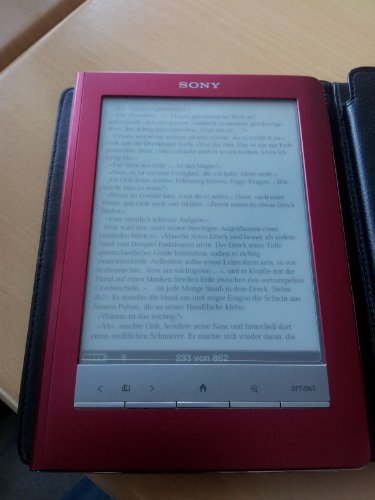
Sony Prs 600 Review | 68 Data compared

Avg. price:~£80Screen size:6 inchesPixel density:167 ppiInternal storage:0.5 GBBattery life:14 hoursSupported bookstore ecosystem:Sony Open Ecosystem

Sony Prs 600 Review: Compare 68 technical specifications and user reviews to see how this product ranks in the eReaders category and whether it is worth buying.

4.4

Overall score

Score
4.4/ 10
✕
What it is
An overall evaluation of the eReader's quality, based on technical analyses and user reviews.
When it matters
When you need a quick reference to identify the best eReaders on the market.
Score distribution
â–¼
<55-66-77-88-99-10
Score components

90%

4.1

Technical score

10%

6.5

User score

â–¼Worse than 95% of ereaders
4.1

Technical score

Technical score
4.1/ 10
✕
What it is
An assessment of the eReader's technical performance, covering key areas such as display quality, reading features, battery life, format support, ecosystem, and design.
When it matters
When you want to compare eReaders based on technical performance and available features.
Score distribution
â–¼
<55-66-77-88-99-10
Score components

25%

3.1

Display

22%

6.6

Reading

18%

3.4

Battery

14%

3.7

Hardware

12%

2.1

Connectivity

9%

6.0

Design

â–¼Worse than 97% of ereaders
6.5

User score

User score
6.5/ 10
✕
What it is
A rating that combines user reviews and the total number of reviews received by the eReader.
When it matters
When you want to know how an eReader feels in daily reading and how reliable it is for screen comfort, battery life, and library management according to user feedback.
Score distribution
â–¼
<55-66-77-88-99-10
Score components

70%

7.1

User ratings

30%

5.2

Number of reviews

Based on 112 buyer reviews from online shops.
How we calculate this
User ratings – average star rating across all shop listings, weighted by how many reviews each has, on a 1–10 scale.
Number of reviews – how many buyer reviews the product has, on a logarithmic scale; the 8% most-reviewed models in the category get 10.
â–¼Worse than 93% of ereaders
  • sony-prs-600
  • sony-prs-600
  • sony-prs-600
  • sony-prs-600
sony-prs-600
sony-prs-600
sony-prs-600
sony-prs-600

Best prices

*As an Amazon Associate, we earn from qualifying purchases.

Best rankings

Available: ranking among products currently available (including other versions of this product).All: ranking among all products in the database.
Loading...
Loading category ranking...

Technical Specifications of eReader Sony Prs 600

Technical score
Technical score
4.1/ 10
✕
What it is
An assessment of the eReader's technical performance, covering key areas such as display quality, reading features, battery life, format support, ecosystem, and design.
When it matters
When you want to compare eReaders based on technical performance and available features.
Score distribution
â–¼
<55-66-77-88-99-10
Score components:

25%

3.1

Display

22%

6.6

Reading

18%

3.4

Battery

14%

3.7

Hardware

12%

2.1

Connectivity

9%

6.0

Design

4.1
User score
User score
6.5/ 10
✕
What it is
A rating that combines user reviews and the total number of reviews received by the eReader.
When it matters
When you want to know how an eReader feels in daily reading and how reliable it is for screen comfort, battery life, and library management according to user feedback.
Score distribution
â–¼
<55-66-77-88-99-10
Score components

70%

7.1

User ratings

30%

5.2

Number of reviews

Based on 112 buyer reviews from online shops.
How we calculate this
User ratings – average star rating across all shop listings, weighted by how many reviews each has, on a 1–10 scale.
Number of reviews – how many buyer reviews the product has, on a logarithmic scale; the 8% most-reviewed models in the category get 10.
6.5
Popularity
Popularity
5.2/ 10
✕
What it is
An indicator based on the number of reviews received by the eReader.
When it matters
When you prefer to choose an eReader reviewed and selected by many other buyers.
Score distribution
â–¼
<55-66-77-88-99-10
Popularity:
Sony Prs 600 has a popularity score of 5.2 points, which is lower than that of 52.5% of products in this category.
5.2
Value for money
Value for money
6.1/ 10
✕
What it is
An indicator that combines the eReader's overall rating with its cost.
When it matters
When you are looking for an eReader with a good balance between reading comfort, features, and price.
Score distribution
â–¼
<55-66-77-88-99-10
Score components:

60%

4.4

Overall score

40%

10

Price

6.1
Brand name
Sony
Screen size
6 inches
Screen size
6 inches
This ereader has a screen size of 6 inches which is smaller than 57.4% on this spec and equal to 40.2% of eReaders.
Screen resolution
600x800 px
Screen resolution
600x800 px
This ereader uses a screen resolution of 600x800 px, which is less sharp than that of 83.6% of eReaders and the same as that of 15.6% of eReaders.
Pixel density
167 ppi
Pixel density
167 ppi
This ereader has a pixel density of 167 ppi which is lower than 77.9% on this spec and equal to 10.7% of eReaders.
E-paper display
yes
E-paper display
yes
This ereader uses an e-paper display. 2.5% of eReaders have an e-paper display.
Show more
Supported file types
6
Supported file types
6
This ereader supports 6 file types which is fewer than 90.7% on this spec and equal to 3.4% of eReaders.
PDF reflow support
yes
PDF reflow support
yes
This ereader offers PDF reflow. 45.5% of eReaders support PDF reflow.
Annotation support
yes
Annotation support
yes
This ereader offers annotation support. 1.6% of eReaders offer annotation support.
Dictionary
yes
Dictionary
yes
This ereader includes a built-in dictionary. 0.8% of eReaders include a built-in dictionary.
Text-to-speech
yes
Text-to-speech
yes
This ereader offers text-to-speech. 36.1% of eReaders include text-to-speech.
Show more
Battery life
14 hours
Battery life
14 hours
This ereader offers 14 hours of battery life which is shorter than 83.3% on this spec and equal to 2.1% of eReaders.
Advertised as "up to 2 weeks", actual usage varies and some users report significantly less in hours/days
Battery capacity
800 mAh
Battery capacity
800 mAh
This ereader has a battery capacity of 800 mAh which is lower than 99.2% on this spec.
Charging time
2 hours
Charging time
2 hours
This ereader takes 2 hours to charge which is quicker than 49.1% on this spec and equal to 40% of eReaders.
2 with optional AC adapter; may take significantly longer via USB
Wireless charging
no
Wireless charging
no
This ereader does not offer wireless charging. 7.4% of eReaders offer wireless charging.
Internal storage
0.5 GB
Internal storage
0.5 GB
This ereader offers 0.5 GB of internal storage which is less than 100% on this spec.
RAM capacity
0.128 GB
RAM capacity
0.128 GB
This ereader offers 0.128 GB of RAM which is less than 87.7% on this spec and equal to 11.5% of eReaders.
CPU base clock speed
1x 0.532 GHz
CPU base clock speed
1x 0.532 GHz
This ereader has a CPU base clock speed of 1x0.532 GHz, which is slower than that of 95.9% of eReaders and the same as that of 3.3% of eReaders.
Operating system
MontaVista Linux
Operating system
MontaVista Linux
This ereader runs MontaVista Linux, which is less advanced than that of 80.3% of eReaders and the same as that of 1.6% of eReaders.
Linux 2.6.23
Memory card slot
yes
Memory card slot
yes
This ereader has a memory card slot. 57.4% of eReaders have a memory card slot.
Show more
Wi-Fi connectivity
no
Wi-Fi connectivity
no
This ereader does not connect over Wi-Fi. 94.3% of eReaders have Wi-Fi.
Wi-Fi version
WiFi not supported
Wi-Fi version
WiFi not supported
This ereader supports Wi-Fi WiFi not supported, which is older than that of 94.3% of eReaders and the same as that of 5.7% of eReaders.
Wi-Fi bands supported
no Wi-Fi
Wi-Fi bands supported
no Wi-Fi
This ereader supports no Wi-Fi Wi-Fi bands, which is narrower than that of 94.3% of eReaders and the same as that of 5.7% of eReaders.
Bluetooth
no
Bluetooth
no
This ereader does not connect over Bluetooth. 60.7% of eReaders have Bluetooth.
Bluetooth version
N/A
Show more
Weight
286 g
Weight
286 g
This ereader weighs 286 g which is heavier than 71.3% on this spec.
Thickness
9.8 mm
Thickness
9.8 mm
This ereader is 9.8 mm thick which is thicker than 82.6% on this spec.
Height
174.3 mm
Height
174.3 mm
This ereader is 174.3 mm tall which is taller than 54.1% on this spec.
Width
121 mm
Width
121 mm
This ereader is 121 mm wide which is narrower than 63.1% on this spec.
Water resistance (splashproof)
no
Water resistance (splashproof)
no
This ereader does not have water resistance against splashes. 25% of eReaders have water resistance against splashes.
Show more

Sony Prs 600 vs the average eReader

246810TotalDisplayReadingBatteryHardwareConnectivityDesign
  • Memory card slot
    Memory card slot
    yes
    This ereader includes a memory card slot, while the average eReader does not. 43.1% of eReaders include a memory card slot.
  • Page-turn buttons
    Page-turn buttons
    yes
    This ereader has page-turn buttons, while the average eReader does not. 44.7% of eReaders have page-turn buttons.
  • 3.5 mm jack
    3.5 mm headphone jack
    yes
    This ereader has a 3.5 mm headphone jack, while the average eReader does not. 15.6% of eReaders have a 3.5 mm headphone jack.
  • Supports stylus
    Stylus support
    yes
    This ereader supports a stylus, while the average eReader does not. 38.2% of eReaders support a stylus.
    included a stylus for handwritten notes/drawings
  • Stylus included
    Stylus included
    yes
    This ereader includes a stylus, while the average eReader does not. 29.3% of eReaders include a stylus.
    Stylus included in the box.
  • 2.13x cheaper
    Sony Prs 600 is cheaper than the average eReader (£80 vs £170).
    £80 vs £170
  • 2.13x cheaper
    Sony Prs 600 is cheaper than the average eReader (£80 vs £170).
    £80 vs £170
  • Supports stylus
    Stylus support
    yes
    This ereader supports a stylus, while the average eReader does not. 38.2% of eReaders support a stylus.
    included a stylus for handwritten notes/drawings
  • Stylus included
    Stylus included
    yes
    This ereader includes a stylus, while the average eReader does not. 29.3% of eReaders include a stylus.
    Stylus included in the box.
  • Memory card slot
    Memory card slot
    yes
    This ereader includes a memory card slot, while the average eReader does not. 43.1% of eReaders include a memory card slot.
  • 3.5 mm jack
    3.5 mm headphone jack
    yes
    This ereader has a 3.5 mm headphone jack, while the average eReader does not. 15.6% of eReaders have a 3.5 mm headphone jack.
  • Page-turn buttons
    Page-turn buttons
    yes
    This ereader has page-turn buttons, while the average eReader does not. 44.7% of eReaders have page-turn buttons.
  • Limited bookstore ecosystem
    Supported bookstore ecosystem
    Sony Open Ecosystem
    This ereader uses the Sony Open Ecosystem bookstore ecosystem, while the average eReader uses Android Open Ecosystem.
    Sony eBookstore, Kobo, Google Books, and other Adobe DRM or DRM-free EPUB/PDF stores.
    Sony Open Ecosystem vs Android Open Ecosystem
  • Less advanced E-Ink technology
    E-Ink technology
    Vizplex
    This ereader uses Vizplex E-Ink technology, while the average eReader uses Carta Plus.
    Vizplex vs Carta Plus
  • No front light
    Front light
    no
    This ereader does not include front light, while the average eReader does. 74% of eReaders include front light.
  • Lower screen resolution
    Screen resolution
    600x800 px
    This ereader supports lower screen resolution than the average eReader (600x800 px vs 1072x1448 px). The average eReader supports 1072x1448 px screen resolution.
    600x800 px vs 1072x1448 px
  • 37% lower pixel density
    Pixel density
    167 ppi
    This ereader has a lower pixel density than the average eReader (167 ppi vs 265 ppi). The average eReader has a pixel density of 265 ppi.
    167 ppi vs 265 ppi
  • No USB Type-C
    USB Type-C
    no
    This ereader does not have USB Type-C, while the average eReader does. 51.2% of eReaders have USB Type-C.
  • 7 hours shorter battery life
    Battery life
    14 hours
    This ereader offers shorter battery life than the average eReader (14 hours vs 21 hours). The average eReader offers 21 hours of battery life.
    Advertised as "up to 2 weeks", actual usage varies and some users report significantly less in hours/days
    14 hours vs 21 hours
  • 9 fewer supported file formats
    Supported file types
    6
    This ereader supports fewer file types than the average eReader (6 vs 15).
    6 vs 15
  • 22.9% lower user score
    User score
    6.5/ 10
    ✕
    What it is
    A rating that combines user reviews and the total number of reviews received by the eReader.
    When it matters
    When you want to know how an eReader feels in daily reading and how reliable it is for screen comfort, battery life, and library management according to user feedback.
    Score distribution
    â–¼
    â–¼
    <55-66-77-88-99-10
    Sony Prs 600
    the average eReader
    Sony Prs 600 has a lower user score than the average eReader (6.51 vs 8.000).
    6.51 vs 8
  • 20.2% worse value for money
    Sony Prs 600 has worse value for money than the average eReader (6.06 vs 7.3).
    6.06 vs 7.28
  • Less advanced E-Ink technology
    E-Ink technology
    Vizplex
    This ereader uses Vizplex E-Ink technology, while the average eReader uses Carta Plus.
    Vizplex vs Carta Plus
  • No front light
    Front light
    no
    This ereader does not include front light, while the average eReader does. 74% of eReaders include front light.
  • Lower screen resolution
    Screen resolution
    600x800 px
    This ereader supports lower screen resolution than the average eReader (600x800 px vs 1072x1448 px). The average eReader supports 1072x1448 px screen resolution.
    600x800 px vs 1072x1448 px
  • 37% lower pixel density
    Pixel density
    167 ppi
    This ereader has a lower pixel density than the average eReader (167 ppi vs 265 ppi). The average eReader has a pixel density of 265 ppi.
    167 ppi vs 265 ppi
  • No color temperature adjustment
    Color temperature adjustment
    no
    This ereader does not support color temperature adjustment, while the average eReader does. 51.6% of eReaders support color temperature adjustment.
  • 1 inches smaller screen size
    Screen size
    6 inches
    This ereader has a smaller screen than the average eReader (6 inches vs 7 inches). The average eReader screen size is 7 inches.
    6 inches vs 7 inches
  • No glare-free screen
    Glare-free screen
    no
    This ereader does not have a glare-free screen, while the average eReader does. 95.1% of eReaders have a glare-free screen.
  • Basic touchscreen technology
    Touchscreen technology
    resistive
    This ereader uses resistive touchscreen technology, while the average eReader uses capacitive.
    resistive vs capacitive
  • 5 fewer front-light LEDs
    N. of front-light LEDs
    0
    This ereader has fewer front-light LEDs than the average eReader (0 vs 5). The average eReader has 5 front-light LEDs.
    0 vs 5
  • 8 fewer screen shades
    Number of screen shades
    8
    This ereader offers fewer screen shades than the average eReader (8 vs 16). The average eReader offers 16 screen shades.
    8 vs 16
  • Limited bookstore ecosystem
    Supported bookstore ecosystem
    Sony Open Ecosystem
    This ereader uses the Sony Open Ecosystem bookstore ecosystem, while the average eReader uses Android Open Ecosystem.
    Sony eBookstore, Kobo, Google Books, and other Adobe DRM or DRM-free EPUB/PDF stores.
    Sony Open Ecosystem vs Android Open Ecosystem
  • 9 fewer supported file formats
    Supported file types
    6
    This ereader supports fewer file types than the average eReader (6 vs 15).
    6 vs 15
  • No cloud sync
    Cloud sync support
    no
    This ereader does not support cloud sync, while the average eReader does. 80% of eReaders support cloud sync.
    Requires a USB connection to a computer for content transfer
  • No folder support
    Folder support
    no
    This ereader does not support folders, while the average eReader does. 54.5% of eReaders support folders.
  • Limited library support
    Library lending platforms supported
    OverDrive
    This ereader supports fewer library lending platforms than the average eReader (OverDrive vs OverDrive, Libby).
    Requires Adobe Digital Editions or manual transfer steps.
    OverDrive vs OverDrive, Libby
  • No parental controls
    Parental controls
    no
    This ereader does not have parental controls, while the average eReader does.
  • Limited DRM support
    DRM schemes supported
    Adobe DRM, BBeB Book
    This ereader supports fewer DRM schemes than the average eReader (Adobe DRM, BBeB Book vs Adobe DRM, Social DRM).
    Adobe DRM, BBeB Book vs Adobe DRM, Social DRM
  • 6 fewer supported languages
    N. of supported languages
    4
    This ereader supports fewer languages than the average eReader (4 vs 10). The average eReader supports 10 languages.
    4 vs 10
  • 7 hours shorter battery life
    Battery life
    14 hours
    This ereader offers shorter battery life than the average eReader (14 hours vs 21 hours). The average eReader offers 21 hours of battery life.
    Advertised as "up to 2 weeks", actual usage varies and some users report significantly less in hours/days
    14 hours vs 21 hours
  • 48.9% smaller battery capacity
    Battery capacity
    800 mAh
    This ereader has a smaller battery than the average eReader (800 mAh vs 1565 mAh). The average eReader battery has a capacity of 1565 mAh.
    800 mAh vs 1,565 mAh
  • 96.9% less storage
    Internal storage
    0.5 GB
    This ereader offers less internal storage than the average eReader (0.5 GB vs 16 GB). The average eReader provides 16 GB of internal storage.
    0.5 GB vs 16 GB
  • Less advanced operating system
    Operating system
    MontaVista Linux
    This ereader uses MontaVista Linux, a less advanced operating system than Kindle OS on the average eReader.
    Linux 2.6.23
    MontaVista Linux vs Kindle OS
  • 0.38 GB less RAM
    RAM capacity
    0.128 GB
    This ereader has less RAM than the average eReader (0.1 GB vs 0.5 GB). The average eReader has 0.512 GB of RAM.
    0.128 GB vs 0.512 GB
  • Slower CPU base clock speed
    CPU base clock speed
    1 x 0.532 GHz
    This ereader has a slower CPU base clock speed than the average eReader (1x0.5 GHz vs 1x1 GHz). The average eReader has a CPU base clock speed of 1x1 GHz.
    1x0.532 GHz vs 1x1 GHz
  • No USB Type-C
    USB Type-C
    no
    This ereader does not have USB Type-C, while the average eReader does. 51.2% of eReaders have USB Type-C.
  • No Bluetooth
    Bluetooth
    no
    This ereader does not have Bluetooth, while the average eReader does. 60.2% of eReaders have Bluetooth.
  • No Bluetooth audio
    Bluetooth audio support
    no
    This ereader does not support Bluetooth audio, while the average eReader does. 57.4% of eReaders support Bluetooth audio.
  • No OTA updates
    OTA updates supported
    no
    This ereader does not support OTA updates, while the average eReader does. 81.7% of eReaders support OTA updates.
  • No Wi-Fi
    Wi-Fi connectivity
    no
    This ereader does not support Wi-Fi, while the average eReader does. 93.5% of eReaders support Wi-Fi.
  • Older Wi-Fi version
    Wi-Fi version
    WiFi not supported
    This ereader supports an older Wi-Fi version than the average eReader (WiFi not supported vs Wi-Fi 4 (802.11n)).
    WiFi not supported vs Wi-Fi 4 (802.11n)
  • No web browser
    Built-in web browser
    no
    This ereader does not include a built-in web browser, while the average eReader does. 91.1% of eReaders include a built-in web browser.
  • Limited Wi-Fi bands
    Wi-Fi bands supported
    no Wi-Fi
    This ereader supports no Wi-Fi Wi-Fi bands, while the average eReader supports 2.4 GHz.
    no Wi-Fi vs 2.4 GHz
  • 34.3% heavier
    Weight
    286 g
    This ereader is heavier than the average eReader (286 g vs 213 g). The average eReader weighs 213 g.
    286 g vs 213 g
  • 12 older
    Release date
    2009
    This ereader is older than the average eReader (2009 vs 2021). The average eReader was released in 2021.
    August 2009
    2,009 vs 2,021
  • 1.7 mm thicker
    Thickness
    9.8 mm
    This ereader is thicker than the average eReader (9.8 mm vs 8.1 mm). The average eReader thickness is 8.1 mm.
    9.8 mm vs 8.1 mm

Video reviews

Hands-on testing, unboxing, and real-world video evaluations

Not graded yet
Not graded yet
Not graded yet
Not graded yet
Not graded yet
Not graded yet
Not graded yet
Not graded yet
Not graded yet
Not graded yet

Third-party reviews

Based on 112 buyer reviews from online shops.
Reviews last updated: October 2026 · How we calculate this

What we like about Sony Prs 600

  • Sleek and sturdy aluminum build quality often described as 'built like a tank'
  • Responsive touchscreen interface that makes menu navigation and page turning intuitive
  • Support for open formats including EPUB and PDF, allowing for library book borrowing
  • Extensive expandable storage via SD and Memory Stick Pro Duo card slots
  • Useful built-in features like a double-tap dictionary and hand-written note-taking with the included stylus
  • Strong battery life capable of approximately 7,500 page turns on a single charge
  • Fast page-turn speeds and overall system performance compared to earlier models

What we don't like about Sony Prs 600

  • Significant screen glare and reflectivity caused by the added touch layer
  • Lower screen contrast compared to non-touch models like the PRS-505, making text appear less sharp
  • Lack of wireless (Wi-Fi or 3G) connectivity, requiring all books to be sideloaded via computer
  • Sony's desktop eBook Library software is often reported as glitchy or unwieldy
  • Does not include an AC adapter or a protective cover in the box (only a soft sleeve)
  • Non-user-replaceable battery, requiring the unit to be sent to Sony for service if it fails
  • PDF reflow and zooming functions can be cumbersome and slow

Verdict

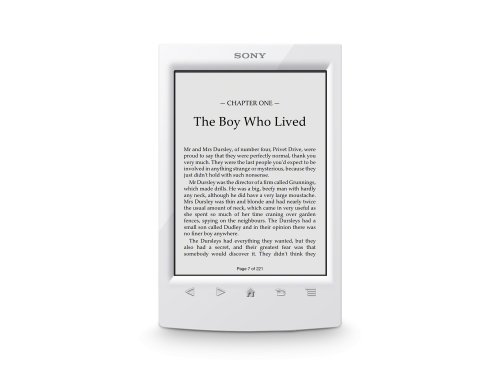
The Sony Reader Touch Edition (PRS-600) features a 6-inch E Ink Vizplex touchscreen with 800 x 600 resolution and 8 levels of greyscale, housed in a premium aluminium frame. It includes 512MB of internal storage (storing approximately 350 books), expandable via dual SD and Memory Stick Pro Duo slots, and supports diverse formats like ePub, PDF, and MP3 for background audio. Main advantages include its intuitive touch interface with stylus support for handwritten annotations, a built-in dictionary, and a durable metal build with a battery life of up to 7,500 page turns. However, the touchscreen layer adds significant screen glare and reduces text contrast compared to non-touch models, and the device lacks wireless connectivity, requiring a USB connection for all book transfers.

Compare Sony Prs 600 with other eReaders

1Product to compare no. 1
VS
2Product to compare no. 2
VS
3Product to compare no. 3 (optional)

Graphic comparison of Sony Prs 600 and other eReaders

No results found