Are Akaso action cameras good?
AKASO action cameras are good budget and mid-range options, with an average overall score of 6.9, ranking #5 among action camera brands.
AKASO is strongest for buyers who want 4K recording, removable batteries, screens, waterproof housings, and a large starter accessory bundle for substantially less than a premium flagship. The compromises are less consistent stabilization, audio, low-light processing, app polish, bitrate, and mode compatibility, so the exact model matters more than the brand name alone.
Who should consider buying Akaso action cameras?
The types of users who should consider AKASO action cameras are as follows:
- Budget-conscious beginners: EK and lower-priced V50 models provide an affordable introduction to 4K recording, waterproof housings, and action-camera mounts.
- Travelers and families: Touchscreens, removable batteries, wide lenses, and bundled accessories make many AKASO models practical for holidays and casual activities.
- Cyclists and motorcycle users: Brave and V50 cameras suit helmet or handlebar filming when a broad mount selection matters more than premium stabilization.
- Water-sports users: Models with native waterproofing or included dive housings can cover swimming, snorkeling, kayaking, and beach use.
- Vloggers and solo creators: Dual-screen Brave models make framing easier when the user needs to face the camera.
- 360-video beginners: AKASO 360 offers full-scene capture and reframing at a lower price than many premium 360 cameras.
How do Akaso action cameras differ from other action cameras?
AKASO action cameras differ from premium competitors by offering more model choice, accessories, and basic recording capability at lower prices.
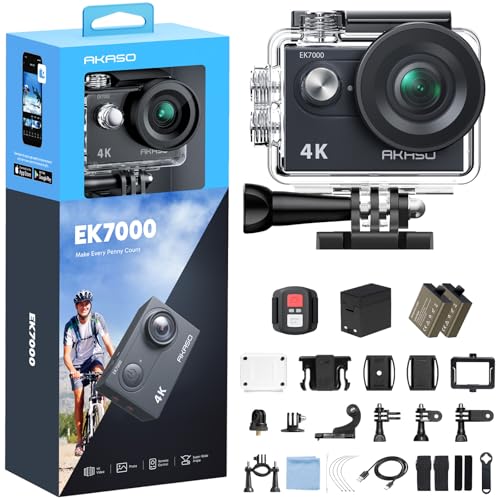
Entry-level EK cameras commonly include a waterproof housing, remote, spare battery, and several mounts in the box. This reduces the cost of a complete starter system, although their 4K frame rates, stabilization, bitrate, screens, and audio are simpler than those of higher AKASO lines.
The V50 and Brave families move closer to mainstream action cameras with touchscreens, electronic stabilization, higher frame rates, adjustable fields of view, front displays on selected models, and removable batteries. Brave 8 represents the conventional performance end of the range, while AKASO 360 adds full-sphere capture and post-recording reframing.
The wide range is useful but makes model names difficult to compare. Two AKASO cameras advertised as 4K can differ in native frame rate, stabilization availability, native waterproofing, external-microphone support, sensor size, and included accessories, so buyers should verify the complete specification rather than choosing by resolution alone.
What are the main series of AKASO action cameras?
The main series of AKASO action cameras are as follows:
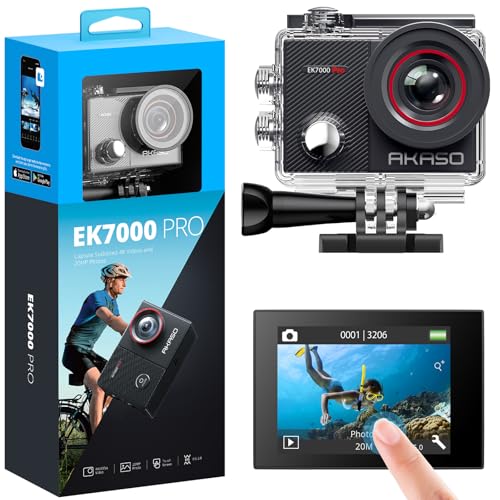
- EK series: The EK line includes entry-level models such as EK7000 and EK7000 Pro, designed to provide inexpensive 4K-labelled recording and a large starter accessory bundle. Pro versions add conveniences such as a touchscreen and electronic stabilization, while most water use depends on the included housing rather than the bare camera. This series suits beginners and occasional users, but lower frame rates, smaller sensors, simpler audio, and limited stabilization make it less suitable for demanding production.
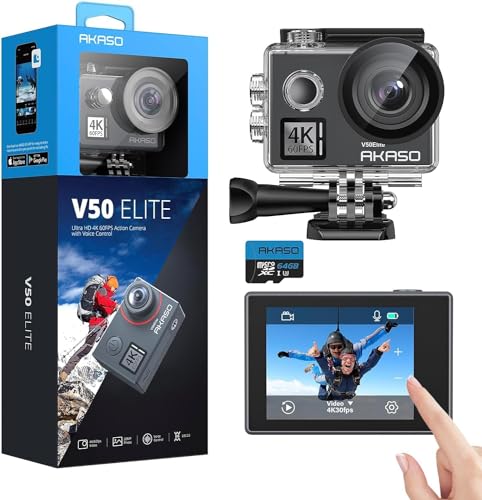
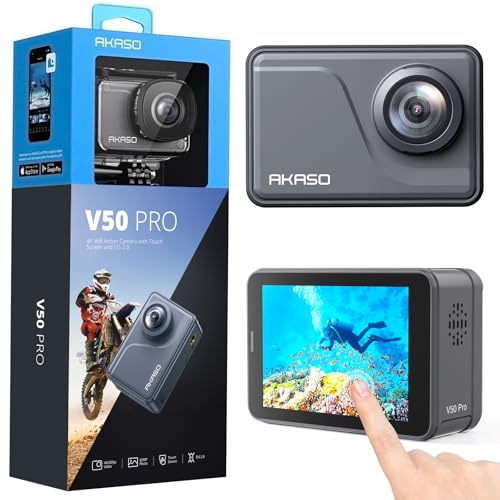
- V50 series: The V50 family, including V50 Pro and V50 Elite, occupies the middle of the range with touchscreens, wider recording choices, electronic stabilization, and up to 4K/60 on selected models. It offers a better balance of image quality, slow motion, controls, and price than the EK line, while retaining removable batteries and common action-camera mounting. V50 models are suitable for travel, cycling, and general sports, but buyers should verify housing requirements and whether stabilization works in the maximum 4K mode.
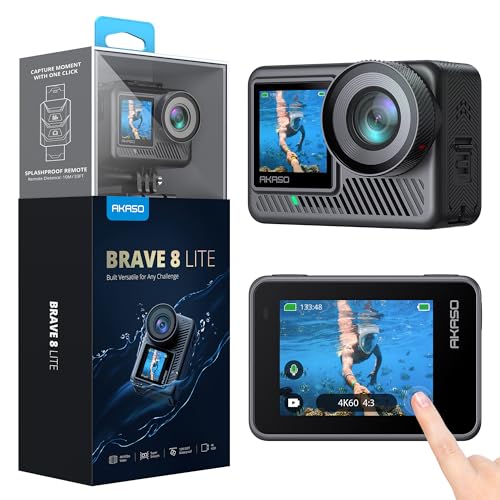
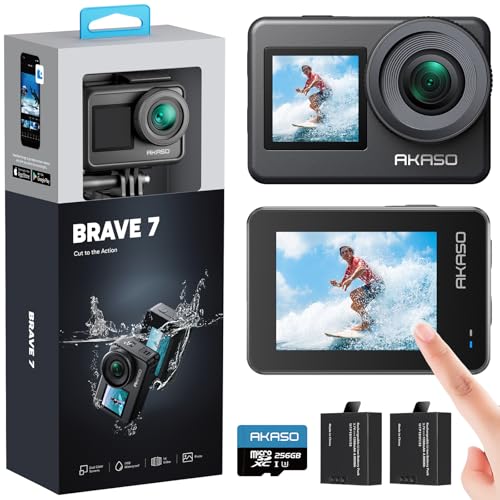
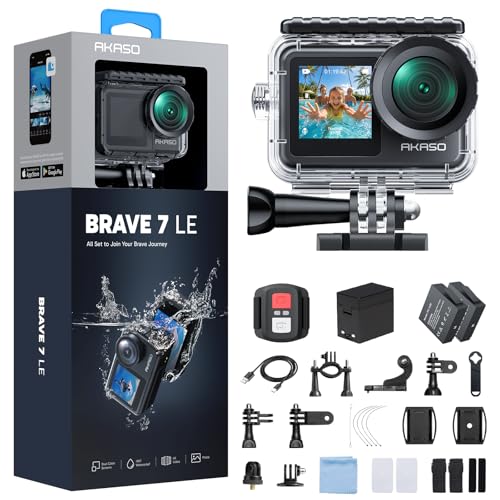
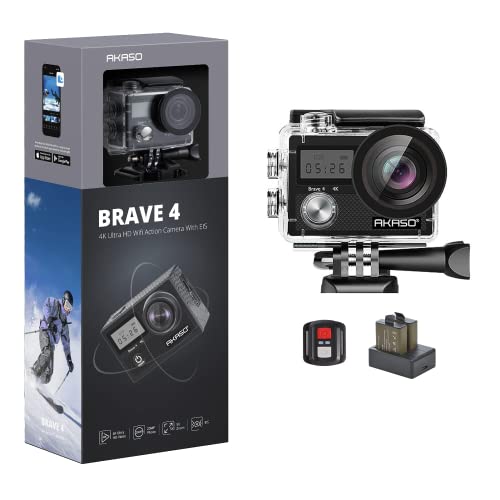
- Brave series: Brave is AKASO's main performance-oriented conventional series, covering models such as Brave 4, Brave 7, Brave 7 LE, Brave 8 Lite, and Brave 8. Higher models add dual screens, stronger electronic or SuperSmooth stabilization, 4K/60, higher bitrates, larger batteries, improved photo modes, and native waterproofing on selected versions. The series suits frequent sports, travel, vlogging, and water use, but capability varies widely between generations, so a Brave name alone does not guarantee flagship recording modes.
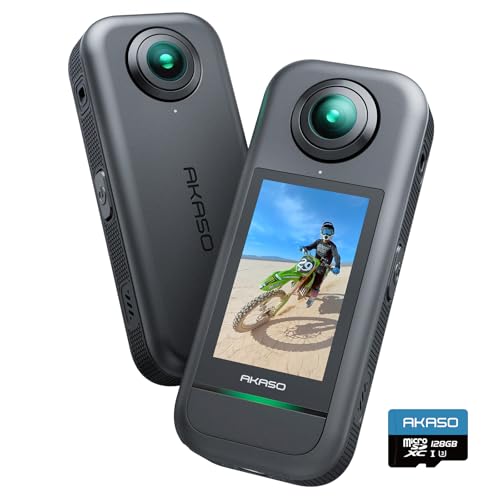
- AKASO 360: AKASO 360 is the brand's full-sphere camera line, using lenses on both sides to capture the entire scene for later reframing. It supports high-resolution 360 video, horizon control, view locking, invisible-selfie-stick-style shots, and conventional exports from the same recording. This model suits motorcycles, travel, skiing, and solo creators who want flexible viewpoints, but its exposed lenses, larger files, shorter runtime, and editing requirements demand more care than a conventional Brave or V50 camera.
How much do Akaso action cameras cost?
New AKASO action cameras generally cost about £50-£270, depending on the series, stabilization system, screens, waterproofing, and maximum recording mode.
EK models occupy the £50-£90 entry tier and normally include the accessories needed for basic mounting and underwater housing use. They are appropriate for simple daytime 1080p or 4K/30 footage, but offer the least capable stabilization and controls.
V50 and lower Brave models usually cost around £90-£180. This range adds touchscreens, stronger electronic stabilization, higher frame rates, front displays on selected models, larger batteries, and more useful adjustment options.
Brave 8 and specialist 360 models reach roughly £170-£270. These cameras add the strongest AKASO recording modes, higher bitrates, improved stabilization, native waterproofing or full-sphere capture; include the price of a fast memory card, spare batteries, lens protection, and any model-specific microphone or mount adapters.
What should you consider while choosing Akaso action cameras?
The main points to consider while choosing AKASO action cameras are as follows:
- Choose the correct AKASO series: Use EK for the lowest-cost starter package, V50 for balanced controls and recording, Brave for the strongest conventional features, and AKASO 360 for full-scene capture and reframing.
- Verify native recording modes: Check the exact resolution, frame rate, bitrate, codec, and sensor readout rather than relying on a 4K label. Confirm whether 4K/60 is native and which modes support high bitrate.
- Check stabilization compatibility: Compare standard electronic stabilization, SuperSmooth, horizon control, and field-of-view crop. Maximum resolution or frame rate may disable the strongest stabilization mode.
- Compare screens and controls: Verify rear touchscreen quality, front-screen live view, physical buttons, voice or remote operation, menu speed, and whether the front display supports control or only framing.
- Plan battery and thermal use: Compare rated runtime in the intended recording mode, removable-battery type, charging speed, USB power, cold-weather behavior, and overheating during long 4K clips.
- Separate native waterproofing from housing depth: Check the bare-camera rating, included dive housing, port-door sealing, lens protection, and whether a microphone or power cable removes water resistance.
- Review lens and low-light performance: Compare sensor size, aperture, field of view, distortion correction, exposure control, and noise processing. Budget models need good light and can show blur when stabilization is active after sunset.
- Check audio and microphone support: Verify internal microphone quality, wind reduction, external-microphone compatibility, adapter requirements, channel support, and whether the microphone can be used with a housing or while charging.
- Confirm cards, app, and editing workflow: Use a supported high-speed microSD card and verify Wi-Fi transfer, phone compatibility, firmware updates, codec support, proxy options, and computer requirements, especially for 4K/60 or 360 footage.
- Compare included accessories and total new price: Check which batteries, remote, waterproof case, mounts, charger, frame, and cables are included. Add missing model-specific accessories before comparing AKASO with a more expensive camera that includes fewer extras.