Scored using Wi-Fi extenders Methodology v3.0
Wi-Fi extenders Methodology v3.0
Mathematical & Unbiased Scoring
Products in this category are scored under Frontum Wi-Fi extenders Methodology v3.0: the technical score from the specifications is the base, and independent expert and video reviews (up to ±0.5 points), owner opinions (up to ±0.3) and best-of lists (up to +0.3) move it up or down.
Explore Wi-Fi extenders Methodology v3.0

Netgear EX7000 review: 64 specs compared

Avg. price:~£60Wi-Fi version:Wi-Fi 5 (802.11ac)Wi-Fi speed:1900 MbpsCoverage area:195 m²

Netgear EX7000 Review: Compare 64 technical specifications and 16 expert and video reviews to see how this product ranks in the Wi-Fi extenders category and whether it is worth buying.
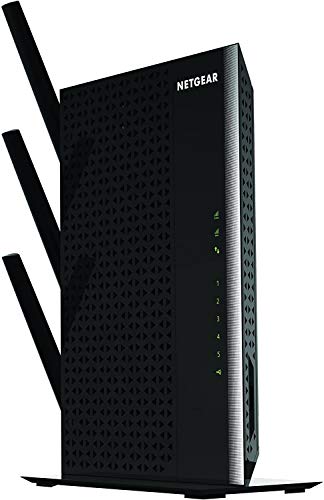
Netgear EX7000
7.2/10

Overall score

Score
7.2/ 10
✕
What it is
Our main score for this model, 1–10. It combines specs, best-of lists, expert reviews and ratings from across the web.
How we count it
Parts: Technical score 45%, List score 30%, Reviews score 15%, User score 10%
Marks: Each part gets a mark out of 10. For reviews, lists and owners, a typical model in this category gets about 8 and the best one gets 10.
No data yet: A part with no data shows "?". It counts as the mark of a weaker model in this category (4 in 5 models with data score higher). This way, models with reviews, lists and owners usually come out ahead.
Score distribution
â–¼
<55-66-77-88-99-10
Score components

45%

6.3

Technical score

30%

?

List scoreNot enough data yet, so we use 7.5, the mark of a weaker model in this category

15%

8.6

Reviews score

10%

8.2

User score

â–¼Worse than 66% of wi fi extenders
8.0

Value for money

Value for money
8.0/ 10
✕
What it is
An indicator that combines the Wi-Fi extender's overall rating with its cost.
When it matters
When you are looking for a Wi‑Fi extender with a good balance between performance and price.
Score distribution
â–¼
<55-66-77-88-99-10
Score components

70%

7.2

Overall score

30%

10

Price

â–¼Worse than 69%
6.3

Technical score

Technical score
6.3/ 10
✕
What it is
How good the specs are compared with the other models in this category, 1–10.
How we count it
Areas: We rate the specs in each area against the other models in this category.
Weighting: The areas that matter most to buyers count more. The shares are shown under Score components.
Share: The technical score is 45% of the overall score.
Score distribution
â–¼
<55-66-77-88-99-10
Score components

40%

6.2

Wi-Fi Performance

30%

4.9

Network

12%

8.7

Setup

10%

5.0

Hardware

8%

10

Ports

â–¼Worse than 71%
8.6

Reviews score

Reviews score
8.6/ 10
✕
What it is
Average grade from independent test sites, magazines and video reviewers, 1–10.
How we count it
Grades: Each review's own score is converted to 1–10; without one, we grade the review ourselves. Big test sites count more, short reviews half as much as full tests. A video review counts half.
Score: The average grade is 80% of the review mark; the number of reviews is the other 20% (1 review = 5, the typical number in this category = 8, the most-reviewed model = 10).
Enough data: With few reviews, the average grade is pulled toward the typical grade of this category. No reviews yet: 7.5 for now.
Share: Reviews count 15% of the overall score.
Score distribution
â–¼
<55-66-77-88-99-10

80%

8.4

Average grade

20%

9.4

Popularity

Grades by review (16)
13 reviews: 9 with a printed score, 4 estimated from the review. 3 video reviews, each counting half as much as a written test. Reviews count 15% of the overall score.
Ratings from across the web count in the User score, not in this score.
★Better than 98%
8.2

User score

User score
8.2/ 10
✕
What it is
How happy buyers are with this model, based on ratings from across the web.
How we count it
Enough data: A model needs at least 1 rating from across the web. Without one, it counts as 7.6, the mark of a weaker rated model in this category.
Share: User score counts 10% of the overall score.
Score distribution
â–¼
<55-66-77-88-99-10

70%

8.0

Rating

30%

8.8

Popularity

â–²Better than 52%
?

List score

List score
7.5/ 10
✕
What it is
How often independent test sites, magazines and video reviewers put this model in their best-of lists for this category.
How we count it
Points: The model in the most lists of this category gets 10; the others get 8 to 10 in proportion. In no list yet: 7.5. Lists count 30% of the overall score.
Enough data: Every list counts, even a single one. With fewer than 5 best-of lists in the category, this part is left out.
Lists with this model (0)
Not in any best-of list yet, so this part counts as 7.5. Models in a list get 8 to 10.
Not in any best-of list yet
  • netgear-ex7000
  • netgear-ex7000
  • netgear-ex7000
  • netgear-ex7000
netgear-ex7000
netgear-ex7000
netgear-ex7000
netgear-ex7000
Where to buy
    N/A~ £60
Best rankings
Available: ranking among products currently available (including other versions of this product).All: ranking among all products in the database.

What reviewers say about the Netgear EX7000

Based on 13 · 3

Reviewers praise the plentiful ports, strong range and good speed, but many find it expensive, bulky and fussy about accounts and routers.
Praised
Mixed views
Criticised
Pick a topic to see who said what
Loading...
Loading category ranking...

Technical Specifications of Wi-Fi extender Netgear EX7000

Technical score
Technical score
6.3/ 10
✕
What it is
How good the specs are compared with the other models in this category, 1–10.
How we count it
Areas: We rate the specs in each area against the other models in this category.
Weighting: The areas that matter most to buyers count more. The shares are shown under Score components.
Share: The technical score is 45% of the overall score.
Score distribution
â–¼
<55-66-77-88-99-10
Score components:

40%

6.2

Wi-Fi Performance

30%

4.9

Network

12%

8.7

Setup

10%

5.0

Hardware

8%

10

Ports

6.3
Reviews score
8.6
User score
8.2
List score
?
Value for money
Value for money
8.0/ 10
✕
What it is
An indicator that combines the Wi-Fi extender's overall rating with its cost.
When it matters
When you are looking for a Wi‑Fi extender with a good balance between performance and price.
Score distribution
â–¼
<55-66-77-88-99-10
Score components:

70%

7.2

Overall score

30%

10

Price

8.0
Wi-Fi version
Wi-Fi 5 (802.11ac)
This Wi-Fi extender supports Wi-Fi 5 (802.11ac), more advanced than 14.3% of Wi-Fi extenders and equal to 38.3% of Wi-Fi extenders.
Wi-Fi bands
Dual-band
This Wi-Fi extender supports Dual-band, more versatile than 15% of Wi-Fi extenders and equal to 74.5% of Wi-Fi extenders.
6 GHz band support
no
This Wi-Fi extender does not support the 6 GHz band. 3.9% of Wi-Fi extenders support the 6 GHz band.
Wi-Fi speed
1900 Mbps
This Wi-Fi extender reaches 1900 Mbps Wi-Fi speed, faster than 63.2% of Wi-Fi extenders and equal to 4% of Wi-Fi extenders.
Max speed 2.4 GHz
600 Mbps
This Wi-Fi extender reaches 600 Mbps on the 2.4 GHz band, which is faster than 76.9% of Wi-Fi extenders and equal to 10.9% of Wi-Fi extenders.
Show more
What reviewers say
Ethernet backhaul
no
This Wi-Fi extender does not support Ethernet backhaul. 53.1% of Wi-Fi extenders support Ethernet backhaul.
Mesh compatibility
N/A
Mesh standard
proprietary mesh
Roaming feature
yes
This Wi-Fi extender supports roaming. 11.8% of Wi-Fi extenders support roaming.
Via Smart Roaming.
802.11k support
yes
This Wi-Fi extender supports 802.11k. 24.3% of Wi-Fi extenders support 802.11k.
Firmware 802.11k Mesh roaming support
Show more
What reviewers say
N. of LAN ports
5
This Wi-Fi extender has 5 LAN port/s, more than 100% of Wi-Fi extenders.
Ethernet port speed
1 Gbps
This Wi-Fi extender offers 1 Gbps Ethernet speed, faster than 30.1% of Wi-Fi extenders and equal to 60.3% of Wi-Fi extenders.
N. of USB ports
1
This Wi-Fi extender has 1 USB port/s, more than 98.7% of Wi-Fi extenders and equal to 1.3% of Wi-Fi extenders.
USB 3 port.
PoE standard
N/A
What reviewers say
Dedicated smartphone app
yes
This Wi-Fi extender comes with a dedicated smartphone app. 10.4% of Wi-Fi extenders come with a dedicated smartphone app.
Nighthawk app.
Web UI management
yes
This Wi-Fi extender has a web management interface. 1.3% of Wi-Fi extenders have a web management interface.
Web UI at mywifiext.net.
Automatic firmware updates
no
This Wi-Fi extender does not have automatic firmware updates. 45.5% of Wi-Fi extenders have automatic firmware updates.
LED control
yes
This Wi-Fi extender has LED control. 9.7% of Wi-Fi extenders have LED control.
Buttons present
wps, reset, power
Show more
What reviewers say
Mounting type
desktop
Portable design
no
This Wi-Fi extender does not have a portable design. 76.2% of Wi-Fi extenders have a portable design.
Height
31 mm
This Wi-Fi extender is 31 mm tall, shorter than 98% of Wi-Fi extenders.
Width
252 mm
This Wi-Fi extender is 252 mm wide, wider than 98% of Wi-Fi extenders.
174 mm also appears in one source.
Thickness
31 mm
This Wi-Fi extender is 31 mm thick, thinner than 96.1% of Wi-Fi extenders.
Show more
What reviewers say

Netgear EX7000 vs the average Wi-Fi extender

246810TotalWi-Fi PerformanceNetworkPortsSetupHardware
  • 4 more LAN ports
    This Wi-Fi extender has more LAN ports than the average Wi-Fi extender (5 vs 1). The average Wi-Fi extender has 1 LAN port/s.
    5 vs 1
  • 50% faster 2.4 GHz speed
    This Wi-Fi extender delivers faster 2.4 GHz speeds than the average Wi-Fi extender (600 Mbps vs 400 Mbps). The average Wi-Fi extender reaches 400 Mbps on 2.4 GHz.
    600 Mbps vs 400 Mbps
  • 5.45 dBm stronger transmit power
    This Wi-Fi extender has higher transmit power than the average Wi-Fi extender (28.5 dBm vs 23 dBm). The average Wi-Fi extender has 23 dBm of transmit power.
    Converted from mW output figures.
    28.45 dBm vs 23 dBm
  • 1 more antennas
    This Wi-Fi extender has more antennas than the average Wi-Fi extender (3 vs 2). The average Wi-Fi extender has 2 antennas.
    3 vs 2
  • 8x more flash storage
    This Wi-Fi extender has more flash storage than the average Wi-Fi extender (128 MB vs 16 MB). The average Wi-Fi extender has 16 MB of flash storage.
    128 MB vs 16 MB
  • 30% larger coverage area
    This Wi-Fi extender covers a larger area than the average Wi-Fi extender (195 m² vs 150 m²). The average Wi-Fi extender covers 150 m².
    195 m² vs 150 m²
  • 15 mm thinner
    This Wi-Fi extender is thinner than the average Wi-Fi extender (31 mm vs 46 mm). The average Wi-Fi extender has a thickness of 46 mm.
    31 mm vs 46 mm
  • 91 mm lower height
    This Wi-Fi extender is shorter than the average Wi-Fi extender (31 mm vs 122 mm). The average Wi-Fi extender has a height of 122 mm.
    31 mm vs 122 mm
  • 17.8% higher review score
    Reviews score
    8.6/ 10
    ✕
    What it is
    Average grade from independent test sites, magazines and video reviewers, 1–10.
    How we count it
    Grades: Each review's own score is converted to 1–10; without one, we grade the review ourselves. Big test sites count more, short reviews half as much as full tests. A video review counts half.
    Score: The average grade is 80% of the review mark; the number of reviews is the other 20% (1 review = 5, the typical number in this category = 8, the most-reviewed model = 10).
    Enough data: With few reviews, the average grade is pulled toward the typical grade of this category. No reviews yet: 7.5 for now.
    Share: Reviews count 15% of the overall score.
    Score distribution
    â–¼
    <55-66-77-88-99-10

    80%

    8.4

    Average grade

    20%

    9.4

    Popularity

    Grades by review (16)
    13 reviews: 9 with a printed score, 4 estimated from the review. 3 video reviews, each counting half as much as a written test. Reviews count 15% of the overall score.
    Ratings from across the web count in the User score, not in this score.
    8.6 vs 7.3
  • 50% faster 2.4 GHz speed
    This Wi-Fi extender delivers faster 2.4 GHz speeds than the average Wi-Fi extender (600 Mbps vs 400 Mbps). The average Wi-Fi extender reaches 400 Mbps on 2.4 GHz.
    600 Mbps vs 400 Mbps
  • 5.45 dBm stronger transmit power
    This Wi-Fi extender has higher transmit power than the average Wi-Fi extender (28.5 dBm vs 23 dBm). The average Wi-Fi extender has 23 dBm of transmit power.
    Converted from mW output figures.
    28.45 dBm vs 23 dBm
  • 1 more antennas
    This Wi-Fi extender has more antennas than the average Wi-Fi extender (3 vs 2). The average Wi-Fi extender has 2 antennas.
    3 vs 2
  • 30% larger coverage area
    This Wi-Fi extender covers a larger area than the average Wi-Fi extender (195 m² vs 150 m²). The average Wi-Fi extender covers 150 m².
    195 m² vs 150 m²
  • 8.6% faster Wi-Fi speed
    This Wi-Fi extender reaches faster Wi-Fi speed than the average Wi-Fi extender (1900 Mbps vs 1,750 Mbps). The average Wi-Fi extender reaches 1,750 Mbps Wi-Fi speed.
    1,900 Mbps vs 1,750 Mbps
  • 1 dBi higher antenna gain
    This Wi-Fi extender has higher antenna gain than the average Wi-Fi extender (5 dBi vs 4 dBi). The average Wi-Fi extender has 4 dBi antenna gain.
    Per external antenna.
    5 dBi vs 4 dBi
  • 8.2% faster 5 GHz speed
    This Wi-Fi extender delivers faster 5 GHz speeds than the average Wi-Fi extender (1,300 Mbps vs 1,201 Mbps). The average Wi-Fi extender reaches 1,201 Mbps on 5 GHz.
    1,300 Mbps vs 1,201 Mbps
  • 4 more connected devices
    This Wi-Fi extender supports more connected devices than the average Wi-Fi extender (35 vs 31). The average Wi-Fi extender supports up to 31 connected devices.
    35 vs 31
  • 4 more LAN ports
    This Wi-Fi extender has more LAN ports than the average Wi-Fi extender (5 vs 1). The average Wi-Fi extender has 1 LAN port/s.
    5 vs 1
  • 8x more flash storage
    This Wi-Fi extender has more flash storage than the average Wi-Fi extender (128 MB vs 16 MB). The average Wi-Fi extender has 16 MB of flash storage.
    128 MB vs 16 MB
  • 91 mm lower height
    This Wi-Fi extender is shorter than the average Wi-Fi extender (31 mm vs 122 mm). The average Wi-Fi extender has a height of 122 mm.
    31 mm vs 122 mm
  • 15 mm thinner
    This Wi-Fi extender is thinner than the average Wi-Fi extender (31 mm vs 46 mm). The average Wi-Fi extender has a thickness of 46 mm.
    31 mm vs 46 mm
  • 2.5 W lower power consumption
    This Wi-Fi extender uses less power than the average Wi-Fi extender (7 W vs 9.5 W). The average Wi-Fi extender uses 9.5 W of power.
    21 W also appears in one source.
    7 W vs 9.5 W
  • No Ethernet backhaul
    This Wi-Fi extender does not support Ethernet backhaul, while the average Wi-Fi extender does. 52.6% of Wi-Fi extenders support Ethernet backhaul.
  • Weaker Wi-Fi security
    This Wi-Fi extender supports weaker Wi-Fi security protocols than the average Wi-Fi extender (WEP, WPA, WPA2 vs WEP, WPA, WPA2, WPA3). The average Wi-Fi extender supports WEP, WPA, WPA2, WPA3 Wi-Fi security protocols.
    WEP, WPA, WPA2 vs WEP, WPA, WPA2, WPA3
  • No WPA3 support
    This Wi-Fi extender does not support WPA3, while the average Wi-Fi extender does. 63.8% of Wi-Fi extenders support WPA3.
  • No MU-MIMO support
    This Wi-Fi extender does not support MU-MIMO, while the average Wi-Fi extender does. 75% of Wi-Fi extenders support MU-MIMO.
    Wi-Fi 5 AC1900 Wave 1 lacks MU-MIMO
  • No 802.11v support
    This Wi-Fi extender does not support 802.11v, while the average Wi-Fi extender does. 73.5% of Wi-Fi extenders support 802.11v.
    Nighthawk Mesh.
  • No band steering
    This Wi-Fi extender does not have band steering, while the average Wi-Fi extender does. 65.5% of Wi-Fi extenders have band steering.
  • 2.34x heavier
    This Wi-Fi extender is heavier than the average Wi-Fi extender (654 g vs 280 g). The average Wi-Fi extender weighs 280 g.
    654 g vs 280 g
  • Not portable
    This Wi-Fi extender does not have a portable design, while the average Wi-Fi extender does. 75.7% of Wi-Fi extenders have a portable design.
  • 2.5% worse value for money
    Netgear EX7000 has a lower value-for-money score than the average Wi-Fi extender (8.04 vs 8.2).
    8.04 vs 8.25
  • No MU-MIMO support
    This Wi-Fi extender does not support MU-MIMO, while the average Wi-Fi extender does. 75% of Wi-Fi extenders support MU-MIMO.
    Wi-Fi 5 AC1900 Wave 1 lacks MU-MIMO
  • No band steering
    This Wi-Fi extender does not have band steering, while the average Wi-Fi extender does. 65.5% of Wi-Fi extenders have band steering.
  • 5 years older release date
    This Wi-Fi extender was released earlier than the average Wi-Fi extender (2015 vs 2020). The average Wi-Fi extender was released in 2020.
    March 2015
    2015 vs 2020
  • No Ethernet backhaul
    This Wi-Fi extender does not support Ethernet backhaul, while the average Wi-Fi extender does. 52.6% of Wi-Fi extenders support Ethernet backhaul.
  • Weaker Wi-Fi security
    This Wi-Fi extender supports weaker Wi-Fi security protocols than the average Wi-Fi extender (WEP, WPA, WPA2 vs WEP, WPA, WPA2, WPA3). The average Wi-Fi extender supports WEP, WPA, WPA2, WPA3 Wi-Fi security protocols.
    WEP, WPA, WPA2 vs WEP, WPA, WPA2, WPA3
  • No WPA3 support
    This Wi-Fi extender does not support WPA3, while the average Wi-Fi extender does. 63.8% of Wi-Fi extenders support WPA3.
  • No 802.11v support
    This Wi-Fi extender does not support 802.11v, while the average Wi-Fi extender does. 73.5% of Wi-Fi extenders support 802.11v.
    Nighthawk Mesh.
  • 2.34x heavier
    This Wi-Fi extender is heavier than the average Wi-Fi extender (654 g vs 280 g). The average Wi-Fi extender weighs 280 g.
    654 g vs 280 g
  • Not portable
    This Wi-Fi extender does not have a portable design, while the average Wi-Fi extender does. 75.7% of Wi-Fi extenders have a portable design.
  • 170.6 mm wider
    This Wi-Fi extender is wider than the average Wi-Fi extender (252 mm vs 81.4 mm). The average Wi-Fi extender has a width of 81.4 mm.
    174 mm also appears in one source.
    252 mm vs 81.4 mm

Video reviews

Hands-on testing, unboxing, and real-world video evaluations

9.0
TechSweep
≈ estimated
17/09/2015
Hands-on review · speed test and setup
Verdict
Netgear EX7000 works very well for Wi-Fi dead spots, though it is a little pricey and needs a settings fix for some devices.
Overview video
Overview video
Shop video
Not graded

Expert reviews

In-depth analysis and verdict from leading tech publications
9.0
pcmag.com
✓ explicit
30/03/2015
Lab test · Dual-band extender
Verdict
The Netgear EX7000 is a fast dual-band extender with strong 5 GHz speeds and several output levels, but it is expensive and much larger than plug-in models.
8.0
trustedreviews.com
✓ explicit
30/09/2015
Expert review · Range extender
Verdict
The Netgear EX7000 is fast and reliable for a busy home or small office, but it needs an AC1900 router and comes with a short one-year warranty.
10
expertreviews.co.uk
✓ explicit
03/09/2015
Hands-on test · Speed tests
Verdict
The Netgear Nighthawk EX7000 is the fastest extender tested when used as an access point, but it only justifies its price if your devices support AC1900 Wi-Fi.
8.0
technuovo.com
≈ estimated
13/02/2016
Quick review · Home setup
Verdict
The Netgear EX7000 is a stylish extender that is simple to set up, though its high price and the need for new adapters for full speed hold it back.
4.1
gadgetguy.com.au
✓ explicit
11/03/2015
Hands-on review · Tall desk design
Verdict
The Netgear EX7000 is a tall, router-like extender that is easy to set up and shares printers and drives, though its back-mounted antennas get in the way.
9.0
neilturner.me.uk
≈ estimated
23/11/2015
Real-home test · Thick-walled house
Verdict
The Netgear Nighthawk EX7000 fixes weak signal in thick-walled homes and also shares a printer or drive, though it is a premium product.
8.0
bestreviewguide.com
✓ explicit
23/01/2021
Roundup review · Range and speed
Verdict
The Netgear Nighthawk EX7000 offers strong range and speed for large homes, but its bulky design and tricky setup count against it.
9.0
au.pcmag.com
✓ explicit
31/03/2015
Lab test · Throughput and range
Verdict
The Netgear Nighthawk AC1900 EX7000 is easy to install and fast on both bands, but its large size and high price stand out.
10
heise.de
✓ explicit
12/03/2018
Practical test · Range extender
Verdict
The Netgear EX7000 is the fastest extender tested with strong range, but it is expensive, large and requires online registration.
8.5
connect-living.de
✓ explicit
02/03/2016
Hands-on test · Range extender
Verdict
The Netgear EX7000 is fast and well connected, with five Gigabit ports and a USB media server, but it is big, pricey and power-hungry.
9.0
techtest.org
≈ estimated
13/10/2015
Product test · Range extender
Verdict
The Netgear EX7000 is a well-designed, easy-to-use extender, but in Europe its range is no better than a high-end router's.
8.2
marioeggers.de
✓ explicit
11/10/2015
Personal test · Dual-band extender
Verdict
The Netgear EX7000 is sturdy and good-looking, lifting a near-dead terrace signal to 60 Mbps, though its glossy case shows fingerprints quickly.
9.0
macitynet.it
≈ estimated
30/09/2015
Product review · Dual-band extender
Verdict
The Netgear EX7000 is a dual-band extender that fills dead zones well, though it is router-sized and its access schedules work only in extender mode.

Third-party reviews

What customers like about Netgear EX7000

  • High throughput and speed performance on both 2.4GHz and 5GHz bands
  • Extensive range coverage that can reach outside buildings or into large warehouses
  • Easy setup process, particularly when using the WPS button
  • Versatile connectivity with five Gigabit Ethernet ports for wired devices
  • Useful 'FastLane' technology that optimizes bandwidth by dedicating one band for router-to-extender communication
  • Dual functionality as both a Wi-Fi range extender and a wireless access point
  • Includes a USB 3.0 port for media and file sharing across the network

What customers don't like about Netgear EX7000

  • Large physical footprint that takes up more space than typical plug-in extenders
  • High price point compared to entry-level range extenders
  • Occasional firmware instability leading to dropped connections or the need for frequent resets
  • Creates a separate network name (SSID) rather than a seamless single network in standard extender mode
  • Power brick design can be bulky and may block adjacent outlets
  • Some users reported difficulty accessing the management interface after initial setup without tracking the IP address

Verdict

The Netgear Nighthawk EX7000 is a high-performance AC1900 dual-band Wi-Fi extender powered by a 1GHz dual-core processor and 700mW high-power amplifiers designed to cover up to 10,000 square feet. It delivers combined wireless speeds of up to 1.9Gbps (1300Mbps on the 5GHz band and 600Mbps on the 2.4GHz band) and features three external antennas alongside five Gigabit Ethernet ports for wired bridging and a USB 3.0 port for media sharing. Main pros include its class-leading throughput, the versatile 'FastLane' technology for dedicated band backhaul, and a user-friendly setup that includes a desktop-style form factor with a vertical stand. However, common cons involve its large physical footprint compared to wall-plug models, a premium price point, and occasional firmware bugs that can complicate advanced configuration changes.

Compare Netgear EX7000 with other products in the Wi-Fi extenders category

1Product to compare no. 1
VS
2Product to compare no. 2
VS
3Product to compare no. 3 (optional)

Graphic comparison of Netgear EX7000 and other products in the Wi-Fi extenders category

No results found