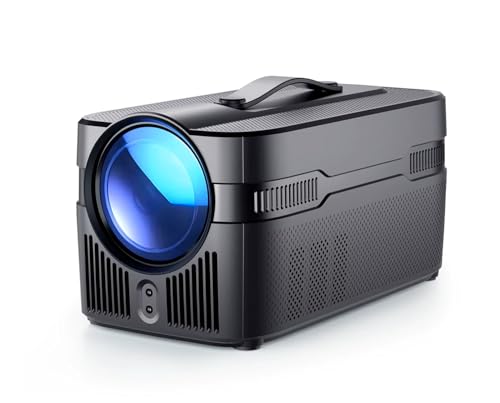
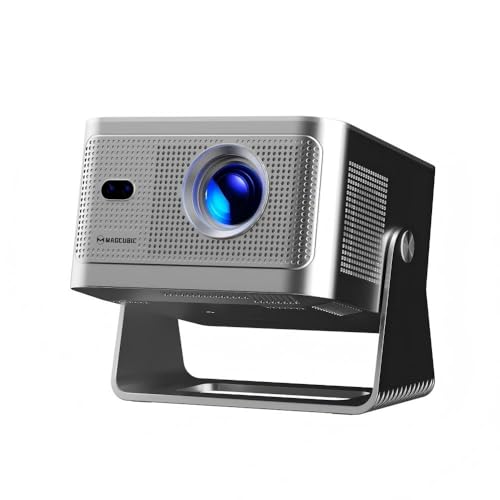
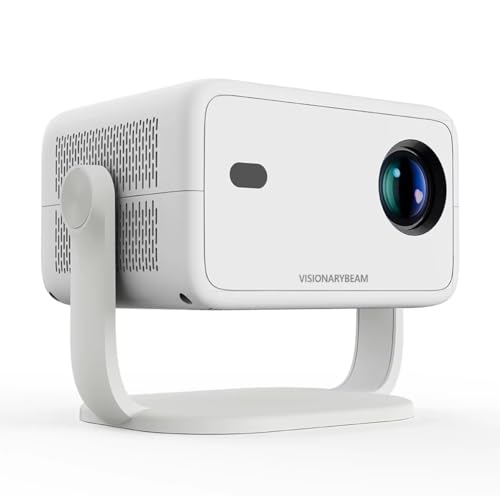
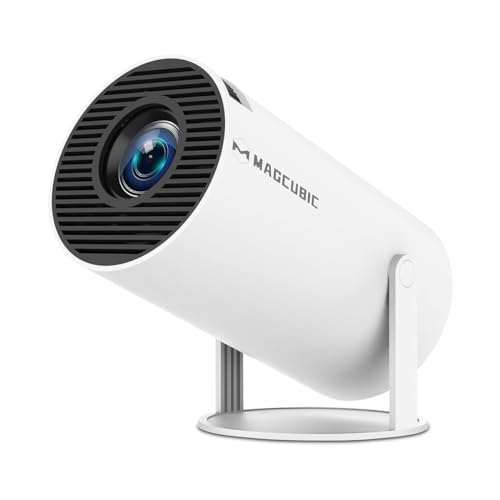
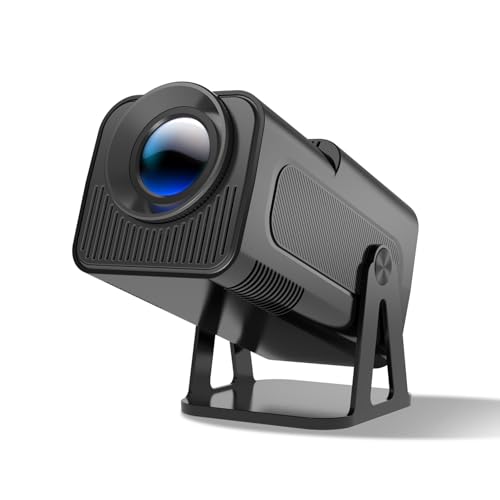
Are Magcubic projectors good?
Magcubic projectors have an average overall score of 6.7, ranking #15 among comparable projector brands, and a user rating of 8.5, placing them at #13 in user reviews.
For the right user, that can still be useful. If you want a very cheap projector for casual videos, a child's room, or experimenting with big-screen viewing in a dark space, Magcubic can deliver a lot of convenience for little money. Some models also include Android-style software and wireless features that make them feel more capable than older ultra-budget projectors.
The limitations are substantial, though. Real brightness, optical quality, focus consistency, sound, and support are all weaker than on established projector brands. Magcubic is best treated as an ultra-budget casual-use brand, not as a reliable substitute for a proper home-theatre projector.
The chart below compares projector brands by average overall score.
[horizontal-chart-06222294491359464560168876188160252806382230551488]
What are the main advantages of Magcubic projectors?
The main advantages of Magcubic projectors are as follows.
- Very aggressive pricing: Magcubic projectors are often cheap enough for buyers who simply want to try projector use without much financial risk.
- Compact mini form factors: Small bodies make these projectors easy to move, store, or use in temporary setups around the home.
- Built-in smart features on some models: Android-style interfaces, Wi-Fi, and Bluetooth can make a Magcubic feel more convenient than an old bare-bones budget projector.
- Useful for casual low-stakes viewing: Cartoons, YouTube, or occasional bedroom use can be fine if the room is dark and expectations stay realistic.
- Simple entry point into projection: Magcubic can work as an inexpensive test of whether a projector lifestyle suits you before spending real money on a better brand.
What are the main disadvantages of Magcubic projectors?
The main disadvantages of Magcubic projectors are as follows.
- Weak real brightness: Tiny ultra-budget hardware struggles heavily outside dark rooms, so the usable image can collapse quickly in normal evening ambient light.
- Inconsistent optics and focus: Cheaper mini projectors often show soft corners, uneven sharpness, and lower overall image stability than established brands.
- Basic audio and build quality: The speakers, cooling systems, and physical construction are usually built to a price rather than to long-term premium standards.
- Software and streaming support are rudimentary: Cheap generic smart-projector software often feels less reliable, less polished, and less well-supported than on stronger lifestyle brands.
- Support and updates are limited: Firmware, warranty support, and long-term platform consistency are generally much weaker than with major consumer-electronics brands.
- Not suitable for serious cinema or gaming: Buyers who care about colour, contrast, lag, or long-term reliability will outgrow Magcubic very quickly.
Who makes Magcubic projectors?
Magcubic projectors are sold under the Magcubic budget electronics brand, which is mainly visible through online retail marketplaces rather than through a long-established global projector business. The brand appears to operate much more like a value-oriented reseller or OEM-led consumer brand than like a major projector engineering company.
That does not automatically make every product useless, but it does shape expectations. Magcubic's role is to offer inexpensive compact projectors for casual buyers, not to compete with Epson, BenQ, Xgimi, or LG on proven projection expertise, software maturity, or after-sales confidence.
What are the main Magcubic projector series?
The main Magcubic projector series are as follows.
- HY-series mini projectors: The best-known Magcubic family, usually built around small smart projectors sold at very aggressive prices.
- Compact Android-style cube models: Small all-in-one units that emphasise streaming convenience, portability, and low cost over image performance.
- Step-up home variants: Some Magcubic models add more connectivity or a slightly bigger chassis, but the brand still remains firmly in the ultra-budget category.
- Loose family naming: Magcubic does not have the kind of stable long-term projector segmentation seen from major brands, so exact model specs matter more than the family label.
How much do Magcubic projectors cost?
Magcubic projectors usually cost about £50 to £170 which tells you immediately that they sit at the ultra-budget edge of the category. The low price is the main attraction, but it also means modest brightness, basic optics, weaker speakers, and rougher software than you would expect from stronger brands.
\n
Even within that range, the more usable options are usually around £90 to £130 where you may get a slightly better feature set or more practical connectivity without leaving the impulse-buy tier. That can be enough for casual dark-room videos or a child's room, but it is still far from mainstream projector performance.
\n
Magcubic never really reaches a premium segment, and that is the key thing to understand before paying toward the top of its range. Once you get close to £130 or £170 spending a little more on a better budget brand often adds far more real value than stretching for the most expensive Magcubic model.
How do Magcubic projectors compare with Yaber projectors?
Magcubic and Yaber both target budget buyers, but Yaber is usually the more credible projector brand overall. Magcubic leans harder into ultra-cheap mini smart projectors and novelty convenience, while Yaber generally offers a more recognisable product ladder, better mainstream visibility, and a slightly stronger balance between price and usability.
If your budget is extremely tight and you only need a small casual-use projector, Magcubic may be enough. If you want a better chance of usable everyday picture quality, clearer product positioning, and a more dependable entry-level experience, Yaber is usually the smarter choice. Magcubic is the ultra-budget gamble; Yaber is the safer low-cost brand.
What should you consider while choosing the best Magcubic projector?
When choosing a Magcubic projector, consider the following points.
\n
\n- Real brightness: The first question is whether the projector has enough honest output for your room. On ultra-cheap models, a dark room and a smaller image matter far more than any marketing claim about giant screen size.
\n- Native resolution: Check the real panel resolution and avoid assuming that signal support equals image quality. If the projector is not genuinely 1080p, softness becomes obvious very quickly once you move beyond basic casual viewing.
\n- Focus and edge clarity: At this price, even if the centre looks acceptable, the corners can stay soft after focus adjustment. That is a bigger problem for subtitles, text, and games than for simple background video.
\n- Software fallback: Built-in apps and interfaces on very cheap projectors are often rough, slow, or unreliable. Make sure there is a straightforward HDMI path for an external streamer, because that is usually the cleaner long-term solution.
\n- Noise, sound, and power: Small low-cost projectors often combine weak speakers, audible fan noise, and basic connection layouts. If you care about dialogue clarity or plan to watch longer films, external audio becomes much more important.
\n- Best-case use: Magcubic makes the most sense for a very cheap secondary projector in a dark room, not as a serious TV replacement. If the budget stretches toward £130 to £170 compare carefully with better-supported entry models before deciding the saving is worth the compromises.
\n