Scored using Headphones Methodology v1.0
Headphones Methodology v1.0
Mathematical & Unbiased Scoring
Products in this category are evaluated mathematically under Frontumo Headphones Methodology v1.0 using verified laboratory benchmarks, technical specifications, and authentic consumer ratings with 0% commercial bias.
Explore Headphones Methodology v1.0

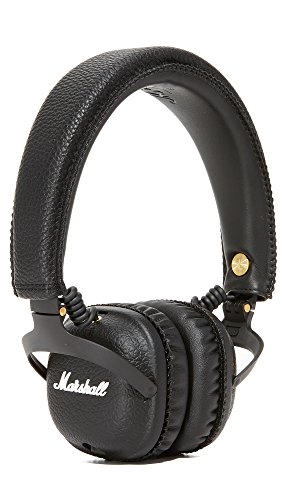
Marshall Major Review | 93 Data compared

Avg. price:~£130Form factor:on-earConnectivity:wirelessBattery life:100 hoursActive noise cancellation (ANC):no

Marshall Major Review: Compare 93 technical specifications and user reviews to see how this product ranks in the Headphones category and whether it is worth buying.

6.6

Overall score

Score
6.6/ 10
✕
What it is
An overall evaluation of the headphones' quality, based on technical analyses and user reviews.
When it matters
When you need a quick reference to identify the best headphones on the market.
Score distribution
▼
<55-66-77-88-99-10
Score components

80%

6.6

Technical score

20%

?

User score

▲Better than 65% of headphones
6.6

Technical score

Technical score
6.6/ 10
✕
What it is
An assessment of technical performance for products in the Headphones category across these key areas: Sound, Calls & Controls, Connectivity, Features, Battery, Design.
When it matters
When you want to compare headphones based on technical performance and available features.
Score distribution
▼
<55-66-77-88-99-10
Score components

52%

6.0

Sound

20%

6.3

Features

10%

7.7

Design

8%

7.9

Connectivity

6%

8.2

Battery

4%

7.4

Calls & Controls

▲Better than 71% of headphones
?

User score

User score
8.0/ 10
✕
What it is
A rating that combines user reviews and the total number of reviews received by the headphones.
When it matters
When you want to understand how headphones perform in real listening and how reliable they are in terms of comfort, audio quality, battery life, and long-term use.
Score distribution
▼
<55-66-77-88-99-10
Score components

70%

?

User ratings

30%

?

Number of reviews

  • No image
No image

Best prices

    N/A~ £130

Best rankings

Available: ranking among products currently available (including other versions of this product).All: ranking among all products in the database.
Loading...
Loading category ranking...

Technical Specifications of pair of headphones Marshall Major

Technical score
Technical score
6.6/ 10
✕
What it is
An assessment of technical performance for products in the Headphones category across these key areas: Sound, Calls & Controls, Connectivity, Features, Battery, Design.
When it matters
When you want to compare headphones based on technical performance and available features.
Score distribution
▼
<55-66-77-88-99-10
Score components:

52%

6.0

Sound

20%

6.3

Features

10%

7.7

Design

8%

7.9

Connectivity

6%

8.2

Battery

4%

7.4

Calls & Controls

6.6
User score
User score
8.0/ 10
✕
What it is
A rating that combines user reviews and the total number of reviews received by the headphones.
When it matters
When you want to understand how headphones perform in real listening and how reliable they are in terms of comfort, audio quality, battery life, and long-term use.
Score distribution
▼
<55-66-77-88-99-10
Score components

70%

?

User ratings

30%

?

Number of reviews

?
Popularity
Popularity
1.0/ 10
✕
What it is
An indicator based on the number of reviews received by the headphones.
When it matters
When you prefer headphones that have already been chosen and reviewed by many other users.
Score distribution
▼
<55-66-77-88-99-10
Popularity:
Marshall Major has a popularity score of 1 point, which is lower than that of 73.4% of products in this category.
1.0
Value for money
Value for money
7.5/ 10
✕
What it is
An indicator that combines the headphones' overall rating with their cost.
When it matters
When you are looking for headphones that offer a strong balance of performance, features, and price.
Score distribution
▼
<55-66-77-88-99-10
Score components:

60%

6.6

Overall score

40%

9.8

Price

7.5
Active noise cancellation (ANC)
no
Active noise cancellation (ANC)
no
This pair of headphones does not support active noise cancellation. 27.5% of headphones support active noise cancellation.
Driver type
dynamic
Driver size
40 mm
Driver size
40 mm
This pair of headphones uses a driver size of 40 mm, larger driver size than 28.6% of headphones and equal to 53.3% of headphones.
Number of drivers
1
Number of drivers
1
This pair of headphones uses 1 drivers, fewer drivers than 4% of headphones and equal to 96% of headphones.
Lowest frequency
20 Hz
Lowest frequency
20 Hz
This pair of headphones reaches a lowest frequency of 20 Hz, higher lowest frequency than 50.8% of headphones and equal to 47.3% of headphones.
Show more
Noise-canceling microphone
no
Noise-canceling microphone
no
This pair of headphones does not support a noise-canceling microphone. 39% of headphones support noise-canceling microphones.
Can be used as a headset
yes
Can be used as a headset
yes
This pair of headphones is headset-ready, 84.8% is not. 15.2% of headphones can be used as headsets.
Number of microphones
1
Number of microphones
1
This pair of headphones has 1 microphones, more microphones than 26.9% of headphones and equal to 50.9% of headphones.
Boom microphone
no
Boom microphone
no
This pair of headphones does not include a boom microphone. 13.5% of headphones have a boom microphone.
Microphone SNR
?
Show more
Connectivity
wireless
Connectivity
wireless
This pair of headphones supports wireless connectivity, more flexible connectivity than 50.8% of headphones and equal to 49.2% of headphones.
Bluetooth version
5
Bluetooth version
5
This pair of headphones uses Bluetooth version 5, newer Bluetooth version than 70.9% of headphones and equal to 13.1% of headphones.
Maximum Bluetooth range
10 m
Maximum Bluetooth range
10 m
This pair of headphones offers a Bluetooth range of 10 m, higher Bluetooth range than 2.7% of headphones and equal to 80.6% of headphones.
Audio latency
40 ms
Audio latency
40 ms
This pair of headphones has audio latency of 40 ms, lower audio latency than 77.2% of headphones and equal to 14.6% of headphones.
Multipoint support
yes
Multipoint support
yes
This pair of headphones supports multipoint. 69.4% of headphones support multipoint.
Show more
Ambient sound mode
no
Ambient sound mode
no
This pair of headphones does not offer ambient sound mode. 24.9% of headphones support ambient sound mode.
EQ support
yes
EQ support
yes
This pair of headphones supports EQ customization. 76.8% of headphones support EQ.
Companion app
yes
Companion app
yes
This pair of headphones works with a companion app. 78.4% of headphones support companion apps.
Adjustable ANC levels
N/A
Voice assistant support
yes
Voice assistant support
yes
This pair of headphones supports voice assistants. 39.2% of headphones support voice assistants.
Show more
Battery life
100 hours
Battery life
100 hours
This pair of headphones offers battery life of 100 hours, higher battery life than 96.1% of headphones and equal to 2.2% of headphones.
Battery life with ANC
N/A
Charging time
3 hours
Charging time
3 hours
This pair of headphones needs 3 hours to charge, higher charging time than 66.7% of headphones and equal to 20.8% of headphones.
Quick charge
yes
Quick charge
yes
This pair of headphones supports quick charge. 67% of headphones support quick charge.
Battery capacity
800 mAh
Battery capacity
800 mAh
This pair of headphones has a battery capacity of 800 mAh, higher battery capacity than 75% of headphones and equal to 7.6% of headphones.
Show more
Brand name
Marshall
Form factor
on-ear
Weight
165 g
Weight
165 g
This pair of headphones weighs 165 g, lighter than 66.3% of headphones and equal to 0.4% of headphones.
Acoustic design
closed-back
Clamp force
4.1
Clamp force
4.1
This pair of headphones has a clamp force of 4.1, lower clamp force than 50.5% of headphones and equal to 0.5% of headphones.
Show more

Marshall Major vs the average pair of headphones

246810TotalDesignSoundBatteryConnectivityCalls & ControlsFeatures
  • EQ customization
    EQ support
    yes
    This pair of headphones supports EQ customization, the average pair of headphones does not. 23.2% of headphones support EQ.
  • Companion app support
    Companion app
    yes
    This pair of headphones works with a companion app, the average pair of headphones does not. 21.6% of headphones support companion apps.
  • 70 hours longer battery life
    Battery life
    100 hours
    This pair of headphones has a higher battery life than the average pair of headphones (100 hours vs 30 hours). The average headphones offer battery life of 30 hours.
    100 hours vs 30 hours
  • Multipoint support
    Multipoint support
    yes
    This pair of headphones supports multipoint, the average pair of headphones does not. 30.6% of headphones support multipoint.
  • 110 ms lower audio latency
    Audio latency
    40 ms
    This pair of headphones has a lower audio latency than the average pair of headphones (40 ms vs 150 ms). The average headphones have audio latency of 150 ms.
    40 ms vs 150 ms
  • More flexible connectivity
    Connectivity
    wireless
    This pair of headphones offers more flexible connectivity than the average pair of headphones (wireless vs wired). The average headphones support wired connectivity.
    wireless vs wired
  • LE Audio support
    Bluetooth LE Audio
    yes
    This pair of headphones supports LE Audio, the average pair of headphones does not. 11.6% of headphones support Bluetooth LE Audio.
  • Direct 3.5 mm plug
    Has a 3.5mm male connector
    yes
    This pair of headphones includes a direct 3.5 mm plug, the average pair of headphones does not. 39.8% of headphones have a 3.5 mm male connector.
  • 24.3% lower weight
    Weight
    165 g
    This pair of headphones is lighter than the average pair of headphones (165 g vs 218 g). The average pair of headphones weighs 218 g.
    165 g vs 218 g
  • Foldable design
    Foldable
    yes
    This pair of headphones has a foldable design, the average pair of headphones does not. 48.3% of headphones are foldable.
  • 0.6 m longer cable length
    Cable length
    1.8 m
    This pair of headphones offers a more useful cable length than the average pair of headphones (1.8 m vs 1.2 m). The average headphones have a cable length of 1.2 m.
    1.8 m vs 1.2 m
  • 70 hours longer battery life
    Battery life
    100 hours
    This pair of headphones has a higher battery life than the average pair of headphones (100 hours vs 30 hours). The average headphones offer battery life of 30 hours.
    100 hours vs 30 hours
  • Quick charge support
    Quick charge
    yes
    This pair of headphones supports quick charge, the average pair of headphones does not. 33% of headphones support quick charge.
  • Wireless charging support
    Wireless charging
    yes
    This pair of headphones supports wireless charging, the average pair of headphones does not. 3.9% of headphones support wireless charging.
  • 37.9% higher battery capacity
    Battery capacity
    800 mAh
    This pair of headphones has a higher battery capacity than the average pair of headphones (800 mAh vs 580 mAh). The average headphones have a battery capacity of 580 mAh.
    800 mAh vs 580 mAh
  • Play while charging
    Play while charging
    yes
    This pair of headphones can play while charging, the average pair of headphones cannot. 29.1% of headphones support play while charging.
  • Rechargeable battery
    Has a rechargeable battery
    yes
    This pair of headphones has a rechargeable battery, the average pair of headphones does not. 47.9% of headphones have a rechargeable battery.
  • Multipoint support
    Multipoint support
    yes
    This pair of headphones supports multipoint, the average pair of headphones does not. 30.6% of headphones support multipoint.
  • 110 ms lower audio latency
    Audio latency
    40 ms
    This pair of headphones has a lower audio latency than the average pair of headphones (40 ms vs 150 ms). The average headphones have audio latency of 150 ms.
    40 ms vs 150 ms
  • More flexible connectivity
    Connectivity
    wireless
    This pair of headphones offers more flexible connectivity than the average pair of headphones (wireless vs wired). The average headphones support wired connectivity.
    wireless vs wired
  • LE Audio support
    Bluetooth LE Audio
    yes
    This pair of headphones supports LE Audio, the average pair of headphones does not. 11.6% of headphones support Bluetooth LE Audio.
  • Direct 3.5 mm plug
    Has a 3.5mm male connector
    yes
    This pair of headphones includes a direct 3.5 mm plug, the average pair of headphones does not. 39.8% of headphones have a 3.5 mm male connector.
  • AAC codec support
    AAC
    yes
    This pair of headphones supports AAC, the average pair of headphones does not. 32.2% of headphones support AAC.
  • Auracast support
    Auracast
    yes
    This pair of headphones supports Auracast, the average pair of headphones does not. 3.6% of headphones support Auracast.
  • Multipoint connections
    Multipoint connections
    yes
    This pair of headphones supports multipoint connections, while the average pair of headphones does not. 30.2% of headphones support multipoint connections.
    supports multipoint for up to 2 devices.
  • On-device controls
    On-device controls
    yes
    This pair of headphones includes on-device controls, the average pair of headphones does not. 46.8% of headphones support on-device controls.
  • In-line controls
    In-line controls
    yes
    This pair of headphones includes in-line controls, the average pair of headphones does not. 36.6% of headphones support in-line controls.
  • Wind noise reduction
    Wind noise reduction
    yes
    This pair of headphones reduces wind noise, the average pair of headphones does not. 34.3% of headphones support wind noise reduction.
  • EQ customization
    EQ support
    yes
    This pair of headphones supports EQ customization, the average pair of headphones does not. 23.2% of headphones support EQ.
  • Companion app support
    Companion app
    yes
    This pair of headphones works with a companion app, the average pair of headphones does not. 21.6% of headphones support companion apps.
  • 1 hours longer charging time
    Charging time
    3 hours
    This pair of headphones has a higher charging time than the average pair of headphones (3 hours vs 2 hours). The average headphones need 2 hours to charge.
    3 hours vs 2 hours
  • 0.7 % higher distortion
    THD (Total Harmonic Distortion)
    1 %
    This pair of headphones has a higher total harmonic distortion than the average pair of headphones (1 % vs 0.3 %). The average headphones have total harmonic distortion of 0.3 %.
    1 % vs 0.3 %
  • 2 Hz weaker bass extension
    Lowest frequency
    20 Hz
    This pair of headphones has a higher lowest frequency than the average pair of headphones (20 Hz vs 18 Hz). The average headphones reach a lowest frequency of 18 Hz.
    20 Hz vs 18 Hz
  • 3.1 dB/mW lower sensitivity
    Sensitivity
    98.9 dB/mW
    This pair of headphones has a lower sensitivity than the average pair of headphones (98.9 dB/mW vs 102 dB/mW). The average headphones have sensitivity of 102 dB/mW.
    98.9 dB/mW vs 102 dB/mW
  • 14 mm tighter earcup width
    Earcup inner width
    30 mm
    This pair of headphones has tighter earcup width than the average pair of headphones (30 mm vs 44 mm). The average headphones offer an inner earcup width of 44 mm.
    30 mm vs 44 mm
  • 5.87x less popular
    Marshall Major is less popular than the average pair of headphones (1 vs 5.9).
    1 vs 5.87
  • No travel bag
    Travel bag included
    no
    This pair of headphones does not include a travel bag, the average pair of headphones does. 65.4% of headphones include a travel bag.
  • 11 dB lower max SPL
    Max SPL
    99 dB
    This pair of headphones has a lower max SPL than the average pair of headphones (99 dB vs 110 dB). The average headphones reach a max SPL of 110 dB.
    99 dB vs 110 dB
  • 5.87x less popular
    Marshall Major is less popular than the average pair of headphones (1 vs 5.9).
    1 vs 5.87
  • 14 mm tighter earcup width
    Earcup inner width
    30 mm
    This pair of headphones has tighter earcup width than the average pair of headphones (30 mm vs 44 mm). The average headphones offer an inner earcup width of 44 mm.
    30 mm vs 44 mm
  • No travel bag
    Travel bag included
    no
    This pair of headphones does not include a travel bag, the average pair of headphones does. 65.4% of headphones include a travel bag.
  • 0.7 % higher distortion
    THD (Total Harmonic Distortion)
    1 %
    This pair of headphones has a higher total harmonic distortion than the average pair of headphones (1 % vs 0.3 %). The average headphones have total harmonic distortion of 0.3 %.
    1 % vs 0.3 %
  • 2 Hz weaker bass extension
    Lowest frequency
    20 Hz
    This pair of headphones has a higher lowest frequency than the average pair of headphones (20 Hz vs 18 Hz). The average headphones reach a lowest frequency of 18 Hz.
    20 Hz vs 18 Hz
  • 3.1 dB/mW lower sensitivity
    Sensitivity
    98.9 dB/mW
    This pair of headphones has a lower sensitivity than the average pair of headphones (98.9 dB/mW vs 102 dB/mW). The average headphones have sensitivity of 102 dB/mW.
    98.9 dB/mW vs 102 dB/mW
  • 11 dB lower max SPL
    Max SPL
    99 dB
    This pair of headphones has a lower max SPL than the average pair of headphones (99 dB vs 110 dB). The average headphones reach a max SPL of 110 dB.
    99 dB vs 110 dB
  • 1 hours longer charging time
    Charging time
    3 hours
    This pair of headphones has a higher charging time than the average pair of headphones (3 hours vs 2 hours). The average headphones need 2 hours to charge.
    3 hours vs 2 hours
  • 6 older release date
    Release date
    2010
    This pair of headphones was released earlier than the average pair of headphones (2010 vs 2016). The average headphones were released in 2016.
    November 2010
    2010 vs 2016

Video reviews

Hands-on testing, unboxing, and real-world video evaluations

Expert reviews

In-depth analysis and verdict from leading tech publications
H
head-fi.org
26/10/2011
Summary of the review
U
unbox.ph
13/08/2011
Summary of the review
T
techcrunch.com
23/12/2010
Summary of the review
W
whathifi.com
06/10/2011
Summary of the review
T
theheadphonelist.com
09/06/2014
Summary of the review
H
head-fi.org
26/10/2011
Summary of the review
H
headfonia.com
14/06/2011
Summary of the review
C
cnet.com
06/04/2011
Summary of the review
C
cnet.com
01/03/2011
Summary of the review
K
kopfhoerer.de
No date available
Summary of the review
C
connect.de
18/10/2012
Summary of the review
A
audiocasque.fr
11/02/2014
Summary of the review
O
on-mag.fr
31/07/2012
Summary of the review
L
lesnumeriques.com
08/03/2012
Summary of the review
C
clubic.com
07/10/2011
Summary of the review
L
letemsvetemapplem.eu
28/02/2021
Summary of the review
E
es.root-nation.com
09/12/2025
Summary of the review
G
gamereactor.es
08/06/2024
Summary of the review
T
topesdegama.com
01/07/2025
Summary of the review
E
es.root-nation.com
11/03/2021
Summary of the review
S
sinabrochar.com
23/01/2024
Summary of the review
R
robadainformatici.it
28/03/2026
Summary of the review
S
smartworld.it
13/01/2021
Summary of the review
R
robadainformatici.it
28/03/2026
Summary of the review
Q
qualescegliere.it
06/05/2016
Summary of the review
S
stereo-head.it
22/04/2013
Summary of the review
F
forum.tomshw.it
19/04/2013
Summary of the review
B
bax-shop.nl
N/A
Summary of the review

Third-party reviews

What we like about Marshall Major

  • Exceptional battery life, with the Major V offering 100+ hours and Major IV providing up to 80 hours
  • Iconic, retro Marshall aesthetic that is lightweight and portable thanks to a foldable design
  • Customizable controls, including a multidirectional brass knob and a programmable 'M' button
  • Excellent sound signature for rock and guitar-heavy genres, featuring punchy bass and crisp highs
  • Convenient wireless charging capability directly through the earcup
  • Rugged and durable build quality suitable for travel and frequent use

What we don't like about Marshall Major

  • Lack of Active Noise Cancellation (ANC), making them less ideal for loud commutes or long flights
  • On-ear design can cause discomfort or ear pressure during extended listening sessions
  • Noticeable sound leakage at higher volumes due to the on-ear fit
  • Higher price point compared to competitors that offer more features like ANC or advanced codecs
  • Lack of high-resolution audio codecs (like aptX) in recent models, which may disappoint audiophiles
  • Limited environmental protection due to a lack of an official IP water-resistance rating

Verdict

The Marshall Major series, particularly the latest Major V, is defined by its iconic rock-inspired aesthetic featuring a textured black vinyl finish and 40mm custom-tuned dynamic drivers that deliver a punchy, bass-forward sound signature. These on-ear headphones boast a market-leading battery life of up to 100 hours (80+ hours on the Major IV), support for Bluetooth 5.3 with AAC/LC3 codecs, and convenient wireless charging alongside a multi-directional brass control knob. Main pros include its exceptionally long-lasting power, highly portable foldable design, and a dedicated 'M' button for customizable EQ or Spotify access via the Marshall app. However, notable cons include the lack of active noise cancellation (ANC), potential ear discomfort during extended wear due to the clamping force of the on-ear design, and moderate sound leakage in loud environments.

Compare Marshall Major with other products in the Headphones category

1Product to compare no. 1
VS
2Product to compare no. 2
VS
3Product to compare no. 3 (optional)

Graphic comparison of Marshall Major and other products in the Headphones category

No results found