Scored using Fitness trackers Methodology v3.0
Fitness trackers Methodology v3.0
Mathematical & Unbiased Scoring
Products in this category are scored under Frontum Fitness trackers Methodology v3.0: the technical score from the specifications is the base, and independent expert and video reviews (up to ±0.5 points), owner opinions (up to ±0.3) and best-of lists (up to +0.3) move it up or down.
Explore Fitness trackers Methodology v3.0

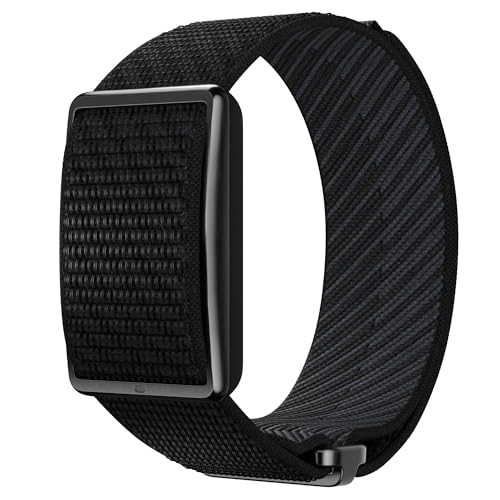
E FUN NextOne review: 163 specs compared

Avg. price:~£150Battery life:?Screen size:1.5 inchHeart rate monitor:yesGPS:noWaterproof depth rating:?

E FUN NextOne Review: Compare 163 technical specifications to see how this product ranks in the Fitness trackers category and whether it is worth buying.
E FUN NextOne
7.4/10

Overall score

Score
7.4/ 10
✕
What it is
Our main score for this model, 1–10. It combines specs, best-of lists, expert reviews and owners.
How we count it
Parts: Technical score 35%, List score 30%, Reviews score 25%, Sentiment score 10%
Marks: Each part gets a mark out of 10. For reviews, lists and owners, a typical model in this category gets about 8 and the best one gets 10.
No data yet: A part with no data shows "?". It counts as the mark of a weaker model in this category (4 in 5 models with data score higher). This way, models with reviews, lists and owners usually come out ahead.
Score distribution
▼
<55-66-77-88-99-10
Score components

35%

7.7

Technical score

30%

?

List scoreNot enough data yet, so we use 7.5, the mark of a weaker model in this category

25%

?

Reviews scoreNot enough data yet, so we use 7.2, the mark of a weaker model in this category

10%

?

Sentiment scoreNot enough data yet, so we use 7.1, the mark of a weaker model in this category

▲Better than 65% of fitness trackers
8.1

Value for money

Value for money
8.1/ 10
✕
What it is
An indicator that combines the fitness tracker's overall rating with its cost.
When it matters
When you are looking for a fitness tracker with a good balance between quality and price.
Score distribution
▼
<55-66-77-88-99-10
Score components

70%

7.4

Overall score

30%

9.7

Price

▼Worse than 54%
7.7

Technical score

Technical score
7.7/ 10
✕
What it is
How good the specs are compared with the other models in this category, 1–10.
How we count it
Areas: We rate the specs in each area against the other models in this category.
Weighting: The areas that matter most to buyers count more. The shares are shown under Score components.
Share: The technical score is 35% of the overall score.
Score distribution
▼
<55-66-77-88-99-10
Score components

20%

7.3

Sports

20%

6.6

Battery

18%

7.6

Health

18%

8.4

Display

8%

9.1

Smart functions

8%

8.3

Wellness

4%

7.4

Connectivity

4%

8.2

Design

▲Better than 80%
?

Reviews score

Reviews score
✕
What it is
Average grade from independent test sites, magazines and video reviewers, 1–10.
How we count it
Grades: Each review's own score is converted to 1–10; without one, we grade the review ourselves. Big test sites count more, short reviews half as much as full tests. A video review counts half.
Score: The average grade is 80% of the review mark; the number of reviews is the other 20% (1 review = 5, the typical number in this category = 8, the most-reviewed model = 10).
Enough data: With few reviews, the average grade is pulled toward the typical grade of this category. No reviews yet: 7.2 for now.
Share: Reviews count 25% of the overall score.
Score distribution
▼
<55-66-77-88-99-10
Grades by review (0)
We have not found an independent test of this model yet. Until we do, its review part counts as 7.2.
User ratings collected online are not part of this score.
No expert tests yet
?

List score

List score
7.5/ 10
✕
What it is
How often independent test sites, magazines and video reviewers put this model in their best-of lists for this category.
How we count it
Points: The model in the most lists of this category gets 10; the others get 8 to 10 in proportion. In no list yet: 7.5. Lists count 30% of the overall score.
Enough data: Every list counts, even a single one. With fewer than 5 best-of lists in the category, this part is left out.
Lists with this model (0)
Not in any best-of list yet, so this part counts as 7.5. Models in a list get 8 to 10.
Not in any best-of list yet
  • e-fun-nextone
e-fun-nextone
Where to buy
    N/A~ £150
Best rankings
Available: ranking among products currently available (including other versions of this product).All: ranking among all products in the database.
Loading...
Loading category ranking...

Technical Specifications of fitness tracker E FUN NextOne

Technical score
Technical score
7.7/ 10
✕
What it is
How good the specs are compared with the other models in this category, 1–10.
How we count it
Areas: We rate the specs in each area against the other models in this category.
Weighting: The areas that matter most to buyers count more. The shares are shown under Score components.
Share: The technical score is 35% of the overall score.
Score distribution
▼
<55-66-77-88-99-10
Score components:

20%

7.3

Sports

20%

6.6

Battery

18%

7.6

Health

18%

8.4

Display

8%

9.1

Smart functions

8%

8.3

Wellness

4%

7.4

Connectivity

4%

8.2

Design

7.7
Reviews score
7.2
List score
?
Value for money
Value for money
8.1/ 10
✕
What it is
An indicator that combines the fitness tracker's overall rating with its cost.
When it matters
When you are looking for a fitness tracker with a good balance between quality and price.
Score distribution
▼
<55-66-77-88-99-10
Score components:

70%

7.4

Overall score

30%

9.7

Price

8.1
Heart rate monitor
yes
This fitness tracker supports heart rate monitoring. 36.2% of fitness trackers support heart rate monitoring.
Resting heart rate
no
This fitness tracker does not support Resting heart rate. 53% of fitness trackers support Resting heart rate.
Fast/slow heart rate alerts
yes
This fitness tracker supports high and low heart rate alerts. 63.9% of fitness trackers support high and low heart rate alerts.
High and low heart rate alerts.
Irregular heart rate alerts
no
This fitness tracker does not support irregular heart rate alerts. 13.7% of fitness trackers support irregular heart rate alerts.
Blood oxygen sensor
?
Show more
GPS
no
This fitness tracker does not have GPS. 12.7% of fitness trackers have GPS.
Satellite systems supported
no
This fitness tracker supports no satellite systems which is less versatile than that of 14.4% of fitness trackers and the same as that of 85.6% of fitness trackers.
no satellite positioning support.
GNSS bands supported
no
This fitness tracker does not support advanced GNSS bands. 8.4% of fitness trackers support advanced GNSS bands.
Galileo support
no
This fitness tracker does not support Galileo. 5.6% of fitness trackers support Galileo.
Acquires GPS faster
no
This fitness tracker does not support faster GPS acquisition. 8.1% of fitness trackers support faster GPS acquisition.
Show more
Notifications
yes
This fitness tracker supports notifications. 27.8% of fitness trackers support notifications.
Vibrating alerts
yes
This fitness tracker supports vibration alerts. 14.3% of fitness trackers support vibration alerts.
Call control
yes
This fitness tracker supports call controls. 59.7% of fitness trackers support call controls.
Reject/mute only.
Call answering
yes
This fitness tracker supports call answering. 99.6% of fitness trackers support call answering.
Answer directly from the watch.
Calendar sync
?
Show more
Activity reports
?
Goal setting
yes
This fitness tracker supports goal setting. 2.5% of fitness trackers support goal setting.
Achievements
?
Inactivity alerts
?
Coaching
?
Show more
Bluetooth version
2
This fitness tracker supports Bluetooth 2 which is older than in 97.7% of fitness trackers.
Maximum Bluetooth range
10 m
This fitness tracker offers a Bluetooth range of 10 m which is higher than that of 14.9% of fitness trackers and equal to that of 64.5% of fitness trackers.
NFC
no
This fitness tracker does not have NFC. 11.8% of fitness trackers have NFC.
Wi-Fi connectivity
no
This fitness tracker does not support Wi-Fi. 2.5% of fitness trackers support Wi-Fi.
Wi-Fi version
no
This fitness tracker does not support modern Wi-Fi. 0.9% of fitness trackers support modern Wi-Fi.
no Wi-Fi support.
Show more
Battery life
?
Battery life with GPS on
?
Battery life in training mode
?
Power-saving battery life
?
Battery capacity
50 mAh
This fitness tracker has a battery capacity of 50 mAh which is lower than that of 87.1% of fitness trackers and equal to that of 1.2% of fitness trackers.
Show more
Display
yes
This fitness tracker has a display. 26.3% of fitness trackers have a display.
Screen size
1.5 inch
This fitness tracker has a screen size of 1.5 inch which is larger than that of 83.5% of fitness trackers and equal to that of 1.9% of fitness trackers.
Display type
OLED
This fitness tracker uses OLED display technology which is more advanced than that of 54.6% of fitness trackers and the same as that of 19.1% of fitness trackers.
Screen resolution
?
Pixel density
?
Show more
Form factor
wristband
Hybrid design
no
This fitness tracker does not support Hybrid design. 2.1% of fitness trackers support Hybrid design.
Designed for kids
no
This fitness tracker is not designed for kids. 3.3% of fitness trackers are designed for kids.
Replaceable watch band
?
Band width
?
Show more

E FUN NextOne vs the average fitness tracker

246810TotalHealthSportsBatteryDisplayConnectivitySmart functionsDesignWellness
  • 0.44 inch larger screen size
    This fitness tracker has a higher screen size than the average fitness tracker (1.5 inch vs 1.06 inch). The average fitness tracker has a screen size of 1.06 inch.
    1.5 inch vs 1.06 inch
  • Smart alarm
    This fitness tracker supports a smart alarm, while the average fitness tracker does not. 30.8% of fitness trackers support a smart alarm.
  • Touchscreen
    This fitness tracker has a touchscreen, while the average fitness tracker does not. 46.7% of fitness trackers have a touchscreen.
  • Heart rate alerts
    This fitness tracker supports high and low heart rate alerts, while the average fitness tracker does not. 36.4% of fitness trackers support high and low heart rate alerts.
    High and low heart rate alerts.
  • Call control
    This fitness tracker supports call controls, while the average fitness tracker does not. 40.6% of fitness trackers support call controls.
    Reject/mute only.
  • Call answering
    This fitness tracker supports call answering, while the average fitness tracker does not. 0.8% of fitness trackers support call answering.
    Answer directly from the watch.
  • Sweat tracking
    This fitness tracker supports sweat tracking, while the average fitness tracker does not. 6.8% of fitness trackers support sweat tracking.
    Tracks perspiration levels.
  • Camera remote control
    This fitness tracker supports camera remote control, while the average fitness tracker does not. 40.6% of fitness trackers support camera remote control.
  • Heart rate alerts
    This fitness tracker supports high and low heart rate alerts, while the average fitness tracker does not. 36.4% of fitness trackers support high and low heart rate alerts.
    High and low heart rate alerts.
  • Sweat tracking
    This fitness tracker supports sweat tracking, while the average fitness tracker does not. 6.8% of fitness trackers support sweat tracking.
    Tracks perspiration levels.
  • 0.44 inch larger screen size
    This fitness tracker has a higher screen size than the average fitness tracker (1.5 inch vs 1.06 inch). The average fitness tracker has a screen size of 1.06 inch.
    1.5 inch vs 1.06 inch
  • Touchscreen
    This fitness tracker has a touchscreen, while the average fitness tracker does not. 46.7% of fitness trackers have a touchscreen.
  • Smart alarm
    This fitness tracker supports a smart alarm, while the average fitness tracker does not. 30.8% of fitness trackers support a smart alarm.
  • Call control
    This fitness tracker supports call controls, while the average fitness tracker does not. 40.6% of fitness trackers support call controls.
    Reject/mute only.
  • Call answering
    This fitness tracker supports call answering, while the average fitness tracker does not. 0.8% of fitness trackers support call answering.
    Answer directly from the watch.
  • Camera remote control
    This fitness tracker supports camera remote control, while the average fitness tracker does not. 40.6% of fitness trackers support camera remote control.
  • No automatic activity detection
    This fitness tracker does not support automatic activity detection, while the average fitness tracker does. 56.4% of fitness trackers support automatic activity detection.
  • Higher resting heart rate
    This fitness tracker does not support Resting heart rate, while the average fitness tracker does. 52.7% of fitness trackers support Resting heart rate.
  • 0.75 hours longer charging time
    This fitness tracker has a higher charging time than the average fitness tracker (2.3 hours vs 1.5 hours). The average fitness tracker needs 1.5 hours to charge.
    source range 2-2.5 h.
    2.25 hours vs 1.5 hours
  • 60% smaller battery capacity
    This fitness tracker has a lower battery capacity than the average fitness tracker (50 mAh vs 125 mAh). The average fitness tracker has 125 mAh of battery capacity.
    50 mAh vs 125 mAh
  • No weight tracking
    This fitness tracker does not support weight tracking, while the average fitness tracker does. 82.4% of fitness trackers support weight tracking.
  • Old Bluetooth version
    This fitness tracker supports an older Bluetooth version than the average fitness tracker (2 vs 4.1). The average fitness tracker supports Bluetooth 4.1.
    2 vs 4.1
  • Limited ip rating
    This fitness tracker has a lower IP rating than the average fitness tracker (IP67 vs IP68). The average fitness tracker has an IP rating of IP68.
    IP67 vs IP68
  • 2.14x more expensive
    E FUN NextOne is more expensive than the average fitness tracker (£150 vs £70).
    £150 vs £70
  • 2.14x more expensive
    E FUN NextOne is more expensive than the average fitness tracker (£150 vs £70).
    £150 vs £70
  • Higher resting heart rate
    This fitness tracker does not support Resting heart rate, while the average fitness tracker does. 52.7% of fitness trackers support Resting heart rate.
  • No automatic activity detection
    This fitness tracker does not support automatic activity detection, while the average fitness tracker does. 56.4% of fitness trackers support automatic activity detection.
  • 0.75 hours longer charging time
    This fitness tracker has a higher charging time than the average fitness tracker (2.3 hours vs 1.5 hours). The average fitness tracker needs 1.5 hours to charge.
    source range 2-2.5 h.
    2.25 hours vs 1.5 hours
  • 60% smaller battery capacity
    This fitness tracker has a lower battery capacity than the average fitness tracker (50 mAh vs 125 mAh). The average fitness tracker has 125 mAh of battery capacity.
    50 mAh vs 125 mAh
  • Old Bluetooth version
    This fitness tracker supports an older Bluetooth version than the average fitness tracker (2 vs 4.1). The average fitness tracker supports Bluetooth 4.1.
    2 vs 4.1
  • Limited ip rating
    This fitness tracker has a lower IP rating than the average fitness tracker (IP67 vs IP68). The average fitness tracker has an IP rating of IP68.
    IP67 vs IP68
  • No weight tracking
    This fitness tracker does not support weight tracking, while the average fitness tracker does. 82.4% of fitness trackers support weight tracking.
  • No BMI tracking
    This fitness tracker does not support BMI tracking, while the average fitness tracker does. 72.2% of fitness trackers support BMI tracking.

Third-party reviews

What customers like about E FUN NextOne

  • Functional touch panel navigation with a dedicated back button
  • Comprehensive notification support for calls, texts, and third-party apps
  • Multi-functional tools including a smartphone camera remote and music playback control
  • Lightweight and comfortable design suitable for continuous wear
  • Budget-friendly price point for an entry-level activity tracker

What customers don't like about E FUN NextOne

  • Screen visibility issues, particularly poor viewing angles from the side
  • Relatively short battery life, typically lasting only 2 to 5 days
  • Build quality feels noticeably plastic and less premium than competitors
  • Complex setup on Android requiring three separate apps to view all data
  • Lack of advanced sensors such as built-in GPS or altimeter for elevation tracking
  • Limited water resistance, often rated as only sweat-resistant rather than waterproof

Verdict

The E Fun NextOne is a budget-oriented fitness tracker and smartwatch featuring a 1.5-inch to 1.8-inch OLED or LCD touchscreen, integrated heart rate monitoring, and IP54 or IP68 water resistance. Key technical specifications include a 50mAh to 300mAh battery offering 2 to 7 days of life, 128MB to 512MB of RAM, and 4GB of onboard storage for music and data. Its main characteristics focus on comprehensive health tracking—including steps, distance, calories, SpO2, and sleep quality—complemented by smartphone integration for notifications, call control, and a camera remote. The primary pros are its affordable price point, built-in microphone for voice features, and a silent smart alarm that uses sleep data to wake users at optimal times. However, notable cons include its older Bluetooth 2.0 connectivity in earlier models, a display that can be difficult to view from sharp angles, and a lack of built-in GPS, requiring a tethered smartphone connection for route mapping.

Compare E FUN NextOne with other products in the Fitness trackers category

1Product to compare no. 1
VS
2Product to compare no. 2
VS
3Product to compare no. 3 (optional)

Graphic comparison of E FUN NextOne and other products in the Fitness trackers category

No results found