Scored using eReaders Methodology v1.0
eReaders Methodology v1.0
Mathematical & Unbiased Scoring
Products in this category are scored under Frontum eReaders Methodology v1.0: technical specifications plus authentic consumer ratings, with 0% commercial bias.
Explore eReaders Methodology v1.0

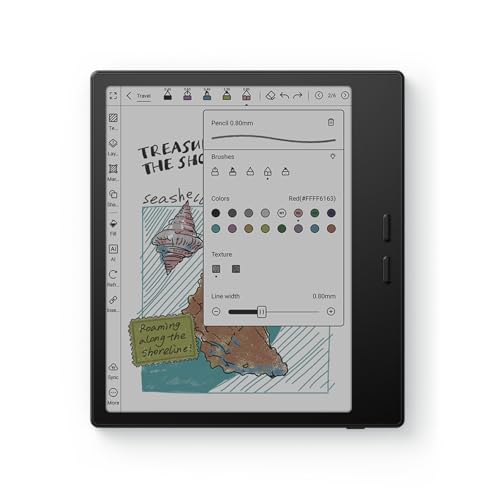
Onyx Boox Galileo Review | 68 Data compared

Avg. price:~£210Screen size:7 inchesPixel density:300 ppiInternal storage:32 GBBattery life:?Supported bookstore ecosystem:Android Open Ecosystem

Onyx Boox Galileo Review: Compare 68 technical specifications and user reviews to see how this product ranks in the eReaders category and whether it is worth buying.

8.0/10

Overall score

Score
8.0/ 10
✕
What it is
An overall evaluation of the eReader's quality, based on technical analyses and user reviews.
When it matters
When you need a quick reference to identify the best eReaders on the market.
Score distribution
â–¼
<55-66-77-88-99-10
Score components

90%

8.0

Technical score

10%

?

User score

â–²Better than 89% of ereaders
8.4

Value for money

Value for money
8.4/ 10
✕
What it is
An indicator that combines the eReader's overall rating with its cost.
When it matters
When you are looking for an eReader with a good balance between reading comfort, features, and price.
Score distribution
â–¼
<55-66-77-88-99-10
Score components

70%

8.0

Overall score

30%

9.4

Price

★Better than 96%
8.0

Technical score

Technical score
8.0/ 10
✕
What it is
An assessment of the eReader's technical performance, covering key areas such as display quality, reading features, battery life, format support, ecosystem, and design.
When it matters
When you want to compare eReaders based on technical performance and available features.
Score distribution
â–¼
<55-66-77-88-99-10
Score components

25%

8.1

Display

22%

8.3

Reading

18%

7.4

Battery

14%

7.7

Hardware

12%

8.6

Connectivity

9%

7.7

Design

â–²Better than 86%
?

User score

User score
8.0/ 10
✕
What it is
A rating that combines user reviews and the total number of reviews received by the eReader.
When it matters
When you want to know how an eReader feels in daily reading and how reliable it is for screen comfort, battery life, and library management according to user feedback.
Score distribution
â–¼
<55-66-77-88-99-10
Score components

70%

?

User ratings

30%

?

Number of reviews

  • No image
No image
Where to buy
    N/A~ £210
Best rankings
Available: ranking among products currently available (including other versions of this product).All: ranking among all products in the database.
Loading...
Loading category ranking...

Technical Specifications of eReader Onyx Boox Galileo

Technical score
Technical score
8.0/ 10
✕
What it is
An assessment of the eReader's technical performance, covering key areas such as display quality, reading features, battery life, format support, ecosystem, and design.
When it matters
When you want to compare eReaders based on technical performance and available features.
Score distribution
â–¼
<55-66-77-88-99-10
Score components:

25%

8.1

Display

22%

8.3

Reading

18%

7.4

Battery

14%

7.7

Hardware

12%

8.6

Connectivity

9%

7.7

Design

8.0
User score
User score
8.0/ 10
✕
What it is
A rating that combines user reviews and the total number of reviews received by the eReader.
When it matters
When you want to know how an eReader feels in daily reading and how reliable it is for screen comfort, battery life, and library management according to user feedback.
Score distribution
â–¼
<55-66-77-88-99-10
Score components

70%

?

User ratings

30%

?

Number of reviews

?
Popularity
Popularity
1.0/ 10
✕
What it is
An indicator based on the number of reviews received by the eReader.
When it matters
When you prefer to choose an eReader reviewed and selected by many other buyers.
Score distribution
â–¼
<55-66-77-88-99-10
Popularity:
Onyx Boox Galileo has a popularity score of 1 point, which is lower than that of 72.1% of products in this category.
1.0
Value for money
Value for money
8.4/ 10
✕
What it is
An indicator that combines the eReader's overall rating with its cost.
When it matters
When you are looking for an eReader with a good balance between reading comfort, features, and price.
Score distribution
â–¼
<55-66-77-88-99-10
Score components:

70%

8.0

Overall score

30%

9.4

Price

8.4
Brand name
Onyx
Screen size
7 inches
This eReader has a screen size of 7 inches which is larger than 48.4% on this spec and equal to 15.6% of eReaders.
Screen resolution
1264x1680 px
This eReader uses a screen resolution of 1264x1680 px, which is sharper than that of 60.7% of eReaders and the same as that of 12.3% of eReaders.
Pixel density
300 ppi
This eReader has a pixel density of 300 ppi which is higher than 51.6% on this spec and equal to 48.4% of eReaders.
E-paper display
yes
This eReader uses an e-paper display. 2.5% of eReaders have an e-paper display.
Show more
Supported file types
24
This eReader supports 24 file types which is more than 85.6% on this spec and equal to 5.1% of eReaders.
PDF reflow support
yes
This eReader offers PDF reflow. 45.5% of eReaders support PDF reflow.
Annotation support
yes
This eReader offers annotation support. 1.6% of eReaders offer annotation support.
Dictionary
yes
This eReader includes a built-in dictionary. 0.8% of eReaders include a built-in dictionary.
Text-to-speech
yes
This eReader offers text-to-speech. 36.1% of eReaders include text-to-speech.
Show more
Battery life
?
Battery capacity
2,300 mAh
This eReader has a battery capacity of 2,300 mAh which is higher than 70.3% on this spec and equal to 1.7% of eReaders.
Charging time
3 hours
This eReader takes 3 hours to charge which is slower than 53.6% on this spec and equal to 27.3% of eReaders.
Wireless charging
no
This eReader does not offer wireless charging. 7.4% of eReaders offer wireless charging.
Internal storage
32 GB
This eReader offers 32 GB of internal storage which is more than 59% on this spec and equal to 23% of eReaders.
RAM capacity
2 GB
This eReader offers 2 GB of RAM which is more than 72.1% on this spec and equal to 8.2% of eReaders.
CPU base clock speed
4x 2 GHz
This eReader has a CPU base clock speed of 4x2 GHz, which is faster than that of 75.2% of eReaders and the same as that of 4.1% of eReaders.
Operating system
Android 11
This eReader runs Android 11, which is more advanced than that of 76.2% of eReaders and the same as that of 17.2% of eReaders.
Memory card slot
yes
This eReader has a memory card slot. 57.4% of eReaders have a memory card slot.
Show more
Wi-Fi connectivity
yes
This eReader connects over Wi-Fi. 6.6% of eReaders have Wi-Fi.
Wi-Fi version
Wi-Fi 5 (802.11ac), Wi-Fi 4 (802.11n)
This eReader supports Wi-Fi Wi-Fi 5 (802.11ac), Wi-Fi 4 (802.11n), which is newer than that of 58.2% of eReaders and the same as that of 40.2% of eReaders.
Wi-Fi bands supported
2.4 GHz+5 GHz
This eReader supports 2.4 GHz+5 GHz Wi-Fi bands, which is broader than that of 57.4% of eReaders and the same as that of 42.6% of eReaders.
Bluetooth
yes
This eReader connects over Bluetooth. 40.2% of eReaders have Bluetooth.
Bluetooth version
5
This eReader supports Bluetooth 5 which is newer than 58.3% on this spec and equal to 29.2% of eReaders.
Show more
Weight
188 g
This eReader weighs 188 g which is lighter than 63.9% on this spec and equal to 0.8% of eReaders.
Thickness
6 mm
This eReader is 6 mm thick which is thinner than 88.4% on this spec and equal to 1.7% of eReaders.
Height
156 mm
This eReader is 156 mm tall which is shorter than 86.9% on this spec and equal to 4.1% of eReaders.
Width
137 mm
This eReader is 137 mm wide which is wider than 63.9% on this spec and equal to 4.1% of eReaders.
Water resistance (splashproof)
no
This eReader does not have water resistance against splashes. 25% of eReaders have water resistance against splashes.
Show more

Onyx Boox Galileo vs the average eReader

246810TotalDisplayReadingBatteryHardwareConnectivityDesign
  • 9 more supported file formats
    This eReader supports a broader range of file types than the average eReader (24 vs 15).
    24 vs 15
  • Memory card slot
    This eReader includes a memory card slot, while the average eReader does not. 43.1% of eReaders include a memory card slot.
  • Page-turn buttons
    This eReader has page-turn buttons, while the average eReader does not. 44.7% of eReaders have page-turn buttons.
  • More advanced operating system
    This eReader uses Android 11, a more advanced operating system than Kindle OS on the average eReader.
    Android 11 vs Kindle OS
  • Broader library support
    This eReader supports more library lending platforms than the average eReader (OverDrive, Libby, Hoopla, BorrowBox, cloudLibrary, PrêtNumérique vs OverDrive, Libby).
    Access comes through installable library apps.
    OverDrive, Libby, Hoopla, BorrowBox, cloudLibrary, PrêtNumérique vs OverDrive, Libby
  • Accelerometer included
    This eReader has an accelerometer, while the average eReader does not. 45.1% of eReaders have an accelerometer.
  • Faster CPU base clock speed
    This eReader has a faster CPU base clock speed than the average eReader (4x2 GHz vs 1x1 GHz). The average eReader has a CPU base clock speed of 1x1 GHz.
    4x2 GHz vs 1x1 GHz
  • 47% larger battery capacity
    This eReader has a larger battery than the average eReader (2,300 mAh vs 1,565 mAh). The average eReader battery has a capacity of 1,565 mAh.
    2,300 mAh vs 1,565 mAh
  • 15.4% better value for money
    Onyx Boox Galileo has better value for money than the average eReader (8.41 vs 7.3).
    8.41 vs 7.28
  • 13.2% higher pixel density
    This eReader has a higher pixel density than the average eReader (300 ppi vs 265 ppi). The average eReader has a pixel density of 265 ppi.
    300 ppi vs 265 ppi
  • Higher screen resolution
    This eReader supports higher screen resolution than the average eReader (1264x1680 px vs 1072x1448 px). The average eReader supports 1072x1448 px screen resolution.
    1264x1680 px vs 1072x1448 px
  • Auto-brightness sensor
    This eReader has an auto-brightness sensor, while the average eReader does not. 41.8% of eReaders have an auto-brightness sensor.
    Ambient light sensor enables automatic brightness adjustments.
  • More advanced E-Ink technology
    This eReader uses Carta 1200 E-Ink technology, while the average eReader uses Carta Plus.
    Carta 1,200 vs Carta Plus
  • Supports auto-rotate
    This eReader supports auto-rotate, while the average eReader does not. 43.4% of eReaders support auto-rotate.
  • 9 more supported file formats
    This eReader supports a broader range of file types than the average eReader (24 vs 15).
    24 vs 15
  • Broader library support
    This eReader supports more library lending platforms than the average eReader (OverDrive, Libby, Hoopla, BorrowBox, cloudLibrary, PrêtNumérique vs OverDrive, Libby).
    Access comes through installable library apps.
    OverDrive, Libby, Hoopla, BorrowBox, cloudLibrary, PrêtNumérique vs OverDrive, Libby
  • 47% larger battery capacity
    This eReader has a larger battery than the average eReader (2,300 mAh vs 1,565 mAh). The average eReader battery has a capacity of 1,565 mAh.
    2,300 mAh vs 1,565 mAh
  • Memory card slot
    This eReader includes a memory card slot, while the average eReader does not. 43.1% of eReaders include a memory card slot.
  • More advanced operating system
    This eReader uses Android 11, a more advanced operating system than Kindle OS on the average eReader.
    Android 11 vs Kindle OS
  • Accelerometer included
    This eReader has an accelerometer, while the average eReader does not. 45.1% of eReaders have an accelerometer.
  • Faster CPU base clock speed
    This eReader has a faster CPU base clock speed than the average eReader (4x2 GHz vs 1x1 GHz). The average eReader has a CPU base clock speed of 1x1 GHz.
    4x2 GHz vs 1x1 GHz
  • 1.49 GB more RAM
    This eReader has more RAM than the average eReader (2 GB vs 0.5 GB). The average eReader has 0.512 GB of RAM.
    2 GB vs 0.512 GB
  • 2x more storage
    This eReader offers more internal storage than the average eReader (32 GB vs 16 GB). The average eReader provides 16 GB of internal storage.
    32 GB vs 16 GB
  • Microphone included
    This eReader has a microphone, while the average eReader does not. 26.7% of eReaders have a microphone.
  • Supports USB OTG
    This eReader supports USB OTG, while the average eReader does not. 33.9% of eReaders support USB OTG.
    OTG can connect USB drives or simple peripherals through the device port.
  • Better Wi-Fi bands
    This eReader supports 2.4 GHz+5 GHz Wi-Fi bands, while the average eReader supports 2.4 GHz.
    2.4 GHz+5 GHz vs 2.4 GHz
  • Newer Wi-Fi version
    This eReader supports a newer Wi-Fi version than the average eReader (Wi-Fi 5 (802.11ac), Wi-Fi 4 (802.11n) vs Wi-Fi 4 (802.11n)).
    Wi-Fi 5 (802.11ac), Wi-Fi 4 (802.11n) vs Wi-Fi 4 (802.11n)
  • 1 more speakers
    This eReader has more speakers than the average eReader (1 vs 0). The average eReader has 0 speakers.
    Built-in speaker count reflects onboard audio hardware.
    1 vs 0
  • Page-turn buttons
    This eReader has page-turn buttons, while the average eReader does not. 44.7% of eReaders have page-turn buttons.
  • 2.1 mm thinner
    This eReader is thinner than the average eReader (6 mm vs 8.1 mm). The average eReader thickness is 8.1 mm.
    6 mm vs 8.1 mm
  • 17 mm shorter
    This eReader is shorter than the average eReader (156 mm vs 173 mm). The average eReader height is 173 mm.
    156 mm vs 173 mm
  • 11.7% lighter
    This eReader is lighter than the average eReader (188 g vs 213 g). The average eReader weighs 213 g.
    188 g vs 213 g
  • 2 newer
    This eReader is newer than the average eReader (2023 vs 2021). The average eReader was released in 2021.
    June 2023
    2023 vs 2021
  • Limited DRM support
    This eReader supports fewer DRM schemes than the average eReader (No native DRM support vs Adobe DRM, Social DRM).
    Relies on third-party Android apps for DRM-protected content.
    No native DRM support vs Adobe DRM, Social DRM
  • 1 hours longer charging time
    This eReader charges more slowly than the average eReader (3 hours vs 2 hours). The average eReader charges in 2 hours.
    3 hours vs 2 hours
  • 5.44x less popular
    Onyx Boox Galileo is less popular than the average eReader (1 vs 5.4).
    1 vs 5.44
  • Versions older Bluetooth
    This eReader supports an older Bluetooth version than the average eReader (5 vs 5.1).
    5 vs 5.1
  • 9.4 mm wider
    This eReader is wider than the average eReader (137 mm vs 127.6 mm). The average eReader width is 127.6 mm.
    137 mm vs 127.6 mm
  • 5.44x less popular
    Onyx Boox Galileo is less popular than the average eReader (1 vs 5.4).
    1 vs 5.44
  • Limited DRM support
    This eReader supports fewer DRM schemes than the average eReader (No native DRM support vs Adobe DRM, Social DRM).
    Relies on third-party Android apps for DRM-protected content.
    No native DRM support vs Adobe DRM, Social DRM
  • 1 hours longer charging time
    This eReader charges more slowly than the average eReader (3 hours vs 2 hours). The average eReader charges in 2 hours.
    3 hours vs 2 hours
  • Versions older Bluetooth
    This eReader supports an older Bluetooth version than the average eReader (5 vs 5.1).
    5 vs 5.1
  • 9.4 mm wider
    This eReader is wider than the average eReader (137 mm vs 127.6 mm). The average eReader width is 127.6 mm.
    137 mm vs 127.6 mm

Third-party reviews

What customers like about Onyx Boox Galileo

  • Open Android 11 system allows installation of various apps like Kindle, Use code with caution.Copied to clipboardjsonKoboUse code with caution.Copied to clipboardjson, and Libby
  • High-quality 7-inch E Ink Carta 1200 screen with 300 PPI for sharp, clear text
  • Built-in speakers and Bluetooth support for audiobooks and music
  • Extensive customisation options for reading, including adjustable font, margins, and light warmth
  • Physical page-turn buttons integrated into the side for comfortable one-handed use
  • Includes a microSD card slot for expandable storage

What customers don't like about Onyx Boox Galileo

  • Steep learning curve due to complex Android settings and a non-intuitive UI
  • Higher battery drain compared to simpler e-readers because of the Android operating system
  • Fragile screen and build quality that typically requires a protective cover
  • Sluggish performance in the OS and some third-party apps, despite upgraded hardware
  • Inconsistent software support with infrequent Android security updates
  • Susceptible to fingerprint smudges on the bezels and back panel

Verdict

The Onyx Boox Galileo is a versatile 7-inch e-reader featuring a high-resolution E Ink Carta 1200 display (300 PPI, 1264 x 1680) protected by flush Onyx Glass. Powered by a 2.0 GHz quad-core Qualcomm processor, 2GB of RAM, and 32GB of internal storage, it runs on Android 11, granting access to the Google Play Store for various reading apps. Its primary characteristics include a lightweight 188g plastic body, physical page-turn buttons, and a 2,300 mAh battery supported by USB-C charging. Key pros are its crisp screen with adjustable dual-tone MOON Light 2, microSD card expansion, and built-in speaker for audiobooks. Notable cons include its lack of water resistance and a potential learning curve for users unfamiliar with the Android-based e-ink interface.

Compare Onyx Boox Galileo with other eReaders

1Product to compare no. 1
VS
2Product to compare no. 2
VS
3Product to compare no. 3 (optional)

Graphic comparison of Onyx Boox Galileo and other eReaders

No results found