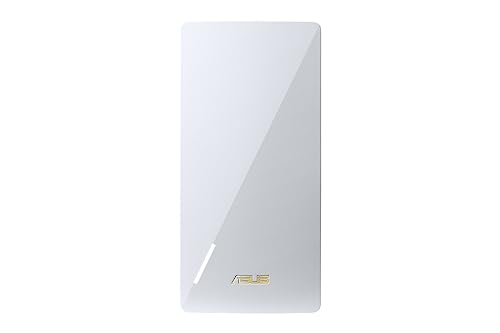
ASUS RP-AC1900 Review | 63 Data compared

double-arrow
  • Avg. price in UK: ~£130
  • Avg. price in US: ~$120
  • Wi-Fi version: Wi-Fi 5 (802.11ac)
  • Wi-Fi speed: 1900 Mbps
  • Coverage area: 279

ASUS RP-AC1900 review. Compare 63 technical specifications and user reviews to see how it ranks among wi-fi extenders and if it is worth buying.

7.5

Overall score

What it is: An overall evaluation of the Wi-Fi extender's quality, based on technical analyses and user reviews.

When it matters: When you need a quick reference to spot the best Wi‑Fi extenders overall.

Score components:

80.0%

7.5

Technical Score

20.0%

?

User score

Very good
7.5

Technical Score

What it is: An assessment of the Wi-Fi extender's technical performance, covering eight key areas: speed, coverage, signal stability, connectivity, Ethernet features, mesh support, ease of setup, and design.

When it matters: When you want to compare Wi‑Fi extenders based on speed, coverage, ports, and wireless features.

Score components:

40.0%

7.0

Wi-Fi Performance

30.0%

7.5

Network & Security

12.0%

10

Setup & Management

10.0%

4.6

Hardware & Deployment

8.0%

9.5

Ports

Very good
?

User score

What it is: A rating that combines user reviews and the total number of reviews received by the Wi-Fi extender.

When it matters: When you want to know how a Wi‑Fi extender performs in daily use and how reliably it maintains a stable connection over time according to user feedback.

Score components:

70.0%

?

User reviews

30.0%

?

Popularity

  • 8.6
    Gaming

    Score components:

    35.0%

    6.3

    Wi-Fi speed

    30.0%

    10

    QoS support

    20.0%

    10

    Ethernet backhaul

    15.0%

    9.0

    N. of LAN ports

  • 2.8
    Travel

    Score components:

    45.0%

    1.2

    Weight

    30.0%

    1.0

    Portable design

    15.0%

    6.3

    Wi-Fi speed

    10.0%

    10

    Access Point mode

  • No image
No image

Best prices in UK

    N/A~ £130

Best rankings

?

Available: ranking among products currently available (including other versions of this product).
All: ranking among all products in the database.

Verdict

The ASUS RP-AC1900 is a high-performance dual-band 802.11ac Wi-Fi extender delivering combined speeds up to 1900 Mbps (1300 Mbps on 5GHz and 600 Mbps on 2.4GHz) to cover large homes up to 3,000 sq. ft. Key characteristics include three external antennas with 3x3 MIMO technology and versatile operation modes such as range extender, access point, and media bridge. Its main pros are seamless AiMesh integration for whole-home coverage, four Gigabit LAN ports for wired connectivity, and advanced features like AiProtection and parental controls when paired with ASUS routers. Potential cons include its older Wi-Fi 5 standard compared to modern Wi-Fi 6 alternatives and its relatively large physical footprint for a plug-in device.

Technical Specifications of ASUS RP-AC1900

Technical Score

What it is: An assessment of the Wi-Fi extender's technical performance, covering eight key areas: speed, coverage, signal stability, connectivity, Ethernet features, mesh support, ease of setup, and design.

When it matters: When you want to compare Wi‑Fi extenders based on speed, coverage, ports, and wireless features.

Score components:

40.0%

?

Wi-Fi Performance

30.0%

?

Network & Security

12.0%

?

Setup & Management

10.0%

?

Hardware & Deployment

8.0%

?

Ports

7.5
ASUS RP-AC1900 has a technical score of 7.46 points, which is higher than 52.9% of Wi-Fi extenders.
User score

What it is: A rating that combines user reviews and the total number of reviews received by the Wi-Fi extender.

When it matters: When you want to know how a Wi‑Fi extender performs in daily use and how reliably it maintains a stable connection over time according to user feedback.

Score components:

70.0%

0.0

User reviews

30.0%

1.0

Popularity

?
Popularity
What it is: An indicator based on the number of reviews received by the Wi-Fi extender.
When it matters: When you prefer to buy a Wi‑Fi extender that has already been chosen and reviewed by many other users.
1.0
ASUS RP-AC1900 has a popularity of 1 points, which is lower than 70.6% of products in this category.
Ratio quality/price

What it is: An indicator that combines the Wi-Fi extender's overall rating with its cost.

When it matters: When you are looking for a Wi‑Fi extender with a good balance between performance and price.

Score components:

60.0%

7.5

Overall score

40.0%

9.8

Price

8.2
ASUS RP-AC1900 has a quality-to-price ratio of 8.2 points, which is higher than 48% of products in this category.
Wi-Fi version
What it is: The Wi‑Fi generation the extender supports, such as Wi‑Fi 5, Wi‑Fi 6, or Wi‑Fi 6E.
When it matters: When you want the extender to work well with newer routers and support modern wireless features.

Importance: HIGH

Wi-Fi 5 (802.11ac)
ASUS RP-AC1900 supports Wi-Fi 5 (802.11ac), more advanced than 9.8% of Wi-Fi extenders and equal to 44.1% of Wi-Fi extenders.
Wi-Fi bands
What it is: The wireless frequency bands the extender can use.
When it matters: When your router and devices depend on support for the right Wi‑Fi bands.

Importance: HIGH

Dual-band
ASUS RP-AC1900 supports Dual-band, more versatile than 10.8% of Wi-Fi extenders and equal to 74.5% of Wi-Fi extenders.
6 GHz band support
What it is: Whether the extender can operate on the 6 GHz band.
When it matters: When you want the extender to work well with newer routers and support modern wireless features.

Importance: LOW

no
ASUS RP-AC1900 does not support the 6 GHz band. 5.9% of Wi-Fi extenders support the 6 GHz band.
Wi-Fi speed
What it is: The combined theoretical maximum wireless speed across the supported bands.
When it matters: When you need better speed and signal strength in rooms that are harder to reach.

Importance: HIGH

1900 Mbps
ASUS RP-AC1900 reaches 1900 Mbps Wi-Fi speed, faster than 59.8% of Wi-Fi extenders and equal to 4.9% of Wi-Fi extenders.
Max speed 2.4 GHz
What it is: The maximum supported wireless speed on the 2.4 GHz band.
When it matters: When you need better speed and signal strength in rooms that are harder to reach.

Importance: MEDIUM

600 Mbps
ASUS RP-AC1900 reaches 600 Mbps on 2.4 GHz, faster than 75.5% of Wi-Fi extenders and equal to 14.7% of Wi-Fi extenders.
Show more
Ethernet backhaul
What it is: Whether the extender supports Ethernet backhaul through a wired network connection.
When it matters: When you want a more stable link over Ethernet instead of relying only on wireless repeating.

Importance: MEDIUM

yes
ASUS RP-AC1900 supports Ethernet backhaul. 48.9% of Wi-Fi extenders support Ethernet backhaul.
Requires AiMesh.
Mesh compatibility
What it is: The mesh systems or ecosystems the extender can work with.
When it matters: When you want smoother roaming and more consistent coverage across your home.

Importance: LOW

AiMesh
Mesh standard
What it is: The mesh standard or ecosystem the extender uses.
When it matters: When you want smoother roaming and more consistent coverage across your home.

Importance: LOW

proprietary mesh
Roaming feature
What it is: Whether the extender supports seamless roaming between network nodes.
When it matters: When you want smoother roaming and more consistent coverage across your home.

Importance: MEDIUM

yes
ASUS RP-AC1900 supports roaming. 17.7% of Wi-Fi extenders support roaming.
Via AiMesh.
802.11k support
What it is: Whether the extender supports 802.11k for better roaming information between access points.
When it matters: When you want smoother roaming and more consistent coverage across your home.

Importance: LOW

no
ASUS RP-AC1900 does not support 802.11k. 74.1% of Wi-Fi extenders support 802.11k.
Show more
N. of LAN ports
What it is: The number of wired LAN ports on the extender.
When it matters: When you need to connect wired devices such as TVs, consoles, PCs, or switches.

Importance: MEDIUM

?
Ethernet port speed
What it is: The maximum Ethernet speed supported by the wired ports.
When it matters: When you connect wired devices and want them to run at full local network speed.

Importance: MEDIUM

1 Gbps
ASUS RP-AC1900 offers 1 Gbps Ethernet speed, faster than 25.7% of Wi-Fi extenders and equal to 64.4% of Wi-Fi extenders.
N. of USB ports
What it is: The number of USB ports on the extender.
When it matters: When you need to connect wired devices such as TVs, consoles, PCs, or switches.

Importance: LOW

0
ASUS RP-AC1900 has 0 USB port/s, equal to 97.1% of Wi-Fi extenders.
PoE standard
What it is: The Power over Ethernet standard the extender supports, if any.
When it matters: When you want to power the extender over Ethernet instead of using a separate power adapter.

Importance: LOW

N/A
Dedicated smartphone app
What it is: Whether the extender can be managed through a dedicated smartphone app.
When it matters: When you want easier setup, monitoring, and control from your phone.

Importance: MEDIUM

yes
ASUS RP-AC1900 comes with a dedicated smartphone app. 15.2% of Wi-Fi extenders come with a dedicated smartphone app.
ASUS Router app.
Web UI management
What it is: Whether the extender offers a web-based interface for setup and management.
When it matters: When you prefer advanced setup and control from a web browser.

Importance: MEDIUM

yes
ASUS RP-AC1900 has a web management interface. 2% of Wi-Fi extenders have a web management interface.
Local browser-based web UI.
Automatic firmware updates
What it is: Whether the extender can install firmware updates automatically.
When it matters: When you want security and stability updates without having to manage them manually.

Importance: LOW

yes
ASUS RP-AC1900 has automatic firmware updates. 53.1% of Wi-Fi extenders have automatic firmware updates.
Auto-update via ASUS Router app.
LED control
What it is: Whether the extender’s LED indicators can be adjusted or turned off.
When it matters: When the extender sits in a bedroom or another space where bright status lights can be annoying.

Importance: LOW

yes
ASUS RP-AC1900 has LED control. 12.1% of Wi-Fi extenders have LED control.
LED control via app/web UI.
Buttons present
What it is: The physical buttons available on the extender, such as reset, power, or WPS.
When it matters: When you prefer direct physical controls instead of relying only on software menus.

Importance: LOW

wps, reset, power
Show more
Mounting type
What it is: The mounting style the extender uses, such as wall-plug or desktop placement.
When it matters: When the extender needs to fit neatly into a tight space, behind furniture, or near an outlet.

Importance: LOW

desktop
Portable design
What it is: Whether the extender has a travel-friendly portable design, usually a compact plug-in form factor rather than a larger desktop or fixed-installation unit.
When it matters: When you want an extender that is easy to pack, move between locations, or use temporarily while travelling.

Importance: LOW

no
ASUS RP-AC1900 does not have a portable design. 66.7% of Wi-Fi extenders have a portable design.
Desktop / fixed-installation form factor.
Height
What it is: The height of the extender body.
When it matters: When the extender needs to fit neatly into a tight space, behind furniture, or near an outlet.

Importance: LOW

155.9 mm
ASUS RP-AC1900 is 155.9 mm tall, taller than 71.6% of Wi-Fi extenders.
Width
What it is: The width of the extender body.
When it matters: When the extender needs to fit neatly into a tight space, behind furniture, or near an outlet.

Importance: LOW

106 mm
ASUS RP-AC1900 is 106 mm wide, wider than 68.6% of Wi-Fi extenders and equal to 1% of Wi-Fi extenders.
216 mm appears in some sources for another orientation.
Thickness
What it is: The depth or thickness of the extender body.
When it matters: When the extender needs to fit neatly into a tight space, behind furniture, or near an outlet.

Importance: LOW

59.65 mm
ASUS RP-AC1900 is 59.65 mm thick, thicker than 74.5% of Wi-Fi extenders.
Show more

ASUS RP-AC1900 vs the average wi-fi extender

  • 92.4% larger coverage area
    ASUS RP-AC1900 covers a larger area than the average wi-fi extender (279 m² vs 145 m²). The average Wi-Fi extender covers 145 m².
    What it is: The estimated area the extender is designed to cover.
    When it matters: When you need better speed and signal strength in rooms that are harder to reach.

    Importance: HIGH

    ASUS RP-AC1900 covers a larger area than the average wi-fi extender (279 m² vs 145 m²). The average Wi-Fi extender covers 145 m².279 m² vs 145 m²
  • Guest network
    ASUS RP-AC1900 has a guest network, while the average wi-fi extender does not. 37% of Wi-Fi extenders have a guest network.
    Via AiMesh.
    What it is: Whether the extender can create a separate guest network.
    When it matters: When you want to give visitors internet access without exposing your main network.

    Importance: LOW

    ASUS RP-AC1900 has a guest network, while the average wi-fi extender does not. 37% of Wi-Fi extenders have a guest network.
  • 150 Mbps faster 2.4 GHz speed
    ASUS RP-AC1900 reaches a faster 2.4 GHz speed than the average wi-fi extender (600 Mbps vs 450 Mbps). The average Wi-Fi extender reaches 450 Mbps on 2.4 GHz.
    What it is: The maximum supported wireless speed on the 2.4 GHz band.
    When it matters: When you need better speed and signal strength in rooms that are harder to reach.

    Importance: MEDIUM

    ASUS RP-AC1900 reaches a faster 2.4 GHz speed than the average wi-fi extender (600 Mbps vs 450 Mbps). The average Wi-Fi extender reaches 450 Mbps on 2.4 GHz.600 Mbps vs 450 Mbps
  • Automatic firmware updates
    ASUS RP-AC1900 has automatic firmware updates, while the average wi-fi extender does not. 47.5% of Wi-Fi extenders have automatic firmware updates.
    Auto-update via ASUS Router app.
    What it is: Whether the extender can install firmware updates automatically.
    When it matters: When you want security and stability updates without having to manage them manually.

    Importance: LOW

    ASUS RP-AC1900 has automatic firmware updates, while the average wi-fi extender does not. 47.5% of Wi-Fi extenders have automatic firmware updates.
  • 8x more flash storage
    ASUS RP-AC1900 has more flash storage than the average wi-fi extender (128 MB vs 16 MB). The average Wi-Fi extender has 16 MB of flash storage.
    What it is: The amount of built-in flash storage used for firmware and saved settings.
    When it matters: When you want the extender to stay responsive and capable over the long term.

    Importance: LOW

    ASUS RP-AC1900 has more flash storage than the average wi-fi extender (128 MB vs 16 MB). The average Wi-Fi extender has 16 MB of flash storage.128 MB vs 16 MB
  • 33 more connected devices
    ASUS RP-AC1900 supports more connected devices than the average wi-fi extender (64 vs 31). The average Wi-Fi extender supports up to 31 connected devices.
    32 per band.
    What it is: The maximum number of client devices the extender is designed to handle at once.
    When it matters: When many phones, laptops, TVs, and smart-home devices are online at the same time.

    Importance: MEDIUM

    ASUS RP-AC1900 supports more connected devices than the average wi-fi extender (64 vs 31). The average Wi-Fi extender supports up to 31 connected devices.64 vs 31
  • 1 more antennas
    ASUS RP-AC1900 has more antennas than the average wi-fi extender (3 vs 2). The average Wi-Fi extender has 2 antennas.
    What it is: The number of antennas built into or attached to the extender.
    When it matters: When you need better speed and signal strength in rooms that are harder to reach.

    Importance: LOW

    ASUS RP-AC1900 has more antennas than the average wi-fi extender (3 vs 2). The average Wi-Fi extender has 2 antennas.3 vs 2
  • Supports DFS
    ASUS RP-AC1900 supports DFS, while the average wi-fi extender does not. 44.7% of Wi-Fi extenders support DFS.
    What it is: Whether the extender supports DFS channels for access to additional wireless spectrum.
    When it matters: When your home or office has many nearby networks that can cause interference and congestion.

    Importance: LOW

    ASUS RP-AC1900 supports DFS, while the average wi-fi extender does not. 44.7% of Wi-Fi extenders support DFS.
  • 92.4% larger coverage area
    ASUS RP-AC1900 covers a larger area than the average wi-fi extender (279 m² vs 145 m²). The average Wi-Fi extender covers 145 m².
  • 150 Mbps faster 2.4 GHz speed
    ASUS RP-AC1900 reaches a faster 2.4 GHz speed than the average wi-fi extender (600 Mbps vs 450 Mbps). The average Wi-Fi extender reaches 450 Mbps on 2.4 GHz.
  • 33 more connected devices
    ASUS RP-AC1900 supports more connected devices than the average wi-fi extender (64 vs 31). The average Wi-Fi extender supports up to 31 connected devices.
  • 1 more antennas
    ASUS RP-AC1900 has more antennas than the average wi-fi extender (3 vs 2). The average Wi-Fi extender has 2 antennas.
  • Supports DFS
    ASUS RP-AC1900 supports DFS, while the average wi-fi extender does not. 44.7% of Wi-Fi extenders support DFS.
  • 7% faster Wi-Fi speed
    ASUS RP-AC1900 reaches faster Wi-Fi speed than the average wi-fi extender (1,900 Mbps vs 1,775 Mbps). The average Wi-Fi extender reaches 1,775 Mbps Wi-Fi speed.
  • 1 more spatial streams
    ASUS RP-AC1900 has more spatial streams per band than the average wi-fi extender (3 vs 2). The average Wi-Fi extender has 2 spatial streams per band.
  • Guest network
    ASUS RP-AC1900 has a guest network, while the average wi-fi extender does not. 37% of Wi-Fi extenders have a guest network.
  • Automatic firmware updates
    ASUS RP-AC1900 has automatic firmware updates, while the average wi-fi extender does not. 47.5% of Wi-Fi extenders have automatic firmware updates.
  • 8x more flash storage
    ASUS RP-AC1900 has more flash storage than the average wi-fi extender (128 MB vs 16 MB). The average Wi-Fi extender has 16 MB of flash storage.
  • 3 dBm weaker transmit power
    ASUS RP-AC1900 has lower transmit power than the average wi-fi extender (20 dBm vs 23 dBm). The average Wi-Fi extender has 23 dBm of transmit power.
  • No WPA3 support
    ASUS RP-AC1900 does not support WPA3, while the average wi-fi extender does. 56.7% of Wi-Fi extenders support WPA3.
  • No 802.11r support
    ASUS RP-AC1900 does not support 802.11r, while the average wi-fi extender does. 58.3% of Wi-Fi extenders support 802.11r.
  • No 802.11k support
    ASUS RP-AC1900 does not support 802.11k, while the average wi-fi extender does. 73.3% of Wi-Fi extenders support 802.11k.
  • Not portable
    ASUS RP-AC1900 does not have a portable design, while the average wi-fi extender does. 66% of Wi-Fi extenders have a portable design.
    Desktop / fixed-installation form factor.
  • 2.85x heavier
    ASUS RP-AC1900 is heavier than the average wi-fi extender (797 g vs 280 g). The average Wi-Fi extender weighs 280 g.
  • 13.65 mm thicker
    ASUS RP-AC1900 is thicker than the average wi-fi extender (59.7 mm vs 46 mm). The average Wi-Fi extender has a thickness of 46 mm.
  • 33.9 mm taller
    ASUS RP-AC1900 is taller than the average wi-fi extender (155.9 mm vs 122 mm). The average Wi-Fi extender has a height of 122 mm.
  • 24.6 mm wider
    ASUS RP-AC1900 is wider than the average wi-fi extender (106 mm vs 81.4 mm). The average Wi-Fi extender has a width of 81.4 mm.
    216 mm appears in some sources for another orientation.
  • No WPA3 support
    ASUS RP-AC1900 does not support WPA3, while the average wi-fi extender does. 56.7% of Wi-Fi extenders support WPA3.
    What it is: Whether the extender supports WPA3 wireless security.
    When it matters: When you want stronger protection for your network and connected devices.

    Importance: MEDIUM

    ASUS RP-AC1900 does not support WPA3, while the average wi-fi extender does. 56.7% of Wi-Fi extenders support WPA3.
  • No 802.11r support
    ASUS RP-AC1900 does not support 802.11r, while the average wi-fi extender does. 58.3% of Wi-Fi extenders support 802.11r.
    What it is: Whether the extender supports 802.11r for faster roaming handoffs.
    When it matters: When you want smoother roaming and more consistent coverage across your home.

    Importance: LOW

    ASUS RP-AC1900 does not support 802.11r, while the average wi-fi extender does. 58.3% of Wi-Fi extenders support 802.11r.
  • No 802.11k support
    ASUS RP-AC1900 does not support 802.11k, while the average wi-fi extender does. 73.3% of Wi-Fi extenders support 802.11k.
    What it is: Whether the extender supports 802.11k for better roaming information between access points.
    When it matters: When you want smoother roaming and more consistent coverage across your home.

    Importance: LOW

    ASUS RP-AC1900 does not support 802.11k, while the average wi-fi extender does. 73.3% of Wi-Fi extenders support 802.11k.
  • Not portable
    ASUS RP-AC1900 does not have a portable design, while the average wi-fi extender does. 66% of Wi-Fi extenders have a portable design.
    Desktop / fixed-installation form factor.
    What it is: Whether the extender has a travel-friendly portable design, usually a compact plug-in form factor rather than a larger desktop or fixed-installation unit.
    When it matters: When you want an extender that is easy to pack, move between locations, or use temporarily while travelling.

    Importance: LOW

    ASUS RP-AC1900 does not have a portable design, while the average wi-fi extender does. 66% of Wi-Fi extenders have a portable design.
  • 2.85x heavier
    ASUS RP-AC1900 is heavier than the average wi-fi extender (797 g vs 280 g). The average Wi-Fi extender weighs 280 g.
    What it is: The total weight of the extender.
    When it matters: When you want an extender that is easier to move, mount, or place without adding bulk.

    Importance: LOW

    ASUS RP-AC1900 is heavier than the average wi-fi extender (797 g vs 280 g). The average Wi-Fi extender weighs 280 g.797 g vs 280 g
  • 3 dBm weaker transmit power
    ASUS RP-AC1900 has lower transmit power than the average wi-fi extender (20 dBm vs 23 dBm). The average Wi-Fi extender has 23 dBm of transmit power.
    What it is: The maximum wireless transmit power of the extender.
    When it matters: When you need better speed and signal strength in rooms that are harder to reach.

    Importance: MEDIUM

    ASUS RP-AC1900 has lower transmit power than the average wi-fi extender (20 dBm vs 23 dBm). The average Wi-Fi extender has 23 dBm of transmit power.20 dBm vs 23 dBm
  • 10x less popular
    ASUS RP-AC1900 has a lower popularity than the average wi-fi extender (1.00 vs 10.000).
    What it is: An indicator based on the number of reviews received by the Wi-Fi extender.
    When it matters: When you prefer to buy a Wi‑Fi extender that has already been chosen and reviewed by many other users.
    ASUS RP-AC1900 has a lower popularity than the average wi-fi extender (1.00 vs 10.000).1 vs 10
  • 13.65 mm thicker
    ASUS RP-AC1900 is thicker than the average wi-fi extender (59.7 mm vs 46 mm). The average Wi-Fi extender has a thickness of 46 mm.
    What it is: The depth or thickness of the extender body.
    When it matters: When the extender needs to fit neatly into a tight space, behind furniture, or near an outlet.

    Importance: LOW

    ASUS RP-AC1900 is thicker than the average wi-fi extender (59.7 mm vs 46 mm). The average Wi-Fi extender has a thickness of 46 mm.59.65 mm vs 46 mm

Graphic comparison of ASUS RP-AC1900 and

Attribute category
Attribute
No results found

Third-party reviews

What customers like about ASUS RP-AC1900?

  • Seamless integration into the ASUS AiMesh ecosystem for whole-home coverage
  • Versatile functionality; can act as an AiMesh node, access point, or media bridge
  • Significant improvements in signal strength and stability in previous dead zones
  • Easy setup process via the ASUS Extender app or one-touch WPS button
  • High data transfer rates of up to 1900 Mbps (1300 Mbps on 5GHz, 600 Mbps on 2.4GHz)
  • Includes four Gigabit LAN ports for multiple wired device connections
  • Supports MU-MIMO and beamforming for better performance with multiple devices

What customers dislike about ASUS RP-AC1900?

  • Users often report that setup can be 'fiddly' or time-consuming if WPS fails
  • Occasional stability issues where the connection may drop or require a reboot
  • Physical size and power brick design can sometimes block adjacent wall outlets
  • Wireless speeds may not reach the full 1900 Mbps marketing claim in real-world environments
  • Poor documentation reported by some users, making advanced troubleshooting difficult
  • Does not support newer Wi-Fi 6 (802.11ax) standards, limiting future-proofing

Expert reviews

H
hardwarecooking.fr
01/08/2018

Based on the review, the ASUS AiMesh AC1900 WiFi System (RT-AC67U 2-Pack) is a versatile home networking kit that uses ASUS's proprietary AiMesh technology to create a seamless mesh network across a household. Unlike standard mesh configurations that require expensive standalone nodes, this system utilizes two standard RT-AC67U routers acting as mesh extenders while retaining their...Read more

Video reviews

Compare ASUS RP-AC1900 with

VS
VS

Compare