Scored using Projectors Methodology v1.0
Projectors Methodology v1.0
Mathematical & Unbiased Scoring
Products in this category are scored under Frontum Projectors Methodology v1.0: technical specifications plus authentic consumer ratings, with 0% commercial bias.
Explore Projectors Methodology v1.0

Sony VPL FHZ58 Review | 84 Data compared

Avg. price:~£2,680Native panel resolution:1920x1200ANSI lumens:4200Throw ratio:1.39-2.23:1Lamp life:20000 hours

Sony VPL FHZ58 Review: Compare 84 technical specifications and user reviews to see how this product ranks in the Projectors category and whether it is worth buying.
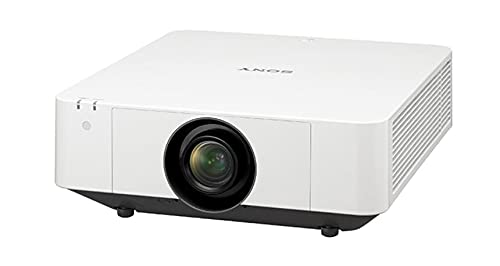
Sony VPL FHZ58
6.6/10

Overall score

Score
6.6/ 10
✕
What it is
An overall evaluation of the projector's quality, based on technical analyses and user reviews.
When it matters
When you need a quick reference to identify the best projectors on the market.
Score distribution
â–¼
<55-66-77-88-99-10
Score components

90%

6.6

Technical score

10%

?

User score

â–²Better than 52% of projectors
4.9

Value for money

Value for money
4.9/ 10
✕
What it is
An indicator that combines the projector's overall rating with its cost.
When it matters
When you are looking for a projector with a good balance between quality and price.
Score distribution
â–¼
<55-66-77-88-99-10
Score components

70%

6.6

Overall score

30%

1.0

Price

â–¼Worse than 94%
6.6

Technical score

Technical score
6.6/ 10
✕
What it is
An assessment of technical performance for products in the Projectors category across these key areas: Image Quality, Projection & Lens, HDMI & Gaming, Connectivity, Audio & Features, Design & Power.
When it matters
When you want to compare projectors based on technical performance and available features.
Score distribution
â–¼
<55-66-77-88-99-10
Score components

42%

7.6

Image Quality

22%

6.5

Projection & Lens

12%

5.9

HDMI & Gaming

10%

5.0

Audio & Features

8%

4.4

Connectivity

6%

7.9

Design & Power

â–²Better than 56%
?

User score

User score
8.0/ 10
✕
What it is
A rating that combines user reviews and the total number of reviews received by the projector.
When it matters
When you want to know how a projector performs in real use and how reliable it remains over time according to user feedback.
Score distribution
â–¼
<55-66-77-88-99-10
Score components

70%

?

User ratings

30%

?

Number of reviews

  • sony-vpl-fhz58
sony-vpl-fhz58
Where to buy
*As an Amazon Associate, we earn from qualifying purchases.
Best rankings
Available: ranking among products currently available (including other versions of this product).All: ranking among all products in the database.
Loading...
Loading category ranking...

Technical Specifications of projector Sony VPL FHZ58

Technical score
Technical score
6.6/ 10
✕
What it is
An assessment of technical performance for products in the Projectors category across these key areas: Image Quality, Projection & Lens, HDMI & Gaming, Connectivity, Audio & Features, Design & Power.
When it matters
When you want to compare projectors based on technical performance and available features.
Score distribution
â–¼
<55-66-77-88-99-10
Score components:

42%

7.6

Image Quality

22%

6.5

Projection & Lens

12%

5.9

HDMI & Gaming

10%

5.0

Audio & Features

8%

4.4

Connectivity

6%

7.9

Design & Power

6.6
User score
User score
8.0/ 10
✕
What it is
A rating that combines user reviews and the total number of reviews received by the projector.
When it matters
When you want to know how a projector performs in real use and how reliable it remains over time according to user feedback.
Score distribution
â–¼
<55-66-77-88-99-10
Score components

70%

?

User ratings

30%

?

Number of reviews

?
Popularity
Popularity
1.0/ 10
✕
What it is
An indicator based on the number of reviews received by the projector.
When it matters
When you prefer to buy a product chosen and reviewed by many other consumers.
Score distribution
â–¼
<55-66-77-88-99-10
Popularity:
Sony VPL FHZ58 has a popularity score of 1 point, which is lower than 64.5% of projectors.
1.0
Value for money
Value for money
4.9/ 10
✕
What it is
An indicator that combines the projector's overall rating with its cost.
When it matters
When you are looking for a projector with a good balance between quality and price.
Score distribution
â–¼
<55-66-77-88-99-10
Score components:

70%

6.6

Overall score

30%

1.0

Price

4.9
ANSI lumens
4,200
This projector reaches 4,200 ANSI lumens, brighter than 91.2% of projectors and equal to 0.4% of projectors.
Contrast ratio
500,000:1
This projector has a contrast ratio of 500000:1, higher than 81.6% of projectors and equal to 1.7% of projectors.
Dynamic contrast ratio.
Native panel resolution
1920x1200
This projector uses a native resolution of 1920x1200, higher than 85.9% of projectors and equal to 3% of projectors.
Output Resolution
1920x1200
This projector supports output resolution up to 1920x1200, higher than 66% of projectors and equal to 3% of projectors.
Projection technology
3LCD
Show more
Throw ratio
1.39-2.23:1
Min throw distance
1.02 m
This projector needs a minimum throw distance of 1.02 m, shorter than 50.1% of projectors and equal to 1% of projectors.
Max projection size
600 inch
This projector supports projection sizes up to 600 inch, larger than 98.8% of projectors and equal to 1% of projectors.
Zoom ratio
1.6
This projector offers a zoom ratio of 1.6, wider than 58.4% of projectors and equal to 18.6% of projectors.
Motorized zoom
yes
This projector has motorized zoom. 83.8% of projectors have motorized zoom.
Show more
Input lag
?
Auto low latency mode (ALLM)
no
This projector does not support ALLM. 17.2% of projectors support ALLM.
Variable refresh rate (VRR)
no
This projector does not support VRR. 1.6% of projectors support VRR.
HDMI version
1.4
This projector supports HDMI 1.4, older than 54.8% of projectors and equal to 34% of projectors.
Max HDMI bandwidth
?
Show more
N. of HDMI ports
1
This projector has 1 HDMI port/s, fewer than 55.1% of projectors and equal to 41.6% of projectors.
Wi-Fi connectivity
no
This projector does not support Wi-Fi. 52.9% of projectors support Wi-Fi.
Wi-Fi version
N/A
Bluetooth connectivity
no
This projector does not support Bluetooth. 50.5% of projectors support Bluetooth.
Bluetooth version
N/A
Show more
Smart TV features
no
This projector does not have smart TV features. 43.8% of projectors have smart TV features.
Operating system
none
Android OS
no
This projector does not run Android OS. 18.8% of projectors run Android OS.
Dedicated smartphone app
no
This projector does not come with a dedicated smartphone app. 35.2% of projectors come with a dedicated smartphone app.
Remote control
yes
This projector includes a remote control. 1.6% of projectors include a remote control.
Show more
Light source type
laser
This projector uses laser light source technology, more advanced than 74% of projectors and equal to 26% of projectors.
Laser diode.
Laser Light Source
yes
This projector uses a laser light source. 72% of projectors use a laser light source.
Z-Phosphor laser.
Lamp life
20,000 hours
This projector offers lamp life of 20,000 hours, shorter than 34.4% of projectors and equal to 27.6% of projectors.
Laser light source life.
Lamp life (eco mode)
20,000 hours
This projector offers eco-mode lamp life of 20,000 hours, shorter than 36.3% of projectors and equal to 19% of projectors.
Eco mode rating.
Operating power consumption
100 W
This projector uses 100 W of power, less than 71.2% of projectors and equal to 3.3% of projectors.
Show more

Sony VPL FHZ58 vs the average projector

246810TotalImage QualityProjection & LensHDMI & GamingConnectivityAudio & FeaturesDesign & Power
  • 90.9% brighter image
    This projector has higher ANSI lumens than the average projector (4,200 vs 2,200). The average projector has 2,200 ANSI lumens.
    4,200 vs 2,200
  • Higher contrast ratio
    This projector has a higher contrast ratio than the average projector (500000:1 vs 10000:1). The average projector has 10000:1 of contrast ratio.
    Dynamic contrast ratio.
    500,000:1 vs 10,000:1
  • High native resolution
    This projector has a higher native panel resolution than the average projector (1920x1200 vs 1920x1080). The average projector has a native panel resolution of 1920x1080.
    1920x1200 vs 1920x1080
  • 353.5 inch larger image size
    This projector has a higher projection size than the average projector (600 inch vs 246.5 inch). The average projector has 246.5 inch of projection size.
    600 inch vs 246.5 inch
  • Higher output resolution
    This projector supports a higher output resolution than the average projector (1920x1200 vs 1920x1080). The average projector outputs at 1920x1080 resolution.
    1920x1200 vs 1920x1080
  • Has motorized zoom
    This projector has motorized zoom, while the average projector does not. 16.3% of projectors have motorized zoom.
  • 2 more RJ45 ports
    This projector has more RJ45 ports than the average projector (2 vs 0). The average projector has 0 RJ45 ports.
    LAN and HDBaseT ports.
    2 vs 0
  • Advanced focus control
    This projector offers Advanced focus control than the average projector (motorized vs manual). The average projector uses manual focus control.
    motorized vs manual
  • 90.9% brighter image
    This projector has higher ANSI lumens than the average projector (4,200 vs 2,200). The average projector has 2,200 ANSI lumens.
    4,200 vs 2,200
  • Higher contrast ratio
    This projector has a higher contrast ratio than the average projector (500000:1 vs 10000:1). The average projector has 10000:1 of contrast ratio.
    Dynamic contrast ratio.
    500,000:1 vs 10,000:1
  • High native resolution
    This projector has a higher native panel resolution than the average projector (1920x1200 vs 1920x1080). The average projector has a native panel resolution of 1920x1080.
    1920x1200 vs 1920x1080
  • Higher output resolution
    This projector supports a higher output resolution than the average projector (1920x1200 vs 1920x1080). The average projector outputs at 1920x1080 resolution.
    1920x1200 vs 1920x1080
  • 353.5 inch larger image size
    This projector has a higher projection size than the average projector (600 inch vs 246.5 inch). The average projector has 246.5 inch of projection size.
    600 inch vs 246.5 inch
  • Has motorized zoom
    This projector has motorized zoom, while the average projector does not. 16.3% of projectors have motorized zoom.
  • Advanced focus control
    This projector offers Advanced focus control than the average projector (motorized vs manual). The average projector uses manual focus control.
    motorized vs manual
  • 0.3 2x wider zoom range
    This projector has a higher zoom ratio than the average projector (1.6 vs 1.3). The average projector has 1.3 of zoom ratio.
    1.6 vs 1.3
  • Motorized focus
    This projector supports motorized focus, while the average projector does not. 47.2% of projectors support motorized focus.
  • 2 % more horizontal lens shift
    This projector has more horizontal lens shift than the average projector (32 % vs 30 %). The average projector has 30 % horizontal lens shift.
    32 % vs 30 %
  • 2 more RJ45 ports
    This projector has more RJ45 ports than the average projector (2 vs 0). The average projector has 0 RJ45 ports.
    LAN and HDBaseT ports.
    2 vs 0
  • Includes DVI
    This projector includes DVI input, while the average projector does not. 6% of projectors include DVI input.
    DVI-D 24-pin input.
  • Includes VGA
    This projector includes VGA input, while the average projector does not. 45.3% of projectors include VGA input.
  • 1 more audio input ports
    This projector has more audio input ports than the average projector (1 vs 0). The average projector has 0 audio input ports.
    1 vs 0
  • Uses laser light source
    This projector uses a laser light source, while the average projector does not. 28.1% of projectors use a laser light source.
    Z-Phosphor laser.
  • 2 dB quieter operation
    This projector has a lower audible noise than the average projector (28 dB vs 30 dB). The average projector has 30 dB of audible noise.
    28 dB vs 30 dB
  • 135 W lower power use
    This projector uses less power than the average projector (100 W vs 235 W). The average projector uses 235 W of power.
    100 W vs 235 W
  • Limited HDMI format
    This projector supports a less capable max HDMI input format than the average projector (1080p/60Hz vs 4K/120Hz). The average projector supports a max HDMI input format of 4K/120Hz.
    1080p/60Hz vs 4K/120Hz
  • No HDR10 support
    This projector does not support HDR10, while the average projector does. 56.5% of projectors support HDR10.
  • 2 bit lower color depth
    This projector has a lower color depth than the average projector (8 bit vs 10 bit). The average projector has 10 bit of color depth.
    8 bit vs 10 bit
  • 1 fewer HDMI ports
    This projector has fewer HDMI ports than the average projector (1 vs 2). The average projector has 2 HDMI ports.
    1 vs 2
  • 55 % less vertical lens shift
    This projector has fewer vertical lens shift than the average projector (5 % vs 60 %). The average projector has 60 % vertical lens shift.
    5 % vs 60 %
  • No Wi-Fi support
    This projector does not support Wi-Fi, while the average projector does. 52.9% of projectors support Wi-Fi.
  • No Bluetooth support
    This projector does not support Bluetooth, while the average projector does. 50.5% of projectors support Bluetooth.
  • Older HDMI version
    This projector has Old HDMI standard than the average projector (1.4 vs 2). The average projector supports HDMI 2.0.
    1.4 vs 2.0
  • 31.5% worse value for money
    Sony VPL FHZ58 has a lower value-for-money score than the average projector (4.95 vs 6.5).
    4.95 vs 6.51
  • 3.48x more expensive
    Sony VPL FHZ58 is more expensive than the average projector (£2,680 vs £770).
    £2,680 vs £770
  • 4.87x less popular
    Sony VPL FHZ58 has a lower popularity than the average projector (1 vs 4.9).
    1 vs 4.87
  • No HDR10 support
    This projector does not support HDR10, while the average projector does. 56.5% of projectors support HDR10.
  • 2 bit lower color depth
    This projector has a lower color depth than the average projector (8 bit vs 10 bit). The average projector has 10 bit of color depth.
    8 bit vs 10 bit
  • No 3D support
    This projector does not support 3D playback, while the average projector does. 55% of projectors support 3D playback.
  • No 3D glasses support
    This projector does not support 3D glasses, while the average projector does. 55.1% of projectors support 3D glasses.
  • 55 % less vertical lens shift
    This projector has fewer vertical lens shift than the average projector (5 % vs 60 %). The average projector has 60 % vertical lens shift.
    5 % vs 60 %
  • Limited HDMI format
    This projector supports a less capable max HDMI input format than the average projector (1080p/60Hz vs 4K/120Hz). The average projector supports a max HDMI input format of 4K/120Hz.
    1080p/60Hz vs 4K/120Hz
  • Older HDMI version
    This projector has Old HDMI standard than the average projector (1.4 vs 2). The average projector supports HDMI 2.0.
    1.4 vs 2.0
  • Old HDCP version
    This projector has Old HDCP version than the average projector (1.4 vs 2.2). The average projector supports HDCP 2.2.
    1.4 vs 2.2
  • 1 fewer HDMI ports
    This projector has fewer HDMI ports than the average projector (1 vs 2). The average projector has 2 HDMI ports.
    1 vs 2
  • No Wi-Fi support
    This projector does not support Wi-Fi, while the average projector does. 52.9% of projectors support Wi-Fi.
  • No Bluetooth support
    This projector does not support Bluetooth, while the average projector does. 50.5% of projectors support Bluetooth.
  • No built-in speaker
    This projector drawback: no built-in speaker. 85.3% of projectors have a built-in speaker.
  • No sleep timer
    This projector does not have a sleep timer, while the average projector does. 80.6% of projectors have a sleep timer.
  • 5.16x heavier weight
    This projector is heavier than the average projector (16 kg vs 3.1 kg). The average projector weighs 3.1 kg.
    16 kg vs 3.1 kg
  • 160 mm wider body
    This projector is wider than the average projector (460 mm vs 300 mm). The average projector has a width of 300 mm.
    460 mm vs 300 mm

Third-party reviews

What customers like about Sony VPL FHZ58

  • High brightness of 4,200 lumens suitable for well-lit rooms
  • Long-lasting laser light source rated for up to 20,000 hours of use
  • Virtually maintenance-free operation with an automated filter cleaning system
  • Excellent installation flexibility with wide powered lens shift and 360-degree mounting
  • Quiet operation at approximately 28 decibels in certain modes
  • Advanced image processing features like Reality Creation and Contrast Enhancer for improved clarity

What customers don't like about Sony VPL FHZ58

  • Lacks built-in Wi-Fi connectivity
  • Black levels and shadow detail may be limited compared to dedicated home theatre models
  • Large, professional-grade chassis may be too bulky for standard domestic environments
  • Professional pricing can be a significant investment for those with tight budgets
  • Certain advanced picture modes or gamma settings may only be available through specific inputs

Verdict

The Sony VPL-FHZ58 is a high-performance 3LCD laser projector featuring a Z-Phosphor light source that delivers 4,200 lumens of brightness and a native WUXGA (1920 x 1200) resolution. Key characteristics include a 20,000-hour maintenance-free light source, Reality Creation technology for enhanced image clarity, and a high contrast ratio of 500,000:1. Its primary advantages are flexible installation with 360-degree mounting, powered lens shift, and HDBaseT support for simplified connectivity over long distances. However, potential drawbacks include its significant weight of approximately 16 kg and the lack of built-in 3D support compared to newer models in the same series.

Compare Sony VPL FHZ58 with other products in the Projectors category

1Product to compare no. 1
VS
2Product to compare no. 2
VS
3Product to compare no. 3 (optional)

Graphic comparison of Sony VPL FHZ58 and other products in the Projectors category

No results found