
Are Trust keyboards good?
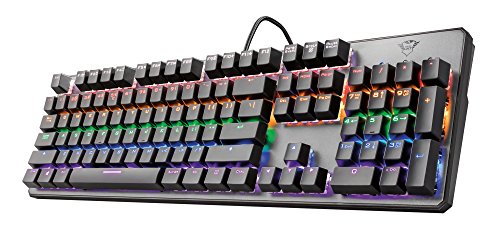
Trust keyboards are good for budget-focused buyers only, but the current live category slice is too small for a meaningful brand ranking: it includes just one Trust keyboard, which currently scores 7.36 overall and 9.00 in user ratings.
Trust's main strengths are its accessible pricing, straightforward gaming identity, and a simple spec profile that is easy for mainstream buyers to understand. In the current live category slice, that mostly means one basic mechanical RGB gaming board rather than a broad keyboard lineup.
The main tradeoff is how narrow the brand is here. There is no meaningful layout spread, no wireless variety, no Mac-oriented range, and no real QMK or VIA flexibility in the current slice. Compared with larger keyboard brands, Trust offers much less room to optimize around size, ecosystem, or switch preference.
Trust keyboards make the most sense for buyers who want a basic lower-cost gaming-style board and who are comfortable choosing from a very limited live lineup.
What are the main advantages of Trust keyboards?
The main advantages of Trust keyboards are as follows:
- Lower entry pricing: Trust is relevant here mainly as a more affordable gaming-style option, which can make the brand interesting for buyers who want mechanical gaming hardware without paying premium-brand prices.
- Straightforward gaming identity: The current Trust keyboard slice is clearly gaming-oriented, which keeps the decision simple for buyers who already know they want a mainstream RGB gaming board.
- Familiar full-size format: The live Trust model here uses a practical full-size layout, which is easy to adopt for buyers who do not want to relearn a smaller or more experimental format.
- Mechanical positioning: Even though the brand slice is thin, the current model still gives buyers a mechanical-keyboard path rather than only office-style membrane hardware.
- Simple buying logic: Because the lineup is so small, buyers do not need to sort through a large matrix of overlapping Trust models to understand what the brand currently represents in this category.
What are the main disadvantages of Trust keyboards?
The main disadvantages of Trust keyboards are as follows:
- Extremely narrow lineup: Trust currently has only one live keyboard product in this category, which makes the brand much less useful if you want real choice across sizes, prices, or feature sets.
- Weak ecosystem depth: Compared with larger keyboard brands, Trust offers far less flexibility in wireless options, premium tiers, portability, or cross-platform use.
- No real customization depth: The current Trust slice has no meaningful QMK or VIA support and no enthusiast-grade firmware appeal for buyers who want deeper remapping or layered control.
- Gaming-only skew: Trust is represented here only as a gaming-style mechanical keyboard, which makes the brand much less relevant for office-first, ergonomic, or portable productivity buyers.
- Lower ceiling: If you want higher-end acoustics, stronger switch variety, or a broader path into enthusiast mechanical keyboards, the current Trust offering is too limited to cover those needs.

Who makes Trust keyboards?
Trust keyboards are made by Trust International, a Dutch consumer electronics and computer accessories company founded in 1983. The brand is known more broadly for affordable peripherals and everyday consumer tech accessories rather than for operating as a premium enthusiast keyboard specialist.
For keyboards, Trust's identity is generally tied to accessible mainstream hardware and entry-level gaming accessories rather than to deep mechanical-keyboard communities or high-end productivity ecosystems. That positioning fits the current live category slice, which is represented by one straightforward gaming-oriented model rather than by a large layered lineup.
Trust's keyboard strategy therefore looks more like practical budget peripheral coverage than like a broad platform with many specialist options. That makes the brand attractive for buyers who want a simpler lower-cost accessory, but less compelling for buyers who expect serious mechanical depth or long-term ecosystem breadth.
What are the main Trust keyboard series?
The main Trust keyboard series are as follows:
- GXT gaming keyboards: This is the part of Trust's keyboard identity most clearly visible here, focused on entry-level or mainstream gaming accessories rather than on office-first keyboards or enthusiast custom boards.
- Budget consumer keyboards more broadly: Trust is also associated with lower-cost everyday peripherals, but in this category the live slice is currently centered on the gaming side rather than on a broad office lineup.
- Narrow category-specific offerings: In practice, Trust's keyboard presence here is small enough that the brand is better understood as a limited accessory line than as a deep multi-series keyboard ecosystem.
How much do Trust keyboards cost?
Trust keyboards currently sit in the lower-priced gaming range in this category. The live Trust keyboard here is around £45, which positions the brand far below premium mechanical gaming keyboards and much closer to the affordable end of the market.
That means Trust is mainly judged on whether it delivers decent gaming-style value at a low price rather than on whether it offers premium build depth or advanced enthusiast features. Paying more is not really the Trust story here; the brand's current keyboard identity in this category is about accessible entry-level gaming value.
How do Trust keyboards compare with Logitech models?
Trust keyboards usually compare with Logitech models as the much narrower and lower-cost option, while Logitech is the far broader and more mature keyboard brand overall. Trust is relevant here mainly if you want a cheaper gaming-style keyboard and are comfortable with a very limited lineup, while Logitech covers a much wider spread across office, wireless, gaming, and premium mainstream categories.
The practical difference is that Logitech gives buyers real choice across layouts, wireless modes, software depth, and price tiers, while Trust currently amounts to one affordable wired full-size mechanical RGB gaming board in this category. In practice, Trust makes more sense for budget-first buyers, while Logitech makes more sense for buyers who want flexibility and a deeper ecosystem.
What should you consider while choosing the best Trust keyboard?
You should consider the following factors while choosing the best Trust keyboard:
- Budget: Trust makes the most sense when you want to keep spending low and still get a gaming-style mechanical keyboard rather than moving into higher-priced mainstream or enthusiast brands.
- Need for choice: The current Trust lineup here is extremely narrow, so be honest about whether one basic full-size gaming model is enough for your needs.
- Layout preference: Trust is represented here by a full-size board, which is fine if you want a numpad and conventional layout but less useful if you want TKL, 75%, or smaller options.
- Gaming versus office use: The live Trust slice is gaming-oriented, so it makes more sense for budget gaming than for productivity-first, ergonomic, or portable office setups.
- Feature expectations: If you expect wireless modes, Mac friendliness, QMK or VIA support, or broader switch choice, Trust is usually not the right brand in this category.
- Long-term upgrade path: Buyers who expect to stay within one brand and move up through multiple stronger keyboard tiers will usually find more room to grow with a broader keyboard brand.
- Value threshold: Trust is most compelling only when the low price clearly matters more than ecosystem breadth, deeper customization, or premium typing refinement.