Scored using Headphones Methodology v1.0
Headphones Methodology v1.0
Mathematical & Unbiased Scoring
Products in this category are scored under Frontum Headphones Methodology v1.0: technical specifications plus authentic consumer ratings, with 0% commercial bias.
Explore Headphones Methodology v1.0

Shure SRH1440 Review | 93 Data compared

Avg. price:~£320Form factor:over-earConnectivity:wiredBattery life:N/A hoursActive noise cancellation (ANC):no

Shure SRH1440 Review: Compare 93 technical specifications and user reviews to see how this product ranks in the Headphones category and whether it is worth buying.
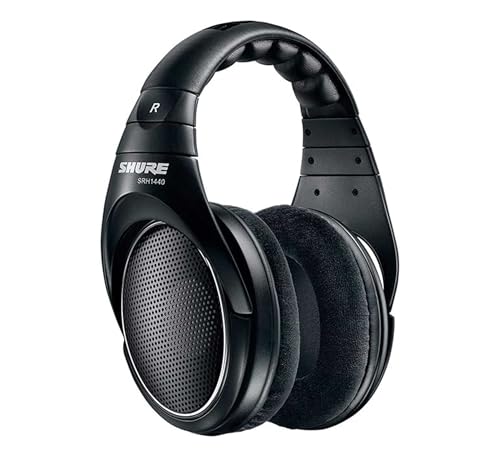
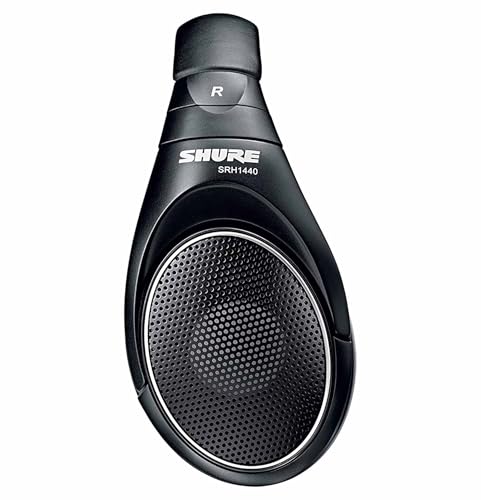
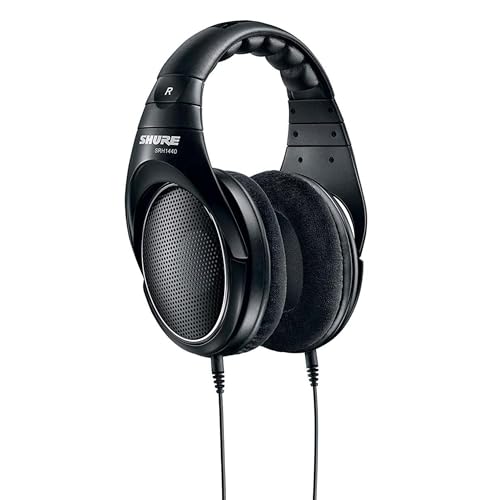
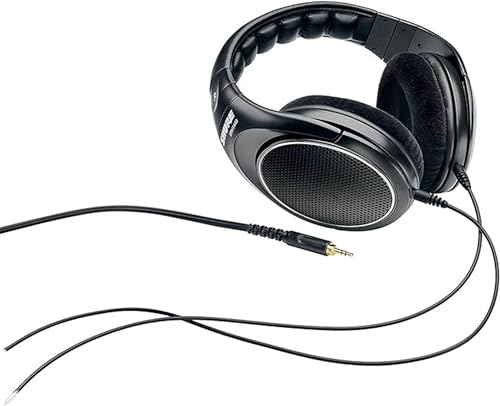
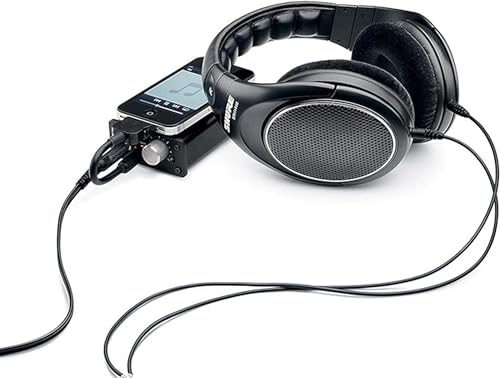
Shure SRH1440
5.4/10

Overall score

Score
5.4/ 10
✕
What it is
An overall evaluation of the headphones' quality, based on technical analyses and user reviews.
When it matters
When you need a quick reference to identify the best headphones on the market.
Score distribution
â–¼
<55-66-77-88-99-10
Score components

80%

4.9

Technical score

20%

7.5

User score

â–¼Worse than 90% of headphones
6.4

Value for money

Value for money
6.4/ 10
✕
What it is
An indicator that combines the headphones' overall rating with their cost.
When it matters
When you are looking for headphones that offer a strong balance of performance, features, and price.
Score distribution
â–¼
<55-66-77-88-99-10
Score components

70%

5.4

Overall score

30%

8.8

Price

â–¼Worse than 93%
4.9

Technical score

Technical score
4.9/ 10
✕
What it is
An assessment of technical performance for products in the Headphones category across these key areas: Sound, Calls & Controls, Connectivity, Features, Battery, Design.
When it matters
When you want to compare headphones based on technical performance and available features.
Score distribution
â–¼
<55-66-77-88-99-10
Score components

52%

5.0

Sound

20%

5.0

Features

10%

5.3

Design

8%

4.6

Connectivity

6%

4.0

Battery

4%

3.8

Calls & Controls

â–¼Worse than 95%
7.5

User score

User score
7.5/ 10
✕
What it is
A rating that combines user reviews and the total number of reviews received by the headphones.
When it matters
When you want to understand how headphones perform in real listening and how reliable they are in terms of comfort, audio quality, battery life, and long-term use.
Score distribution
â–¼
<55-66-77-88-99-10
Score components

70%

8.4

User ratings

30%

5.6

Number of reviews

Based on ratings from across the web.
â–¼Worse than 73%
  • shure-srh1440
  • shure-srh1440
  • shure-srh1440
  • shure-srh1440
  • shure-srh1440
  • shure-srh1440
  • shure-srh1440
  • shure-srh1440
  • shure-srh1440
shure-srh1440
shure-srh1440
shure-srh1440
shure-srh1440
shure-srh1440
shure-srh1440
shure-srh1440
shure-srh1440
shure-srh1440
Where to buy
*As an Amazon Associate, we earn from qualifying purchases.
Best rankings
Available: ranking among products currently available (including other versions of this product).All: ranking among all products in the database.
Loading...
Loading category ranking...

Technical Specifications of pair of headphones Shure SRH1440

Technical score
Technical score
4.9/ 10
✕
What it is
An assessment of technical performance for products in the Headphones category across these key areas: Sound, Calls & Controls, Connectivity, Features, Battery, Design.
When it matters
When you want to compare headphones based on technical performance and available features.
Score distribution
â–¼
<55-66-77-88-99-10
Score components:

52%

5.0

Sound

20%

5.0

Features

10%

5.3

Design

8%

4.6

Connectivity

6%

4.0

Battery

4%

3.8

Calls & Controls

4.9
User score
User score
7.5/ 10
✕
What it is
A rating that combines user reviews and the total number of reviews received by the headphones.
When it matters
When you want to understand how headphones perform in real listening and how reliable they are in terms of comfort, audio quality, battery life, and long-term use.
Score distribution
â–¼
<55-66-77-88-99-10
Score components

70%

8.4

User ratings

30%

5.6

Number of reviews

Based on ratings from across the web.
7.5
Popularity
Popularity
5.6/ 10
✕
What it is
An indicator based on the number of reviews received by the headphones.
When it matters
When you prefer headphones that have already been chosen and reviewed by many other users.
Score distribution
â–¼
<55-66-77-88-99-10
Popularity:
Shure SRH1440 has a popularity score of 5.6 points, which is lower than that of 52.4% of products in this category.
5.6
Value for money
Value for money
6.4/ 10
✕
What it is
An indicator that combines the headphones' overall rating with their cost.
When it matters
When you are looking for headphones that offer a strong balance of performance, features, and price.
Score distribution
â–¼
<55-66-77-88-99-10
Score components:

70%

5.4

Overall score

30%

8.8

Price

6.4
Active noise cancellation (ANC)
no
This pair of headphones does not support active noise cancellation. 27.5% of headphones support active noise cancellation.
Driver type
dynamic
Driver size
40 mm
This pair of headphones uses a driver size of 40 mm, larger driver size than 28.6% of headphones and equal to 53.3% of headphones.
Number of drivers
1
This pair of headphones uses 1 drivers, fewer drivers than 4% of headphones and equal to 96% of headphones.
Lowest frequency
15 Hz
This pair of headphones reaches a lowest frequency of 15 Hz, lower lowest frequency than 58.3% of headphones and equal to 5.8% of headphones.
Show more
Noise-canceling microphone
no
This pair of headphones does not support a noise-canceling microphone. 39% of headphones support noise-canceling microphones.
Can be used as a headset
no
This pair of headphones is not headset-ready, while 15.1% is. 84.9% of headphones can be used as headsets.
Number of microphones
0
This pair of headphones has 0 microphones, fewer microphones than 73.2% of headphones and equal to 26.9% of headphones.
Boom microphone
no
This pair of headphones does not include a boom microphone. 13.5% of headphones have a boom microphone.
Microphone SNR
N/A
Show more
Connectivity
wired
This pair of headphones supports wired connectivity, less flexible connectivity than 49.2% of headphones and equal to 50.8% of headphones.
Bluetooth version
N/A
Maximum Bluetooth range
N/A
Audio latency
N/A
Multipoint support
no
This pair of headphones does not support multipoint. 30.6% of headphones support multipoint.
Show more
Ambient sound mode
no
This pair of headphones does not offer ambient sound mode. 24.9% of headphones support ambient sound mode.
EQ support
yes
This pair of headphones supports EQ customization. 76.8% of headphones support EQ.
Companion app
no
This pair of headphones does not work with a companion app. 21.6% of headphones support companion apps.
Adjustable ANC levels
N/A
Voice assistant support
no
This pair of headphones does not support voice assistants. 60.9% of headphones support voice assistants.
Show more
Battery life
N/A
Battery life with ANC
N/A
Charging time
N/A
Quick charge
no
This pair of headphones does not support quick charging. 33.1% of headphones support quick charge.
Battery capacity
N/A
Show more
Brand name
Shure
Form factor
over-ear
Weight
343 g
This pair of headphones weighs 343 g, heavier than 90.8% of headphones.
Acoustic design
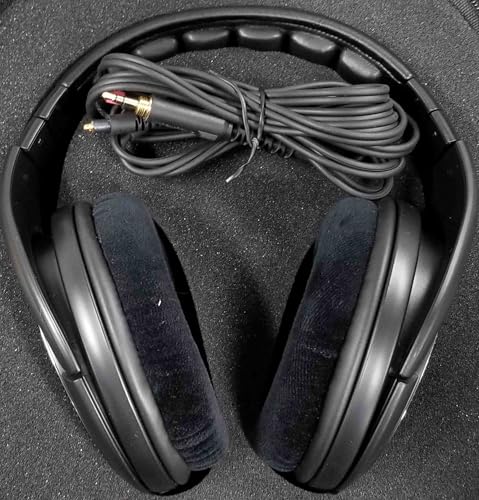
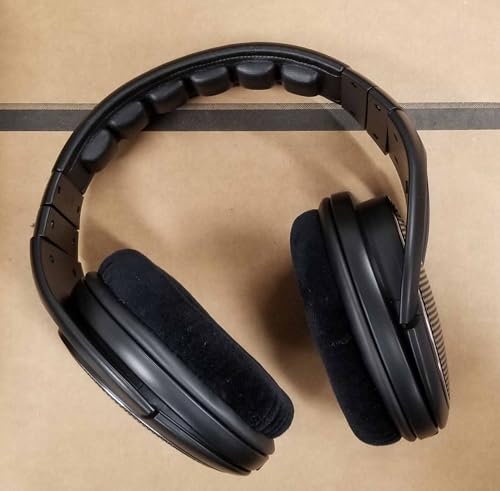
open-back
Clamp force
8
This pair of headphones has a clamp force of 8, higher clamp force than 97.9% of headphones and equal to 0.7% of headphones.
Show more

Shure SRH1440 vs the average pair of headphones

246810TotalDesignSoundBatteryConnectivityCalls & ControlsFeatures
  • EQ customization
    This pair of headphones supports EQ customization, the average pair of headphones does not. 23.2% of headphones support EQ.
  • Direct 3.5 mm plug
    This pair of headphones includes a direct 3.5 mm plug, the average pair of headphones does not. 39.8% of headphones have a 3.5 mm male connector.
  • 0.2 % lower distortion
    This pair of headphones has a lower total harmonic distortion than the average pair of headphones (0.1 % vs 0.3 %). The average headphones have total harmonic distortion of 0.3 %.
    0.1 % vs 0.3 %
  • 7,000 Hz higher treble extension
    This pair of headphones has a higher highest frequency than the average pair of headphones (27,000 Hz vs 20,000 Hz). The average headphones reach a highest frequency of 20,000 Hz.
    27,000 Hz vs 20,000 Hz
  • 0.9 m longer cable length
    This pair of headphones offers a more useful cable length than the average pair of headphones (2.1 m vs 1.2 m). The average headphones have a cable length of 1.2 m.
    2.1 m vs 1.2 m
  • Open-back design
    This pair of headphones uses an open-back design, while the average pair of headphones does not. 9.1% of headphones have an open-back design.
  • 3 Hz lower bass extension
    This pair of headphones has a lower lowest frequency than the average pair of headphones (15 Hz vs 18 Hz). The average headphones reach a lowest frequency of 18 Hz.
    15 Hz vs 18 Hz
  • 10x higher input power handling
    This pair of headphones has a higher max input power than the average pair of headphones (1,000 mW vs 100 mW). The average headphones handle max input power of 100 mW.
    1,000 mW vs 100 mW
  • 0.9 m longer cable length
    This pair of headphones offers a more useful cable length than the average pair of headphones (2.1 m vs 1.2 m). The average headphones have a cable length of 1.2 m.
    2.1 m vs 1.2 m
  • Open-back design
    This pair of headphones uses an open-back design, while the average pair of headphones does not. 9.1% of headphones have an open-back design.
  • 0.2 % lower distortion
    This pair of headphones has a lower total harmonic distortion than the average pair of headphones (0.1 % vs 0.3 %). The average headphones have total harmonic distortion of 0.3 %.
    0.1 % vs 0.3 %
  • 7,000 Hz higher treble extension
    This pair of headphones has a higher highest frequency than the average pair of headphones (27,000 Hz vs 20,000 Hz). The average headphones reach a highest frequency of 20,000 Hz.
    27,000 Hz vs 20,000 Hz
  • 3 Hz lower bass extension
    This pair of headphones has a lower lowest frequency than the average pair of headphones (15 Hz vs 18 Hz). The average headphones reach a lowest frequency of 18 Hz.
    15 Hz vs 18 Hz
  • 10x higher input power handling
    This pair of headphones has a higher max input power than the average pair of headphones (1,000 mW vs 100 mW). The average headphones handle max input power of 100 mW.
    1,000 mW vs 100 mW
  • 20 dB higher max SPL
    This pair of headphones has a higher max SPL than the average pair of headphones (130 dB vs 110 dB). The average headphones reach a max SPL of 110 dB.
    130 dB vs 110 dB
  • Direct 3.5 mm plug
    This pair of headphones includes a direct 3.5 mm plug, the average pair of headphones does not. 39.8% of headphones have a 3.5 mm male connector.
  • EQ customization
    This pair of headphones supports EQ customization, the average pair of headphones does not. 23.2% of headphones support EQ.
  • No passive noise reduction
    This pair of headphones does not offer passive noise reduction, while the average pair of headphones does. 82.6% of headphones have passive noise reduction.
  • 57.3% higher weight
    This pair of headphones is heavier than the average pair of headphones (343 g vs 218 g). The average pair of headphones weighs 218 g.
    343 g vs 218 g
  • No voice assistant support
    This pair of headphones does not support voice assistants, the average pair of headphones does. 60.8% of headphones support voice assistants.
  • Not headset-ready
    This pair of headphones is not headset-ready, while the average pair of headphones is. 84.8% of headphones can be used as headsets.
  • 3.7 higher clamp force
    This pair of headphones has a higher clamp force than the average pair of headphones (8 vs 4.3). The average headphones have a clamp force of 4.3.
    8 vs 4.3
  • No battery indicator
    This pair of headphones does not show battery level clearly, while the average pair of headphones does. 56.3% of headphones have a battery level indicator.
  • 13% worse value for money
    Shure SRH1440 has worse value for money than the average pair of headphones (6.44 vs 7.3).
    6.44 vs 7.27
  • 1 fewer microphones
    This pair of headphones has fewer microphones than the average pair of headphones (0 vs 1). The average headphones have 1 microphones.
    0 vs 1
  • 13% worse value for money
    Shure SRH1440 has worse value for money than the average pair of headphones (6.44 vs 7.3).
    6.44 vs 7.27
  • 3.56x more expensive
    Shure SRH1440 is more expensive than the average pair of headphones (£320 vs £90).
    £320 vs £90
  • 6% lower user score
    User score
    7.5/ 10
    ✕
    What it is
    A rating that combines user reviews and the total number of reviews received by the headphones.
    When it matters
    When you want to understand how headphones perform in real listening and how reliable they are in terms of comfort, audio quality, battery life, and long-term use.
    Score distribution
    ▼▼
    <55-66-77-88-99-10
    Shure SRH1440
    the average pair of headphones
    Shure SRH1440 has a lower user score than the average pair of headphones (7.55 vs 8).
    7.55 vs 8
  • 57.3% higher weight
    This pair of headphones is heavier than the average pair of headphones (343 g vs 218 g). The average pair of headphones weighs 218 g.
    343 g vs 218 g
  • 3.7 higher clamp force
    This pair of headphones has a higher clamp force than the average pair of headphones (8 vs 4.3). The average headphones have a clamp force of 4.3.
    8 vs 4.3
  • Tangle-prone cable
    This pair of headphones uses a tangle-prone cable, while the average pair of headphones is easier to manage. 64.2% of headphones use a tangle-free cable.
  • 4 mm tighter earcup width
    This pair of headphones has tighter earcup width than the average pair of headphones (40 mm vs 44 mm). The average headphones offer an inner earcup width of 44 mm.
    40 mm vs 44 mm
  • No passive noise reduction
    This pair of headphones does not offer passive noise reduction, while the average pair of headphones does. 82.6% of headphones have passive noise reduction.
  • 1 dB/mW lower sensitivity
    This pair of headphones has a lower sensitivity than the average pair of headphones (101 dB/mW vs 102 dB/mW). The average headphones have sensitivity of 102 dB/mW.
    101 dB/mW vs 102 dB/mW
  • No battery indicator
    This pair of headphones does not show battery level clearly, while the average pair of headphones does. 56.3% of headphones have a battery level indicator.
  • Not headset-ready
    This pair of headphones is not headset-ready, while the average pair of headphones is. 84.8% of headphones can be used as headsets.
  • 1 fewer microphones
    This pair of headphones has fewer microphones than the average pair of headphones (0 vs 1). The average headphones have 1 microphones.
    0 vs 1
  • No voice assistant support
    This pair of headphones does not support voice assistants, the average pair of headphones does. 60.8% of headphones support voice assistants.
  • 4 older release date
    This pair of headphones was released earlier than the average pair of headphones (2012 vs 2016). The average headphones were released in 2016.
    January 2012
    2012 vs 2016

Video reviews

Hands-on testing, unboxing, and real-world video evaluations

9.0
Marco B (maurilio86)
≈ estimated
08/04/2015
Hands-on review · sound, build and amplifier needs
Verdict
Shure SRH1440 is very good value for a monitoring headphone, though it needs an amplifier and is not made for portable use.
Shop video
Shop video
Not graded
Not graded

Expert reviews

In-depth analysis and verdict from leading tech publications

uk.pcmag.com
19/04/2012
Review · Pro open-back headphones
Verdict
The Shure SRH1440 is a precise, flat-sounding pro pair for mastering and critical listening, but its leaky open back rules out public use and home recording.
trustedreviews.com
27/07/2012
Hands-on review · Open-back headphones
Verdict
The Shure SRH1440 is a revealing, comfortable open-back pair that performs near the top of its class, but it only suits quiet rooms.
theabsolutesound.com
20/11/2012
Review · Reference open-back headphones
Verdict
The Shure SRH1440 is a neutral, detailed open-back pair that works as a monitoring reference and for casual listening, though bass lovers will find it light.
cnet.com
28/06/2012
Hands-on review · Full-size open-back
Verdict
The Shure SRH1440 is a bright, detailed, very comfortable open-back pair for home listening, though it doesn't fold and its bass feels light.
majorhifi.com
03/04/2016
Hands-on review · Audiophile listening
Verdict
The Shure SRH1440 is an articulate, lifelike open-back pair that suits all-round listening, though its clamping force feels firm at first.
tapeop.com
01/06/2012
Studio review · Mixing headphones
Verdict
The Shure SRH1440 is a smooth open-back pair that adds sparkle to the highs without harshness, suiting mixing work, but it is weak in deep bass.
D
diyaudioheaven.wordpress.com
27/06/2020
Summary of the review
H
headfonia.com
20/04/2012
Summary of the review
headphonecheck.com
N/A
Review · Home listening headphones
Verdict
The Shure SRH1440 is a natural, precise home headphone that holds up against pricier models, though its bulk makes it poor for travel.
kopfhoerer.de
20/03/2012
Hands-on test · Open studio headphones
Verdict
The Shure SRH1440 is a natural-sounding open studio headphone, ideal at home on the sofa, but too heavy and leaky for travel or recording.
bonedo.de
15/05/2017
Hands-on test · Open studio headphones
Verdict
The Shure SRH1440 is a transparent, analytical open headphone with a comfortable fit, suited to mixing and mastering, though its bass feels very controlled.
delamar.de
25/04/2012
Hands-on test · Open studio headphones
Verdict
The Shure SRH1440 is a detailed, comfortable open studio headphone with controlled bass, best for mixing and mastering, though its sound is forward.
on-mag.fr
04/04/2013
Listening test · Open-back Hi-Fi
Verdict
The Shure SRH1440 is an analytical, detailed open-back pair for listeners who want precision, though its bright, incisive sound may feel aggressive to some.
on-mag.fr
28/10/2014
Listening test · Semi-pro Hi-Fi
Verdict
The Shure SRH1440 is a precise, detailed open-back pair that suits listeners who value clarity, though its bright treble can feel harsh to others.
hwready.it
20/05/2015
Hands-on review · Monitoring headphones
Verdict
The Shure SRH1440 is a detailed, monitoring-style open-back pair that suits mixing and critical listening, but it needs a good amp and gives bass little body.
F
forum.tomshw.it
08/04/2015
Summary of the review
estatica.it
08/04/2015
Listening review · Open-back headphones
Verdict
The Shure SRH1440 is an open-back pair with very detailed sound and a wide stage, best for listeners who want clarity over bass.

Third-party reviews

Based on ratings from across the web.
Reviews last updated: November 2026 · How we calculate this

What customers like about Shure SRH1440

  • Exceptional clarity and highly detailed sound profile suitable for critical listening
  • Open-back design provides a natural, airy soundstage with precise imaging
  • High comfort levels due to lightweight design, gentle earpad pressure, and premium velour pads
  • Rugged build quality intended for long-term professional and audiophile use
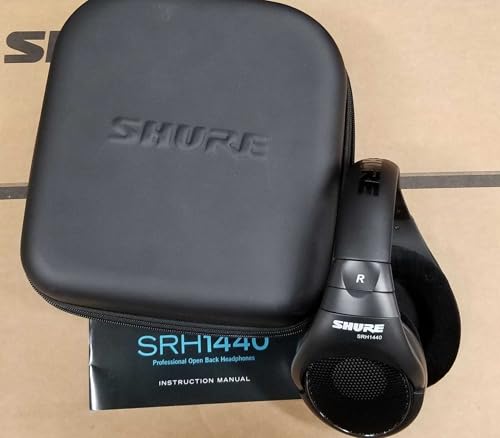
  • Well-accessorized, including a semi-rigid storage case, replacement velour pads, and two detachable cables
  • Relatively easy to drive with portable devices due to low impedance (37 Ohms)

What customers don't like about Shure SRH1440

  • Bass response is lean and lacks the impact required by 'bassheads'
  • The sound signature is bright and can become aggressive or 'shouty' at higher volumes
  • Large, bulky frame that does not fold flat, limiting portability for travel
  • Open-back design results in significant sound leakage and poor noise isolation
  • Some users noted a 'plastic feel' and occasional creaking from the hinges
  • Lack of integrated smartphone controls or a shorter cable for mobile use

Verdict

The Shure SRH1440 is a professional open-back, circumaural headphone featuring 40mm neodymium drivers, a frequency response of 15 Hz – 27 kHz, and a low impedance of 37 ohms for compatibility with portable devices. Key characteristics include its lightweight steel-frame construction, replaceable velour ear pads, and dual-exit detachable MMCX cables. Its main pros are an exceptionally natural soundscape with detailed highs and a wide stereo image suitable for critical mastering. However, notable cons include a bulky, non-folding frame and a bass response that may feel light or recessed for those seeking high-impact low-end.

Compare Shure SRH1440 with other products in the Headphones category

1Product to compare no. 1
VS
2Product to compare no. 2
VS
3Product to compare no. 3 (optional)

Graphic comparison of Shure SRH1440 and other products in the Headphones category

No results found