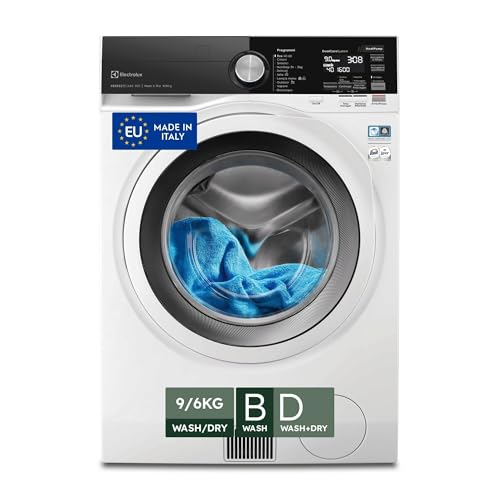
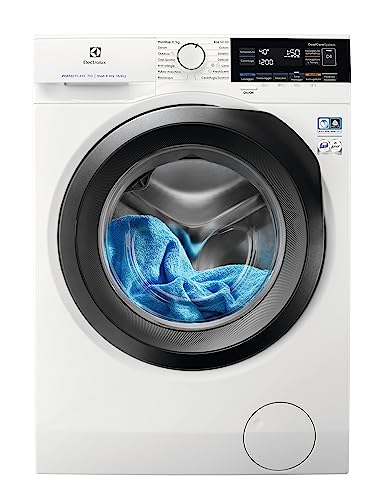
When choosing the best Electrolux tumble dryer, check the washing and drying capacity, drum volume, size, energy consumption, motor type, and available programs and features.
What is the most common type of Electrolux washer-dryers?
The most common type of Electrolux washer-dryers are those that use condensator technology. About 0% of Electrolux washer-dryers use this system, which handles the drying process through condensation. The remaining 0% use heat pump technology, which you find in high-end Electrolux models.
The following chart illustrates the distribution of drying technologies among Electrolux washer-dryers.
[pie-chart-21956821157718770]
What capacities are available for Electrolux washer-dryers?
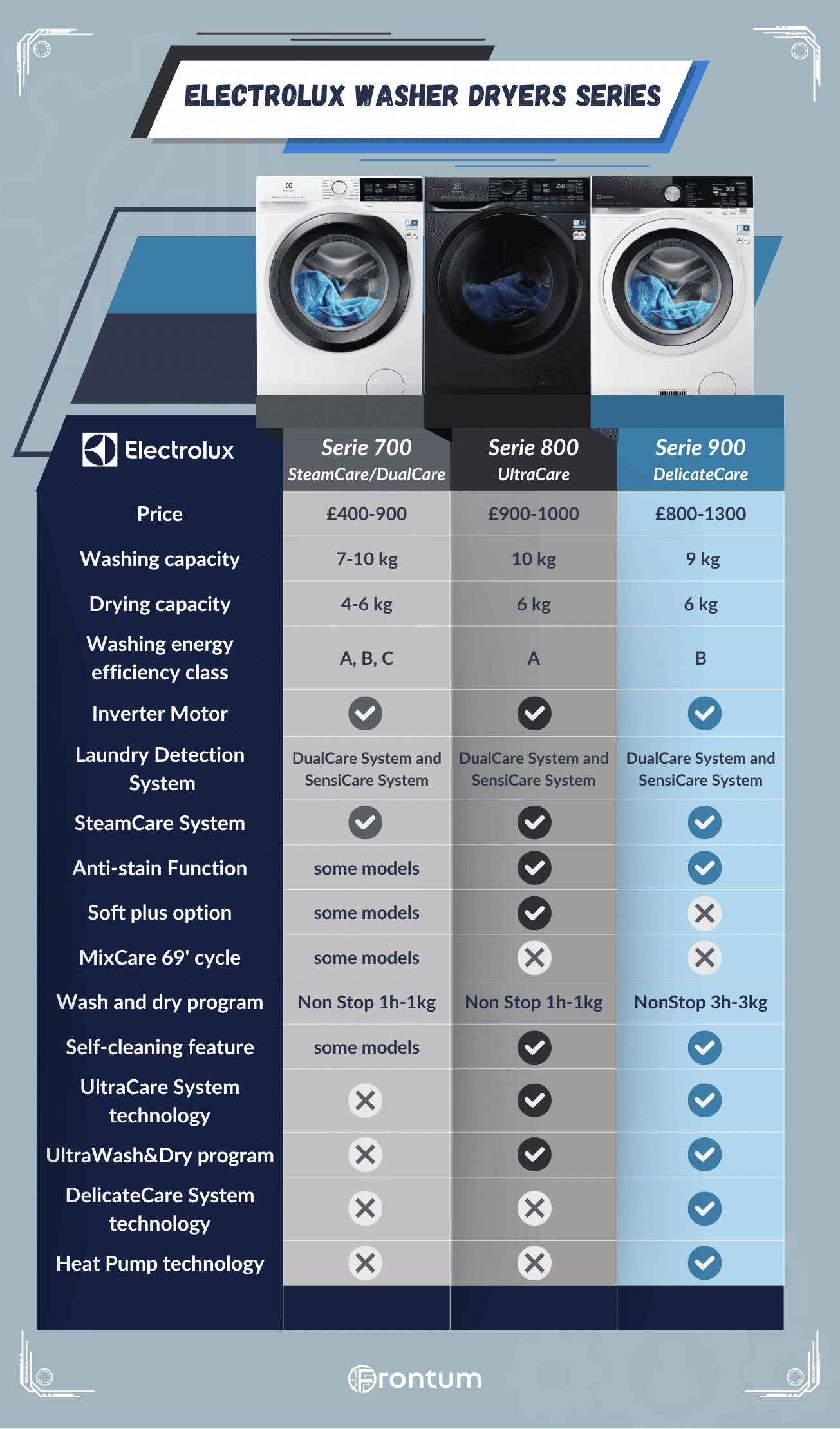
Electrolux washer-dryers come with washing capacities from 7 to 10 kg and drying capacities from 4 to 6 kg. The most common combinations are 9/6 kg and 10/6 kg, each found in around 29% of models. Most models use a drum volume of 69 L, which is 9 L more than the market average of 60 L.
Depth ranges from 54 to 64 cm, so there are no slim washer-dryers in the Electrolux range. If you want a slim model, you need to look at other brands.
Most Electrolux washer-dryers weigh about 78 kg, which is 10 kg more than the average on the market (68 kg). Smaller capacity models can weigh as little as 71 kg.
The chart below highlights how capacities vary across Electrolux washer-dryer models.
[pie-chart-21065820494418737]
How energy-efficient are Electrolux washer-dryers?
Electrolux washer-dryers are more energy-efficient than most on the market. About 50% have a washing energy efficiency class A, 33% fall into class B, and 17% into class C. You won't find Electrolux models in class D or E. In comparison, the market average shows 48% in class A, 19% in class B, 18% in class C, 12% in class D and 3% in class E.
When looking at combined energy efficiency classes (for full wash and dry cycles), most Electrolux washer-dryers fall into class D (50%) or class E (50%). None of them belong to class A, B, C or F. These numbers still beat the market, where less than 1% belong to class A, 1% to class B, 1% to class C, 42% to class D, 51% to class E and 4% to class F.
Electrolux washer-dryers consume between 49 and 63 kWh per 100 washing cycles, with an average of 51 kWh, while the market average stands at 55 kWh. For 100 combined cycles, they use between 217 and 376 kWh, with an average of 307 kWh, compared to the market average of 318 kWh.
Water consumption per washing cycle ranges from 42 to 47 litres, with an average of 46 litres, while the market average is 48 litres. For a combined cycle, Electrolux machines use between 50 and 75 litres, with an average of 70 litres, lower than the market average of 79 litres.
Washing energy efficiency classes for Electrolux washer-dryers are distributed as shown in the following chart.
[pie-chart-31669631056823526]
What is the spin-drying efficiency of Electrolux washer-dryers?
The spin-drying efficiency of Electrolux washer-dryers is usually class B. Most Electrolux models fall into class B, which places them slightly below the market average. In the overall market, 14% of washer-dryers reach class A, 85% fall into class B, and less than 1% rank as class C.
Spin-drying efficiency class closely follows the maximum spin speed. Electrolux washer-dryers usually spin at either 1400 RPM or 1600 RPM, and 67% of Electrolux models reach 1600 RPM. All models also support a minimum spin speed of 400 RPM, so you can safely wash delicate clothes that need lower-speed spinning.
How loud are Electrolux washer-dryers?
Electrolux washer-dryers are not the quietest on the market. During the spin cycle, most models reach 76 dB, which matches the market average of 75 dB. Spin noise levels in the Electrolux range fall between 70 and 76 dB. During washing, Electrolux models usually reach 51 dB, which is lower than the market average of 54 dB. During drying, they typically produce 60 dB, which is close to the market average of 59 dB.
Noise emission classes in Electrolux washer-dryers tend to fall behind the market. About 83% belong to class B and only 17% reach class A. Across the market, 38% of washer-dryers fall into class A, 31% into class B, 24% into class C and 7% into class D. So you get lower noise class performance with Electrolux compared to many other brands.
Electrolux washer-dryers rank at position #6 in the noise level classification (lowest to highest) out of 70 dB brands.
How many washing & drying programs do Electrolux washer-dryers offer?
Electrolux washer-dryers have 14 washing programs (same as the market average) and 2 drying programs (less than the market average of 4 drying programs).
The most common Electrolux washing programs are as follows:
- Eco 40-60
- Cottons
- Synthetics
- Delicates
- Wool
- FreshScent
- Anti-Allergy
- Sportswear
- Outdoor
- Denim
- Non Stop 1h 1kg
The most common Electrolux drying programs are as follows:
- Eco 40-60 + Dry Level Cupboard
- Non Stop 1h 1kg
More advanced models include extra cycles such as:
- MixCare 69' cycle: Effectively cleans your clothes without separating them. MixCare adjusts energy and drying time based on the load weight
- Steam cycle: Refreshes garments with much less water
Most models (around 71%) include a Self-cleaning cycle.
Electrolux washer-dryers take between 195 and 235 minutes to complete the Eco washing cycle, with an average of 220 minutes (same as the market average). The combined cycle (Eco + Cupboard dry level) takes from 380 to 560 minutes, with an average of 465 minutes (20 minutes less than the market average of 485 minutes).
You will not find Shirt, Baby care, Colors or Duvet cycles in any Electrolux washer-dryer. Only a few models include a Hygiene cycle.
Which washing/drying functions do Electrolux washer-dryers have?
Electrolux washer-dryers have various washing and drying functions. Some Electrolux washer-dryers also include the following functions:
- Fast cycle option: Time Manager, with this option it will be possible to reduce the duration of the program depending on the size of the load and the level of dirt.
- Anti-stain function: Use this option for laundry with stains that are difficult to remove.
- Anti-crease function: This option adds a short anti-crease phase at the end of the program. This phase reduces creases and makes ironing easier.
- Permanent Soft Plus option: Set this option to optimize the fabric softener distribution and improve the fabric softness.
- Extra Rinse function
- Prewash function
- Rinse-hold function
We have found none Electrolux washer-dryers with Night/Silent option, Water+ function, Soak function or Power Save mode, though most of these are pretty rare also in other brands.
What features do Electrolux washer-dryers include?
Electrolux washer-dryers usually include 13 to 14 advanced features, which is close to the market average of 14 features.
Almost all Electrolux washer-dryers include the following features:
- Laundry detection system: DualCare system Technology automatically adjusts the cycle according to the type of fabric and the weight of the load
- Automatic drying
- Unbalanced load detection
- Foam control system
- Delay start option (for up to 20 hours)
- Pause & Add option
- Selectable drying level
All Electrolux washer-dryers use an inverter motor.
Some higher-end models include UltraCare, a pre-mix technology that distributes detergent and water evenly for cleaner clothes.
You won’t find these features in Electrolux washer-dryers: automatic load balancing during spin, automatic drawer cleaning, scan function, acqua stop, automatic dosing system, water jets system, Wi-Fi connectivity, or AI technology. Electrolux does not mention a special drum design for delicate clothes or antivibration design.
No model has an interior light or a reversible door.