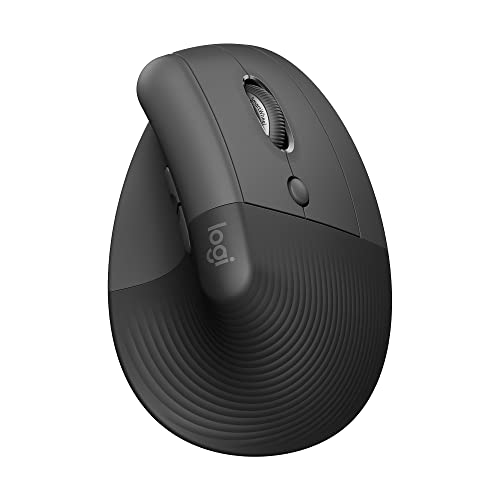

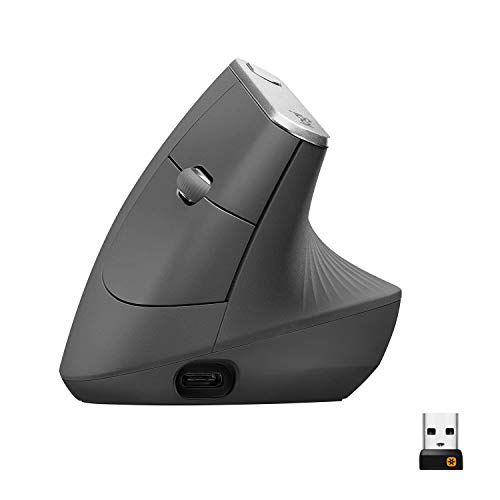
Are Logitech vertical mice good?
Logitech vertical mice have an average overall score of 7.6, ranking #18 among vertical-mouse brands, and an average user rating of 9.4, placing them at #3 based on user reviews.
Logitech vertical mice are generally good when comfort and office-friendly usability matter more than gaming speed. The vertical branch is tightly focused around Logitech's familiar Lift Vertical and MX Vertical direction, with productivity-led specs, wireless-first convenience, and a much stronger emphasis on desk comfort than on competitive performance.
That makes Logitech vertical mice most convincing when you want a more supportive working posture and a cleaner office-focused experience. They are less compelling if you want low weight, lineup variety, or gaming-style responsiveness, but they are a strong fit for buyers shopping mainly for ergonomic comfort.
The following chart ranks vertical-mouse brands by their overall score.
[horizontal-chart-10899482154241415014122502463324611279532233785967]


What are the main Logitech vertical mouse series?
The main Logitech vertical mouse series are as follows.
- Lift Vertical: Lift is Logitech's more accessible vertical line. It is positioned as the simpler mainstream choice, with a lighter price point, a compact office-first shape, Bluetooth / 2.4 GHz connectivity, and the same 4000 DPI ceiling as the more expensive model.
- Mx Vertical: Mx Vertical is the more premium and more feature-rich branch. It adds wired / Bluetooth / 2.4 GHz connectivity, a heavier full-size shell, and a more expensive professional-office positioning aimed at longer desk use.
Logitech vertical mice are not split into many separate families. In practice, the lineup is a small two-step ladder from a more approachable Lift model to a more premium Mx Vertical model.
How much do Logitech vertical mice cost?
The best Logitech vertical mice usually cost about 70-£100. In practical terms, that puts Logitech in the mid-range to premium office-comfort bracket rather than in the budget part of the vertical-mouse market.
Logitech vertical mouse pricing is driven more by ergonomic design, wireless flexibility, and office polish than by gaming hardware. Lift Vertical covers the lower end at around £60, while Mx Vertical pushes closer to £100 with a more premium shell and broader connection flexibility.
This chart visualizes Logitech vertical mouse prices.
[vertical-chart-07056221273193067011029884343693754716231030163344]
How do Logitech vertical mice compare with Anker models?
Logitech vertical mice usually compare with Anker models as the more refined and more premium option, while Anker is the cheaper and more basic value pick. Logitech is stronger if you want a more polished office-oriented vertical design, better mainstream brand support, and a clearer step up in connectivity quality.
The technical split is straightforward. The current Logitech vertical models sit around 70-£100, offer 4000 DPI, 6 buttons, and Bluetooth-capable wireless use, while the current Anker vertical model sits near £17, offers 1600 DPI, 5 buttons, and a simpler 2.4 GHz-only connection. In practice, Logitech vertical mice are the better comfort-and-features choice, while Anker is the cheaper entry point into the same general vertical concept.
What should you consider while choosing a Logitech vertical mouse?
The main technical criteria for a Logitech vertical mouse are as follows.
- Main split: Logitech's vertical decision is mostly Lift versus MX Vertical, not a huge lineup comparison. Lift is the more mainstream office pick and makes sense when you want the vertical form without overspending, while MX Vertical is the stronger option only if wired fallback, a more premium build, or the fuller higher-tier office feel is worth the extra cost.
- Hand fit and shell size: Both current models are full-bodied vertical mice, but that does not make them interchangeable. In a category like this, small differences in height, thumb-rest depth, and front-button reach matter more than they would on a flatter office mouse, so hand fit should be checked as carefully as the connection features.
- Connection stack: Lift gives you Bluetooth and 2.4 GHz, while MX Vertical adds wired operation. If your desk setup is stable and cable-free use is the goal, Lift already covers the essentials; MX Vertical is easier to justify when you value the extra flexibility more than the savings.
- Weight and movement feel: Both sit around 125-135 g, which is completely normal for vertical mice but still noticeably slower and more planted than a typical flat everyday model. This branch only makes sense if you are comfortable trading some speed and flickability for support and wrist angle.
- Sensor and response ceiling: Both current Logitech vertical models stay at 4,000 DPI and 125 Hz, which is enough for office use but clearly outside the gaming-performance tier. That means the choice is about comfort profile and workflow behavior, not about chasing higher-speed hardware.
- Controls: The two current models both stay in the 6-button office-friendly range. That is usually the right level for productivity shortcuts without turning the vertical shell into a crowded specialist device, so extra buttons should not be the deciding factor for this branch.