Jawbone Up review. Compare 171 technical specifications and user reviews to see how this product ranks in the Fitness trackers category and whether it is worth buying.
Overall score
What it is: An overall evaluation of the fitness tracker's quality, based on technical analyses and user reviews.
When it matters: When you need a quick reference to identify the best fitness trackers on the market.
Score components:
80.0%
Technical Score
20.0%
User score
Technical Score
What it is: An assessment of technical performance for products in the Fitness trackers category across these key areas: Health, Sports & Navigation, Smart Features, App & Wellness, Connectivity, Battery, Display, Design & Durability.
When it matters: When you want to compare fitness trackers based on technical performance and available features.
Score components:
20.0%
Sports & Navigation
20.0%
Battery
18.0%
Health
18.0%
Display
8.0%
Smart Features
8.0%
App & Wellness
4.0%
Connectivity
4.0%
Design & Durability
User score
What it is: A rating that combines user reviews and the total number of reviews received by the fitness tracker.
When it matters: When you want to know how a fitness tracker performs in daily use and how reliable it remains over time according to user feedback.
Score components:
70.0%
User reviews
30.0%
Popularity

(Reviews last updated: June 2026)
Score components:
28.0%
ATM rating
24.0%
Open-water swim mode
18.0%
Waterproof depth rating
15.0%
GPS
15.0%
Battery life
Score components:
30.0%
Battery life
25.0%
Weight
20.0%
ATM rating
15.0%
Screen size
10.0%
Price



Available: ranking among products currently available (including other versions of this product).
All: ranking among all products in the database.
#114 in Best Fitness Trackers
What it is: An assessment of technical performance for products in the Fitness trackers category across these key areas: Health, Sports & Navigation, Smart Features, App & Wellness, Connectivity, Battery, Display, Design & Durability.
When it matters: When you want to compare fitness trackers based on technical performance and available features.
Score components:
20.0%
Sports & Navigation
20.0%
Battery
18.0%
Health
18.0%
Display
8.0%
Smart Features
8.0%
App & Wellness
4.0%
Connectivity
4.0%
Design & Durability
What it is: A rating that combines user reviews and the total number of reviews received by the fitness tracker.
When it matters: When you want to know how a fitness tracker performs in daily use and how reliable it remains over time according to user feedback.
Score components:
70.0%
User reviews
30.0%
Popularity
(Reviews last updated: June 2026)
What it is: An indicator that combines the fitness tracker's overall rating with its cost.
When it matters: When you are looking for a fitness tracker with a good balance between quality and price.
Score components:
60.0%
Overall score
40.0%
Price
Importance: HIGH
Importance: MEDIUM
Importance: LOW
Importance: LOW
Importance: MEDIUM
Importance: LOW
Importance: LOW
Importance: LOW
Importance: LOW
Importance: LOW
Importance: LOW
Importance: LOW
Importance: LOW
Importance: LOW
Importance: LOW
Importance: HIGH
Importance: LOW
Importance: LOW
Importance: LOW
Importance: LOW
Importance: LOW
Importance: LOW
Importance: LOW
Importance: LOW
Importance: LOW
Importance: LOW
Importance: LOW
Importance: LOW
Importance: LOW
Importance: LOW
Importance: LOW
Importance: LOW
Importance: LOW
Importance: MEDIUM
Importance: MEDIUM
Importance: HIGH
Importance: MEDIUM
Importance: LOW
Importance: LOW
Importance: LOW
Importance: LOW
Importance: LOW
Importance: LOW
Importance: LOW
Importance: LOW
Importance: LOW
Importance: LOW
Importance: LOW
Importance: LOW
Importance: LOW
Importance: LOW
Importance: LOW
Importance: LOW
Importance: LOW
Importance: LOW
Importance: LOW
Importance: LOW
Importance: LOW
Importance: LOW
Importance: LOW
Importance: LOW
Importance: MEDIUM
Importance: LOW
Importance: LOW
Importance: LOW
Importance: LOW
Importance: LOW
Importance: LOW
Importance: LOW
Importance: LOW
Importance: LOW
Importance: LOW
Importance: LOW
Importance: LOW
Importance: LOW
Importance: LOW
Importance: LOW
Importance: LOW
Importance: LOW
Importance: LOW
Importance: LOW
Importance: LOW
Importance: LOW
Importance: LOW
Importance: LOW
Importance: LOW
Importance: LOW
Importance: LOW
Importance: LOW
Importance: LOW
Importance: LOW
Importance: LOW
Importance: LOW
Importance: LOW
Importance: LOW
Importance: LOW
Importance: LOW
Importance: LOW
Importance: LOW
Importance: LOW
Importance: LOW
Importance: LOW
Importance: LOW
Importance: LOW
Importance: LOW
Importance: LOW
Importance: LOW
Importance: LOW
Importance: LOW
Importance: LOW
Importance: LOW
Importance: LOW
Good value: >=5.0
Importance: LOW
Good value: >=10 m
Importance: LOW
Importance: LOW
Importance: LOW
Importance: LOW
Importance: LOW
Importance: LOW
Importance: LOW
Importance: LOW
Importance: HIGH
Good value: >5 days
Importance: LOW
Good value: >=8 hours
Importance: LOW
Importance: LOW
Importance: MEDIUM
Good value: >=100 mAh
Importance: LOW
Importance: LOW
Importance: LOW
Importance: MEDIUM
Importance: LOW
Importance: LOW
Importance: LOW
Importance: LOW
Importance: LOW
Importance: MEDIUM
Importance: MEDIUM
Importance: MEDIUM
Importance: LOW
Good value: >=280 ppi
Importance: LOW
Importance: LOW
Importance: LOW
Importance: HIGH
Good value: >=450 nits
Importance: LOW
Importance: LOW
Importance: LOW
Importance: LOW
Importance: LOW
Importance: LOW
Importance: LOW
Importance: LOW
Importance: LOW
Importance: LOW
Importance: LOW
Importance: LOW
Importance: LOW
Importance: LOW
Importance: LOW
Good value: <10 mm
Importance: LOW
Importance: LOW
Good value: <25 g
Importance: LOW
Importance: LOW
Importance: LOW
Good value: >=5 ATM
Importance: LOW
Good value: >=50 m
Importance: LOW
Importance: LOW
Importance: LOW
Importance: LOW
Importance: LOW
Importance: LOW
Importance: LOW
Importance: LOW
Importance: MEDIUM
Importance: LOW
Importance: LOW
Importance: LOW
Importance: LOW
Importance: LOW
Importance: LOW
Importance: HIGH
Importance: MEDIUM
Importance: MEDIUM
Importance: MEDIUM
Importance: LOW
Good value: >=50 m
Importance: LOW
Importance: LOW
(Reviews last updated: June 2026)
The Jawbone UP is a physical fitness bracelet designed to track continuous daily activity, sleep cycles, and meals via a companion smartphone app. The reviewer notes that the device excels in its elegant, minimalist hardware design which features a single control button, a hidden connection plug, and an invisible mode-indicator LED. Key positive functionalities include highly accurate exercise-tracking—which can even record pauses during stationary movements like push-ups—and a vibrating sleep-alarm that automatically wakes the user up during their lightest sleep phase. Additionally, the manufacturer provides a highly functional and beautiful online support forum for community troubleshooting. Conversely, the product is heavily criticized for its substantial software and hardware flaws. A major hardware drawback is the complete absence of wireless synchronization and the inability to charge the band directly through the phone, forcing users to constantly plug the physical device into an audio jack or a separate USB cable. The lack of a built-in GPS chip further limits its independence from the phone. On the software side, the application suffers from poor, circular navigation, requires repetitive daily wake-up adjustments, and features...
The VentureBeat review highlights the Jawbone Up as a stylish, 24/7 wearable with excellent sleep tracking, an improved app, and a 10-day battery, though it lacks a display and wireless syncing. In contrast, the clip-on Fitbit One is described as a "secretly geeky," unobtrusive device featuring effortless Bluetooth synchronization, a protective clip jacket, and a detailed online dashboard, despite its less inspiring, functional design.
The 2012 second-generation Jawbone UP is an improved TPU rubber fitness tracker that completely overhauls the manufacturing flaws and poor water resistance of its predecessor. Priced at $129.99, the device earns praise for being extremely comfortable across its three available sizes and for featuring a highly effective internal vibrating motor. This motor serves as a silent morning alarm and actively nudges users to move when they have been sitting at a desk for too long. Additionally, the device boasts an impressive 10-day battery life and allows flexible tracking, giving users the freedom to manually log workouts, exertion levels, and missed sleep data directly within its compatible iOS app.
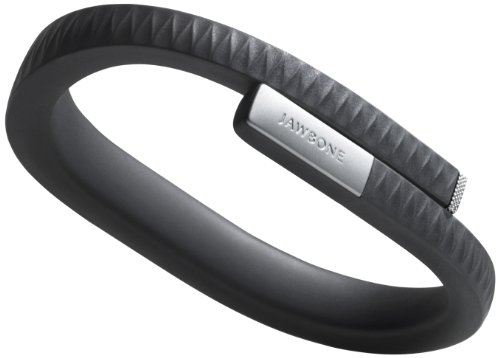
The Jawbone Up is a sleek, exceptionally designed, button-less fitness tracker that serves primarily as an advanced pedometer with lifestyle monitoring capabilities. Designed out of medical-grade rubber, it wraps around the wrist comfortably without clasps and features a single button on one end to toggle between day and night modes. Its standout features include an attractive design, an impressive 10-day battery life, and a vibrant, well-designed smartphone app that tracks movement and sleep data while animating daily goals. However, data syncing requires physically uncovering a 3.5mm jack and plugging it into the phone’s headphone socket rather than utilizing a wireless connection. While the device excels at tracking sleep patterns by separating deep and light sleep cycles, it ultimately leaves consumers with more questions than answers because it fails to provide actionable recommendations based on the collected data. Key disadvantages include its limited functionality, lack of wireless connectivity (Bluetooth), and the fact that it cannot charge while syncing data. Additionally, at a retail price of $149, the tracker is significantly expensive compared to its competitors. It is less effective as a...
The Jawbone UP fitness tracker ($129.99) earns a 3.5 "Good" rating from PCMag for its thorough health monitoring and stellar mobile app companion. The medical-grade rubber bracelet is comfortable for 24/7 wear and provides an impressive 10-day battery life. Its standout features reside within its vibrant iOS and Android applications, which track steps, distance, sleep patterns, and caloric burn. Notably, the app supports a highly unique, vibration-based silent alarm that can analyze REM cycles to wake users up at an optimal moment, alongside customized "power nap" settings and useful "idle alerts" to discourage physical inactivity. Despite these excellent software metrics, the hardware suffers from significant limitations when compared to cheaper competitors like the $100 Fitbit One. The Jawbone UP lacks a physical data readout or screen on the band itself, forcing users to manually plug the bracelet into a smartphone's headphone jack to sync data. Furthermore, it completely lacks wireless syncing capabilities, heart rate monitoring, and integration with third-party software or smart scales. Additionally, its bright, wrap-around design is difficult to wear discreetly at formal events. Ultimately, while the health-tracking...
The second-generation Jawbone UP is a lightweight, comfortable, and highly stylish flexible wristband designed to track distance, calories, sleep quality, and active intensity without requiring a tight fit that traps sweat. Its companion smartphone app stands out as an exceptional motivation tool, offering a beautifully designed interface that logs food via a barcode scanner, tracks distinct exercise sessions, and delivers automated health tips. Additionally, because the tracker lacks power-draining wireless components, it achieves an outstanding, market-leading battery life of roughly ten days on a single charge. However, the tracker suffers from major usability flaws, most notably its complete lack of wireless syncing, forcing users to physically plug the device's 3.5mm jack into a phone's headphone socket to view data. This frustration is compounded by a total absence of a device display—offering no immediate progress updates—and the lack of an altimeter to track elevation changes. Combined with a premium price tag of £99 that makes it more expensive than more convenient competitors like the Fitbit Flex, the Jawbone UP is difficult to recommend over its rivals.
The Live Science review rates the Jawbone Up 5.8/10, praising its detailed personal data tracking for steps, sleep, and calories, along with an engaging app that includes a barcode scanner for nutrition tracking. However, the device is criticized for its bulky design and lack of a display screen for instant stat checks. Furthermore, the lack of Bluetooth connectivity requires a clunky, manual, headphone-jack syncing process that hinders daily use. YouTube
The $129.99 Jawbone UP is a comfortable, well-designed personal health tracker that excels at monitoring daily activity and sleep efficiency via a robust mobile dashboard, featuring unique silent, vibrating alarms for wake-ups and inactivity alerts. It offers seamless integration with third-party apps like MyFitnessPal but lacks on-device data readouts and is limited to iOS and Android, excluding PC support. Significant drawbacks highlighted in the review include the lack of wireless syncing, requiring a physical connection to a smartphone's headphone jack to transfer data. Furthermore, the device lacks a screen to check stats on the go, does not connect with external sensors like heart rate monitors, and has a design that is not particularly discreet. YouTube
The redesigned Jawbone Up ($129.99) is an innovative, lightweight fitness tracker designed to be worn 24/7 to monitor daily activity and sleep patterns. Its standout strengths include a groundbreaking, flexible rubber design that is highly comfortable and water-resistant enough for showering. The companion mobile app is highly intuitive, presenting comprehensive data metrics like active time, idle alerts, sleep depth, and a historical timeline via the Lifeline feature. Additionally, it offers impressive battery performance, lasting roughly seven to ten days on a single charge, and provides motivational tools like haptic smart alarms and power nap modes. However, the device suffers from notable design and connectivity drawbacks. It completely lacks a built-in display screen or clock, meaning users are entirely dependent on their smartphones to check any health data. Data syncing requires a less convenient physical connection using a 3.5mm headphone jack adapter rather than wireless Bluetooth. Furthermore, the Jawbone Up features limited software support, compatibility only with iOS and a select few Android devices, and lacks GPS features to measure distance and speed, making it poorly suited for serious athletes.
Jawbone Up (2012) Review Summary The 2012 reboot of the Jawbone Up successfully addresses the widespread hardware failures of its predecessor by introducing a highly durable, water-resistant design capable of enduring daily showers, dishwashing, and rigorous bending without breaking. Its companion iOS application has been completely transformed from a basic data logger into a feature-rich, visually polished hub featuring comprehensive sleep patterns, bar graphs, and an active social feed designed to motivate users through peer competition. The device boasts an impressive nine-to-ten-day battery life, and its revamped food-tracking system now includes a helpful barcode scanner alongside a robust database to help users consciously monitor their daily caloric intake. However, the fitness tracker is held back by several notable design oversights and functional limitations. Hardware inconveniences include a bulky end cap and button that frequently snag on objects, a lack of wireless syncing or Bluetooth, and a reliance on a easily misplaceable, proprietary 3.5mm charging adapter. Furthermore, many software features feel unpolished; the "Smart Alarm" and "Power Nap" features struggle to accurately detect sleep states, the calorie tracker occasionally misidentifies scanned...
The Jawbone UP activity-monitoring wristband has experienced a high rate of hardware failures, leading Jawbone CEO Hosain Rahman to issue a formal statement and offer an unprecedented "no questions asked" refund program. The device features notable pros, including its sleek visual reports, a useful "Activity Reminders" system that sends gentle wrist vibrations to prevent prolonged sitting, and comprehensive nighttime sleep tracking that maps deep and light sleep cycles via an iOS app interface. Additionally, the company's generous refund policy allows dissatisfied customers who purchased the band from authorized retailers to receive a full financial refund while being permitted to keep their physical bands. However, the product suffers from critical cons related to major engineering flaws, forcing Jawbone to temporarily halt production. Two specific capacitors in the power system frequently fail, causing the wristbands to drop data, issue erratic or random vibrations, fail to hold a charge, and ultimately "brick" or stop working entirely within the first seven to ten days of use. Furthermore, multiple testing units experienced hardware-related syncing failures, creating a highly frustrating user experience and resulting in poor...
In this article from Summer Tomato, author Darya Rose reviews the Jawbone Up activity tracker, highlighting several distinct pros that initially led her to call it the coolest pedometer on the market. A major standout feature is the customisable hourly buzz reminders that nudge users to stay active and avoid prolonged sitting. Rose praises the elegant, sleek design of the waterproof wristband, noting it is far more attractive than standard pedometers. The app's user interface is celebrated for its beautiful graphical display of step progress toward goals, and the device features impressive sleep-tracking capabilities that monitor light versus deep sleep patterns alongside a gentle vibration alarm. Furthermore, the app initially promised strong habit-building and friendly, competitive social interaction components. However, the review outlines substantial hardware and software cons that heavily impact the device's reliability. From a usability standpoint, the lack of Bluetooth wireless syncing is a major drawback, forcing users to physically plug the band into an iPhone audio port to fetch data. Rose stopped using the sleep tracking because the bracelet felt obtrusively bulky in bed, and she found...
The Jawbone UP fitness tracker is a stylish, comfortable, and water-resistant wristband designed by Yves Behar that functions as an excellent always-on health accessory. It provides high utility by tracking physical activity, step progress, and sleep cycles via an internal accelerometer, syncing the collected data directly into a sleek iPhone app. The companion app also offers useful secondary features like a photographic diet-tracker, GPS route maps, and a team page to create fitness challenges with friends. However, the hardware suffers from major design and reliability flaws, most notably an unacceptably high failure rate where the bands completely "brick" and stop working entirely. Additional drawbacks include a poorly designed cap covering the connection jack that easily pops off and costs up to $15 to replace, a tedious physical syncing method requiring the band to be plugged directly into the phone's headphone port, and a team feature that lacks a functional way to scan contacts or social media to find friends. Due to these severe defects, the reviewer strongly advises against buying the device until permanent manufacturing fixes are implemented.
The Jawbone Up is a sleek, bracelet-style activity tracker designed by Yves Behar that functions as a piece of "functional jewelry" made from hypoallergenic TPU rubber. It excels as a lifestyle data collector, accurately tracking daily steps, calories burned, and highly detailed sleep cycles—including deep and light sleep phases. Notable positive features include its exceptional 10-day battery life, robust waterproof build that can survive showers and toddler roughhousing, a helpful "Idle Alert" to combat sedentary behavior, and a smart alarm that vibrates to wake you up gently during a light sleep cycle. Furthermore, its platform supports integration with popular third-party apps like MyFitnessPal and RunKeeper to offset localized data limitations. However, the device suffers from several notable weaknesses and inconvenient design choices. A major drawback is the lack of wireless connectivity; users must physically plug the tracker's 3.5mm jack into their smartphone to sync data, risking the loss of the small protective cap. The band also completely lacks visual indicators or a screen, meaning users cannot check progress toward daily step goals at a glance without syncing. Additionally, the external...
The Jawbone Up, a $99 wearable, is praised for its comfortable, stylish, and lightweight design, featuring a 10-day battery life and a "smart alarm" via its vibration motor. The device excels at passive activity and sleep tracking, supported by a polished, social-focused iOS app. However, the review notes significant drawbacks, particularly the lack of wireless syncing, requiring a manual, sometimes buggy, connection to the iPhone's headphone jack. Furthermore, food logging is tedious, and the clasp-less design can be awkward during daily activities.
The CHIP video review highlights the Jawbone Up as a highly stylish, trend-setting fitness tracker emerging from the US market. The device functions primarily as an all-day lifestyle companion designed to log a user's sleep quality, eating habits, total steps taken, and daily calorie expenditure. One of its key features is a built-in vibration alarm that proactively reminds users to stop being sedentary and start moving. Furthermore, adjacent expert reviews emphasize that the medical-grade rubber chassis is lightweight, robust, comfortable, and provides a remarkable battery life of roughly 10 days. YouTube · Despite its visual appeal and comprehensive tracking, the device has notable drawbacks highlighted by reviewers. The prominent downside is the lack of wireless synchronization, requiring users to manually plug the band into an iOS or Android smartphone's headphone jack to sync data. There is also no built-in display on the bracelet, meaning users cannot check real-time stats directly on their wrist and must rely entirely on the companion mobile app. Additionally, historical user data notes that earlier production runs suffered from high hardware failure rates and potential structural...
A year-long test of the Jawbone Up by the Frankfurter Allgemeine Zeitung (FAZ) reveals mixed results, questioning the long-term impact of tracking devices on behavior. While the device effectively logs daily steps and rewards milestones, its primary strength lies in providing a quantitative record of high-intensity activity. The review highlights significant drawbacks, including a failure to reliably track non-walking sports like cycling or swimming without awkward, risky workarounds, such as wearing it on the ankle. Ultimately, the analysis finds the, tracker provides limited insights beyond basic metrics, suggesting that modern smartphones can effectively replace the standalone hardware. FAZ
The Jawbone Up fitness band serves primarily as an encouraging health motivator rather than a precise, scientific tracking tool. On the positive side, its flexible rubberised housing makes it highly resilient and effortless to wear daily. Its core tracking metrics successfully record steps, walking, running, and detailed sleep cycles via integrated movement sensors. Additionally, users can benefit from an excellent companion mobile app that maps clear statistical trends and coordinates data across a friendly social network group. A standout highlight is its built-in silent vibration motor, which provides custom smart-alarms designed to wake you gently during light sleep phases or jog you to move after long periods of workplace inactivity. The battery life is also highly commendable, reliably lasting up to seven days on a single charge. However, the hardware suffers from glaring hardware limitations, specifically the total absence of a built-in display and wireless Bluetooth connectivity. Users must physically plug the tracker into their smartphone's headphone jack to transfer data, a process that works fine on iOS devices but completely fails on certain Android smartphones like the HTC One....
The Jawbone UP features a minimalistic, comfortable design with excellent build quality, utilizing a, sleek, water-resistant TPU rubber form factor suitable for 24/7 wear. Its core strengths lie in precise daily step and activity tracking, a powerful companion app, third-party data integration (Runtastic, Runkeeper), and a multi-day battery. Conversely, the device lacks a display, necessitating complete reliance on a smartphone for data viewing, and requires a tedious 3.5mm headphone jack adapter for synchronization. Further cons include the manual effort needed for food tracking (with an incomplete European database) and potential long-term hardware durability issues regarding the rubber housing. YouTube
The UP by Jawbone is a €129 fitness tracker designed as a stylish, lightweight (19g–23g) wristband made of medical-grade, hypoallergenic soft-touch polyurethane. It provides highly accurate tracking of daily movement, sleep patterns, and dietary intake by synchronising with dedicated Android and iOS applications via a 3.5mm headphone jack rather than wireless protocols. Equipped with an advanced MotionX sensor, the device precisely differentiates between light and deep sleep, tracks waking moments, and features an integrated inactivity alert alongside an exceptionally effective "intelligent" vibrating alarm to wake users during their lightest sleep phase. Furthermore, its robust digital food database supports efficient calorie and nutrient balancing through manual searches or barcode scanning, all sustained by an impressive nine-day battery life that recharges in just 73 minutes. Despite its strong utility, the fitness tracker carries several notable design and functional drawbacks. On the downside, the device is merely splash-proof, rendering it entirely unsuitable for swimming. Its physical design features faux-metal plastic ends that easily scratch against laptop surfaces during typing, and switching into sleep mode requires a tedious manual button hold prior to going...
The Jawbone Up is a lightweight and discreet health-tracking bracelet designed to monitor sleep, daily activity, and dietary habits. Weighing just 22 grams, this waterproof device offers an impressive 10-day battery life from an 80-minute charge and features a simple physical sizing gauge on its packaging. To sync data, users must plug the band's integrated headphone jack directly into a smartphone or tablet running the companion app. The app categorizes information into clear graphics, tracking specific metrics like deep versus light sleep, wake-up intervals, active time, and calories burned. Key advantages of the device include its excellent, non-bulky ergonomics, customized vibration alerts that wake users up during optimal light sleep phases, and idle alerts that encourage physical movement after periods of inactivity. On the downside, the reviewer found the food-tracking system highly tedious, noting that its nutritional database is poorly tailored to French culinary habits and leans too heavily toward Anglo-Saxon products. Additionally, the reviewer criticizes the product's high price point and the frustrating absence of a French language version for the Android app at the time of review.
The Jawbone UP is a lightweight (22g) fitness tracking bracelet designed for the "Quantified Self" movement, but it ultimately delivers a mixed performance, receiving a 2 out of 5 rating. Its standout features include a smart vibrating alarm that wakes the user during light sleep phases within a customizable 30-minute window, and an effective inactivity alert system that vibrates when the wearer is sedentary for too long. The accompanying mobile application provides highly detailed graphs tracking daily activity, diet integration, and sleep quality (light vs. deep sleep), while also aggregating data from third-party apps like Withings scales. However, the tracker suffers from notable design and functional drawbacks. It lacks any built-in display or LEDs, making it impossible to check goal progress without a smartphone, and it offers no PC connectivity. Furthermore, data synchronization relies on an outdated physical connection via the phone's headphone jack rather than wireless syncing. Reviewers also noted physical flaws, such as a loose, noisy vibration button, a rubber surface that easily catches on clothing sleeves, and ambiguous "waterproof" claims that actually advise against swimming.
The Jawbone UP is an activity tracker designed to count daily steps, log distances, and track sleep quality for users looking to combat a sedentary lifestyle. In this comprehensive review, the device is praised for its comfortable lizard-tail rubber design, long-lasting 10-day battery life, and highly precise step-counting algorithm, which performs with greater accuracy than competing trackers like the Fitbit Flex. Furthermore, the companion iOS and Android application stands out due to its beautiful, intuitive interface, helpful inactivity alerts that prompt users to move, and seamless integration with 13 third-party health apps like RunKeeper. However, the reviewer notes several distinct drawbacks, particularly regarding the device's physical interface and navigation. Managing multiple advanced features—such as setting the stopwatch or activating the power nap mode—proves difficult and counter-intuitive using only the single built-in physical button. Additionally, while the app integrates third-party workout routes, the imported maps are static images that cannot be explored or zoomed into. Priced at €130, the reviewer concludes that while regular runners might outgrow it, the Jawbone UP remains an excellent, highly motivational tool for everyday users.
The review from 20 Minutes provides a detailed head-to-head comparison of two major activity trackers available on the French market: the Fitbit Flex (€99) and the Jawbone Up (€129.99). In terms of performance tracking, the reviewer rates them as a tie, noting that while their daily step and activity metrics differ by about 8%, both serve as highly valuable relative progress indicators rather than tools of mathematical precision. When looking into specifics, each device highlights contrasting pros and cons regarding connectivity, applications, and daily usability. The Fitbit Flex stands out for its seamless, modern smartphone integration via Bluetooth, making it highly recommended for owners of newer mobile devices like the iPhone 4S or Samsung Galaxy S3. Its app is highly open, allowing data to be exported to excellent third-party healthcare platforms like Tactio Santé. However, its battery life is shorter at around 7 days due to the Bluetooth and LED display usage, and its sleep tracking functions are somewhat lacking, requiring users to manually enter sleep times within the application. Conversely, the Jawbone Up lacks Bluetooth connectivity and a display...
The Europe 1 review of the Jawbone Up fitness bracelet paints a picture of an elegant and technically impressive device that ultimately delivers only a minor impact on daily life. Priced at 129 euros, the wristband is highly praised for its physical design, being described as lightweight, discreet, comfortable to put on, and entirely waterproof. Its standout features include highly precise step tracking, impressive sleep cycle graphs, and a fluid, colorful smartphone app for iOS and Android. To protect users from unknown radiation risks, Jawbone intentionally excluded Bluetooth and Wi-Fi, opting instead for a quick data sync via the phone’s headphone jack. Additional smart elements, like the idle vibrate alerts and the intelligent alarm clock that vibrates during light sleep windows, add subtle value to the package. However, the reviewer highlights several prominent limitations and flaws that hold the device back. On the hardware side, the bracelet lacks a secure fastening mechanism and was lost multiple times during contact sports like basketball, and the actual battery life falls short of the promised 10 days, lasting only about a week. The...
The Jawbone UP, a flexible rubber wristband designed by Fuseproject, serves as a lifestyle tracker, pedometer, and advanced sleep monitor. Praised for its comfortable, lightweight, and buttonless design, the device provides users with detailed tracking of sleep cycles, vibration-based alarms, and a highly engaging, visual mobile application that promotes,, health goals. Key drawbacks highlighted include the lack of an integrated display, which forces users to rely exclusively on a smartphone to view data. Furthermore, the tracker lacks wireless syncing, requiring users to remove a cap and connect via a 3.5mm jack for data transfer, while the app, despite its design, sometimes shows data discrepancies and offers limited raw data export. YouTube
The Jawbone Up is evaluated as an appealing and highly effective "wellness" wristband that monitors daily activity and sleep quality rather than serving as a strict fitness tracker. Among its primary benefits, the device boasts an impressive 10-day battery life and a remarkably smooth user experience through its complimentary companion app. It features functional secondary utilities, such as a smart vibration alarm that wakes the user during light sleep cycles, a restorative afternoon nap timer, and an anti-laziness alert to prompt physical movement during long sedentary periods. Additionally, the reviewer highlights its sleek, aesthetically pleasing plastic design available in multiple sizes and colors, declaring it a highly approachable gadget for personal well-being. Conversely, the review highlights several distinct drawbacks, most notably its lack of a display screen and the reliance on a non-wireless syncing method. Users must physically plug the wristband into a smartphone's headphone jack to transfer data, utilizing a proprietary USB-to-jack adapter that is highly inconvenient to lose. This wired design choice was intentional to preserve battery life and maintain universal OS compatibility, though the reviewer notes that...
The Saggiamente review highlights the Jawbone UP 2.0 as a highly improved, comfortable, and lightweight (19-23g) fitness tracker that introduces essential water resistance and a durable, non-allergenic TPU design. The device features a versatile single-button interface for managing activity modes, complemented by a comprehensive companion app that excels at tracking steps and sleep data through integrations like MyFitnessPal. Conversely, the review notes significant limitations, specifically the absence of a display, the lack of automatic Bluetooth, and the tedious requirement to physically plug in the 3.5mm jack for data synchronization. Other mentioned downsides include the potential for the clasp-free design to snag on clothing, the risk of losing the charging cap, and inaccuracies in step tracking when moving arms while seated.
The Macitynet review outlines that the Jawbone UP24 keeps the same core fitness tracking capabilities as its predecessor, utilizing Motion X technology to log daily movement, calorie consumption, and sleep cycles. The most significant upgrade is the introduction of Bluetooth connectivity, which replaces the cumbersome requirement of physically plugging the band into a headphone jack to upload data. This wireless feature allows for automatic background synchronization every hour, providing real-time progress updates and motivational reminders directly inside a revised, user-friendly companion app. Additionally, the review notes excellent cross-compatibility, highlighting its successful dual integration with third-party platforms like MyFitnessPal. However, the review details specific compromises made for this wireless upgrade. The continuous Bluetooth pairing significantly impacts the hardware, reducing battery life from 10 days down to approximately 7 days. Furthermore, the physical device still completely lacks an integrated screen, meaning users cannot glance at their stats directly from their wrist and must rely entirely on the mobile app and two simple LED indicators. Lastly, the wireless version comes with a financial trade-off, arriving at a retail price of 150 euros, which...
The Jawbone Up is a wristband-style fitness tracker designed to monitor the user's daily steps, sleep patterns, and dietary intake, compiling the data into a structured activity stream within its companion application. The device features a rubberized exterior with silver-finished ends, containing a single button and a status LED on one side, and a 3.5mm headphone jack connector hidden under a removable cap on the other. Key advantages of the tracker include a well-designed, smooth-syncing application that provides clear informational graphs, a "smart alarm" that vibrates to wake the user during their lightest sleep phase, and an "idle alarm" that alerts them to prolonged periods of inactivity. Additionally, users can input their daily mood via emoticons and log calorie consumption within the app framework. However, the reviewer highlights significant drawbacks, most notably severe inaccuracies in step counting; when compared against S Health on a Samsung Galaxy S4 and a Fitbit One, the Jawbone Up recorded significantly fewer steps, with the Fitbit sometimes tracking double the amount. Another distinct disadvantage is the lack of wireless synchronization, requiring users to physically plug...

Compare