Scored using Projectors Methodology v1.0
Projectors Methodology v1.0
Mathematical & Unbiased Scoring
Products in this category are scored under Frontum Projectors Methodology v1.0: technical specifications plus authentic consumer ratings, with 0% commercial bias.
Explore Projectors Methodology v1.0

JVC DLA NZ9 Review | 84 Data compared

Avg. price:~£22,000Native panel resolution:4096x2160ANSI lumens:3000Throw ratio:1.35-2.75:1Lamp life:20000 hours

JVC DLA NZ9 Review: Compare 84 technical specifications and user reviews to see how this product ranks in the Projectors category and whether it is worth buying.
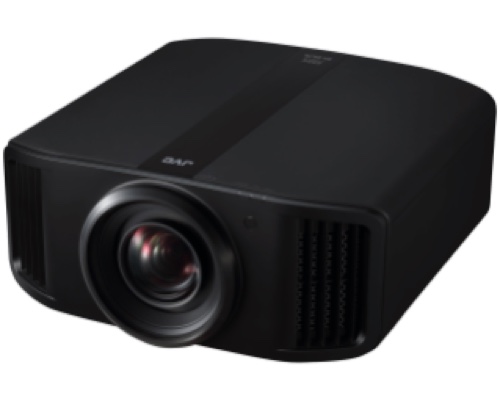
JVC DLA NZ9
7.8/10

Overall score

Score
7.8/ 10
✕
What it is
An overall evaluation of the projector's quality, based on technical analyses and user reviews.
When it matters
When you need a quick reference to identify the best projectors on the market.
Score distribution
â–¼
<55-66-77-88-99-10
Score components

90%

7.9

Technical score

10%

7.4

User score

★Better than 92% of projectors
5.8

Value for money

Value for money
5.8/ 10
✕
What it is
An indicator that combines the projector's overall rating with its cost.
When it matters
When you are looking for a projector with a good balance between quality and price.
Score distribution
â–¼
<55-66-77-88-99-10
Score components

70%

7.8

Overall score

30%

1.0

Price

â–¼Worse than 75%
7.9

Technical score

Technical score
7.9/ 10
✕
What it is
An assessment of technical performance for products in the Projectors category across these key areas: Image Quality, Projection & Lens, HDMI & Gaming, Connectivity, Audio & Features, Design & Power.
When it matters
When you want to compare projectors based on technical performance and available features.
Score distribution
â–¼
<55-66-77-88-99-10
Score components

42%

8.9

Image Quality

22%

8.4

Projection & Lens

12%

7.9

HDMI & Gaming

10%

4.9

Audio & Features

8%

5.3

Connectivity

6%

7.7

Design & Power

★Better than 92%
7.4

User score

User score
7.4/ 10
✕
What it is
A rating that combines user reviews and the total number of reviews received by the projector.
When it matters
When you want to know how a projector performs in real use and how reliable it remains over time according to user feedback.
Score distribution
â–¼
<55-66-77-88-99-10
Score components

70%

9.2

User ratings

30%

3.3

Number of reviews

Based on ratings from across the web.
â–¼Worse than 82%
  • jvc-dla-nz9
jvc-dla-nz9
Where to buy
    N/A~ £22,000
Best rankings
Available: ranking among products currently available (including other versions of this product).All: ranking among all products in the database.
Loading...
Loading category ranking...

Technical Specifications of projector JVC DLA NZ9

Technical score
Technical score
7.9/ 10
✕
What it is
An assessment of technical performance for products in the Projectors category across these key areas: Image Quality, Projection & Lens, HDMI & Gaming, Connectivity, Audio & Features, Design & Power.
When it matters
When you want to compare projectors based on technical performance and available features.
Score distribution
â–¼
<55-66-77-88-99-10
Score components:

42%

8.9

Image Quality

22%

8.4

Projection & Lens

12%

7.9

HDMI & Gaming

10%

4.9

Audio & Features

8%

5.3

Connectivity

6%

7.7

Design & Power

7.9
User score
User score
7.4/ 10
✕
What it is
A rating that combines user reviews and the total number of reviews received by the projector.
When it matters
When you want to know how a projector performs in real use and how reliable it remains over time according to user feedback.
Score distribution
â–¼
<55-66-77-88-99-10
Score components

70%

9.2

User ratings

30%

3.3

Number of reviews

Based on ratings from across the web.
7.4
Popularity
Popularity
3.3/ 10
✕
What it is
An indicator based on the number of reviews received by the projector.
When it matters
When you prefer to buy a product chosen and reviewed by many other consumers.
Score distribution
â–¼
<55-66-77-88-99-10
Popularity:
JVC DLA NZ9 has a popularity score of 3.3 points, which is lower than 56.9% of projectors.
3.3
Value for money
Value for money
5.8/ 10
✕
What it is
An indicator that combines the projector's overall rating with its cost.
When it matters
When you are looking for a projector with a good balance between quality and price.
Score distribution
â–¼
<55-66-77-88-99-10
Score components:

70%

7.8

Overall score

30%

1.0

Price

5.8
ANSI lumens
3,000
This projector reaches 3,000 ANSI lumens, brighter than 64.2% of projectors and equal to 9.1% of projectors.
Contrast ratio
100,000:1
This projector has a contrast ratio of 100000:1, higher than 71.6% of projectors and equal to 3.8% of projectors.
Native contrast ratio.
Native panel resolution
4096x2160
This projector uses a native resolution of 4096x2160, higher than 95.3% of projectors and equal to 4.7% of projectors.
Output Resolution
8192x4320
This projector supports output resolution up to 8192x4320, higher than 99% of projectors and equal to 1% of projectors.
Projection technology
LCoS
Show more
Throw ratio
1.35-2.75:1
Min throw distance
1.88 m
This projector needs a minimum throw distance of 1.88 m, longer than 94.7% of projectors and equal to 0.6% of projectors.
Max projection size
300 inch
This projector supports projection sizes up to 300 inch, larger than 51.9% of projectors and equal to 37.9% of projectors.
Zoom ratio
2
This projector offers a zoom ratio of 2, wider than 83.3% of projectors and equal to 6.6% of projectors.
Motorized zoom
yes
This projector has motorized zoom. 83.8% of projectors have motorized zoom.
Show more
Input lag
?
Auto low latency mode (ALLM)
no
This projector does not support ALLM. 17.2% of projectors support ALLM.
Variable refresh rate (VRR)
no
This projector does not support VRR. 1.6% of projectors support VRR.
HDMI version
2.1
This projector supports HDMI 2.1, more modern than 82.3% of projectors and equal to 17.7% of projectors.
Max HDMI bandwidth
48 Gbps
This projector supports HDMI bandwidth up to 48 Gbps, higher than 90.1% of projectors and equal to 9.9% of projectors.
Show more
N. of HDMI ports
2
This projector has 2 HDMI port/s, more than 45% of projectors and equal to 47.7% of projectors.
Wi-Fi connectivity
no
This projector does not support Wi-Fi. 52.9% of projectors support Wi-Fi.
Wi-Fi version
N/A
Bluetooth connectivity
no
This projector does not support Bluetooth. 50.5% of projectors support Bluetooth.
Bluetooth version
N/A
Show more
Smart TV features
no
This projector does not have smart TV features. 43.8% of projectors have smart TV features.
Operating system
none
Android OS
no
This projector does not run Android OS. 18.8% of projectors run Android OS.
Dedicated smartphone app
no
This projector does not come with a dedicated smartphone app. 35.2% of projectors come with a dedicated smartphone app.
Remote control
yes
This projector includes a remote control. 1.6% of projectors include a remote control.
Show more
Light source type
laser
This projector uses laser light source technology, more advanced than 74% of projectors and equal to 26% of projectors.
Laser Light Source
yes
This projector uses a laser light source. 72% of projectors use a laser light source.
BLU-Escent Laser.
Lamp life
20,000 hours
This projector offers lamp life of 20,000 hours, shorter than 34.4% of projectors and equal to 27.6% of projectors.
Laser light source life.
Lamp life (eco mode)
20,000 hours
This projector offers eco-mode lamp life of 20,000 hours, shorter than 36.3% of projectors and equal to 19% of projectors.
Operating power consumption
440 W
This projector uses 440 W of power, more than 94.2% of projectors and equal to 0.9% of projectors.
Show more

JVC DLA NZ9 vs the average projector

246810TotalImage QualityProjection & LensHDMI & GamingConnectivityAudio & FeaturesDesign & Power
  • Higher output resolution
    This projector supports a higher output resolution than the average projector (8192x4320 vs 1920x1080). The average projector outputs at 1920x1080 resolution.
    8192x4320 vs 1920x1080
  • High native resolution
    This projector has a higher native panel resolution than the average projector (4096x2160 vs 1920x1080). The average projector has a native panel resolution of 1920x1080.
    4096x2160 vs 1920x1080
  • Wider color gamut
    This projector has a higher color gamut coverage than the average projector (98% DCI-P3 % vs 99% Rec.709 %). The average projector has 99% Rec.709 % of color gamut coverage.
    98% DCI-P3 % vs 99% Rec.709 %
  • Supports lens memory
    This projector supports lens memory, while the average projector does not. 9% of projectors support lens memory.
    Stored within 10 Installation Modes.
  • 0.7 2x wider zoom range
    This projector has a higher zoom ratio than the average projector (2 vs 1.3). The average projector has 1.3 of zoom ratio.
    2 vs 1.3
  • 40 % more vertical lens shift
    This projector has more vertical lens shift than the average projector (100 % vs 60 %). The average projector has 60 % vertical lens shift.
    100 % vs 60 %
  • Supports HDR10+
    This projector supports HDR10+, while the average projector does not. 15.7% of projectors support HDR10+.
  • Higher contrast ratio
    This projector has a higher contrast ratio than the average projector (100000:1 vs 10000:1). The average projector has 10000:1 of contrast ratio.
    Native contrast ratio.
    100,000:1 vs 10,000:1
  • Higher output resolution
    This projector supports a higher output resolution than the average projector (8192x4320 vs 1920x1080). The average projector outputs at 1920x1080 resolution.
    8192x4320 vs 1920x1080
  • High native resolution
    This projector has a higher native panel resolution than the average projector (4096x2160 vs 1920x1080). The average projector has a native panel resolution of 1920x1080.
    4096x2160 vs 1920x1080
  • Wider color gamut
    This projector has a higher color gamut coverage than the average projector (98% DCI-P3 % vs 99% Rec.709 %). The average projector has 99% Rec.709 % of color gamut coverage.
    98% DCI-P3 % vs 99% Rec.709 %
  • Supports HDR10+
    This projector supports HDR10+, while the average projector does not. 15.7% of projectors support HDR10+.
  • Higher contrast ratio
    This projector has a higher contrast ratio than the average projector (100000:1 vs 10000:1). The average projector has 10000:1 of contrast ratio.
    Native contrast ratio.
    100,000:1 vs 10,000:1
  • 36.4% brighter image
    This projector has higher ANSI lumens than the average projector (3,000 vs 2,200). The average projector has 2,200 ANSI lumens.
    3,000 vs 2,200
  • Supports pixel shifting
    This projector supports pixel shifting, while the average projector does not. 28.4% of projectors support pixel shifting.
    Via e-shiftX.
  • Supports HLG
    This projector supports HLG, while the average projector does not. 42.7% of projectors support HLG.
  • Supports lens memory
    This projector supports lens memory, while the average projector does not. 9% of projectors support lens memory.
    Stored within 10 Installation Modes.
  • 0.7 2x wider zoom range
    This projector has a higher zoom ratio than the average projector (2 vs 1.3). The average projector has 1.3 of zoom ratio.
    2 vs 1.3
  • 40 % more vertical lens shift
    This projector has more vertical lens shift than the average projector (100 % vs 60 %). The average projector has 60 % vertical lens shift.
    100 % vs 60 %
  • 13 % more horizontal lens shift
    This projector has more horizontal lens shift than the average projector (43 % vs 30 %). The average projector has 30 % horizontal lens shift.
    43 % vs 30 %
  • Has motorized zoom
    This projector has motorized zoom, while the average projector does not. 16.3% of projectors have motorized zoom.
  • Advanced focus control
    This projector offers Advanced focus control than the average projector (motorized vs manual). The average projector uses manual focus control.
    motorized vs manual
  • 53.5 inch larger image size
    This projector has a higher projection size than the average projector (300 inch vs 246.5 inch). The average projector has 246.5 inch of projection size.
    300 inch vs 246.5 inch
  • Motorized focus
    This projector supports motorized focus, while the average projector does not. 47.2% of projectors support motorized focus.
  • Supports frame interpolation
    This projector supports frame interpolation, while the average projector does not. 37.1% of projectors support frame interpolation.
    Via Clear Motion Drive.
  • Modern HDMI standard
    This projector offers Modern HDMI standard than the average projector (2.1 vs 2). The average projector supports HDMI 2.0.
    2.1 vs 2.0
  • 2.67x higher HDMI bandwidth
    This projector has a higher HDMI bandwidth than the average projector (48 Gbps vs 18 Gbps). The average projector has 18 Gbps of HDMI bandwidth.
    48 Gbps vs 18 Gbps
  • Modern HDCP version
    This projector offers Modern HDCP version than the average projector (2.3 vs 2.2). The average projector supports HDCP 2.2.
    2.3 vs 2.2
  • High HDMI input format
    This projector supports a more capable max HDMI input format than the average projector (8K/60Hz vs 4K/120Hz). The average projector supports a max HDMI input format of 4K/120Hz.
    8K/60Hz vs 4K/120Hz
  • 1 more RJ45 ports
    This projector has more RJ45 ports than the average projector (1 vs 0). The average projector has 0 RJ45 ports.
    1 vs 0
  • Uses laser light source
    This projector uses a laser light source, while the average projector does not. 28.1% of projectors use a laser light source.
    BLU-Escent Laser.
  • 6 dB quieter operation
    This projector has a lower audible noise than the average projector (24 dB vs 30 dB). The average projector has 30 dB of audible noise.
    Eco mode figure.
    24 dB vs 30 dB
  • 0.86 m longer throw distance
    This projector has a higher throw distance than the average projector (1.9 m vs 1 m). The average projector has 1.025 m of throw distance.
    1.88 m vs 1.025 m
  • No Wi-Fi support
    This projector does not support Wi-Fi, while the average projector does. 52.9% of projectors support Wi-Fi.
  • No Bluetooth support
    This projector does not support Bluetooth, while the average projector does. 50.5% of projectors support Bluetooth.
  • No built-in speaker
    This projector drawback: no built-in speaker. 85.3% of projectors have a built-in speaker.
  • 8.16x heavier weight
    This projector is heavier than the average projector (25.3 kg vs 3.1 kg). The average projector weighs 3.1 kg.
    25.3 kg vs 3.1 kg
  • 28.57x more expensive
    JVC DLA NZ9 is more expensive than the average projector (£22,000 vs £770).
    £22,000 vs £770
  • No 3.5 mm jack
    This projector does not include a 3.5 mm audio jack, while the average projector does. 82.9% of projectors include a 3.5 mm audio jack.
  • 205 W higher power use
    This projector uses more power than the average projector (440 W vs 235 W). The average projector uses 235 W of power.
    440 W vs 235 W
  • 28.57x more expensive
    JVC DLA NZ9 is more expensive than the average projector (£22,000 vs £770).
    £22,000 vs £770
  • 7.5% lower user score
    User score
    7.4/ 10
    ✕
    What it is
    A rating that combines user reviews and the total number of reviews received by the projector.
    When it matters
    When you want to know how a projector performs in real use and how reliable it remains over time according to user feedback.
    Score distribution
    ▼▼
    <55-66-77-88-99-10
    JVC DLA NZ9
    the average projector
    JVC DLA NZ9 has a lower user score than the average projector (7.44 vs 8.000).
    7.44 vs 8
  • 12.4% worse value for money
    JVC DLA NZ9 has a lower value-for-money score than the average projector (5.79 vs 6.5).
    5.79 vs 6.51
  • 0.86 m longer throw distance
    This projector has a higher throw distance than the average projector (1.9 m vs 1 m). The average projector has 1.025 m of throw distance.
    1.88 m vs 1.025 m
  • No Wi-Fi support
    This projector does not support Wi-Fi, while the average projector does. 52.9% of projectors support Wi-Fi.
  • No Bluetooth support
    This projector does not support Bluetooth, while the average projector does. 50.5% of projectors support Bluetooth.
  • No 3.5 mm jack
    This projector does not include a 3.5 mm audio jack, while the average projector does. 82.9% of projectors include a 3.5 mm audio jack.
  • No built-in speaker
    This projector drawback: no built-in speaker. 85.3% of projectors have a built-in speaker.
  • 8.16x heavier weight
    This projector is heavier than the average projector (25.3 kg vs 3.1 kg). The average projector weighs 3.1 kg.
    25.3 kg vs 3.1 kg
  • 205 W higher power use
    This projector uses more power than the average projector (440 W vs 235 W). The average projector uses 235 W of power.
    440 W vs 235 W
  • 200 mm wider body
    This projector is wider than the average projector (500 mm vs 300 mm). The average projector has a width of 300 mm.
    500 mm vs 300 mm
  • 107 mm taller body
    This projector is taller than the average projector (234 mm vs 127 mm). The average projector has a height of 127 mm.
    234 mm vs 127 mm
  • 383 mm thicker body
    This projector is thicker than the average projector (528 mm vs 145 mm). The average projector has a thickness of 145 mm.
    528 mm vs 145 mm
  • 1 W higher standby power
    This projector uses more standby power than the average projector (1.5 W vs 0.5 W). The average projector uses 0.5 W of standby power.
    1.5 W vs 0.5 W

Video reviews

Hands-on testing, unboxing, and real-world video evaluations
Shop video
Shop video
Shop video
Overview video
Brand video

Third-party reviews

Based on ratings from across the web.
Reviews last updated: October 2026 · How we calculate this

What customers like about JVC DLA NZ9

  • Industry-leading native contrast and deep black levels
  • Superior 100mm all-glass lens provides edge-to-edge sharpness and clarity
  • Exceptional HDR performance with advanced proprietary frame-adapt tone mapping
  • High light output (3,000 lumens) suitable for large screens up to 200+ inches
  • Quiet operation even in high-output laser modes
  • Future-proof connectivity with 48Gbps HDMI 2.1 supporting 8K/60p and 4K/120p

What customers don't like about JVC DLA NZ9

  • Extremely high price point compared to smaller models in the NZ line
  • Massive physical footprint and weight (over 55 lbs) requires specialized, heavy-duty mounting
  • Limited availability of native 8K source material to fully utilize its maximum resolution
  • Dynamic laser dimming can occasionally be noticeable during rapid scene transitions
  • Lacks built-in smart platform or streaming apps, requiring external media players

Verdict

The JVC DLA-NZ9 is a flagship D-ILA home cinema projector featuring a BLU-Escent laser light source that delivers 3,000 lumens of brightness and a 20,000-hour lifespan. Driven by three 0.69-inch native 4K devices, it utilizes proprietary 8K/e-shiftX technology to achieve an effective 8192 x 4320 resolution, supported by a premium 18-element, 100mm all-glass lens for exceptional edge-to-edge clarity. Key characteristics include dual 48Gbps HDMI 2.1 inputs supporting 8K/60p and 4K/120p signals, industry-leading Frame Adapt HDR with Theater Optimizer, and an native contrast ratio of 100,000:1 (infinite dynamic). Main pros are its world-class black levels, class-leading HDR tone mapping, and gaming-ready low latency mode. Notable cons include its significant physical weight of 25.3 kg, high retail price, and a measurable drop in brightness when engaging the Cinema Filter for wide color gamut coverage.

Compare JVC DLA NZ9 with other products in the Projectors category

1Product to compare no. 1
VS
2Product to compare no. 2
VS
3Product to compare no. 3 (optional)

Graphic comparison of JVC DLA NZ9 and other products in the Projectors category

No results found