Scored using Projectors Methodology v1.0
Projectors Methodology v1.0
Mathematical & Unbiased Scoring
Products in this category are scored under Frontum Projectors Methodology v1.0: technical specifications plus authentic consumer ratings, with 0% commercial bias.
Explore Projectors Methodology v1.0

JVC DLA NZ800 Review | 84 Data compared

Avg. price:~£14,080Native panel resolution:4096x2160ANSI lumens:2700Throw ratio:1.43-2.92:1Lamp life:20000 hours

JVC DLA NZ800 Review: Compare 84 technical specifications and user reviews to see how this product ranks in the Projectors category and whether it is worth buying.
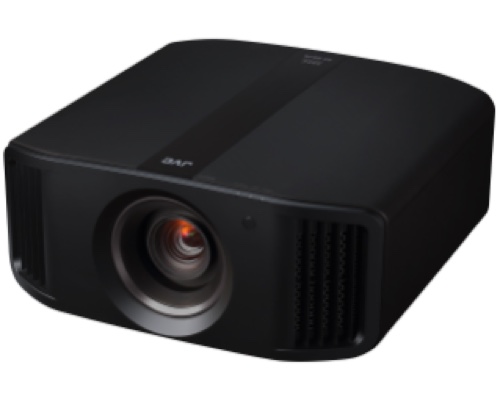
JVC DLA NZ800
7.7/10

Overall score

Score
7.7/ 10
✕
What it is
An overall evaluation of the projector's quality, based on technical analyses and user reviews.
When it matters
When you need a quick reference to identify the best projectors on the market.
Score distribution
▼
<55-66-77-88-99-10
Score components

90%

7.7

Technical score

10%

?

User score

▲Better than 88% of projectors
5.7

Value for money

Value for money
5.7/ 10
✕
What it is
An indicator that combines the projector's overall rating with its cost.
When it matters
When you are looking for a projector with a good balance between quality and price.
Score distribution
▼
<55-66-77-88-99-10
Score components

70%

7.7

Overall score

30%

1.0

Price

▼Worse than 78%
7.7

Technical score

Technical score
7.7/ 10
✕
What it is
An assessment of technical performance for products in the Projectors category across these key areas: Image Quality, Projection & Lens, HDMI & Gaming, Connectivity, Audio & Features, Design & Power.
When it matters
When you want to compare projectors based on technical performance and available features.
Score distribution
▼
<55-66-77-88-99-10
Score components

42%

8.7

Image Quality

22%

7.4

Projection & Lens

12%

8.3

HDMI & Gaming

10%

4.9

Audio & Features

8%

5.3

Connectivity

6%

7.9

Design & Power

▲Better than 88%
?

User score

User score
8.0/ 10
✕
What it is
A rating that combines user reviews and the total number of reviews received by the projector.
When it matters
When you want to know how a projector performs in real use and how reliable it remains over time according to user feedback.
Score distribution
▼
<55-66-77-88-99-10
Score components

70%

?

User ratings

30%

?

Number of reviews

  • jvc-dla-nz800
jvc-dla-nz800
Where to buy
    N/A~ £14,080
Best rankings
Available: ranking among products currently available (including other versions of this product).All: ranking among all products in the database.
Loading...
Loading category ranking...

Technical Specifications of projector JVC DLA NZ800

Technical score
Technical score
7.7/ 10
✕
What it is
An assessment of technical performance for products in the Projectors category across these key areas: Image Quality, Projection & Lens, HDMI & Gaming, Connectivity, Audio & Features, Design & Power.
When it matters
When you want to compare projectors based on technical performance and available features.
Score distribution
▼
<55-66-77-88-99-10
Score components:

42%

8.7

Image Quality

22%

7.4

Projection & Lens

12%

8.3

HDMI & Gaming

10%

4.9

Audio & Features

8%

5.3

Connectivity

6%

7.9

Design & Power

7.7
User score
User score
8.0/ 10
✕
What it is
A rating that combines user reviews and the total number of reviews received by the projector.
When it matters
When you want to know how a projector performs in real use and how reliable it remains over time according to user feedback.
Score distribution
▼
<55-66-77-88-99-10
Score components

70%

?

User ratings

30%

?

Number of reviews

?
Popularity
Popularity
1.0/ 10
✕
What it is
An indicator based on the number of reviews received by the projector.
When it matters
When you prefer to buy a product chosen and reviewed by many other consumers.
Score distribution
▼
<55-66-77-88-99-10
Popularity:
JVC DLA NZ800 has a popularity score of 1 point, which is lower than 64.5% of projectors.
1.0
Value for money
Value for money
5.7/ 10
✕
What it is
An indicator that combines the projector's overall rating with its cost.
When it matters
When you are looking for a projector with a good balance between quality and price.
Score distribution
▼
<55-66-77-88-99-10
Score components:

70%

7.7

Overall score

30%

1.0

Price

5.7
ANSI lumens
2,700
This projector reaches 2,700 ANSI lumens, brighter than 59.6% of projectors and equal to 3% of projectors.
Contrast ratio
100,000:1
This projector has a contrast ratio of 100000:1, higher than 71.6% of projectors and equal to 3.8% of projectors.
Native contrast ratio.
Native panel resolution
4096x2160
This projector uses a native resolution of 4096x2160, higher than 95.3% of projectors and equal to 4.7% of projectors.
Output Resolution
8192x4320
This projector supports output resolution up to 8192x4320, higher than 99% of projectors and equal to 1% of projectors.
Projection technology
LCoS
Show more
Throw ratio
1.43-2.92:1
Min throw distance
2.8 m
This projector needs a minimum throw distance of 2.8 m, longer than 98.9% of projectors.
Minimum throw distance is 2.8 m for a 60-inch image.
Max projection size
200 inch
This projector supports projection sizes up to 200 inch, smaller than 51.3% of projectors and equal to 12.8% of projectors.
Zoom ratio
2
This projector offers a zoom ratio of 2, wider than 83.3% of projectors and equal to 6.6% of projectors.
Motorized zoom
yes
This projector has motorized zoom. 83.8% of projectors have motorized zoom.
Show more
Input lag
36 ms
This projector has input lag of 36 ms, higher than 63.1% of projectors and equal to 0.9% of projectors.
In Low Latency Mode.
Auto low latency mode (ALLM)
?
Variable refresh rate (VRR)
no
This projector does not support VRR. 1.6% of projectors support VRR.
HDMI version
2.1
This projector supports HDMI 2.1, more modern than 82.3% of projectors and equal to 17.7% of projectors.
Max HDMI bandwidth
48 Gbps
This projector supports HDMI bandwidth up to 48 Gbps, higher than 90.1% of projectors and equal to 9.9% of projectors.
Show more
N. of HDMI ports
2
This projector has 2 HDMI port/s, more than 45% of projectors and equal to 47.7% of projectors.
Wi-Fi connectivity
no
This projector does not support Wi-Fi. 52.9% of projectors support Wi-Fi.
Wi-Fi version
N/A
Bluetooth connectivity
no
This projector does not support Bluetooth. 50.5% of projectors support Bluetooth.
Bluetooth version
N/A
Show more
Smart TV features
no
This projector does not have smart TV features. 43.8% of projectors have smart TV features.
Operating system
none
Android OS
no
This projector does not run Android OS. 18.8% of projectors run Android OS.
Dedicated smartphone app
no
This projector does not come with a dedicated smartphone app. 35.2% of projectors come with a dedicated smartphone app.
Remote control
yes
This projector includes a remote control. 1.6% of projectors include a remote control.
Show more
Light source type
laser
This projector uses laser light source technology, more advanced than 74% of projectors and equal to 26% of projectors.
Laser Light Source
yes
This projector uses a laser light source. 72% of projectors use a laser light source.
BLU-Escent Laser Diode.
Lamp life
20,000 hours
This projector offers lamp life of 20,000 hours, shorter than 34.4% of projectors and equal to 27.6% of projectors.
Laser light source life.
Lamp life (eco mode)
20,000 hours
This projector offers eco-mode lamp life of 20,000 hours, shorter than 36.3% of projectors and equal to 19% of projectors.
Operating power consumption
440 W
This projector uses 440 W of power, more than 94.2% of projectors and equal to 0.9% of projectors.
Show more

JVC DLA NZ800 vs the average projector

246810TotalImage QualityProjection & LensHDMI & GamingConnectivityAudio & FeaturesDesign & Power
  • Higher output resolution
    This projector supports a higher output resolution than the average projector (8192x4320 vs 1920x1080). The average projector outputs at 1920x1080 resolution.
    8192x4320 vs 1920x1080
  • High native resolution
    This projector has a higher native panel resolution than the average projector (4096x2160 vs 1920x1080). The average projector has a native panel resolution of 1920x1080.
    4096x2160 vs 1920x1080
  • Wider color gamut
    This projector has a higher color gamut coverage than the average projector (100% DCI-P3 % vs 99% Rec.709 %). The average projector has 99% Rec.709 % of color gamut coverage.
    100% DCI-P3 % vs 99% Rec.709 %
  • Supports lens memory
    This projector supports lens memory, while the average projector does not. 9% of projectors support lens memory.
  • 0.7 2x wider zoom range
    This projector has a higher zoom ratio than the average projector (2 vs 1.3). The average projector has 1.3 of zoom ratio.
    2 vs 1.3
  • Supports HDR10+
    This projector supports HDR10+, while the average projector does not. 15.7% of projectors support HDR10+.
  • Higher contrast ratio
    This projector has a higher contrast ratio than the average projector (100000:1 vs 10000:1). The average projector has 10000:1 of contrast ratio.
    Native contrast ratio.
    100,000:1 vs 10,000:1
  • Supports pixel shifting
    This projector supports pixel shifting, while the average projector does not. 28.4% of projectors support pixel shifting.
    Via e-shiftX.
  • Higher output resolution
    This projector supports a higher output resolution than the average projector (8192x4320 vs 1920x1080). The average projector outputs at 1920x1080 resolution.
    8192x4320 vs 1920x1080
  • High native resolution
    This projector has a higher native panel resolution than the average projector (4096x2160 vs 1920x1080). The average projector has a native panel resolution of 1920x1080.
    4096x2160 vs 1920x1080
  • Wider color gamut
    This projector has a higher color gamut coverage than the average projector (100% DCI-P3 % vs 99% Rec.709 %). The average projector has 99% Rec.709 % of color gamut coverage.
    100% DCI-P3 % vs 99% Rec.709 %
  • Supports HDR10+
    This projector supports HDR10+, while the average projector does not. 15.7% of projectors support HDR10+.
  • Higher contrast ratio
    This projector has a higher contrast ratio than the average projector (100000:1 vs 10000:1). The average projector has 10000:1 of contrast ratio.
    Native contrast ratio.
    100,000:1 vs 10,000:1
  • Supports pixel shifting
    This projector supports pixel shifting, while the average projector does not. 28.4% of projectors support pixel shifting.
    Via e-shiftX.
  • 2 bit deeper color depth
    This projector has a higher color depth than the average projector (12 bit vs 10 bit). The average projector has 10 bit of color depth.
    12 bit vs 10 bit
  • 22.7% brighter image
    This projector has higher ANSI lumens than the average projector (2,700 vs 2,200). The average projector has 2,200 ANSI lumens.
    2,700 vs 2,200
  • Supports HLG
    This projector supports HLG, while the average projector does not. 42.7% of projectors support HLG.
  • Supports lens memory
    This projector supports lens memory, while the average projector does not. 9% of projectors support lens memory.
  • 0.7 2x wider zoom range
    This projector has a higher zoom ratio than the average projector (2 vs 1.3). The average projector has 1.3 of zoom ratio.
    2 vs 1.3
  • Has motorized zoom
    This projector has motorized zoom, while the average projector does not. 16.3% of projectors have motorized zoom.
  • Advanced focus control
    This projector offers Advanced focus control than the average projector (motorized vs manual). The average projector uses manual focus control.
    motorized vs manual
  • 20 % more vertical lens shift
    This projector has more vertical lens shift than the average projector (80 % vs 60 %). The average projector has 60 % vertical lens shift.
    80 % vs 60 %
  • 4 % more horizontal lens shift
    This projector has more horizontal lens shift than the average projector (34 % vs 30 %). The average projector has 30 % horizontal lens shift.
    34 % vs 30 %
  • Motorized focus
    This projector supports motorized focus, while the average projector does not. 47.2% of projectors support motorized focus.
  • Supports frame interpolation
    This projector supports frame interpolation, while the average projector does not. 37.1% of projectors support frame interpolation.
    Via Clear Motion Drive.
  • Modern HDMI standard
    This projector offers Modern HDMI standard than the average projector (2.1 vs 2). The average projector supports HDMI 2.0.
    2.1 vs 2.0
  • 2.67x higher HDMI bandwidth
    This projector has a higher HDMI bandwidth than the average projector (48 Gbps vs 18 Gbps). The average projector has 18 Gbps of HDMI bandwidth.
    48 Gbps vs 18 Gbps
  • Modern HDCP version
    This projector offers Modern HDCP version than the average projector (2.3 vs 2.2). The average projector supports HDCP 2.2.
    2.3 vs 2.2
  • High HDMI input format
    This projector supports a more capable max HDMI input format than the average projector (8K/60Hz vs 4K/120Hz). The average projector supports a max HDMI input format of 4K/120Hz.
    8K/60Hz vs 4K/120Hz
  • 1 more RJ45 ports
    This projector has more RJ45 ports than the average projector (1 vs 0). The average projector has 0 RJ45 ports.
    1 vs 0
  • Uses laser light source
    This projector uses a laser light source, while the average projector does not. 28.1% of projectors use a laser light source.
    BLU-Escent Laser Diode.
  • 6 dB quieter operation
    This projector has a lower audible noise than the average projector (24 dB vs 30 dB). The average projector has 30 dB of audible noise.
    Eco mode figure.
    24 dB vs 30 dB
  • 4 dB quieter eco mode
    This projector has a lower audible noise in eco mode than the average projector (24 dB vs 28 dB). The average projector has 28 dB of audible noise in eco mode.
    Eco mode figure.
    24 dB vs 28 dB
  • 1.78 m longer throw distance
    This projector has a higher throw distance than the average projector (2.8 m vs 1 m). The average projector has 1.025 m of throw distance.
    Minimum throw distance is 2.8 m for a 60-inch image.
    2.80 m vs 1.025 m
  • No Wi-Fi support
    This projector does not support Wi-Fi, while the average projector does. 52.9% of projectors support Wi-Fi.
  • No Bluetooth support
    This projector does not support Bluetooth, while the average projector does. 50.5% of projectors support Bluetooth.
  • No built-in speaker
    This projector drawback: no built-in speaker. 85.3% of projectors have a built-in speaker.
  • 7.45x heavier weight
    This projector is heavier than the average projector (23.1 kg vs 3.1 kg). The average projector weighs 3.1 kg.
    23.1 kg vs 3.1 kg
  • 18.29x more expensive
    JVC DLA NZ800 is more expensive than the average projector (£14,080 vs £770).
    £14,080 vs £770
  • No 3.5 mm jack
    This projector does not include a 3.5 mm audio jack, while the average projector does. 82.9% of projectors include a 3.5 mm audio jack.
  • 46.5 inch smaller image size
    This projector has a lower projection size than the average projector (200 inch vs 246.5 inch). The average projector has 246.5 inch of projection size.
    200 inch vs 246.5 inch
  • 18.29x more expensive
    JVC DLA NZ800 is more expensive than the average projector (£14,080 vs £770).
    £14,080 vs £770
  • 4.87x less popular
    JVC DLA NZ800 has a lower popularity than the average projector (1 vs 4.9).
    1 vs 4.87
  • 14.8% worse value for money
    JVC DLA NZ800 has a lower value-for-money score than the average projector (5.67 vs 6.5).
    5.67 vs 6.51
  • 1.78 m longer throw distance
    This projector has a higher throw distance than the average projector (2.8 m vs 1 m). The average projector has 1.025 m of throw distance.
    Minimum throw distance is 2.8 m for a 60-inch image.
    2.80 m vs 1.025 m
  • 46.5 inch smaller image size
    This projector has a lower projection size than the average projector (200 inch vs 246.5 inch). The average projector has 246.5 inch of projection size.
    200 inch vs 246.5 inch
  • 9 ms higher input lag
    This projector has a higher input lag than the average projector (36 ms vs 27 ms). The average projector has 27 ms of input lag.
    In Low Latency Mode.
    36 ms vs 27 ms
  • No Wi-Fi support
    This projector does not support Wi-Fi, while the average projector does. 52.9% of projectors support Wi-Fi.
  • No Bluetooth support
    This projector does not support Bluetooth, while the average projector does. 50.5% of projectors support Bluetooth.
  • No 3.5 mm jack
    This projector does not include a 3.5 mm audio jack, while the average projector does. 82.9% of projectors include a 3.5 mm audio jack.
  • No built-in speaker
    This projector drawback: no built-in speaker. 85.3% of projectors have a built-in speaker.
  • 7.45x heavier weight
    This projector is heavier than the average projector (23.1 kg vs 3.1 kg). The average projector weighs 3.1 kg.
    23.1 kg vs 3.1 kg
  • 205 W higher power use
    This projector uses more power than the average projector (440 W vs 235 W). The average projector uses 235 W of power.
    440 W vs 235 W
  • 200 mm wider body
    This projector is wider than the average projector (500 mm vs 300 mm). The average projector has a width of 300 mm.
    500 mm vs 300 mm
  • 107 mm taller body
    This projector is taller than the average projector (234 mm vs 127 mm). The average projector has a height of 127 mm.
    234 mm vs 127 mm
  • 360 mm thicker body
    This projector is thicker than the average projector (505 mm vs 145 mm). The average projector has a thickness of 145 mm.
    505 mm vs 145 mm
  • 1 W higher standby power
    This projector uses more standby power than the average projector (1.5 W vs 0.5 W). The average projector uses 0.5 W of standby power.
    1.5 W vs 0.5 W

Video reviews

Hands-on testing, unboxing, and real-world video evaluations
9.0
Build Montage
≈ estimated
25/10/2024
Hands-on review · calibration measurements and contrast tests
Verdict
The JVC DLA-NZ800 has unrivalled contrast for the price, though brightness is traded away and upgrading is a tough call.
9.0
David Susilo Unscripted
≈ estimated
12/01/2025
Unboxing · recommended picture settings for HDR and SDR
Verdict
The JVC DLA-NZ800 is a must-have for owners of older JVC projectors, with clearly better picture quality and quieter operation.
9.5
David Susilo Unscripted
≈ estimated
30/05/2024
First look · pre-production sample impressions
Verdict
The JVC DLA-NZ800 is a strong buy in its price range and a clear step up from the NZ8 and RS3100.
Shop video
Not graded
Shop video
Shop video
Hands-on video, no verdict

Third-party reviews

What customers like about JVC DLA NZ800

  • Unparalleled black levels and industry-leading native contrast
  • Significant leap in image sharpness and detail over previous models
  • State-of-the-art Frame Adapt HDR tone-mapping for cinematic visuals
  • Improved 8K e-shiftX device is almost silent during operation
  • Excellent motion handling with minimal blur or artefacts
  • High-quality 65mm all-glass lens with motorised controls
  • Low input lag (approx. 36ms) and 4K/120Hz support for responsive gaming
  • Consistent screen uniformity with minimal 'bright corners'

What customers don't like about JVC DLA NZ800

  • High retail price makes it a significant investment
  • Large and heavy chassis (approx. 23kg/51lbs) requires robust mounting
  • Using the DCI Color Filter reduces peak brightness by roughly 20-30%
  • Can be audible in high laser power modes
  • 3D functionality requires additional purchase of RF transmitter and glasses
  • Some image noise may appear in extremely fine textural details
  • Aspect ratio of 17:9 can lead to slight light overspill on standard 16:9 screens

Verdict

The JVC DLA-NZ800 is a high-end 4K/8K home cinema projector featuring a third-generation 0.69-inch native 4K D-ILA chipset and a BLU-Escent laser light source that delivers 2,700 lumens of brightness with a 20,000-hour lifespan. Its main characteristics include second-generation 8K/e-shiftX technology for 8192 x 4320 resolution, a premium 65mm 17-element all-glass lens, and wide colour gamut coverage reaching 100% of DCI-P3. Pros include industry-leading native contrast of 100,000:1 (infinite dynamic), state-of-the-art Frame Adapt HDR tone mapping with HDR10+ support, and dual 48Gbps HDMI 2.1 inputs supporting 4K/120Hz gaming. Notable cons include its significant weight of 23.1kg, a lack of built-in smart TV features, and a high price point that reflects its professional-grade performance.

Compare JVC DLA NZ800 with other products in the Projectors category

1Product to compare no. 1
VS
2Product to compare no. 2
VS
3Product to compare no. 3 (optional)

Graphic comparison of JVC DLA NZ800 and other products in the Projectors category

No results found