Scored using Headphones Methodology v1.0
Headphones Methodology v1.0
Mathematical & Unbiased Scoring
Products in this category are scored under Frontum Headphones Methodology v1.0: technical specifications plus authentic consumer ratings, with 0% commercial bias.
Explore Headphones Methodology v1.0

Grado RS2i Review | 93 Data compared

Avg. price:~£480Form factor:on-earConnectivity:wiredBattery life:N/A hoursActive noise cancellation (ANC):no

Grado RS2i Review: Compare 93 technical specifications and user reviews to see how this product ranks in the Headphones category and whether it is worth buying.
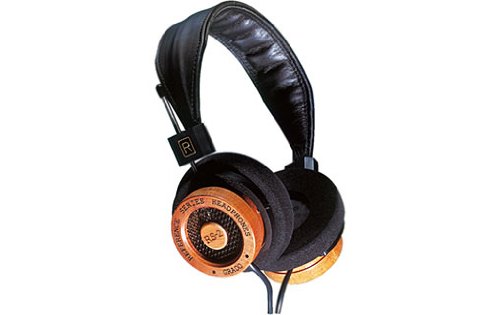
Grado RS2i
4.7/10

Overall score

Score
4.7/ 10
✕
What it is
An overall evaluation of the headphones' quality, based on technical analyses and user reviews.
When it matters
When you need a quick reference to identify the best headphones on the market.
Score distribution
â–¼
<55-66-77-88-99-10
Score components

80%

4.7

Technical score

20%

?

User score

â–¼Worse than 99% of headphones
5.7

Value for money

Value for money
5.7/ 10
✕
What it is
An indicator that combines the headphones' overall rating with their cost.
When it matters
When you are looking for headphones that offer a strong balance of performance, features, and price.
Score distribution
â–¼
<55-66-77-88-99-10
Score components

70%

4.7

Overall score

30%

8.0

Price

â–¼Worse than 96%
4.7

Technical score

Technical score
4.7/ 10
✕
What it is
An assessment of technical performance for products in the Headphones category across these key areas: Sound, Calls & Controls, Connectivity, Features, Battery, Design.
When it matters
When you want to compare headphones based on technical performance and available features.
Score distribution
â–¼
<55-66-77-88-99-10
Score components

52%

5.0

Sound

20%

4.0

Features

10%

6.1

Design

8%

4.0

Connectivity

6%

4.0

Battery

4%

3.8

Calls & Controls

â–¼Worse than 98%
?

User score

User score
8.0/ 10
✕
What it is
A rating that combines user reviews and the total number of reviews received by the headphones.
When it matters
When you want to understand how headphones perform in real listening and how reliable they are in terms of comfort, audio quality, battery life, and long-term use.
Score distribution
â–¼
<55-66-77-88-99-10
Score components

70%

?

User ratings

30%

?

Number of reviews

  • grado-rs2i
grado-rs2i
Where to buy
    N/A~ £480
Best rankings
Available: ranking among products currently available (including other versions of this product).All: ranking among all products in the database.
Loading...
Loading category ranking...

Technical Specifications of pair of headphones Grado RS2i

Technical score
Technical score
4.7/ 10
✕
What it is
An assessment of technical performance for products in the Headphones category across these key areas: Sound, Calls & Controls, Connectivity, Features, Battery, Design.
When it matters
When you want to compare headphones based on technical performance and available features.
Score distribution
â–¼
<55-66-77-88-99-10
Score components:

52%

5.0

Sound

20%

4.0

Features

10%

6.1

Design

8%

4.0

Connectivity

6%

4.0

Battery

4%

3.8

Calls & Controls

4.7
User score
User score
8.0/ 10
✕
What it is
A rating that combines user reviews and the total number of reviews received by the headphones.
When it matters
When you want to understand how headphones perform in real listening and how reliable they are in terms of comfort, audio quality, battery life, and long-term use.
Score distribution
â–¼
<55-66-77-88-99-10
Score components

70%

?

User ratings

30%

?

Number of reviews

?
Popularity
Popularity
1.0/ 10
✕
What it is
An indicator based on the number of reviews received by the headphones.
When it matters
When you prefer headphones that have already been chosen and reviewed by many other users.
Score distribution
â–¼
<55-66-77-88-99-10
Popularity:
Grado RS2i has a popularity score of 1 point, which is lower than that of 73.4% of products in this category.
1.0
Value for money
Value for money
5.7/ 10
✕
What it is
An indicator that combines the headphones' overall rating with their cost.
When it matters
When you are looking for headphones that offer a strong balance of performance, features, and price.
Score distribution
â–¼
<55-66-77-88-99-10
Score components:

70%

4.7

Overall score

30%

8.0

Price

5.7
Active noise cancellation (ANC)
no
This pair of headphones does not support active noise cancellation. 27.5% of headphones support active noise cancellation.
Driver type
dynamic
Driver size
40 mm
This pair of headphones uses a driver size of 40 mm, larger driver size than 28.6% of headphones and equal to 53.3% of headphones.
Number of drivers
1
This pair of headphones uses 1 drivers, fewer drivers than 4% of headphones and equal to 96% of headphones.
Lowest frequency
14 Hz
This pair of headphones reaches a lowest frequency of 14 Hz, lower lowest frequency than 64.2% of headphones and equal to 0.4% of headphones.
Show more
Noise-canceling microphone
no
This pair of headphones does not support a noise-canceling microphone. 39% of headphones support noise-canceling microphones.
Can be used as a headset
no
This pair of headphones is not headset-ready, while 15.1% is. 84.9% of headphones can be used as headsets.
Number of microphones
0
This pair of headphones has 0 microphones, fewer microphones than 73.2% of headphones and equal to 26.9% of headphones.
Boom microphone
no
This pair of headphones does not include a boom microphone. 13.5% of headphones have a boom microphone.
Microphone SNR
N/A
Show more
Connectivity
wired
This pair of headphones supports wired connectivity, less flexible connectivity than 49.2% of headphones and equal to 50.8% of headphones.
Bluetooth version
N/A
Maximum Bluetooth range
N/A
Audio latency
N/A
Multipoint support
no
This pair of headphones does not support multipoint. 30.6% of headphones support multipoint.
Show more
Ambient sound mode
no
This pair of headphones does not offer ambient sound mode. 24.9% of headphones support ambient sound mode.
EQ support
no
This pair of headphones does not support EQ customization. 23.2% of headphones support EQ.
Companion app
no
This pair of headphones does not work with a companion app. 21.6% of headphones support companion apps.
Adjustable ANC levels
N/A
Voice assistant support
no
This pair of headphones does not support voice assistants. 60.9% of headphones support voice assistants.
Show more
Battery life
N/A
Battery life with ANC
N/A
Charging time
N/A
Quick charge
no
This pair of headphones does not support quick charging. 33.1% of headphones support quick charge.
Battery capacity
N/A
Show more
Brand name
Grado
Form factor
on-ear
Weight
255 g
This pair of headphones weighs 255 g, heavier than 64.2% of headphones and equal to 0.6% of headphones.
Acoustic design
open-back
Clamp force
2.2
This pair of headphones has a clamp force of 2.2, lower clamp force than 93.3% of headphones and equal to 2.1% of headphones.
Show more

Grado RS2i vs the average pair of headphones

246810TotalDesignSoundBatteryConnectivityCalls & ControlsFeatures
  • 2.1 lower clamp force
    This pair of headphones has a lower clamp force than the average pair of headphones (2.2 vs 4.3). The average headphones have a clamp force of 4.3.
    2.2 vs 4.3
  • 8,000 Hz higher treble extension
    This pair of headphones has a higher highest frequency than the average pair of headphones (28,000 Hz vs 20,000 Hz). The average headphones reach a highest frequency of 20,000 Hz.
    28,000 Hz vs 20,000 Hz
  • 0.2 % lower distortion
    This pair of headphones has a lower total harmonic distortion than the average pair of headphones (0.1 % vs 0.3 %). The average headphones have total harmonic distortion of 0.3 %.
    0.1 % vs 0.3 %
  • 4 Hz lower bass extension
    This pair of headphones has a lower lowest frequency than the average pair of headphones (14 Hz vs 18 Hz). The average headphones reach a lowest frequency of 18 Hz.
    14 Hz vs 18 Hz
  • Open-back design
    This pair of headphones uses an open-back design, while the average pair of headphones does not. 9.1% of headphones have an open-back design.
  • 0.5 m longer cable length
    This pair of headphones offers a more useful cable length than the average pair of headphones (1.7 m vs 1.2 m). The average headphones have a cable length of 1.2 m.
    1.7 m vs 1.2 m
  • 0.45 dB tighter channel balance
    This pair of headphones has a lower channel balance tolerance than the average pair of headphones (0.1 dB vs 0.5 dB). The average headphones have channel balance tolerance of 0.5 dB.
    0.05 dB vs 0.5 dB
  • 2.1 lower clamp force
    This pair of headphones has a lower clamp force than the average pair of headphones (2.2 vs 4.3). The average headphones have a clamp force of 4.3.
    2.2 vs 4.3
  • Open-back design
    This pair of headphones uses an open-back design, while the average pair of headphones does not. 9.1% of headphones have an open-back design.
  • 0.5 m longer cable length
    This pair of headphones offers a more useful cable length than the average pair of headphones (1.7 m vs 1.2 m). The average headphones have a cable length of 1.2 m.
    1.7 m vs 1.2 m
  • 8,000 Hz higher treble extension
    This pair of headphones has a higher highest frequency than the average pair of headphones (28,000 Hz vs 20,000 Hz). The average headphones reach a highest frequency of 20,000 Hz.
    28,000 Hz vs 20,000 Hz
  • 0.2 % lower distortion
    This pair of headphones has a lower total harmonic distortion than the average pair of headphones (0.1 % vs 0.3 %). The average headphones have total harmonic distortion of 0.3 %.
    0.1 % vs 0.3 %
  • 4 Hz lower bass extension
    This pair of headphones has a lower lowest frequency than the average pair of headphones (14 Hz vs 18 Hz). The average headphones reach a lowest frequency of 18 Hz.
    14 Hz vs 18 Hz
  • 0.45 dB tighter channel balance
    This pair of headphones has a lower channel balance tolerance than the average pair of headphones (0.1 dB vs 0.5 dB). The average headphones have channel balance tolerance of 0.5 dB.
    0.05 dB vs 0.5 dB
  • No passive noise reduction
    This pair of headphones does not offer passive noise reduction, while the average pair of headphones does. 82.6% of headphones have passive noise reduction.
  • No voice assistant support
    This pair of headphones does not support voice assistants, the average pair of headphones does. 60.8% of headphones support voice assistants.
  • Fixed cable
    This pair of headphones has a fixed cable, while the average pair of headphones has a detachable one. 62% of headphones have a detachable cable.
  • Not headset-ready
    This pair of headphones is not headset-ready, while the average pair of headphones is. 84.8% of headphones can be used as headsets.
  • 4 dB/mW lower sensitivity
    This pair of headphones has a lower sensitivity than the average pair of headphones (98 dB/mW vs 102 dB/mW). The average headphones have sensitivity of 102 dB/mW.
    98 dB/mW vs 102 dB/mW
  • 17% higher weight
    This pair of headphones is heavier than the average pair of headphones (255 g vs 218 g). The average pair of headphones weighs 218 g.
    255 g vs 218 g
  • 5.33x more expensive
    Grado RS2i is more expensive than the average pair of headphones (£480 vs £90).
    £480 vs £90
  • 27.7% worse value for money
    Grado RS2i has worse value for money than the average pair of headphones (5.69 vs 7.3).
    5.69 vs 7.27
  • 5.33x more expensive
    Grado RS2i is more expensive than the average pair of headphones (£480 vs £90).
    £480 vs £90
  • 27.7% worse value for money
    Grado RS2i has worse value for money than the average pair of headphones (5.69 vs 7.3).
    5.69 vs 7.27
  • 5.87x less popular
    Grado RS2i is less popular than the average pair of headphones (1 vs 5.9).
    1 vs 5.87
  • Fixed cable
    This pair of headphones has a fixed cable, while the average pair of headphones has a detachable one. 62% of headphones have a detachable cable.
  • 17% higher weight
    This pair of headphones is heavier than the average pair of headphones (255 g vs 218 g). The average pair of headphones weighs 218 g.
    255 g vs 218 g
  • Tangle-prone cable
    This pair of headphones uses a tangle-prone cable, while the average pair of headphones is easier to manage. 64.2% of headphones use a tangle-free cable.
  • No travel bag
    This pair of headphones does not include a travel bag, the average pair of headphones does. 65.4% of headphones include a travel bag.
  • No passive noise reduction
    This pair of headphones does not offer passive noise reduction, while the average pair of headphones does. 82.6% of headphones have passive noise reduction.
  • 4 dB/mW lower sensitivity
    This pair of headphones has a lower sensitivity than the average pair of headphones (98 dB/mW vs 102 dB/mW). The average headphones have sensitivity of 102 dB/mW.
    98 dB/mW vs 102 dB/mW
  • 5 dB SPL lower sound pressure level
    This pair of headphones has a lower sound pressure level than the average pair of headphones (98 dB SPL vs 103 dB SPL). The average headphones reach a sound pressure level of 103 dB SPL.
    98 dB SPL vs 103 dB SPL
  • No battery indicator
    This pair of headphones does not show battery level clearly, while the average pair of headphones does. 56.3% of headphones have a battery level indicator.
  • Not headset-ready
    This pair of headphones is not headset-ready, while the average pair of headphones is. 84.8% of headphones can be used as headsets.
  • 1 fewer microphones
    This pair of headphones has fewer microphones than the average pair of headphones (0 vs 1). The average headphones have 1 microphones.
    0 vs 1
  • No voice assistant support
    This pair of headphones does not support voice assistants, the average pair of headphones does. 60.8% of headphones support voice assistants.
  • 7 older release date
    This pair of headphones was released earlier than the average pair of headphones (2009 vs 2016). The average headphones were released in 2016.
    January 2009
    2009 vs 2016

Video reviews

Hands-on testing, unboxing, and real-world video evaluations

7.0
Gary Chen
≈ estimated
24/08/2020
Hands-on review · tonality, soundstage and comparisons
Verdict
Grado RS2i is a recommended complement for certain music, though it is not class-leading for its price.
7.0
SOUNDPAL audio
≈ estimated
29/06/2014
Unboxing · first look at build and included parts
Verdict
Grado RS2i looks good so far, but the plastic part disappoints and the sound is still untested.
9.0
Protocols
≈ estimated
04/11/2013
Hands-on review · sound with and without amp, comfort
Verdict
Grado RS2i sounds great and is comfortable, but its bass is weak and it leaks sound; best paired with an amplifier.
Not graded

Expert reviews

In-depth analysis and verdict from leading tech publications
soundandvision.com
27/01/2012
Panel test · Open-back headphones
Verdict
The Grado RS2i is a very detailed, fast headphone for jazz, acoustic and classical, but its treble-heavy tone disappoints on rock.
homestudiobasics.com
21/12/2017
Personal listening review · Open-back headphones
Verdict
The Grado RS2i is a fast, detailed headphone with good bass that gets harsh and hissy when loud, and needs no amp.
M
misauriculares.com
16/12/2019
Summary of the review

Third-party reviews

What customers like about Grado RS2i

  • Incredible mid-range and treble detail with excellent transients and speed
  • Hand-crafted mahogany wood enclosures that provide natural warmth and a unique aesthetic
  • Lightweight design that feels remarkably airy and doesn't clamp the head too tightly
  • Easy to drive from portable sources like iPods or laptops due to 32-ohm impedance
  • Highly involving and 'intimate' soundstage that makes the listener feel on stage with performers
  • Improved 8-conductor cable over the previous RS2 model for better signal control

What customers don't like about Grado RS2i

  • Treble-heavy tonal balance that can be fatiguing or sound 'bright' to some listeners
  • Lacks deep sub-bass impact and 'slam,' making them less ideal for EDM or hip-hop
  • Foam ear cushions are often described as stiff, scratchy, and uncomfortable for long sessions
  • Open-back design offers virtually no noise isolation and leaks sound to those nearby
  • Non-removable, thick, and somewhat bulky cable can be cumbersome for some users
  • Simple 'pizza box' cardboard packaging and lack of included accessories (like a 3.5mm adapter)

Verdict

The Grado RS2i is a high-performance open-air, on-ear headphone from the Reference Series, featuring hand-crafted mahogany housings designed to reduce resonance and enhance tonal purity. It is equipped with 40mm vented dynamic drivers matched to within 0.05dB, providing a wide frequency response of 14Hz – 28kHz, an impedance of 32 ohms, and a sensitivity of 98dB. Key characteristics include an 8-conductor ultra-high purity long crystal (UHPLC) copper cable and 'de-stressed' diaphragms for improved detail. Main pros are its vivid, ultra-lucid midrange, fast transient response, and lightweight design that facilitates long listening sessions. However, it is frequently noted for a treble-heavy tonal balance that can lack deep bass impact, a relatively stiff and non-detachable cable, and foam ear pads that some users find abrasive or uncomfortable.

Compare Grado RS2i with other products in the Headphones category

1Product to compare no. 1
VS
2Product to compare no. 2
VS
3Product to compare no. 3 (optional)

Graphic comparison of Grado RS2i and other products in the Headphones category

No results found