Are Oppo tablets good?
Oppo tablets have an average overall score of 8.7, ranking #7 among all tablet brands, and a user rating of 8.2, placing them at #17 based on user reviews.
The design usually follows Oppo’s smartphone style, slim and modern, which gives them an attractive look compared to other mid-range tablets. Battery life is often reasonable, covering a full day of light to moderate use.
The main distinction comes from Oppo’s ColorOS software layered on Android, which adds features and customization but can feel different if you prefer a stock Android experience. Oppo tablets are less widespread than Samsung or Apple tablets, which means accessory support and long-term updates may not be as strong.
The best Oppo tablets are as follows.
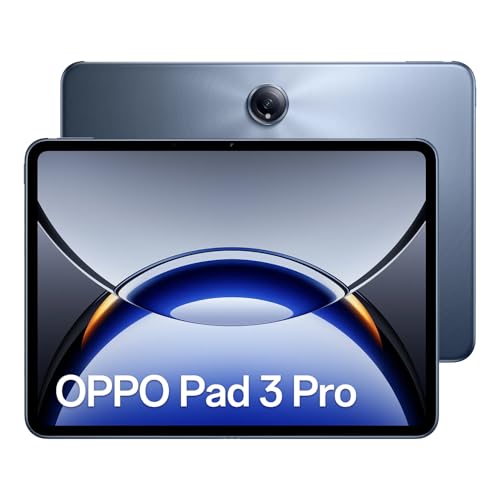
- Oppo Pad 3 Pro (12GB + 256GB) (Overall score: 8.68 points)
- Oppo Pad 5 WiFi (16GB + 512GB) (Overall score: 8.39 points)
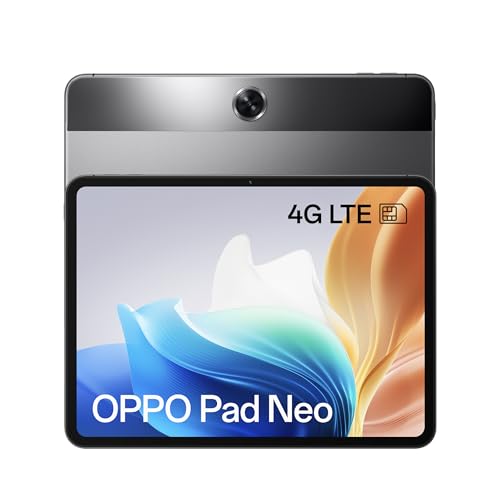
- Oppo Pad Neo LTE (8GB + 128GB) (Overall score: 7.47 points)
Tablet brands are compared by overall score in the following chart.
[horizontal-chart-17307447123912072405130790404762119862712244951798]
What are the main advantages of Oppo tablets?
The main advantages of Oppo tablets are the following:
- Display quality: Oppo tablets use high-resolution LCD or AMOLED panels with up to 2.5K resolution and 120 Hz refresh rate, which gives smoother visuals in gaming and streaming. Brightness often reaches 500 nits, so the screen stays clear even in strong daylight.
- Fast charging: Many Oppo tablets integrate 33 W or 67 W SUPERVOOC charging, so a 8.000 mAh battery charges to 50% in about 30 minutes. This feature reduces downtime and keeps the device ready for longer use.
- Battery life: Large batteries range from 7.000 to 9.000 mAh, which lasts about 12–14 hours of video playback or 8–10 hours of continuous browsing. This capacity is above average for tablets in the mid-range segment.
- Performance: Oppo tablets often use Snapdragon 870 or Dimensity chipsets with up to 8 GB RAM and 256 GB storage. This level of performance supports multitasking, video editing, and high-end games without lag.
- Audio quality: Quad-speaker setups with Dolby Atmos support create immersive sound for films and music. The system separates channels well, which improves both bass and clarity.
- Connectivity: Some models support 5G and Wi-Fi 6, so downloads reach over 1 Gbps where the network supports it. This feature helps in video calls, cloud gaming, and fast file transfer.
- Stylus support: High-end Oppo tablets work with stylus input at 4096 pressure levels, so writing or drawing feels precise. This appeals to students and designers who use digital note-taking or art apps.
What are the main disadvantages of Oppo tablets?
The disadvantages of Oppo tablets are the following:
- Software ecosystem: Oppo tablets run ColorOS, which has fewer tablet-optimized apps compared to iPadOS or Samsung’s One UI. Some apps stretch across the screen without real multitasking features.
- Update policy: Android updates for Oppo tablets usually cover 2–3 years, which is shorter than Apple’s 5–6 years or Samsung’s 4 years. This limits long-term use.
- Limited availability: Oppo tablets are not sold in all regions (mainly Asia and parts of Europe), so accessories and official support may be harder to access.
- Price vs competition: High-end Oppo tablets cost around £390-£550, but for similar prices Samsung and Apple models give stronger app ecosystems and longer support.
- Storage expandability: Many Oppo tablets do not support microSD expansion, so users must rely on internal storage (up to 256 GB), which can be limiting for large files and games.
Who makes Oppo tablets?
Oppo tablets are made by Oppo, a Chinese consumer electronics company founded in 2004 and headquartered in Dongguan, Guangdong.
Oppo operates as a subsidiary of BBK Electronics, the same parent company behind brands like OnePlus, Realme, and Vivo. The company produces smartphones, tablets, audio devices, and other smart electronics, and it expanded into the tablet market in 2022 with the Oppo Pad series.
Oppo has more than 40,000 employees worldwide and sells products in over 50 countries. It invests heavily in research and development through multiple global centers, with a strong focus on design and hardware innovation.
How popular are Oppo tablets worldwide?
Oppo tablets are a small player worldwide, with shipments in 2024 estimated at about 2 million units and a global market share close to 1 %, so the brand stayed outside the top 5 vendors.
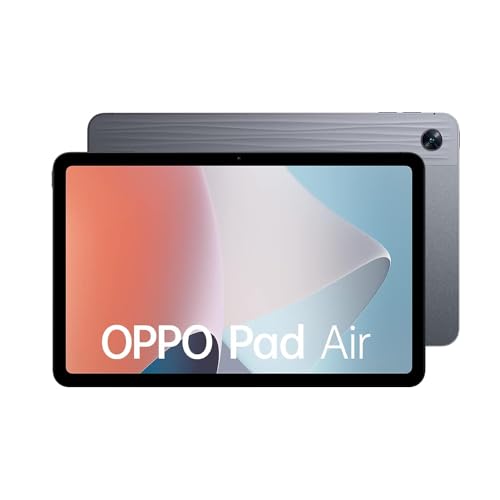
The Oppo Pad 2 and Pad Air drove most sales, positioned in the mid-range Android segment.
Oppo performed strongest in China, where its share reached about 5 %, while in Europe and other regions its presence remained minimal.
What are the main Oppo tablet series?
The main Oppo tablet series are as follows:
- Oppo Pad: First launched in 2022 as Oppo’s entry into the tablet market. It has a 11-inch LCD display with 120 Hz refresh rate, Snapdragon 870 processor, up to 8 GB RAM and 256 GB storage. It supports the Oppo Pencil and runs ColorOS for Pad.
- Oppo Pad Air: A more affordable series with a slimmer design. It has a 10.36-inch LCD display, Snapdragon 680 processor, up to 6 GB RAM and 128 GB storage. It is lighter than the regular Pad and targets users who want a budget-friendly multimedia tablet.
- Oppo Pad 2: A high-end upgrade introduced in 2023. It has a 11.6-inch 2.8K LCD display with 144 Hz refresh rate, MediaTek Dimensity 9000 processor, up to 12 GB RAM and 512 GB storage. It supports Oppo Pencil 2 and a smart keyboard case, and focuses on productivity and entertainment.
- Oppo Pad Neo: A mid-range series launched in 2024. It has a 11.4-inch 2.4K LCD display with 120 Hz refresh rate, MediaTek Dimensity 7050 processor, up to 8 GB RAM and 256 GB storage. It positions itself between the Pad Air and Pad 2, balancing price and performance.
How much do Oppo tablets cost?
Oppo tablets cost between £220 and £430 depending on the model and specifications.
The more affordable models start around £220 and focus on basic multimedia use, while higher-end models approach £430 with stronger processors and better displays.
The mid-range category, usually around £260-£340, includes tablets with Full HD resolution, decent RAM, and storage options that fit daily use such as browsing, reading, or watching videos. At the higher end, around £390-£430, Oppo tablets often feature larger displays, higher refresh rates, and faster chipsets, which improve multitasking and gaming.
The following chart shows how prices are distributed across Oppo tablets.
[vertical-chart-03422297049929959865081707814740955426702324425208]
What should you consider while choosing the best Oppo tablet?
When choosing the best Oppo tablet, you should consider the following factors:
- Display: The screen size ranges from 11 inches in the Pad SE to 12.1 inches in the Pad 3 Pro. Resolution varies significantly between models, with the Pad SE at 1920x1200 and the Pad 3 Pro at 3000x2120 (3K). Higher-end models like the Pad 3 Pro achieve 900 nits brightness while budget options like the Pad SE reach 500 nits. The refresh rate also differs, with the Pad SE at 90Hz and premium models at 144Hz.
- Performance: Oppo tablets use different chipsets across series. The Pad SE features MediaTek Helio G100 for basic tasks, while the Pad 2 uses Dimensity 9000 for mid-range performance. The flagship Pad 3 Pro includes Snapdragon 8 Gen 3 which delivers top-tier performance for gaming and multitasking.
- Memory: RAM options vary from 4GB in entry-level Pad SE to 16GB in high-end Pad 3 Pro. Storage starts at 128GB in the Pad SE and extends to 1TB in premium models. The Pad 3 Pro uses faster UFS 3.1 storage compared to UFS2.2 in the Pad SE.
- Battery: Battery sizes range from 9340mAh in the Pad SE to 9510mAh in the Pad 2 and Pad 3 Pro. Fast charging speeds differ significantly, with the Pad SE at 33W while the Pad 3 Pro supports 67W charging for quicker power recovery.
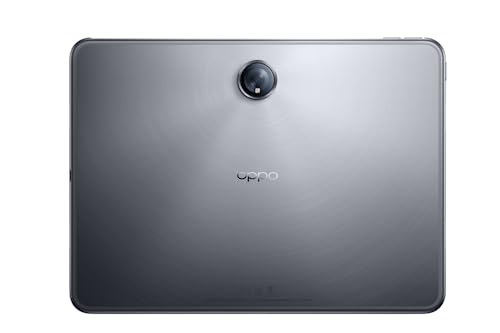
- Design: Weight varies from 530 grams in the Pad SE to 586 grams in the Pad 3 Pro. Thickness ranges from 6.49mm in the Pad 3 Pro to 7.39mm in the Pad SE. Premium models feature metal unibody construction while budget options use standard materials.
- Software: All models run ColorOS based on Android, but versions differ. The Pad SE uses ColorOS 15.0.1 while the Pad 3 Pro runs ColorOS 14.1. Higher-end models offer more customization options and better multitasking features.
- Connectivity: The Pad SE includes Wi-Fi 5 and Bluetooth 5.4, while the Pad 3 Pro features Wi-Fi 7 and NFC support. Premium models also include 5G sharing capability for enhanced connectivity.