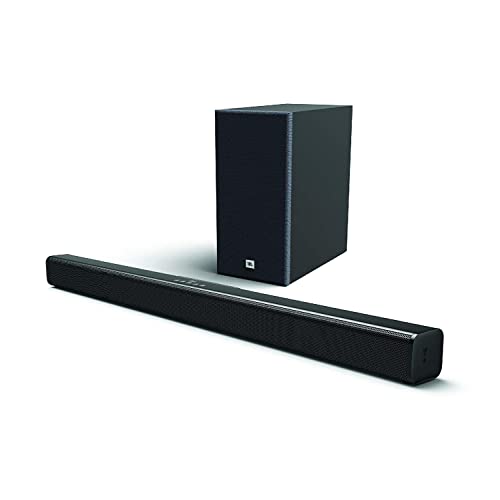
Are JBL soundbars good?
JBL soundbars have an average overall score of 5.9, ranking #10 among all soundbar brands, and a user rating of 8.3, placing them at #13 based on user reviews.
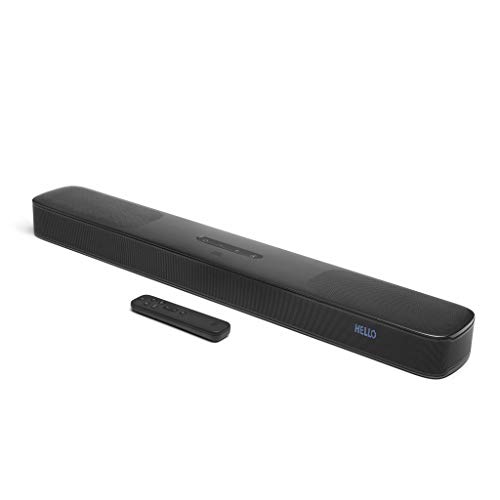
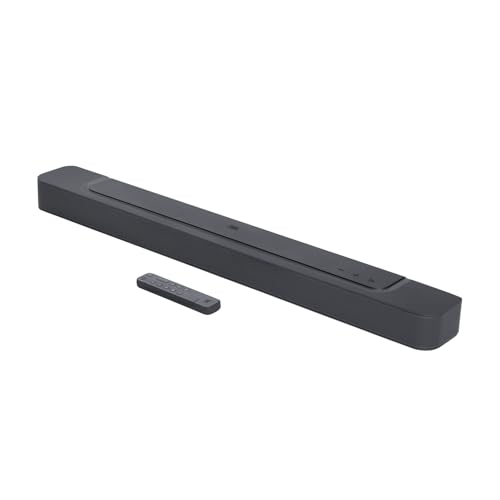
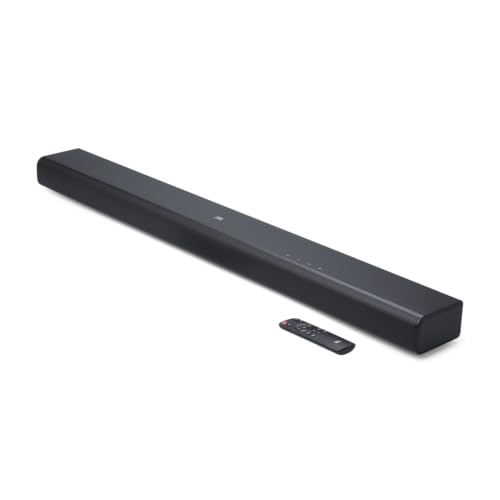
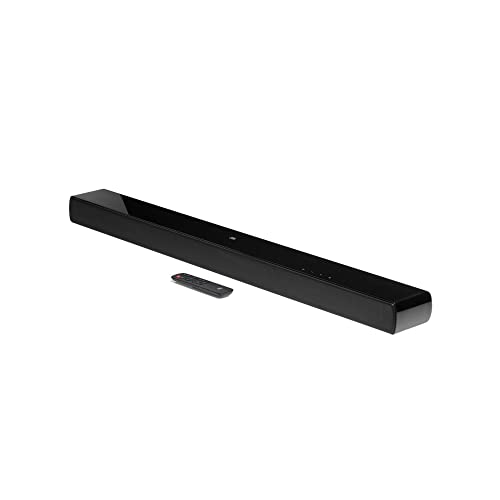
JBL soundbars are generally good if you want a familiar audio brand with a clear split between simple TV bars and more capable all-in-one cinema bars. The range covers compact 2.0 models around 614 mm wide, larger 950 mm Cinema bars, and 5.0 eARC/Atmos models at the top of the JBL soundbar ladder.
The brand's strongest models are the Bar 300 and Bar 5.0 MultiBeam because they add eARC, Dolby Atmos, Wi-Fi, and 5.0-channel processing without requiring a separate subwoofer or rear-speaker package. The simpler Cinema and Bar Studio models make more sense when ARC, Bluetooth, and basic TV sound are enough.
The main limitation is that JBL does not give you a bundled subwoofer or rear speakers in this soundbar range. If you want a full package with separate bass hardware or rear channels in the box, Samsung and LG usually provide more direct options.
The best available JBL soundbars are as follows.
- JBL Bar 5.0 MultiBeam (Overall score: 7.67 points)
- JBL Bar 300 (Overall score: 7.55 points)
- JBL Cinema SB510 (Overall score: 6.26 points)
The following chart ranks soundbar brands by their overall scores.
[horizontal-chart-04592904924512229361057660775741675581583712410342]
What are the main advantages of JBL soundbars?
The main advantages of JBL soundbars are as follows.
- Dolby Atmos tier: JBL Bar 300 and Bar 5.0 MultiBeam support Dolby Atmos. That gives JBL a clear step-up path above the basic Cinema and 2.0 All-in-One models.
- 5.0 channel option: JBL reaches 5.0 layouts in the Bar 300 and Bar 5.0 MultiBeam. These models are stronger choices than the 2.0 bars when you want a wider front stage and more advanced processing.
- Wi-Fi models: Wi-Fi is available on the stronger JBL bars. Choose those models if you want app-connected or streaming-friendly features rather than only Bluetooth playback.
- Bluetooth baseline: Bluetooth is present across the JBL soundbar range. That keeps quick phone music playback available even on the cheaper Cinema, Studio, and Bar 2.0 models.
- Compact choices: JBL includes 614 mm models such as Bar 2.0 All-in-One and Bar Studio. Those are easier to place under smaller TVs and tighter furniture than the wider 950 mm Cinema models.
- Higher output: Bar 300, Bar 5.0 MultiBeam, and Cinema SB510 sit above the lowest-output JBL models. They are the more relevant JBL choices when a basic 30-110 W bar is not enough.
What are the main disadvantages of JBL soundbars?
The main disadvantages of JBL soundbars are as follows.
- No bundled subwoofer: JBL does not include a separate subwoofer with these models. That keeps setup simple, but it limits low-bass impact compared with 2.1 and 3.1 packages with dedicated bass hardware.
- No rear speakers: JBL also does not include rear speakers in this range. The 5.0 bars can create a wider processed stage, but they are not the same as physical rear-channel packages.
- Basic entry tier: Several JBL models stay at 2.0 with ARC and no Dolby Atmos. They are useful TV-audio upgrades, but they are not in the same hardware tier as Bar 300 or Bar 5.0 MultiBeam.
- Mixed HDMI depth: Some JBL models have one HDMI input, while others have no HDMI input beyond the TV connection path. Check this before routing a console, streamer, or disc player through the soundbar.
- Limited top end: JBL reaches eARC, Wi-Fi, Dolby Atmos, and 5.0 here, but not 5.1.2 or 7.1.2. Sony and Samsung have broader high-end ladders if height channels and bigger channel counts are priorities.
Who makes JBL soundbars?
JBL soundbars are made under the JBL brand, which is part of HARMAN International. JBL's audio heritage goes back to James B. Lansing, who founded the brand in 1946, and HARMAN describes JBL as one of its world-renowned audio brands covering consumer, professional, home, automotive, multimedia, and connected-technology audio.
HARMAN itself is now part of Samsung Electronics: Samsung completed its acquisition of HARMAN in March 2017, while retaining HARMAN's consumer and professional audio brands. That means a JBL soundbar comes from HARMAN's audio-brand portfolio rather than from JBL operating as a standalone TV manufacturer.
What are the main JBL soundbar series?
The main JBL soundbar series are as follows.
- Bar 2.0 line: JBL Bar 2.0 All-in-One and Bar Studio are the compact/simple side of the range. They focus on 2.0 playback, ARC, Bluetooth, and easy placement rather than on Dolby Atmos, eARC, or a larger channel layout.
- Cinema SB line: JBL Cinema SB110, SB120, and SB510 are the more TV-package-style JBL models. SB110 and SB120 stay at 2.0, while SB510 is the stronger step because it moves to 3.1 and 200 W output while still avoiding Wi-Fi and Atmos complexity.
- Bar 300 tier: JBL Bar 300 is the cleaner modern step-up model. It adds 5.0 channels, eARC, Dolby Atmos, Wi-Fi, Bluetooth, one HDMI input, and 260 W output, so it is a better fit for a main TV than the simpler 2.0 bars.
- Bar 5.0 MultiBeam tier: JBL Bar 5.0 MultiBeam is close to Bar 300 in role but uses the MultiBeam positioning in JBL's naming. It combines 5.0 playback, eARC, Dolby Atmos, Wi-Fi, Bluetooth, one HDMI input, and 250 W output in a narrower cabinet than the 950 mm Cinema bars.
How much do JBL soundbars cost?
JBL soundbars usually cost about £90-£300, with the main jump coming when you move from 2.0 ARC models to the 5.0 eARC and Dolby Atmos tier.
The lower JBL range is around £90-£160. This covers Cinema SB510, Cinema SB110/SB120, Bar 2.0 All-in-One, and Bar Studio, where the focus is usually ARC, Bluetooth, 2.0 or 3.1 playback, and straightforward TV use rather than Wi-Fi or Atmos.
The stronger JBL Bar 300 and Bar 5.0 MultiBeam models sit around £260-£300. That higher tier buys eARC, Dolby Atmos, Wi-Fi, 5.0-channel processing, and higher rated output, so it is the more relevant price band if the soundbar is for a main living-room TV.
How do JBL soundbars compare with Sony models?
JBL soundbars usually compare with Sony as the more affordable and simpler brand, while Sony has the stronger premium channel-layout ladder. JBL is easier to read if you are choosing between basic 2.0/3.1 bars and a 5.0 Atmos step-up model; Sony stretches further into expensive 5.0.2, 5.1.2, 7.0.2, and 7.1.2 territory.
For everyday TV upgrades, JBL often gives you the lower entry price and more compact options. Models such as Bar 2.0 All-in-One and Bar Studio are smaller and cheaper than Sony's larger premium bars, while Cinema SB510 gives JBL a simple 3.1 route that Sony does not mirror as directly in this range.
For home-cinema ambition, Sony is stronger. Sony's premium Bravia Theater and HT-A models bring higher channel counts, eARC, Wi-Fi, and Dolby Atmos across a more expensive ladder, while JBL's current upper point here is mainly Bar 300 or Bar 5.0 MultiBeam with 5.0 processing and no included subwoofer or rear speakers.
What should you consider while choosing the best JBL soundbar?
The main things to check while choosing the best JBL soundbar are as follows.
- Model tier: Start by separating Cinema/Bar 2.0 models from Bar 300 and Bar 5.0 MultiBeam. The lower tier is mostly about ARC, Bluetooth, and basic TV improvement, while the step-up tier adds eARC, Dolby Atmos, Wi-Fi, and 5.0 processing. This matters because JBL model names can look close even when the hardware level is very different.
- Channels: Compare 2.0, 3.1, and 5.0 before looking at smaller feature differences. A 2.0 JBL bar is mainly a stereo TV upgrade, Cinema SB510 adds a center-channel-style 3.1 layout, and the 5.0 models are the better fit for wider front-stage processing. If dialogue focus matters more than Atmos labels, the 3.1 SB510 can still be more relevant than a basic 2.0 bar.
- HDMI path: Check whether the model has ARC or eARC and whether it includes a usable HDMI input. JBL's step-up models use eARC, while many cheaper models stay with ARC or simpler HDMI behavior. If you want to pass a streamer or console through the bar, do not assume every JBL model gives you the same HDMI routing.
- Atmos support: Treat Dolby Atmos as a Bar 300 and Bar 5.0 MultiBeam feature in this range. The Cinema and basic 2.0 bars do not offer the same format path, so they are not equivalent buys for movie use. If Atmos is not important, the cheaper JBL models may be sufficient, but the trade-off is a simpler sound field.
- Wi-Fi features: Wi-Fi is another clear divider between the better JBL bars and the simpler entry models. Choose the Wi-Fi models if app-connected streaming and smarter home-audio behavior matter. If you only need TV sound and phone Bluetooth playback, a cheaper non-Wi-Fi model can keep the setup simpler.
- Size and output: JBL ranges from compact 614 mm bars to wider 950 mm Cinema models, with rated output from 30 W to about 260 W. Check width against the TV stand and choose the higher-output models for a main living-room TV. A compact low-output bar can be practical for a small screen, but it is not the same class as Bar 300 or Bar 5.0 MultiBeam.