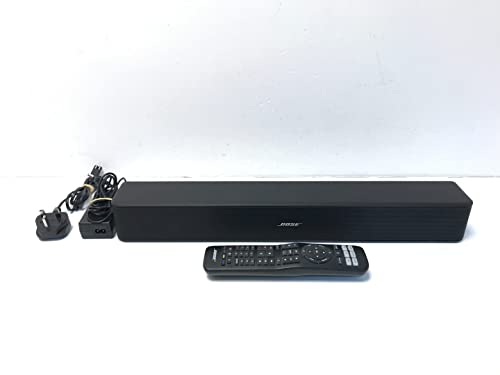
Are Bose soundbars good?
Bose soundbars have an average overall score of 7, ranking #5 among all soundbar brands, and a user rating of 9.2, placing them at #2 based on user reviews.
Bose soundbars are good if you want a compact TV soundbar with strong dialogue focus, clean living-room design, and smart features on the higher models. The range is strongest from the Smart Soundbar line upward, where Wi-Fi, AirPlay, app control, voice assistant support, eARC, and Dolby Atmos become relevant depending on the model.
The lineup is narrower than Samsung or LG. Bose ranges from 2.0 to 5.1.2, while some competing brands go wider with bundled subwoofers, rear speakers, or larger channel counts. That makes Bose better for tidy front-stage sound than for buyers who want a complete surround package in one box.
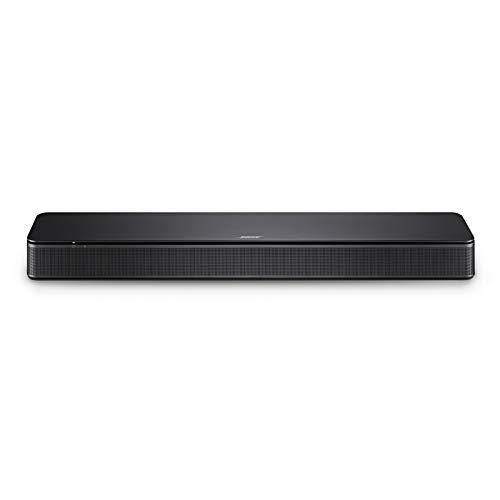
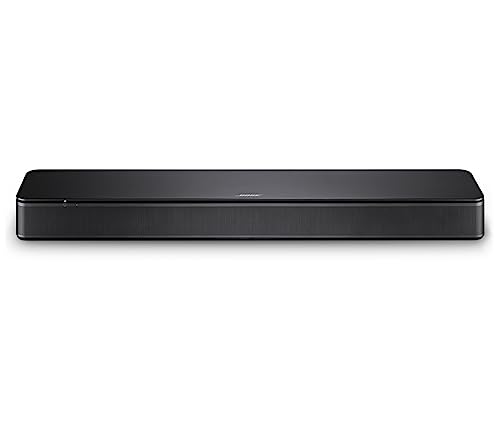
The main thing to check is the exact model tier. A Bose Solo or Bose TV Speaker is a basic TV-audio upgrade, while the Smart Soundbar 600, 900, and Ultra are much closer to Atmos-focused home-cinema bars.
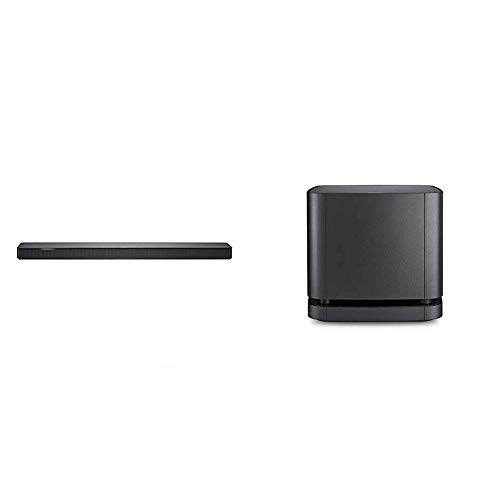
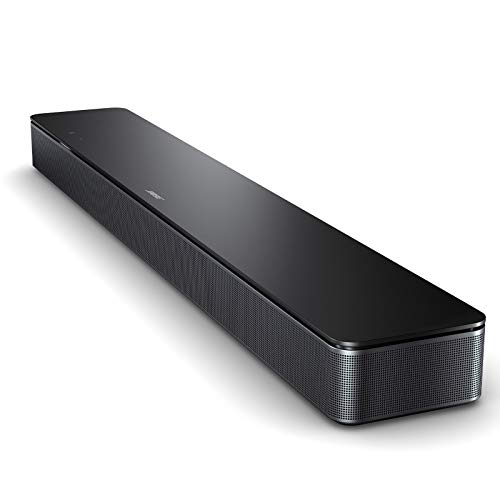
The best available Bose soundbars are as follows.
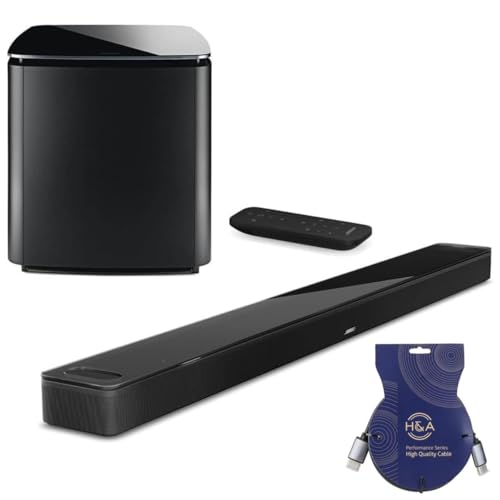
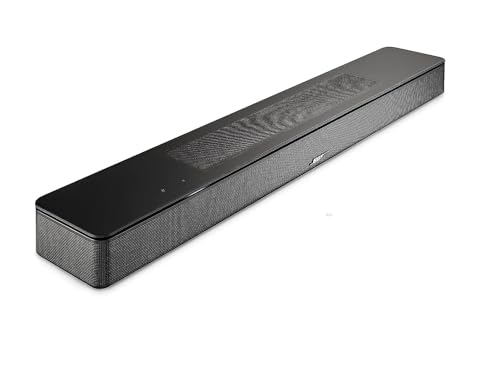
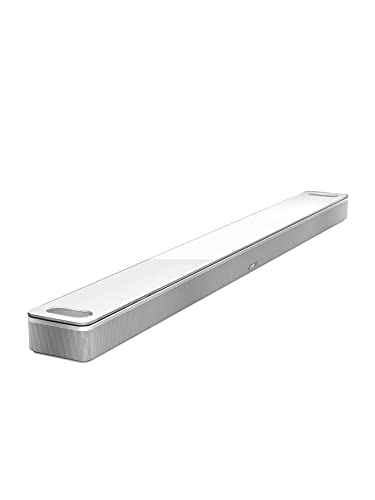
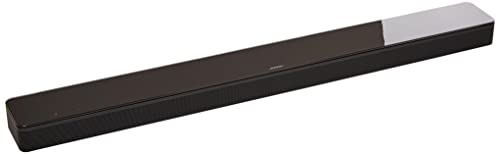
- Bose Smart Ultra Soundbar (Overall score: 7.79 points)
- Bose Smart Soundbar 600 (Overall score: 7.78 points)
- Bose Smart Soundbar 900 (Overall score: 7.71 points)
The chart below ranks soundbar brands based on their overall scores.
[horizontal-chart-04592904924512229361057660775741675581583712410342]
What are the main advantages of Bose soundbars?
The main advantages of Bose soundbars are as follows:
- Compact design: Bose soundbars are generally easier to place than many large home-cinema bars. Bose soundbars run from about 550 mm to 1050 mm wide and stay low at roughly 45-70 mm tall, so they work well under many TVs without needing a deep cabinet or a large speaker layout.
- Dialogue clarity: Bose puts clear TV speech high in the range, and dialogue enhancement appears across the Bose range. This matters for streaming series, news, sport, and films where the built-in TV speakers make voices sound thin or recessed.
- Smart features: The stronger Bose smart bars add Wi-Fi, AirPlay, app control, and voice assistant support. These features appear mainly from the Smart Soundbar 300/500/700 tier upward, while the Solo and TV Speaker models stay more basic.
- Atmos options: Bose has Dolby Atmos options in the Smart Soundbar 600, Smart Soundbar 900, and Smart Ultra Soundbar. These models move beyond simple 2.0 or 3.0 playback and are the better Bose choices for films, games, and larger TV setups.
- Modular upgrades: Bose does not force every buyer into a large surround package at the start. You can choose a clean all-in-one bar first, then treat bass modules or surround speakers as a separate upgrade path if the room later needs more low-end impact or rear effects.
What are the main disadvantages of Bose soundbars?
Bose soundbars have the following main disadvantages:
- No bundled subwoofer: Bose soundbars generally do not include a separate subwoofer in the box. That keeps setup clean, but it also means deep bass impact is limited unless you add a Bose bass module separately. Buyers focused on action films or bass-heavy music may get stronger value from a package that includes a subwoofer.
- No bundled rears: Bose also does not include rear speakers with these soundbars. Front-stage processing can widen the sound, but it cannot replace real rear channels behind the listener. For proper surround separation, you need to check optional rear-speaker compatibility and budget for extra hardware.
- Premium pricing: Bose becomes expensive once you move into the Smart Soundbar 700, 900, or Ultra tier. The range reaches about £850, so buyers should make sure they are paying for the features they will actually use: eARC, Atmos, app control, voice support, room calibration, and possible modular expansion.
- Basic entry models: The Solo models and Bose TV Speaker are much simpler than the premium Smart Soundbar line. They are useful for clearer TV sound, but they do not offer the same Wi-Fi, AirPlay, eARC, Atmos, room calibration, or voice-control package as the stronger Bose models.
Who makes Bose soundbars?
Bose soundbars are made by Bose Corporation, the American audio company founded in 1964 by Dr. Amar G. Bose. Bose is headquartered in Framingham, Massachusetts, and remains a privately held company. A distinctive part of its ownership structure is that the majority of Bose stock was donated to MIT in the form of non-voting shares, so the company stayed private while supporting the institute's research mission.
Bose is best known as a specialist audio company rather than as a TV manufacturer. Its wider business includes consumer speakers, headphones, automotive audio, aviation headsets, and professional sound products, so a Bose soundbar comes from a company whose identity has long been centered on acoustics, speaker design, and audio engineering.
What are the main Bose soundbar series?
Bose soundbars are mainly split into Solo/TV Speaker models, Smart Soundbar 300/500/700 models, and the newer Atmos-focused Smart Soundbar 600/900/Ultra tier.
- Solo line: Bose Solo models such as the Solo 5 and Solo Soundbar Series II are basic 2.0 soundbars. They focus on compact placement, Bluetooth, and clearer TV sound rather than eARC, Wi-Fi, AirPlay, app control, or Dolby Atmos. They make the most sense for small TVs, secondary rooms, or buyers who want a simple Bose bar without smart-home features.
- TV Speaker: The Bose TV Speaker is still a simple 2.0 bar, but it is more TV-focused than the older Solo models. It adds ARC and keeps the cabinet compact at under 600 mm wide. It is a better fit for basic HDMI TV use, but it is not a cinema-focused Bose model.
- Smart 300/500/700: The Smart Soundbar 300, 500, and 700 sit in the middle of the Bose range with 3.0 layouts and stronger smart features. These are the Bose models to consider if you want Wi-Fi, AirPlay, app control, voice assistant support, and a more polished daily TV setup without moving to Atmos.
- Smart 600: The Smart Soundbar 600 is the compact Atmos model in the Bose range. It uses a 3.0.2 layout with eARC, Dolby Atmos, Wi-Fi, AirPlay, app control, voice support, and a much shorter width than the 900/Ultra models. It is the most relevant Bose option when you want Atmos features but not a very wide bar.
- Smart 900/Ultra: The Smart Soundbar 900 and Smart Ultra Soundbar are the premium Bose bars. They use 5.1.2 layouts with eARC, Dolby Atmos, Wi-Fi, AirPlay, app control, voice support, and room calibration. These are the best Bose candidates for larger TVs and more serious movie use, but they still do not include a subwoofer or rear speakers in the box.
How much do Bose soundbars cost?
Bose soundbars cost about £45 to £850, with the main price jump coming from smart features, eARC, Dolby Atmos, room calibration, and the move from 2.0 or 3.0 playback to 5.1.2 layouts.
Entry Bose models such as the Solo Soundbar Series II, Solo 5, and Bose TV Speaker sit roughly around £45-£260. These are mainly compact TV-audio upgrades, so the buyer is paying for clearer dialogue, simple Bluetooth, small size, and in the TV Speaker's case ARC rather than premium cinema hardware.
Midrange Bose models such as the Smart Soundbar 500, Smart Soundbar 300, and Smart Soundbar 600 sit roughly around £260-£430. This is where Bose becomes more interesting technically, because Wi-Fi, AirPlay, app control, voice assistant support, room calibration on selected models, and Atmos on the 600 start to matter.
Premium Bose models such as the Smart Soundbar 900, Smart Soundbar 700, and Smart Ultra Soundbar sit roughly around £700-£850. This tier is mainly for buyers who want the strongest Bose smart-bar experience, with eARC, larger cabinets, higher channel layouts, Dolby Atmos on the 900 and Ultra, and better suitability for main living-room use.
How do Bose soundbars compare with Sonos models?
Bose soundbars are usually the better fit if you want a compact TV-first bar with Bluetooth and voice features, while Sonos soundbars are stronger if the priority is a Wi-Fi multiroom ecosystem and the highest channel layout in the Sonos Arc Ultra tier.
Bose has a broader soundbar ladder, ranging from basic Solo and TV Speaker bars to Smart Soundbar 600, 900, and Ultra models. Sonos has a smaller soundbar range, but it spans from the Ray to Beam Gen 2, Arc, and Arc Ultra, with the Arc Ultra reaching a much larger 9.1.4 layout.
For basic TV sound, Bose has more low-end and compact choices. The Solo models and Bose TV Speaker are simpler than Sonos Beam or Arc, but they are easier to justify when the goal is only clearer dialogue and a small footprint.
For premium cinema use, compare Bose Smart Ultra and Smart Soundbar 900 against Sonos Arc and Arc Ultra by channel layout, eARC, Atmos, app ecosystem, and expansion plans. Bose tops out at 5.1.2, while Sonos reaches 9.1.4 with Arc Ultra, so Sonos has the stronger top-end channel specification if the room and budget justify it.
The better choice depends on ecosystem priority. Bose is more appealing if you want Bose voice/control features and a simple TV-first bar, while Sonos makes more sense if you already use Sonos speakers or want a broader multiroom setup around the same app platform.
What should you consider while choosing the best Bose soundbar?
The main things to check while choosing the best Bose soundbar are as follows.
- Series tier: Start by separating Solo and TV Speaker models from the Smart Soundbar line. Solo and TV Speaker models are mainly 2.0 TV-audio upgrades, while Smart Soundbar 300, 500, and 700 add stronger connected features and the 600, 900, and Ultra tier adds the most relevant Bose cinema specs. This prevents comparing a basic Bose bar with an Atmos model as if they serve the same room.
- Channel layout: Bose ranges from 2.0 and 3.0 models to 3.0.2 and 5.1.2 layouts. A 2.0 Bose bar is mainly about clearer front sound and dialogue, while 3.0 adds a stronger center presentation and 5.1.2 is the more serious movie target. If films and games matter, check the channel layout directly.
- HDMI level: ARC or eARC changes how cleanly the soundbar works with a modern TV. The simplest Bose models may have no ARC or only basic ARC, while stronger Smart Soundbar models can add eARC. For Atmos-focused use, eARC is the safer target because it gives better format handling than older TV-audio connections.
- Atmos support: Dolby Atmos is limited to selected Bose models, mainly the Smart Soundbar 600, 900, and Ultra. It is not present on the Solo line, Bose TV Speaker, or several older smart bars. If height effects matter, check both Atmos support and whether the model has height-channel hardware.
- Center-channel strength: Bose models differ noticeably between simple 2.0 soundbars and models with a stronger speech-focused center presentation. This matters if dialogue clarity is more important than big cinematic scale, because some Bose bars are built much more explicitly around voice intelligibility than others.
- Smart features: Wi-Fi, AirPlay, app control, voice assistant support, and calibration are concentrated in the Smart Soundbar models. These features matter if the soundbar will also handle music, voice control, or multi-device living-room use. If you only need basic TV dialogue, a simpler Bose model may be enough.
- Cabinet size: Bose bars also vary in physical scale, from compact TV-speaker replacements to much wider premium models. Check width and placement before moving to a higher Bose tier, because the stronger models need more space under the TV and make more sense in larger rooms.