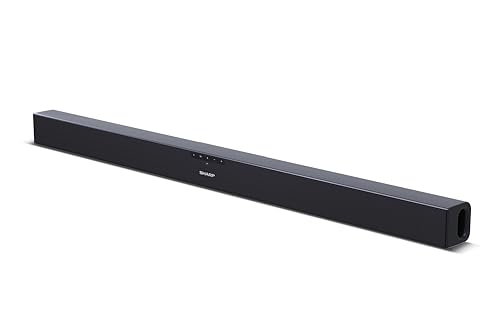
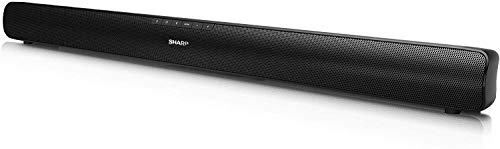
Are Sharp soundbars good?
Sharp soundbars have an average overall score of 5.4, ranking #17 among all soundbar brands.
Sharp soundbars are generally good if your goal is a simple and affordable TV-audio upgrade. The currently listed Sharp models cover the main entry-level basics well, especially HDMI ARC support, compact-to-mid-width cabinets, and low pricing.
The main strength is that the lineup is easy to understand. Most models stay focused on 2.0 sound with direct TV integration, while the HT-SB700 gives Sharp one more advanced option with Dolby Atmos, eARC, and a less basic hardware path.
That said, Sharp is stronger as a practical budget brand than as a specialist cinema brand. If you want more subwoofer packages, more 3.1-style dialogue-focused options, or a wider spread of surround-class models, other brands usually offer more choice.
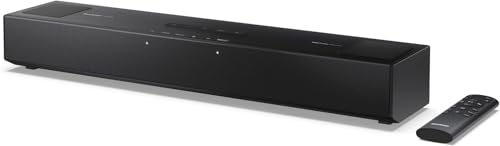
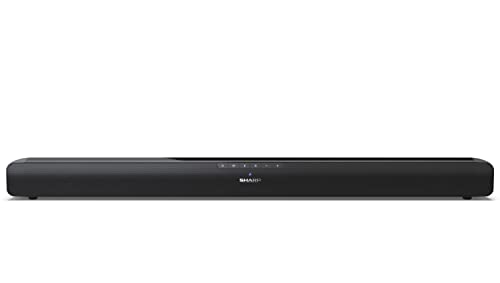
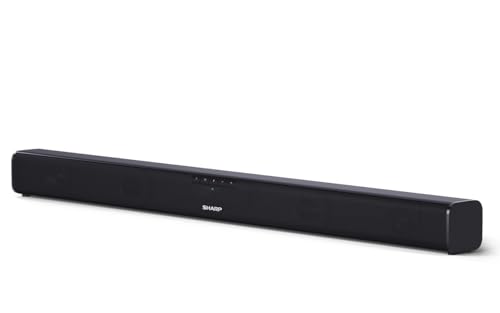
The best available Sharp soundbars are as follows.
- Sharp HT-SB700 (Overall score: 6.17 points)
- Sharp HT-SB107 (Overall score: 5.65 points)
- Sharp HT-SB147 (Overall score: 5.55 points)
The following chart ranks different soundbar brands by their overall score.
[horizontal-chart-04592904924512229361057660775741675581583712410342]
What are the main advantages of Sharp soundbars?
The main advantages of Sharp soundbars are as follows.
- Low pricing and accessible range: Sharp soundbars sit mainly in the entry tier, roughly from £45 to £150, so the brand is easy to consider if you want a lower-cost TV-audio upgrade first.
- Broad HDMI ARC coverage: Most Sharp soundbars include HDMI ARC, which is one of the brand's most useful practical strengths. That gives even the cheaper Sharp bars a more convenient TV connection path than some competing entry-level models.
- Straightforward 2.0 TV-sound focus: Sharp is clear about what most of its cheaper bars are meant to do. If your goal is better dialogue and simpler TV sound, Sharp's stereo-first lineup is easier to read than brands with many overlapping low-end variants.
- Easy lineup to compare: Sharp's range is not crowded with many overlapping channel layouts and bundled subwoofer packages. Most models stay in the basic 2.0 tier, while the HT-SB700 is the one clear step-up for buyers who want something more advanced.
- One real modern step-up model: The HT-SB700 gives Sharp a stronger hardware path with 2.0.2 channels, eARC, and Dolby Atmos. That matters because the brand is not limited only to the cheapest stereo bars.
- Familiar consumer-electronics positioning: Sharp soundbars sit inside a broader TV and home-electronics brand ecosystem, which helps make the lineup easier to understand for mainstream buyers.
What are the main disadvantages of Sharp soundbars?
The main disadvantages of Sharp soundbars are as follows.
- Narrow channel spread: Most Sharp soundbars stay at 2.0, which means the brand gives you less variety if you want stronger bass, a dedicated center channel, or a more film-oriented setup.
- No bundled subwoofer packages in the current range: Sharp's present soundbar range does not include subwoofer-included systems, so the brand is weaker if bass output is a priority.
- Thin middle tier: There is a sharp jump between the basic HT-SB bars and the more advanced HT-SB700. That makes the range less flexible for buyers who want an intermediate step instead of choosing between very simple stereo bars and one much clearer format-support upgrade.
- Limited cinematic ladder inside the brand: Sharp has one clearer Atmos/eARC step-up model, but it does not give you many stages between simple stereo bars and the more advanced end. If you want to step gradually upward through several movie-focused tiers, other brands usually give you a smoother progression.
- Weaker bass-first choice in the entry segment: Because Sharp leans so heavily on stereo bars, the brand is less convincing if your first priority is low-end impact rather than dialogue or TV clarity.
Who makes Sharp soundbars?
Sharp soundbars are sold under the Sharp brand, whose parent company is Sharp Corporation in Japan. Sharp traces its history to Tokuji Hayakawa, who established a metalworking shop in Tokyo in 1912 and later created the Ever-Sharp mechanical pencil, the product that gave the company its name. The company became Sharp Corporation in 1970, after decades of expansion into radios, televisions, calculators, displays, appliances, and other electronics.
For European consumer audio, the official Sharp Consumer site is operated by Sharp Consumer Electronics Poland sp. z o.o. in Poland. That means a Sharp soundbar is tied to a long-running Japanese electronics brand, but its current European consumer-audio sales and support structure runs through Sharp Consumer Electronics Poland rather than through a small audio-only manufacturer.
What are the main Sharp soundbar series?
The main Sharp soundbar series are as follows.
- HT-SB entry series: This is the part of the Sharp range that defines most of the brand's soundbars, including bars such as the HT-SB100, HT-SB107, HT-SB110, HT-SB140, HT-SB145, and HT-SB147. These are mainly straightforward 2.0 TV-sound bars built around lower pricing, HDMI ARC, and simple everyday use rather than around surround-style hardware or bundled bass systems.
- HT-SB700 step-up tier: The HT-SB700 is the clearest Sharp move beyond the basic stereo tier in the current lineup. It adds a 2.0.2 layout, eARC, and Dolby Atmos support, so it is the Sharp model to focus on if you want a more modern format path without leaving the brand.
- Q Soundbar range: On Sharp's official consumer site, the premium soundbar direction is represented by the Q Soundbar line above the simpler HT-SB entry bars. That range is the better reference point if you are looking at Sharp as a broader brand and want to understand where the company places its more cinema-oriented soundbar positioning rather than its cheapest TV-audio upgrades.
So the practical split is simple: HT-SB models cover the entry-level Sharp identity, while the higher Sharp soundbar direction starts above that with the HT-SB700 and the broader Q Soundbar line.
How much do Sharp soundbars cost?
Sharp soundbars usually cost about £45-£150, so the brand sits mainly in the entry-level range rather than in the midrange or premium market. Most of the range clusters around the cheaper end, with only one clear step-up model moving meaningfully higher.
That price shape matches the hardware. Most Sharp soundbars are simple 2.0 bars with HDMI ARC and no bundled subwoofer, while the more expensive HT-SB700 is the one model that adds eARC, Dolby Atmos, and a 2.0.2 layout.
So Sharp pricing is easy to read. If you want a low-cost soundbar brand first, Sharp fits well, but if you want many options between entry-level and premium tiers, the range is much narrower.
How do Sharp soundbars compare with Hisense models?
Sharp soundbars usually compare with Hisense as the simpler and more entry-focused brand, while Hisense generally puts more emphasis on 2.1-style value packages and broader home-cinema progression. Sharp is stronger when you want a straightforward ARC-based TV-sound upgrade with a cleaner low-cost lineup, whereas Hisense is often the easier brand to consider if you want more bass-oriented setups or a wider spread of feature tiers.
Sharp's soundbar identity is centered more on basic HT-SB bars plus a smaller number of clearer step-up models such as the HT-SB700 and the newer Q Soundbar direction. Hisense, by contrast, is usually positioned more aggressively around value-for-money home entertainment, which often means stronger 2.1 and Atmos-style propositions for buyers who want more impact without moving far upmarket.
So the better brand depends on what matters most to you. Sharp makes more sense if you want a simpler, cleaner TV-audio upgrade path, while Hisense is often the better fit if you want more bass, more cinema-style hardware, or a broader range of step-up choices across the lineup.
What should you consider while choosing the best Sharp soundbar?
The main things to check while choosing the best Sharp soundbar are as follows.
- Entry HT-SB bars vs HT-SB700: This is the first Sharp decision to make, because most of the brand's models are simple 2.0 HT-SB bars while the HT-SB700 is the one much more advanced option. If you only want clearer TV dialogue and easier ARC-based use, the entry bars can already be enough. If you want Dolby Atmos, eARC, or a less basic layout, the HT-SB700 is the Sharp model to check first.
- 2.0 versus 2.0.2: Most Sharp soundbars stay at 2.0, so compare whether stereo-only hardware is really enough for your room and TV habits. A basic Sharp bar can work well for news, streaming, and everyday TV, but it is not the same as a model with height channels and broader movie-focused presentation. If films matter more, the HT-SB700 is the only Sharp model that clearly moves beyond the simple stereo tier.
- ARC versus eARC: The cheaper Sharp bars usually give you HDMI ARC, which is already a strong practical spec for TV use. The HT-SB700 steps up to eARC, so this is one of the clearest hardware differences to compare inside the brand. If you are choosing between Sharp models, ARC is the baseline and eARC is the step-up feature.
- Bass expectations: Sharp's current soundbar range does not include bundled subwoofers, so bass expectations should stay realistic from the start. If you want a fuller low-end presentation, a Sharp 2.0 bar may not give you the same result as a competing 2.1 package at a similar price. Sharp works better when your priority is clear TV sound first, not maximum bass for the money.
- Cabinet width and fit: Sharp's bars range from compact units around the low-500 mm range to much wider bars around 920-950 mm. Compare the bar width against your furniture and TV size before treating the bigger model as automatically better. Wider cabinets can help the front stage feel broader, but only if they actually fit the setup properly.
- How much step-up you really need: Because the lineup is narrow, the decision is usually between a basic Sharp bar and one clearer higher option, not between many near-identical models. Check whether paying more is buying specific features you will actually use, such as Atmos and eARC, or whether a simpler ARC-based model already covers your needs. Sharp is easiest to shop when you make that split early.