Are Majority soundbars good?
Majority soundbars have an average overall score of 5.7, ranking #14 among all soundbar brands.
Majority soundbars are good if you want a very low-cost TV-audio upgrade with simple controls, Bluetooth, and compact placement. The brand is strongest at the budget end, where Atlas, Bowfell, and Snowdon II cover small-room and entry-level living-room use.
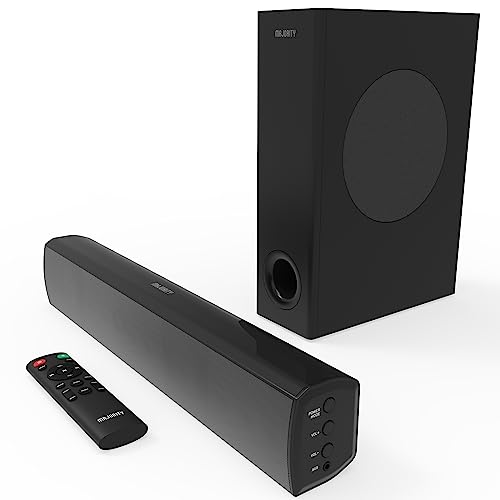
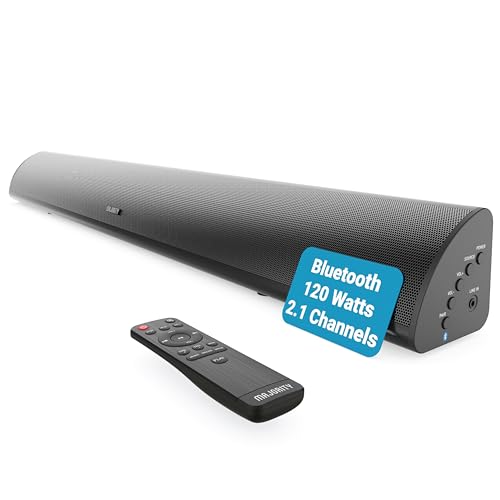
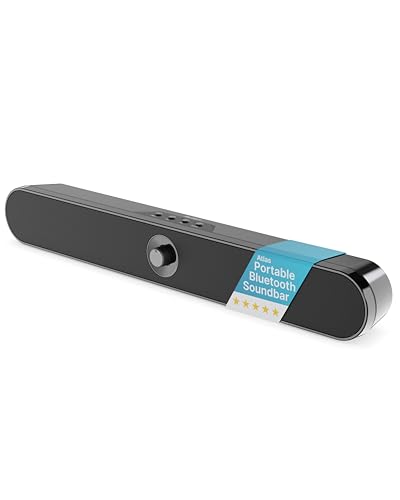
The main reason to choose Majority is price and simplicity. Snowdon II is the most useful TV-facing model because it adds HDMI ARC and 120 W output, while Bowfell and Atlas are better understood as ultra-compact soundbars for smaller setups.
The main limitation is that Majority is not a premium soundbar brand in this range. Dolby Atmos, DTS:X, wireless rears, separate subwoofers, eARC, and high-channel layouts are not part of these models.
The best available Majority soundbars are as follows.
- Majority Bowfell (Overall score: 5.85 points)
- Majority Snowdon II (Overall score: 5.7 points)
- Majority Atlas (Overall score: 5.66 points)
The following chart displays soundbar brands based on their overall score.
[horizontal-chart-04592904924512229361057660775741675581583712410342]
What are the main advantages of Majority soundbars?
The main advantages of Majority soundbars are as follows.
- Low pricing: Majority is mainly a budget soundbar brand. It is strongest when you want a cheap TV-audio upgrade rather than a premium cinema system.
- Compact cabinets: Majority has several small soundbars, so the brand works well for bedrooms, desks, narrow TV furniture, and smaller screens. Atlas and Bowfell are good examples of this compact direction.
- Simple channels: Majority commonly focuses on basic 2.0 and 2.1 layouts. That keeps setup simple and gives buyers a bass-channel option without moving into complex surround hardware.
- TV basics: Majority can cover useful TV essentials such as HDMI ARC on stronger models, while simpler models stay closer to optical, auxiliary, USB, or Bluetooth-style use. Check the exact connection set before buying.
- Bluetooth playback: Bluetooth is a normal Majority feature. That makes the brand convenient for quick music playback from a phone, tablet, or laptop.
- Clear step-ups: Majority tends to separate models by size, output, and TV-connection quality. A small bar suits a bedroom or desk, while a wider and more powerful model is better for a main TV.
What are the main disadvantages of Majority soundbars?
The main disadvantages of Majority soundbars are as follows.
- Limited premium tier: Majority is not the first brand to choose for Dolby Atmos, DTS:X, eARC, rear speakers, or high-channel surround systems. Its stronger identity is affordable TV audio.
- Basic channels: Majority is usually closer to 2.0 and 2.1 soundbars than to 3.1, 5.0, 5.1, or 7.1-class systems. That limits dialogue separation and surround effects compared with stronger home-cinema brands.
- Bass limits: Many Majority soundbars rely on compact cabinets or built-in bass rather than a large dedicated subwoofer. If deep low-end impact matters, compare the exact bass hardware carefully.
- HDMI limits: HDMI ARC is not something to assume across the whole Majority range. If one-cable TV connection and TV remote volume control matter, check the exact model before buying.
- Smart-feature limits: Majority is not mainly a Wi-Fi multi-room, app ecosystem, or voice-assistant soundbar brand. Bluetooth is the safer baseline expectation.
Who makes Majority soundbars?
Majority soundbars are made under the Majority brand, a British audio company founded in Cambridge, UK in 2012. Majority describes itself as a Cambridge-founded audio brand that makes soundbars, radios, speakers, and other accessible home-audio products.
The company positions itself around affordable audio rather than premium hi-fi pricing. Its own company information says Majority devices are now used in over 4 million homes worldwide, which fits the brand's role as a budget-friendly audio maker rather than a specialist high-end cinema brand.
What are the main Majority soundbar series?
The main Majority soundbar series are as follows.
- Atlas line: Atlas is the compact 2.0 direction in the Majority range. It is around 450 mm wide with about 20 W output, so it fits best as a small-room or desk-style TV-audio upgrade rather than a main home-cinema bar.
- Bowfell line: Bowfell is the ultra-compact 2.1 option. It is around 388 mm wide with about 50 W output, making it useful when you want a tiny soundbar with more bass focus than a plain 2.0 bar.
- Snowdon line: Snowdon II is the stronger TV-facing Majority option. It uses a 2.1 layout, HDMI ARC, Bluetooth, about 120 W output, and an 810 mm cabinet, so it is the clearer choice for a wider living-room TV setup.
How much do Majority soundbars cost?
Majority soundbars usually cost about £30-£60, so the brand sits in the very low-cost soundbar tier.
Atlas is around £30 and works as the smallest basic option. Bowfell sits around £35 with a compact 2.1 layout, while Snowdon II moves closer to £60 because it adds a wider cabinet, HDMI ARC, and higher 120 W output.
That price structure is simple: Majority pricing rises mainly with cabinet size, output, and TV connection quality. It does not rise because of Dolby Atmos, eARC, Wi-Fi ecosystem depth, rear speakers, or a bundled subwoofer.
How do Majority soundbars compare with JBL models?
Majority soundbars usually compare with JBL as the cheaper and simpler option, while JBL has the stronger step-up path. Majority is better if the budget is very tight and the goal is a compact 2.0 or 2.1 TV-audio upgrade; JBL is stronger if you want Dolby Atmos, Wi-Fi, 5.0 processing, or higher output.
The clearest Majority advantage is price. Atlas, Bowfell, and Snowdon II sit far below the JBL Bar 300 and Bar 5.0 MultiBeam tier, and even below many JBL entry models.
The clearest JBL advantage is technical depth. JBL gives you more channel variety, Dolby Atmos on selected models, eARC on step-up models, and stronger output options, while Majority stays focused on basic and budget TV sound.
What should you consider while choosing the best Majority soundbar?
The main things to check while choosing the best Majority soundbar are as follows.
- Model size: Start by choosing between Atlas, Bowfell, and Snowdon II by cabinet size. Atlas and Bowfell are very compact, while Snowdon II is much wider at about 810 mm. If the soundbar is for a main TV rather than a desk or bedroom setup, Snowdon II is the more natural fit.
- TV connection: Check HDMI ARC before buying. Snowdon II includes HDMI ARC, which is better for TV use than relying only on Bluetooth or older-style inputs. If you want TV remote convenience and one-cable audio, do not assume every Majority model has the same connection set.
- Channel layout: Compare 2.0 and 2.1 directly. Atlas is a 2.0 bar, while Bowfell and Snowdon II use 2.1 layouts. Choose 2.1 if you want more bass focus, but do not expect the same low-end impact as a separate-subwoofer package.
- Output power: Majority ranges from about 20 W to 120 W in these models. Atlas fits small spaces, Bowfell is still compact but stronger, and Snowdon II is the better choice for a wider TV setup. Do not choose only by price if the room is not small.
- Premium features: Treat Dolby Atmos, DTS:X, eARC, Wi-Fi multiroom, rear speakers, and separate subwoofers as outside this Majority tier. If those are must-have specs, compare JBL, LG, Samsung, Sony, Sonos, or Philips instead. Majority makes more sense when the priority is low price and simple setup.