Scored using Coffee Grinders Methodology v3.0
Coffee Grinders Methodology v3.0
Mathematical & Unbiased Scoring
Products in this category are scored under Frontum Coffee Grinders Methodology v3.0: the technical score from the specifications is the base, and independent expert and video reviews (up to ±0.5 points), owner opinions (up to ±0.3) and best-of lists (up to +0.3) move it up or down.
Explore Coffee Grinders Methodology v3.0

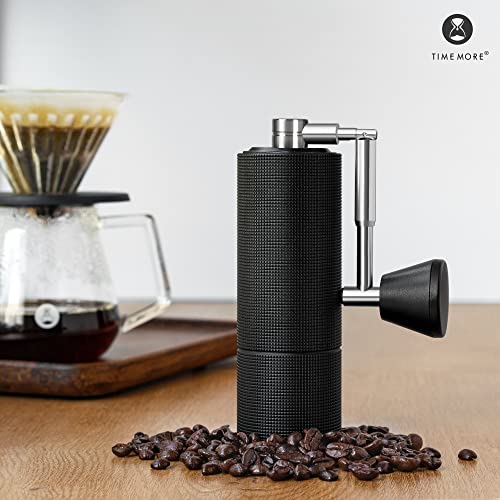
TIMEMORE Chestnut C3 Pro review: 43 specs compared

Avg. price:~£95Stepless adjustment:noBean hopper capacity:25 gWeight:0.47 kgDigital display:no

TIMEMORE Chestnut C3 Pro Review: Compare 43 technical specifications and 1 expert and video reviews to see how this product ranks in the Coffee Grinders category and whether it is worth buying.
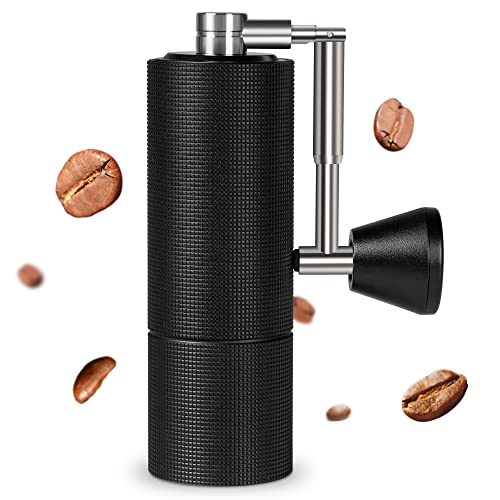
TIMEMORE Chestnut C3 Pro
5.6/10

Overall score

Score
5.6/ 10
✕
What it is
Our main score for this model, 1–10. It combines specs, best-of lists, expert reviews, ratings from across the web and owners.
How we count it
Parts: Technical score 50%, List score 20%, Reviews score 15%, User score 10%, Sentiment score 5%
Marks: Each part gets a mark out of 10. For reviews, lists and owners, a typical model in this category gets about 8 and the best one gets 10.
No data yet: A part with no data shows "?". It counts as the mark of a weaker model in this category (4 in 5 models with data score higher). This way, models with reviews, lists and owners usually come out ahead.
Score distribution
â–¼
<55-66-77-88-99-10
Score components

50%

5.1

Technical score

20%

?

List scoreNot enough data yet, so we use 7.5, the mark of a weaker model in this category

15%

5.1

Reviews score

10%

5.1

User score

5%

?

Sentiment scoreNot enough data yet, so we use 5.1, the mark of a weaker model in this category

â–¼Worse than 91% of coffee grinders
6.8

Value for money

Value for money
6.8/ 10
✕
What it is
An indicator that combines the coffee grinder's overall rating with its price.
When it matters
When you are looking for a coffee grinder with a good balance between quality and price.
Score distribution
â–¼
<55-66-77-88-99-10
Score components

70%

5.6

Overall score

30%

9.7

Price

â–¼Worse than 82%
5.1

Technical score

Technical score
5.1/ 10
✕
What it is
How good the specs are compared with the other models in this category, 1–10.
How we count it
Areas: We rate the specs in each area against the other models in this category.
Weighting: The areas that matter most to buyers count more. The shares are shown under Score components.
Share: The technical score is 50% of the overall score.
Score distribution
â–¼
<55-66-77-88-99-10
Score components

50%

4.1

Grinding

15%

6.5

Design

15%

3.3

Dosing

10%

9.2

Motor

5%

6.0

Safety

5%

6.1

Maintenance

â–¼Worse than 74%
5.1

Reviews score

Reviews score
5.1/ 10
✕
What it is
Average grade from independent test sites, magazines and video reviewers, 1–10.
How we count it
Grades: Each review's own score is converted to 1–10; without one, we grade the review ourselves. Big test sites count more, short reviews half as much as full tests. A video review counts half.
Score: The average grade is 80% of the review mark; the number of reviews is the other 20% (1 review = 5, the typical number in this category = 8, the most-reviewed model = 10).
Enough data: With few reviews, the average grade is pulled toward the typical grade of this category. No reviews yet: 7.9 for now.
Share: Reviews count 15% of the overall score.
Score distribution
â–¼
<55-66-77-88-99-10

5.1

Mark 7.9 is below the typical mark 8.2 of this category, so it cannot lift the score above the technical score

80%

8.6

Average grade

20%

5.0

Popularity

Grades by review (1)
1 video review, counting half as much as a written test. Reviews count 15% of the overall score.
Ratings from across the web count in the User score, not in this score.
â–¼Worse than 90%
?

Sentiment score

Sentiment score
5.1/ 10
✕
What it is
How positive owners are about this model in their comments under video reviews and on forums. We read each comment, keep only people who say they own the model, and sort them into positive, mixed or negative.
How we count it
Score: We compare how satisfied this model’s owners are with the other models in this category: the typical model gets 8, the most satisfied tenth 10, the least satisfied 4. This is 80% of the owner mark; the number of owners is the other 20%.
Enough data: A model counts with 10+ owners from 4+ different discussions. With fewer, the owner part changes nothing.
Share: Owners count 5% of the overall score (left out in categories where fewer than 10 models have enough owner comments).
Score distribution
â–¼
<55-66-77-88-99-10
Owners (7)
Not enough owner comments yet (10+ owners from 4+ discussions needed), so the owner part changes nothing.
Our own analysis of online owner opinions, not a rating from any website.
Not enough owner comments yet
5.1

User score

User score
5.1/ 10
✕
What it is
How happy buyers are with this model, based on ratings from across the web.
How we count it
Enough data: A model needs at least 1 rating from across the web. Without one, it counts as 7.8, the mark of a weaker rated model in this category.
Share: User score counts 10% of the overall score.
Score distribution
â–¼
<55-66-77-88-99-10

5.1

Mark 8.0 is below the typical mark 8.4 of this category, so it cannot lift the score above the technical score

70%

8.5

Rating

30%

7.1

Popularity

â–¼Worse than 87%
?

List score

List score
7.5/ 10
✕
What it is
How often independent test sites, magazines and video reviewers put this model in their best-of lists for this category.
How we count it
Points: The model in the most lists of this category gets 10; the others get 8 to 10 in proportion. In no list yet: 7.5. Lists count 20% of the overall score.
Enough data: Every list counts, even a single one. With fewer than 5 best-of lists in the category, this part is left out.
Lists with this model (0)
Not in any best-of list yet, so this part counts as 7.5. Models in a list get 8 to 10.
Not in any best-of list yet
  • timemore-chestnut-c3-pro
  • timemore-chestnut-c3-pro
  • timemore-chestnut-c3-pro
  • timemore-chestnut-c3-pro
  • timemore-chestnut-c3-pro
  • timemore-chestnut-c3-pro
  • timemore-chestnut-c3-pro
timemore-chestnut-c3-pro
Where to buy
*As an Amazon Associate, we earn from qualifying purchases.
Best rankings
Available: ranking among products currently available (including other versions of this product).All: ranking among all products in the database.
Loading...
Loading category ranking...

Technical Specifications of coffee grinder TIMEMORE Chestnut C3 Pro

Technical score
Technical score
5.1/ 10
✕
What it is
How good the specs are compared with the other models in this category, 1–10.
How we count it
Areas: We rate the specs in each area against the other models in this category.
Weighting: The areas that matter most to buyers count more. The shares are shown under Score components.
Share: The technical score is 50% of the overall score.
Score distribution
â–¼
<55-66-77-88-99-10
Score components:

50%

4.1

Grinding

15%

6.5

Design

15%

3.3

Dosing

10%

9.2

Motor

5%

6.0

Safety

5%

6.1

Maintenance

5.1
Reviews score
5.1
Sentiment score
?
User score
5.1
List score
?
Value for money
Value for money
6.8/ 10
✕
What it is
An indicator that combines the coffee grinder's overall rating with its price.
When it matters
When you are looking for a coffee grinder with a good balance between quality and price.
Score distribution
â–¼
<55-66-77-88-99-10
Score components:

70%

5.6

Overall score

30%

9.7

Price

6.8
Operation type
manual
Grinding mechanism
conical burr
Burr diameter
38 mm
This coffee grinder has a 38 mm burr diameter, which is smaller than 85.2% of coffee grinders and equal to 12.7% of coffee grinders.
Grinding element material
stainless steel
Number of grind settings
36
This coffee grinder has 36 grind settings, which is more than 50.7% of coffee grinders and equal to 4.6% of coffee grinders.
Show more
Bean hopper capacity
25 g
This coffee grinder holds 25 g of beans, which is smaller than 90.8% of coffee grinders and equal to 2.8% of coffee grinders.
Grounds container capacity
25 g
This coffee grinder holds 25 g of grounds, which is smaller than 87.9% of coffee grinders and equal to 4.6% of coffee grinders.
Detachable grounds container
yes
This coffee grinder has a detachable grounds container. 41.7% of coffee grinders have one.
Portafilter holder
no
This coffee grinder does not have a portafilter holder. 41% of coffee grinders offer this.
Single dosing
no
This coffee grinder does not support single dosing. 21.9% of coffee grinders offer this.
Show more
Power
N/A
Voltage
N/A
Grinding speed
N/A
Noise level
65 dB
This coffee grinder runs at 65 dB, which is quieter than 79.3% of coffee grinders and equal to 1.6% of coffee grinders.
Overheat protection
no
This coffee grinder does not have overheat protection. 66% of coffee grinders offer this.
Safety lock
N/A
Non-slip base
yes
This coffee grinder has a non-slip base. 18.2% of coffee grinders offer this.
Tool-free burr removal
?
Dishwasher-safe parts
no
This coffee grinder does not have dishwasher-safe parts. 12.5% of coffee grinders offer this.
Cleaning brush
yes
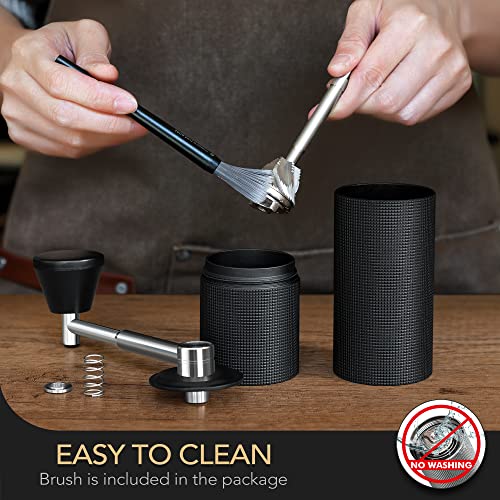
This coffee grinder includes a cleaning brush. 56% of coffee grinders offer this.
Main color
black
Vintage design
no
Digital display
no
This coffee grinder does not have a digital display. 31% of coffee grinders offer this.
Body material
aluminium
Transparent hopper
no
This coffee grinder does not have a transparent hopper. 74.5% of coffee grinders have one.
Show more

TIMEMORE Chestnut C3 Pro vs the average coffee grinder

246810TotalGrindingDesignDosingMotorSafetyMaintenance
  • 10 dB quieter
    This coffee grinder is quieter than the average coffee grinder (65 dB vs 75 dB). The average coffee grinder runs at 75 dB.
    65 dB vs 75 dB
  • 74.5% lighter
    This coffee grinder is lighter than the average coffee grinder (0.5 kg vs 1.84 kg). The average coffee grinder weighs 1.84 kg.
    0.47 kg vs 1.84 kg
  • Includes cleaning brush
    This coffee grinder includes a cleaning brush, while the average coffee grinder does not. 44.2% of coffee grinders include one.
  • 11.9 cm shallower
    This coffee grinder is shallower than the average coffee grinder (5.1 cm vs 17 cm). The average coffee grinder is 17 cm deep.
    5.1 cm vs 17 cm
  • 13.1 cm shorter
    This coffee grinder is shorter than the average coffee grinder (16.5 cm vs 29.6 cm). The average coffee grinder is 29.6 cm tall.
    16.5 cm vs 29.6 cm
  • 7.8 cm narrower
    This coffee grinder is narrower than the average coffee grinder (5.2 cm vs 13 cm). The average coffee grinder is 13 cm wide.
    5.2 cm vs 13 cm
  • 1 more grind settings
    This coffee grinder has more grind settings than the average coffee grinder (36 vs 35). The average coffee grinder has 35 grind settings.
    36 vs 35
  • 57.9% cheaper
    TIMEMORE Chestnut C3 Pro is cheaper than the average coffee grinder (£95 vs £150).
    £95 vs £150
  • 57.9% cheaper
    TIMEMORE Chestnut C3 Pro is cheaper than the average coffee grinder (£95 vs £150).
    £95 vs £150
  • 1 more grind settings
    This coffee grinder has more grind settings than the average coffee grinder (36 vs 35). The average coffee grinder has 35 grind settings.
    36 vs 35
  • 74.5% lighter
    This coffee grinder is lighter than the average coffee grinder (0.5 kg vs 1.84 kg). The average coffee grinder weighs 1.84 kg.
    0.47 kg vs 1.84 kg
  • 11.9 cm shallower
    This coffee grinder is shallower than the average coffee grinder (5.1 cm vs 17 cm). The average coffee grinder is 17 cm deep.
    5.1 cm vs 17 cm
  • 7.8 cm narrower
    This coffee grinder is narrower than the average coffee grinder (5.2 cm vs 13 cm). The average coffee grinder is 13 cm wide.
    5.2 cm vs 13 cm
  • 13.1 cm shorter
    This coffee grinder is shorter than the average coffee grinder (16.5 cm vs 29.6 cm). The average coffee grinder is 29.6 cm tall.
    16.5 cm vs 29.6 cm
  • 10 dB quieter
    This coffee grinder is quieter than the average coffee grinder (65 dB vs 75 dB). The average coffee grinder runs at 75 dB.
    65 dB vs 75 dB
  • Includes cleaning brush
    This coffee grinder includes a cleaning brush, while the average coffee grinder does not. 44.2% of coffee grinders include one.
  • 25 mm smaller burr diameter
    This coffee grinder has a smaller burr diameter than the average coffee grinder (38 mm vs 63 mm). The average coffee grinder has a 63 mm burr diameter.
    38 mm vs 63 mm
  • No transparent hopper
    This coffee grinder does not have a transparent hopper, while the average coffee grinder does. 74.3% of coffee grinders have one.
  • 31.1% lower review score
    Reviews score
    5.1/ 10
    ✕
    What it is
    Average grade from independent test sites, magazines and video reviewers, 1–10.
    How we count it
    Grades: Each review's own score is converted to 1–10; without one, we grade the review ourselves. Big test sites count more, short reviews half as much as full tests. A video review counts half.
    Score: The average grade is 80% of the review mark; the number of reviews is the other 20% (1 review = 5, the typical number in this category = 8, the most-reviewed model = 10).
    Enough data: With few reviews, the average grade is pulled toward the typical grade of this category. No reviews yet: 7.9 for now.
    Share: Reviews count 15% of the overall score.
    Score distribution
    â–¼
    <55-66-77-88-99-10

    5.1

    Mark 7.9 is below the typical mark 8.2 of this category, so it cannot lift the score above the technical score

    80%

    8.6

    Average grade

    20%

    5.0

    Popularity

    Grades by review (1)
    1 video review, counting half as much as a written test. Reviews count 15% of the overall score.
    Ratings from across the web count in the User score, not in this score.
    5.1 vs 7.4
  • No overheat protection
    This coffee grinder does not support overheat protection, while the average coffee grinder does. 65.9% of coffee grinders offer this.
  • 45 g less grounds space
    This coffee grinder holds fewer grounds than the average coffee grinder (25 g vs 70 g). The average coffee grinder holds 70 g of grounds.
    25 g vs 70 g
  • 31.1% lower user score
    User score
    5.1/ 10
    ✕
    What it is
    How happy buyers are with this model, based on ratings from across the web.
    How we count it
    Enough data: A model needs at least 1 rating from across the web. Without one, it counts as 7.8, the mark of a weaker rated model in this category.
    Share: User score counts 10% of the overall score.
    Score distribution
    â–¼
    <55-66-77-88-99-10

    5.1

    Mark 8.0 is below the typical mark 8.4 of this category, so it cannot lift the score above the technical score

    70%

    8.5

    Rating

    30%

    7.1

    Popularity

    5.1 vs 7.4
  • 95 g smaller capacity
    This coffee grinder holds fewer beans than the average coffee grinder (25 g vs 120 g). The average coffee grinder holds 120 g of beans.
    25 g vs 120 g
  • 7.6% worse value for money
    TIMEMORE Chestnut C3 Pro has worse value for money than the average coffee grinder (6.8 vs 7.3).
    6.8 vs 7.32
  • 31.1% lower review score
    Reviews score
    5.1/ 10
    ✕
    What it is
    Average grade from independent test sites, magazines and video reviewers, 1–10.
    How we count it
    Grades: Each review's own score is converted to 1–10; without one, we grade the review ourselves. Big test sites count more, short reviews half as much as full tests. A video review counts half.
    Score: The average grade is 80% of the review mark; the number of reviews is the other 20% (1 review = 5, the typical number in this category = 8, the most-reviewed model = 10).
    Enough data: With few reviews, the average grade is pulled toward the typical grade of this category. No reviews yet: 7.9 for now.
    Share: Reviews count 15% of the overall score.
    Score distribution
    â–¼
    <55-66-77-88-99-10

    5.1

    Mark 7.9 is below the typical mark 8.2 of this category, so it cannot lift the score above the technical score

    80%

    8.6

    Average grade

    20%

    5.0

    Popularity

    Grades by review (1)
    1 video review, counting half as much as a written test. Reviews count 15% of the overall score.
    Ratings from across the web count in the User score, not in this score.
    5.1 vs 7.4
  • 31.1% lower user score
    User score
    5.1/ 10
    ✕
    What it is
    How happy buyers are with this model, based on ratings from across the web.
    How we count it
    Enough data: A model needs at least 1 rating from across the web. Without one, it counts as 7.8, the mark of a weaker rated model in this category.
    Share: User score counts 10% of the overall score.
    Score distribution
    â–¼
    <55-66-77-88-99-10

    5.1

    Mark 8.0 is below the typical mark 8.4 of this category, so it cannot lift the score above the technical score

    70%

    8.5

    Rating

    30%

    7.1

    Popularity

    5.1 vs 7.4
  • 7.6% worse value for money
    TIMEMORE Chestnut C3 Pro has worse value for money than the average coffee grinder (6.8 vs 7.3).
    6.8 vs 7.32
  • 25 mm smaller burr diameter
    This coffee grinder has a smaller burr diameter than the average coffee grinder (38 mm vs 63 mm). The average coffee grinder has a 63 mm burr diameter.
    38 mm vs 63 mm
  • No transparent hopper
    This coffee grinder does not have a transparent hopper, while the average coffee grinder does. 74.3% of coffee grinders have one.
  • 45 g less grounds space
    This coffee grinder holds fewer grounds than the average coffee grinder (25 g vs 70 g). The average coffee grinder holds 70 g of grounds.
    25 g vs 70 g
  • 95 g smaller capacity
    This coffee grinder holds fewer beans than the average coffee grinder (25 g vs 120 g). The average coffee grinder holds 120 g of beans.
    25 g vs 120 g
  • No overheat protection
    This coffee grinder does not support overheat protection, while the average coffee grinder does. 65.9% of coffee grinders offer this.

Video reviews

Hands-on testing, unboxing, and real-world video evaluations

9.0
Brian Quan
≈ estimated
21/10/2023
Hands-on review · flavour and high-extraction tests
Verdict
TIMEMORE Chestnut C3 Pro is an enjoyable grinder within normal brewing parameters, as long as you don't chase extreme extraction.
Brand video
Hands-on video, no verdict

Third-party reviews

What customers like about TIMEMORE Chestnut C3 Pro

  • Excellent value for money, competing well with much more expensive hand grinders.
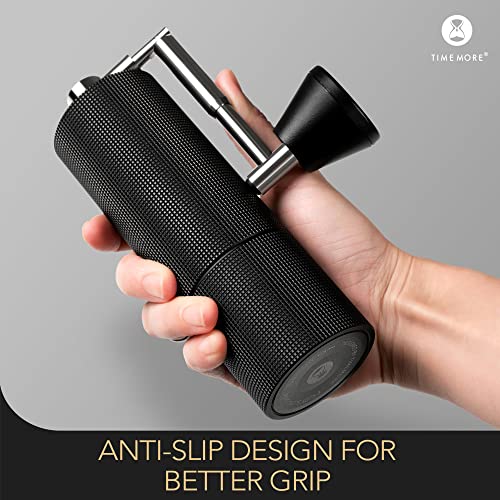
  • Foldable crank handle makes it highly compact and perfect for travel or easy storage.
  • Solid all-metal aluminum body construction provides durability and a premium feel.
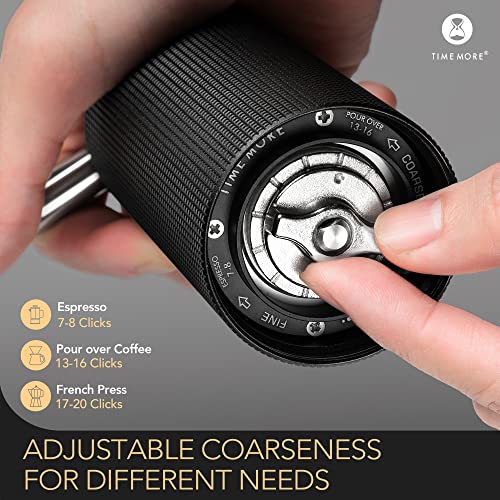
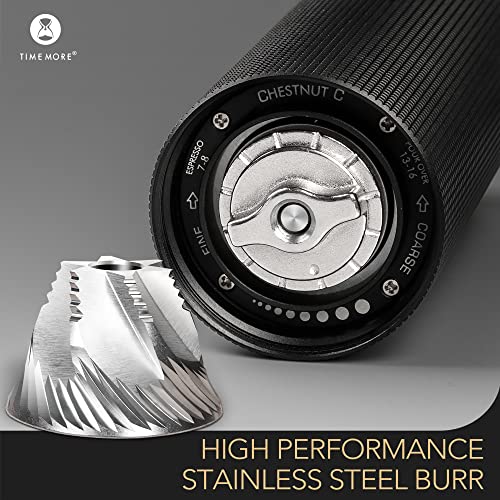
  • Patented S2C (Spike-to-Cut) stainless steel burrs deliver a fast and smooth grinding experience.
  • Textured, knurled surface offers an excellent, anti-slip grip even for sweaty hands.
  • Dual-bearing axle design removes burr wobble, leading to highly consistent grinds for pour-over and filter coffee.
  • Flavor profile pushes toward high sweetness, full body, and smooth balance, masking minor brewing defects.

What customers don't like about TIMEMORE Chestnut C3 Pro

  • Not well-suited for espresso due to wide adjustment steps (clicks) that make fine-tuning difficult.
  • Internal grind size adjustment dial requires removing the catch cup, which can be less convenient.
  • The metal casing makes it feel somewhat heavy compared to plastic competitors.
  • Produces a slightly less transparent flavor profile with reduced clarity and acidity compared to high-end boutique grinders.
  • Grinding very light or dense roasts manually can require significant physical effort.

Verdict

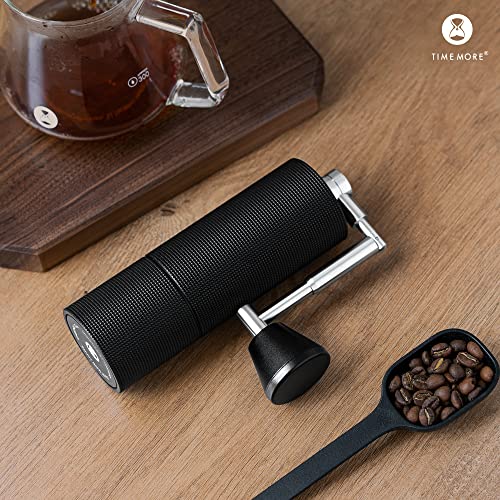
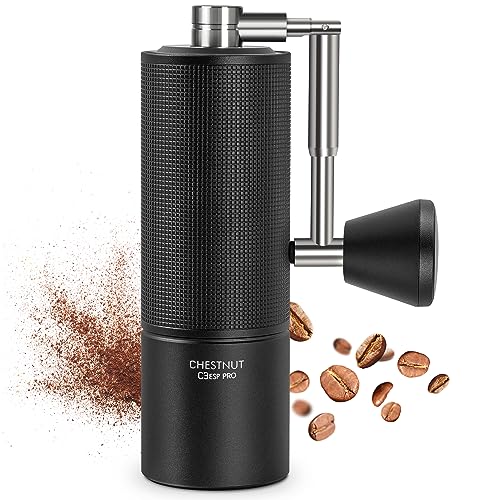
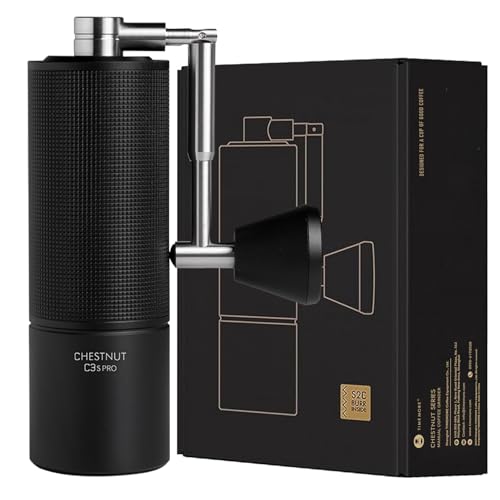
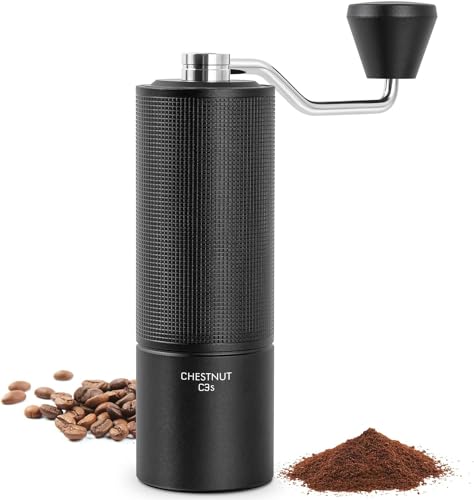
The TIMEMORE Chestnut C3 Pro is a highly portable manual coffee grinder featuring high-precision 38mm SUS420 stainless steel conical burrs with a patented "Spike to Cut" (S2C660) design, dual bearings for axle stability, and an integrated all-metal aluminium alloy body weighing approximately 423 to 530 grams. It stands out with a 20 to 25-gram bean hopper capacity and a signature spring-assisted foldable crank handle that folds flush to prevent tipping during travel. Its main pros include exceptional grind consistency for pour-over, Aeropress, and French press methods, an ergonomic anti-slip textured grip, smooth low-effort operation, and excellent value for an entry-level metal grinder. However, its downsides include an internal adjustment dial that lacks the granular resolution needed to easily dial in espresso shots, relatively slow grinding speeds for fine grinds, and the potential for static buildup or grounds sticking in the corners of the catch cup.

Compare TIMEMORE Chestnut C3 Pro with other coffee grinders

1Product to compare no. 1
VS
2Product to compare no. 2
VS
3Product to compare no. 3 (optional)

Graphic comparison of TIMEMORE Chestnut C3 Pro and other coffee grinders

No results found